


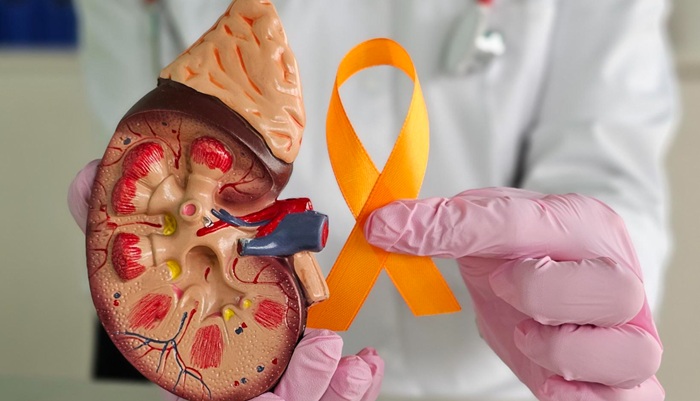
Kidney cancer is a malignant tumor that develops in the kidneys. The kidneys are important organs that filter the blood, maintain fluid balance in the body, and remove waste products through urine. When cells in the kidneys grow uncontrollably and form a malignant tumor, the condition can develop into kidney cancer.
A kidney cancer diagnosis can understandably cause concern, particularly because there is still a common misconception that patients with kidney cancer must always undergo complete kidney removal. However, this is not necessarily the case. Advances in medical technology and treatment methods allow doctors to consider procedures that can remove the tumor while preserving the healthy part of the kidney in selected patients. The choice of procedure depends on factors such as the tumor’s size, location, characteristics, and the patient’s overall condition.
To support more precise kidney cancer removal, Mandaya Royal Hospital Puri offers BK5000 ultrasound technology, which can be used intraoperatively, or during surgery. This technology helps doctors identify and mark the boundaries of a kidney tumor or cancer in real time during a partial nephrectomy procedure, in which the cancer is removed while preserving the healthy kidney tissue. With this visualization, doctors can more accurately determine the area that needs to be removed while aiming to preserve as much healthy kidney tissue as possible.
The BK5000 ultrasound technology is also compatible with the Da Vinci Xi robotic system available at Mandaya Royal Hospital Puri, supporting more precise kidney cancer surgery.

Contents
Understanding the BK5000 Ultrasound Technology at Mandaya Royal Hospital Puri and Its Advantages
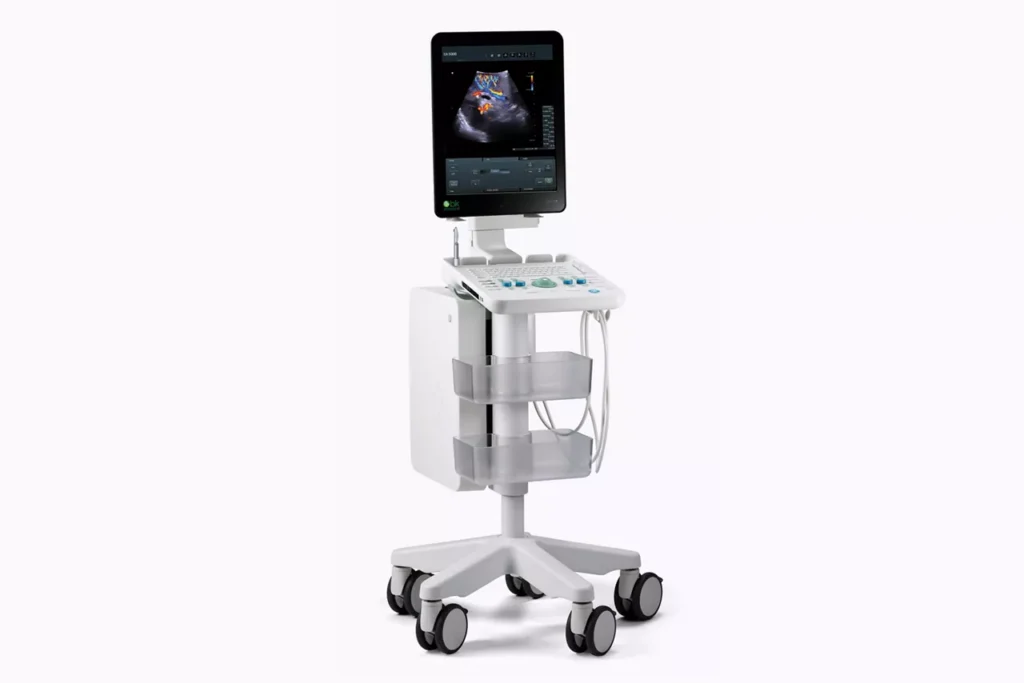
The BK5000 ultrasound system is an ultrasound technology that can help doctors visualize and identify tumor boundaries, major blood vessels, and other important anatomical structures during robotic surgery. The system provides clear and detailed images, allowing doctors to obtain important information directly during the procedure.
The advantages of the BK5000 ultrasound technology include:
1. Helps Clearly Visualize Tumor Boundaries
The BK5000 helps doctors identify and determine the boundaries of a tumor, allowing the area that needs to be removed to be visualized more accurately.
2. Real-Time Imaging During Surgery
Doctors can obtain real-time images of structures inside the body while surgery is in progress. This information can help guide surgical decision-making during the procedure.
3. High-Contrast and High-Resolution Imaging
The BK5000 produces clear and detailed images, allowing tumors and important surrounding structures to be visualized more effectively.
4. Can Be Controlled from the Surgeon’s Console
During robotic-assisted surgery, ultrasound imaging can be operated directly through the surgeon’s console, allowing the surgeon to obtain the information needed throughout the procedure.
5. Equipped with Color Doppler to Visualize Blood Flow
The Color Doppler feature helps doctors visualize blood flow and identify blood vessels supplying the area surrounding the tumor. This information can be important in determining the appropriate surgical approach.
6. Features 3D Imaging Technology
The 3D imaging feature helps doctors better understand the position of the tumor and important anatomical structures around it, supporting more precise surgical planning and execution.
With these capabilities, the BK5000 ultrasound system can help doctors perform tumor or kidney cancer surgery with clearer visualization and real-time information, including when used together with the Da Vinci Xi robotic system at Mandaya Royal Hospital Puri.
Why Is It Important to Preserve Healthy Kidney Tissue During Kidney Cancer Surgery?
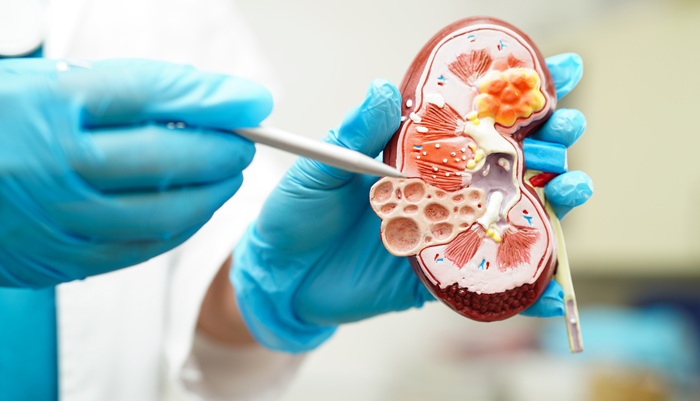
During kidney cancer surgery, doctors do not always need to remove the entire kidney. In certain cases, partial nephrectomy may be an option to remove the cancer while preserving healthy kidney tissue. Some of the reasons why preserving the kidney is important include:
1. The Cancer Can Be Removed Without Removing the Entire Kidney
During a partial nephrectomy, the doctor removes the tumor or cancer along with a small margin of surrounding healthy tissue rather than removing the entire kidney.
2. Helps Preserve Kidney Function
When appropriate, partial nephrectomy is generally preferred over complete kidney removal because it can help preserve kidney function.
3. May Reduce the Risk of Future Kidney-Related Complications
Preserving kidney function through partial nephrectomy may also help reduce the risk of future complications, including kidney disease and the need for dialysis.
4. May Be an Option for Patients With Only One Kidney
Partial nephrectomy is one of the commonly used treatment options for small kidney cancers and may be considered for patients who have only one functioning kidney. Preserving as much functioning kidney tissue as possible is important to help maintain kidney function.
Not every patient is eligible for kidney-sparing surgery. The type of surgery selected will be tailored to the characteristics and stage of the cancer, as well as the patient’s overall health. Therefore, a thorough medical evaluation is necessary to determine whether partial nephrectomy is an appropriate option.
Read also: 5 Kidney Cancer Treatments at Mandaya Puri: From Chemotherapy to Robotic Da Vinci Xi Nephrectomy
Recognize the Symptoms of Kidney Cancer
Kidney cancer does not always cause symptoms in its early stages. Many people only discover that they have kidney cancer incidentally when undergoing imaging tests for another health condition. As the cancer progresses, several signs and symptoms may appear, including:
- Blood in the urine (one of the most common signs): Urine may appear pink, red, or cola-colored. Bleeding may also occur intermittently.
- Persistent pain in the back or side: The pain may feel like an ache or a sharp pain on one side of the lower back.
- A lump on the side or lower back: You or your doctor may be able to feel a lump or mass in the area around the kidney.
- Fatigue: Feeling more tired than usual, even after getting enough rest.
- Unexplained weight loss: Losing weight unintentionally or experiencing a noticeable change in appetite.
- Recurring fever: A low-grade fever that keeps coming back and is not associated with an infection or flu.
- Swelling in the ankles or legs: This may occur when kidney function becomes impaired.
- Night sweats: Waking up with clothes or bedding that feel wet from excessive sweating.
Not everyone with kidney cancer will experience all of these symptoms. In fact, some people may not experience any signs or symptoms until the cancer has progressed to a more advanced stage.
Kidney Cancer Specialist at Mandaya Royal Hospital Puri, Prof. dr. Chaidir Arif Mochtar, Sp.U(K), PhD

Prof. dr. Chaidir Arif Mochtar, Sp.U(K), PhD is a urologist specializing in Urologic Oncology, with expertise in managing various conditions affecting the urinary system, including cancers of urological organs such as kidney cancer.
He completed his medical and urology specialist training at the University of Indonesia before pursuing his doctoral degree at the University of Amsterdam in the Netherlands. Prof. Chaidir is also qualified as a Subspecialist in Urology – Urologic Oncology under the Indonesian Urology Collegium.
In the treatment of kidney cancer, Prof. dr. Chaidir Arif Mochtar, Sp.U(K), PhD performs kidney tumor or cancer removal procedures using the Da Vinci Xi robotic system and BK5000 ultrasound technology at Mandaya Royal Hospital Puri. The combination of these technologies can help provide surgeons with clearer visualization of the tumor, blood vessels, and important structures surrounding the kidney during surgery.
With the support of these technologies, kidney cancer removal can be performed with greater precision while aiming to preserve as much healthy kidney tissue as possible in appropriate patients.
Prof. dr. Chaidir Arif Mochtar, Sp.U(K), PhD is available for consultation at Mandaya Royal Hospital Puri on:
- Monday: 4:00 PM–6:00 PM WIB
- Thursday: 4:00 PM–6:00 PM WIB
To make your visit to Mandaya Royal Hospital Puri more convenient, you can use the Chat via WhatsApp, Book an Appointment, or the Care Dokter app, which can be downloaded from Google Play and the App Store. The app can also be used to check queue numbers and access other relevant information.
The information provided on this page is intended for educational purposes and general information only and does not represent the full range of medical services that may be provided by each doctor. To determine the appropriate treatment for your specific health condition, consultation with the relevant doctor is recommended.
If you have any questions, suggestions, or require further information, please contact our call center at 0811-1900-2000.

References:
- Cleveland Clinic. Kidney Cancer: Symptoms, Causes & Treatment. (https://my.clevelandclinic.org/health/diseases/9409-kidney-cancer-overview). Accessed August 10, 2026.
- Urocare Chennai. Does Kidney Cancer Always Require Removing the Entire Kidney? (https://urocarechennai.com/blog/does-kidney-cancer-always-require-removing-the-entire-kidney/). Accessed August 10, 2026.
- GE HealthCare. BK5000 Ultrasound System. (https://www.gehealthcare.com/en-us/products/ultrasound/surgical-visualization-and-guidance/bk5000). Accessed August 10, 2026.
- Mayo Clinic. Kidney Cancer: Diagnosis and Treatment. (https://www.mayoclinic.org/diseases-conditions/kidney-cancer/diagnosis-treatment/drc-20352669). Accessed August 10, 2026.
- National Kidney Foundation. Kidney Cancer. (https://www.kidney.org/kidney-topics/kidney-cancer). Accessed August 10, 2026.