


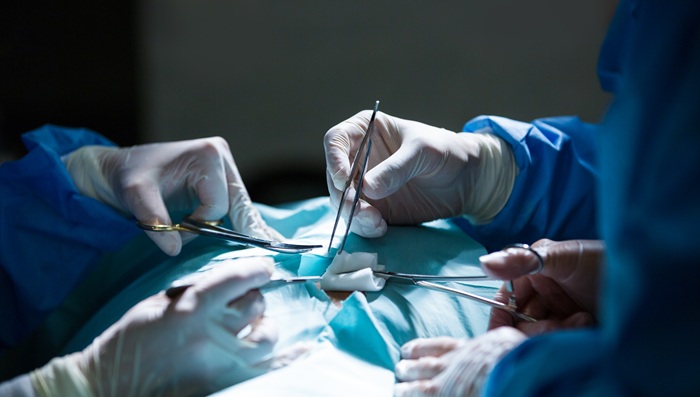
Nephrectomy is a surgical procedure to remove all or part of a kidney. It is most commonly performed to treat kidney cancer or to remove noncancerous (benign) tumors.
In general, there are two types of nephrectomy. A radical nephrectomy involves removing the entire kidney, while a partial nephrectomy removes only the affected portion, preserving as much healthy kidney tissue as possible.
At Mandaya Royal Hospital Puri, nephrectomy can be performed using the advanced Da Vinci Xi robotic system, which allows surgeons to operate with greater precision and stability for more accurate results.

Contents
Purpose of Nephrectomy
Here are some common reasons why nephrectomy is performed:
1. Cancer treatment
Urologic surgeons often perform nephrectomy to remove malignant tumors or abnormal growths in the kidney. The most common type of kidney cancer in adults is renal cell carcinoma, which begins in the cells lining the small tubes inside the kidneys.
Kidney tumors in children are rare. However, when they do occur, they are often Wilms tumor, which is most commonly found in children under 5 years old.
The decision on how much kidney tissue to remove depends on several factors:
- Whether the tumor is confined to the kidney or has spread beyond it
- Whether there is more than one tumor
- How much of the kidney is affected
- Whether nearby tissues are involved
- How well the other kidney functions
- Whether other diseases affect kidney function
- Overall kidney function
Treatment decisions are usually based on imaging tests such as CT scans, MRI, angiography, and ultrasound to assess the kidney and surrounding structures in detail.
2. Treatment for other conditions
Nephrectomy may also be performed to remove kidney tissue that is severely damaged, scarred, or no longer functioning properly due to injury or certain diseases.
How Is a Nephrectomy Performed?
The procedure varies depending on how much of the kidney is removed and the surgical method used.
There are two main types of nephrectomy:
- Radical nephrectomy: removal of the entire kidney, sometimes including the ureter, adrenal gland, and nearby lymph nodes
- Partial nephrectomy: removal of only the diseased portion of the kidney while preserving healthy tissue
Several surgical approaches may be used:
1. Open surgery
This method involves a larger incision on the side or abdomen. It is less commonly used today but may still be necessary in certain complex cases.
2. Laparoscopic surgery
This minimally invasive technique uses several small incisions. A camera (laparoscope) is inserted to guide the surgeon in removing part or all of the kidney. It typically offers faster recovery, shorter hospital stays, and fewer complications.
3. Robot-assisted laparoscopic surgery
This advanced approach uses a robotic system to assist the surgeon in performing precise and stable movements. It allows for greater accuracy and has been shown to reduce bleeding, speed up recovery, and lower complication risks compared to open surgery.
Nephrectomy with Da Vinci Xi at Mandaya Royal Hospital Puri
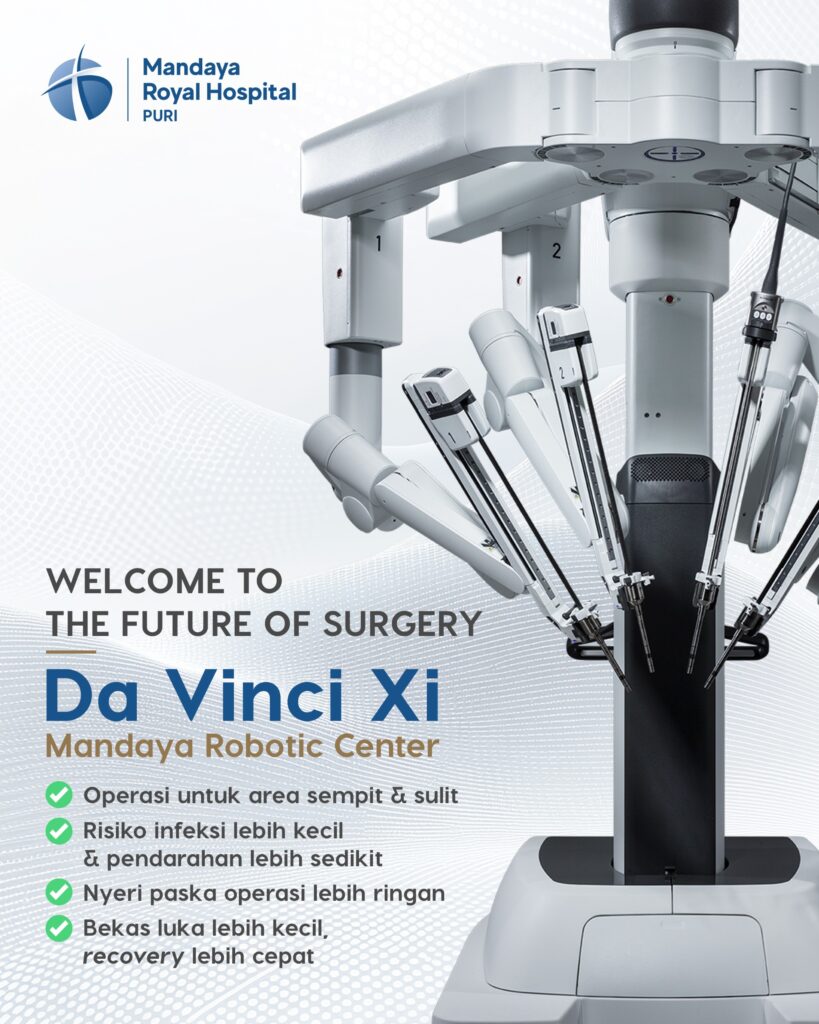
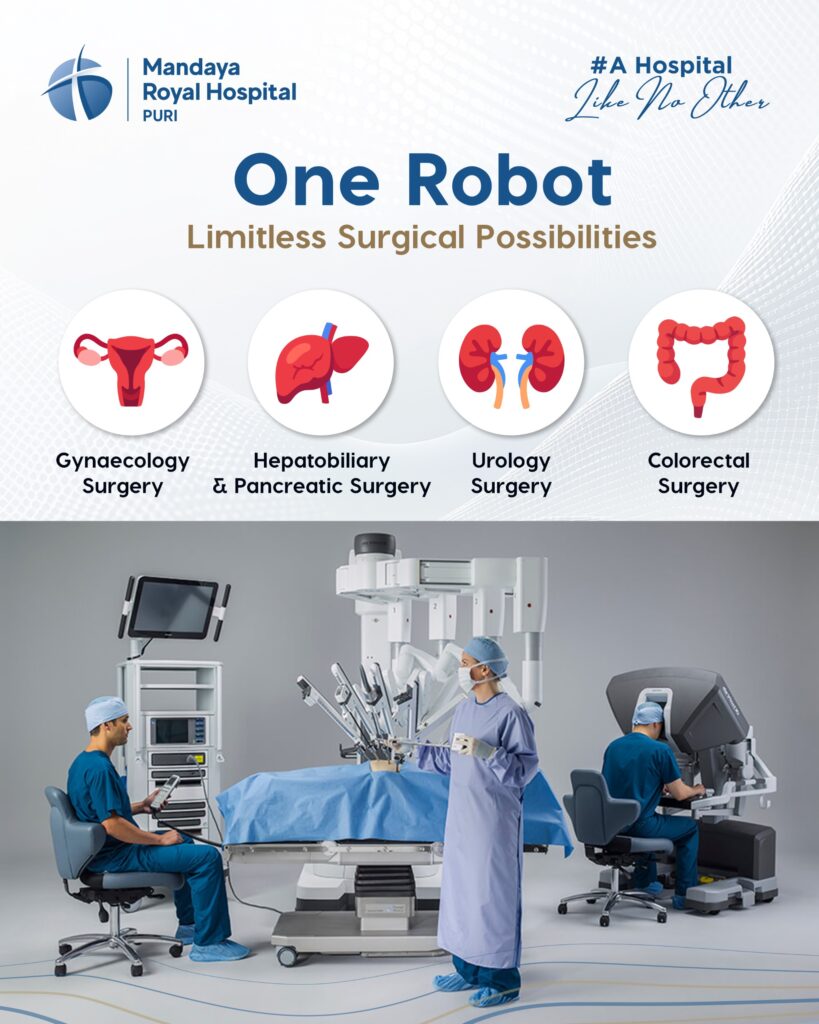
The Da Vinci Xi is an advanced robotic surgical system equipped with four precision arms controlled by the surgeon through a high-definition 3D console.
This technology provides clearer and more detailed visualization of the surgical area. Its flexible robotic arms mimic the movement of human hands in a smaller range, allowing surgeons to reach narrow and complex areas more easily. This enhances surgical accuracy and improves outcomes.
Benefits of robotic nephrectomy with Da Vinci Xi:
-
Greater precision and flexibility
Enables more accurate and controlled movements compared to conventional techniques, helping reduce complications.
-
Minimally invasive approach
Performed through small incisions, resulting in less bleeding, reduced pain, shorter hospital stays, and faster recovery with minimal scarring.
-
Wider surgical capability
Supports complex procedures across multiple specialties, allowing surgeons to handle challenging cases more effectively.
-
Faster recovery and better outcomes
Patients typically experience quicker recovery, fewer complications, and improved overall surgical results.
Urology Specialists for Nephrectomy at Mandaya Royal Hospital Puri
Here are the urology specialists experienced in nephrectomy at Mandaya Royal Hospital Puri:
1. Prof. dr. Chaidir Arif Mochtar, Sp.U(K), PhD
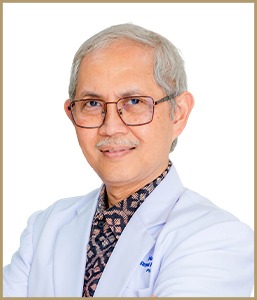
A senior urologist with national and international recognition, experienced in various urologic surgeries including kidney, prostate, varicocele, PCNL, and kidney transplantation. He is also skilled in laparoscopic (minimally invasive) techniques and has received training in the Netherlands.
Schedule:
- Monday: 16:00 – 18:00 WIB
- Thursday: 16:00 – 18:00 WIB
2. Prof. dr. Ponco Birowo, Sp.U(K), PhD
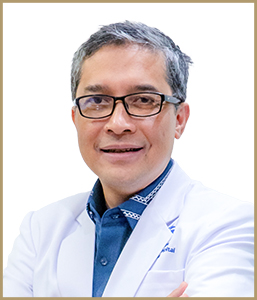
A highly experienced urologist specializing in complex cases, including kidney transplantation. He is widely recognized as a referral expert for advanced urologic procedures requiring high precision.
Schedule:
- Tuesday: 16:00 – 18:00 WIB
- Thursday: 16:00 – 18:00 WIB
3. dr. Hendy Mirza, Sp.U(K)
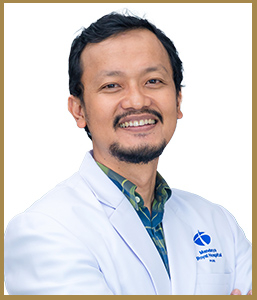
A consultant urologist with expertise in urinary tract disorders. He completed his medical education at the University of North Sumatra and his urology specialization at the University of Indonesia. He also has expertise in pediatric urology reconstruction and laparoscopic techniques.
Schedule:
- Monday: 16:00 – 19:00 WIB
- Wednesday: 16:00 – 19:00 WIB
- Friday: 16:00 – 19:00 WIB
If you would like to learn more about the Da Vinci Xi robotic system, feel free to visit Mandaya Royal Hospital Puri and consult with our medical team.
To make your visit easier, you can use the WhatsApp Chat feature, Book Appointment service, or the Care Dokter app available on Google Play and the App Store to check schedules, queue numbers, and other information.
The information on this page is intended for educational purposes and general overview only. It does not represent the full scope of medical services provided by each doctor. For appropriate treatment, please consult directly with a healthcare professional.
If you have any questions or need further information, please contact our call center at 0811-1900-2000.