



Hearing a breast cancer diagnosis can often immediately raise concerns that the only treatment option is to remove the entire breast. However, breast cancer does not always have to be treated with a mastectomy, or surgery to remove the entire breast. In certain cases, doctors may consider procedures that preserve part of the breast tissue.
One such option is a lumpectomy, a procedure to remove the tumor along with some of the surrounding tissue while preserving the breast. This procedure may generally be an option for early-stage breast cancer under certain conditions. Meanwhile, a mastectomy may be considered when the cancer is more extensive, there is more than one area of cancer, or based on other medical conditions and considerations.
Breast cancer treatment options cannot be determined based on cancer stage alone. Doctors will also consider the size and location of the tumor, the characteristics of the cancer, the condition of the breast, and the patient’s overall health. Therefore, each patient may have different treatment options depending on their examination results and individual needs.

Contents
Lumpectomy vs. mastectomy: Which is right for you?
Lumpectomy and mastectomy are two breast cancer surgery options that may be used in the treatment of breast cancer. Both procedures have the same goal of removing cancerous tissue, but they differ in how much breast tissue is removed. Lumpectomy preserves most of the breast, while mastectomy removes all breast tissue. The choice of procedure depends on the patient’s cancer and individual health factors.
Lumpectomy
Lumpectomy may be an option when the cancer is relatively small compared with the size of the breast and is found in only one area. In certain cases, lumpectomy may also be considered when there are two small areas of cancer in the same breast. The possibility of undergoing radiation therapy (radiotherapy) after surgery is also one of the factors doctors consider when determining whether lumpectomy is appropriate.
For some early-stage breast cancers, lumpectomy followed by radiation therapy can provide similar survival outcomes to mastectomy. Lumpectomy preserves most of the breast tissue but generally needs to be followed by radiation therapy. Meanwhile, mastectomy removes the entire breast, and radiation therapy afterward may or may not be necessary depending on the patient’s condition.
Lumpectomy may not be recommended if:
- The cancer is relatively large compared with the size of the breast.
- Cancer is found in multiple areas of the breast.
- The patient cannot undergo radiation therapy after surgery.
- The patient has inflammatory breast cancer.
Mastectomy
Mastectomy may be a more appropriate option than lumpectomy in certain conditions or when specific risk factors are present. Doctors may recommend a mastectomy if:
- The tumor is relatively large compared with the size of the breast.
- There are multiple areas of ductal carcinoma in situ (DCIS), or large tumors located in different parts of the breast.
- The patient has previously undergone one or more lumpectomies, but the cancer cells could not be completely removed or cancer cells are still present at the margins of the removed tissue.
- The patient has an inherited gene mutation that increases the risk of developing cancer in the other breast, such as a BRCA1 or BRCA2 mutation.
- The patient has inflammatory breast cancer.
- Radiation therapy is not an appropriate treatment option for the patient.
Radiation therapy may not be recommended if the patient has previously received radiation to the same breast, has certain conditions that make the body more sensitive to the side effects of radiation, such as scleroderma or lupus, or is pregnant.
Pros and cons of lumpectomy vs. mastectomy
Each procedure has advantages and disadvantages that should be considered before deciding on a breast cancer treatment approach. Lumpectomy generally preserves more breast tissue, while mastectomy removes the entire breast. The following is a comparison of the advantages and disadvantages of both procedures.
Lumpectomy: Pros and cons
Advantages of lumpectomy
- Most of the breast tissue and nipple can be preserved, although the shape of the breast may change slightly after the procedure.
- Sensation in the breast area can generally be preserved.
- The procedure is more limited, so surgery and recovery time are usually shorter.
- The risk of complications tends to be lower compared with more extensive surgery such as mastectomy.
- It may be a consideration for patients with certain health conditions, such as diabetes or heart disease, that may increase the risks associated with more extensive surgery.
Disadvantages of lumpectomy
- The patient may need another surgery to remove additional tissue around the tumor if cancer cells are still found at the margins of the removed tissue. This procedure is known as a re-excision lumpectomy.
- Radiation therapy is usually required after lumpectomy, particularly for certain types of breast cancer.
- The patient will still need regular mammograms to monitor the condition of the breast.
Mastectomy: Pros and cons
Advantages of mastectomy
- Some patients may feel more reassured because the entire breast tissue is removed, which can reduce concerns about the cancer returning in that breast.
- In certain cases, the patient may not need radiation therapy after surgery.
- Routine mammograms of the removed breast are generally no longer necessary, although ongoing health monitoring will still be performed based on the patient’s condition.
Disadvantages of mastectomy
- The entire breast is permanently removed, and sensation in the breast area may be reduced or lost. This can be emotionally challenging for some patients.
- The surgery is more extensive and generally requires a longer recovery period, with a higher risk of complications compared with lumpectomy.
- Patients may experience long-term pain after surgery, known as post-mastectomy pain syndrome.
Ultimately, the choice between lumpectomy and mastectomy is not determined solely by the advantages and disadvantages of each procedure. Doctors will conduct a comprehensive evaluation, including a physical examination, the size and location of the tumor, the cancer stage and characteristics, the condition of the breast tissue, the patient’s overall health, and any additional treatment that may be required.
After considering all examination results, the doctor will recommend the treatment approach that is most appropriate for each patient’s individual condition and needs.
After breast cancer surgery, there are still options to restore breast shape
For some patients, undergoing breast cancer surgery is not only about removing cancer cells but also about dealing with changes in body shape afterward. This can naturally lead to various concerns and uncomfortable feelings. However, patients do not have to face these changes without options. After surgery, various breast reconstruction methods can help restore the shape and volume of the breast. The options can be tailored to each patient’s medical condition, needs, and expectations.
1. Breast reconstruction with implants
Breast reconstruction after mastectomy can be performed using implants. Breast implants are generally round in shape, with a silicone outer shell, and can be filled with saline solution (sterile salt water) or silicone gel. The implant is then placed in the chest area to replace the volume of the breast tissue that has been removed, helping recreate the breast’s contour and size.
Reconstructive options should ideally be discussed with a plastic surgeon before mastectomy. An early consultation allows the doctor to evaluate the patient’s condition and consider the most appropriate reconstruction technique, including the possibility of using implants. This allows patients to understand the available options and participate in developing their treatment plan together with their doctor.
2. Breast reconstruction using your own fat tissue
Breast reconstruction can also be performed using the patient’s own fat tissue. This technique may be an option for patients who do not want implants or, in certain situations, when implants or other reconstruction methods are less suitable.
Breast reconstruction using the patient’s own fat is generally performed in several stages. After mastectomy, the chest area may first be prepared by gradually stretching the skin using a specialized device, such as an EVE-bra. This step is intended to provide sufficient space for the breast reconstruction process.
Once the chest area is ready, the doctor removes fat from certain areas of the body, such as the abdomen, back, hips, or thighs, using liposuction. The harvested fat is then processed and transferred to the chest area through injections to help recreate the breast.
Using the patient’s own tissue makes this technique one of the alternatives that can be considered for breast reconstruction. However, every patient has different conditions, so the choice of reconstruction technique should be individually tailored.
Breast cancer and breast reconstruction specialists at Mandaya Royal Puri Hospital
1. dr. Abdul Rachman, Sp.B (K) Onk
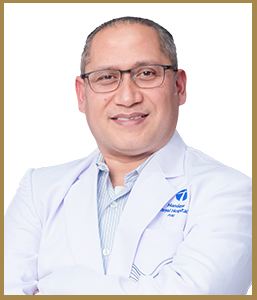
dr. Abdul Rachman is a surgical oncology specialist who completed his General Medicine education at Trisakti University before continuing his training in General Surgery and Surgical Oncology at the University of Indonesia. He has also participated in various training programs and courses to further develop his expertise in surgery and oncology, including Workshop Minimal Invasive Surgery, RFA and VABB, Workshop Oncoplasty, Microsurgery in Management of Cancer, and Laparoscopic in Breast Cancer and Reconstruction with Implant training at National Cheng Kung University Hospital.
With his experience and expertise, dr. Abdul Rachman treats various cancer conditions requiring surgery, including breast cancer. At Mandaya Royal Puri Hospital, he can help evaluate patients and determine appropriate treatment options for breast cancer, including considering mastectomy based on each patient’s individual condition.
dr. Abdul Rachman, Sp.B (K) Onk is available at Mandaya Royal Puri Hospital on:
- Tuesday: 06:00–18:00 WIB
- Thursday: 06:00–18:00 WIB
- Saturday: 09:00–12:00 WIB
2. dr. Enos H. Siburian, Sp.B (K) Onk
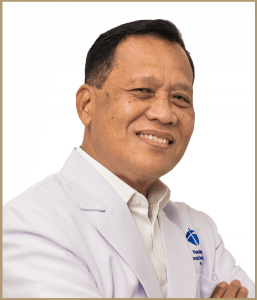
dr. Enos H. Siburian is a surgical oncology specialist who completed his General Medicine education at Universitas Kristen Indonesia before continuing his Surgery Specialist training at Sam Ratulangi University, Manado. He has experience treating various types of cancer requiring surgical management, ranging from breast cancer to colorectal cancer, thyroid cancer, stomach cancer, lung cancer, melanoma and skin cancer, pancreatic cancer, and other types of cancer.
In addition to conventional surgery, dr. Enos is also experienced in minimally invasive surgical techniques, including laparoscopy. For patients with breast cancer, examination and evaluation by a surgical oncologist are important to understand the condition of the cancer and determine the appropriate treatment options, including whether mastectomy is necessary.
dr. Enos H. Siburian, Sp.B (K) Onk is available at Mandaya Royal Puri Hospital on:
- Wednesday: 13:00–15:00 WIB
- Thursday: 09:00–11:00 WIB
- Friday: 13:00–15:00 WIB
3. dr. Sara Ester Triatmoko, Sp.B.P.R.E., Subsp.M.O. (K)

dr. Sara Ester Triatmoko, Sp.B.P.R.E., Subsp.M.O. (K) is a Plastic, Reconstructive, and Aesthetic Surgery specialist who completed her medical and specialist training at the University of Indonesia. She subsequently further developed her expertise in microsurgery and oncoplastic surgery to support various reconstructive needs, including breast reconstruction for patients who have undergone mastectomy.
Breast reconstruction is one of dr. Sara’s areas of focus. The procedure aims to help recreate the breast after mastectomy, allowing patients to restore their body contour. Reconstruction options can be tailored to the patient’s tissue condition, medical needs, as well as individual expectations and preferences.
Communication with the patient is also an important part of the reconstruction planning process. Through consultation, dr. Sara can understand the patient’s condition and expectations before determining the most appropriate reconstruction method.
dr. Sara Ester Triatmoko, Sp.B.P.R.E., Subsp.M.O. (K) is available at Mandaya Royal Puri Hospital on:
- Tuesday: 17:00–19:30 WIB
- Thursday: 17:00–19:30 WIB
Facilities for out-of-town and international patients at Mandaya Royal Puri Hospital

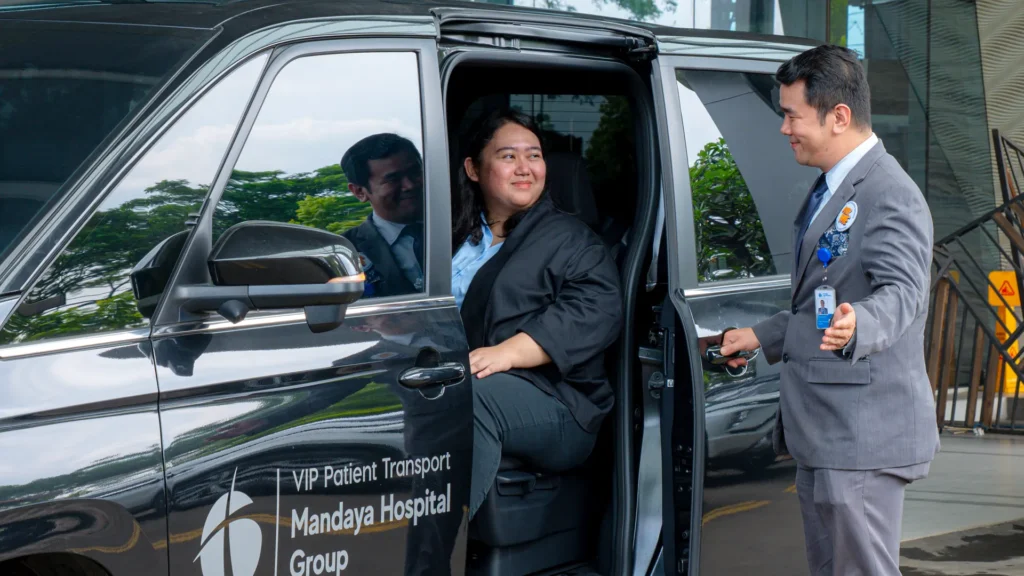
Mandaya Royal Puri Hospital provides various supporting facilities to offer additional convenience for patients traveling from other cities or countries:
- VIP transport: A pick-up service from Soekarno-Hatta International Airport, train stations, or ports to the hospital using a comfortable vehicle accompanied by the Patient Experience Officer (PEO) team.
- Medical ambulance pick-up: A dedicated pick-up service for patients with certain medical conditions from their arrival point (airport, train station, or port), equipped with medical equipment and accompanied by professional healthcare personnel.
- Accommodation (Sleep Hub & apartments): Comfortable accommodation facilities for patients’ families and companions, located on the 8th floor of the Mandaya Royal Puri building, as well as nearby apartment options.
- International Patient Relation: Dedicated assistance for international patients, including medical coordination, interpretation, and administrative support. For information and assistance from International Patient Relation, you can contact 021 5092 8888 or email [email protected].
To make your visit to Mandaya Royal Puri Hospital easier, use the Chat via WhatsApp, Book an Appointment, or the Care Dokter app, which can be downloaded from Google Play and the App Store. The app can help you manage your visit, check your queue number, and access other information.
The information provided on this page is intended for educational purposes and general information only and does not represent the full range of medical services that may be provided by each doctor. To determine the most appropriate treatment for your medical condition, consultation with the relevant doctor is recommended.
If you have any questions, suggestions, or require further information, please contact our call center at 0811-1900-2000.

References:
- Mayo Clinic. Lumpectomy. https://www.mayoclinic.org/tests-procedures/lumpectomy/about/pac-20394650. Accessed October 7, 2026.
- Breastcancer.org. Mastectomy vs. Lumpectomy. https://www.breastcancer.org/treatment/surgery/mastectomy-vs-lumpectomy. Accessed October 7, 2026.
- Breastcancer.org. Implant Reconstruction. https://www.breastcancer.org/treatment/surgery/breast-reconstruction/types/implant-reconstruction. Accessed October 7, 2026.
- American Society of Plastic Surgeons. Fat Transfer May Offer Another Breast Reconstruction Option After Mastectomy. https://www.plasticsurgery.org/news/press-releases/fat-transfer-may-offer-another-breast-reconstruction-option-after-mastectomy. Accessed October 7, 2026.