


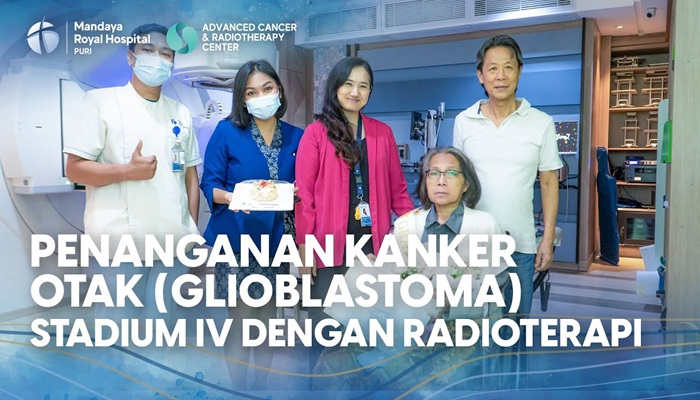
Glioblastoma is a type of brain tumor classified as grade IV, the highest grade of malignancy among brain tumors. Glioblastoma can develop from a type of glial cell called astrocytes, which help support and protect nerve cells in the brain and spinal cord.
One of the main characteristics of glioblastoma is its rapid growth. Tumor cells can grow quickly and invade surrounding healthy tissue, which is why treatment requires comprehensive planning. Treatment options may include surgical removal of the tumor, such as a craniotomy. However, when surgery is not possible or additional treatment is needed after surgery, doctors may recommend radiotherapy to help control tumor cells.
One patient who underwent radiotherapy for glioblastoma at Mandaya Royal Puri Hospital is Yuni Yuningsih. After being diagnosed with stage 4 glioblastoma, Yuni underwent a series of radiotherapy sessions as part of her treatment.
During her radiotherapy at Mandaya Royal Puri Hospital, Yuni felt comfortable with the treatment process. According to her experience, the friendly and supportive attitude of the doctors and nurses helped make the radiotherapy sessions feel more reassuring and comfortable.
“During my wife’s radiation treatment here, I felt comfortable. First, the schedule was on time, so we did not have to wait too long. My wife also does not do well with waiting. There was also a resting area after the radiation treatment, so she felt comfortable here. The nurses were all very friendly as well, and I am grateful to them. My wife and I felt that this was the right place for us to receive treatment,” her husband shared.
He also noticed a positive change in Yuni’s condition during the course of radiotherapy. Before treatment, she could experience seizures two to three times a week. However, she had not experienced another seizure during her radiotherapy sessions, although she still experienced some tremors.

Contents
The Patient’s Initial Symptoms and Her Journey to Penang, Malaysia
Yuni Yuningsih’s journey began with an unexpected event. One morning at around 5 a.m., she experienced a seizure. At first, her husband thought it might be an isolated incident and was not overly concerned. However, the seizure happened again, making the family realize that something might be wrong.
Concerned about her condition, her husband and children took her to Penang, Malaysia, for further examination. An MRI revealed a small lesion in her brain. The doctor explained that the finding was not a stroke and recommended further evaluation by a neurosurgeon.
After consulting with a neurosurgeon, the family was informed that the lesion was suspected to be cancerous. However, the exact type of tumor could not yet be determined, and a biopsy was recommended to establish a definitive diagnosis.
The family then decided to continue Yuni’s treatment in Jakarta. Her husband began searching for a hospital that could provide appropriate treatment for her condition while hoping to find an option that would not necessarily require immediate surgery.
During his search, the family discovered Mandaya Royal Puri Hospital. Further examination confirmed that Yuni had grade IV glioblastoma, an aggressive type of brain tumor that can grow rapidly.
After the diagnosis was established, Yuni was recommended to undergo 30 sessions of radiotherapy as part of her treatment plan. Because Mandaya Royal Puri Hospital was relatively close to her home, the family decided to continue her radiation treatment there and consulted with dr. Novina Fortunata, Sp.Onk.Rad, a radiation oncology specialist.
Read also: 14 Brain Tumor Symptoms You Should Not Ignore
The Patient Feels Comfortable During Radiotherapy at Mandaya Royal Puri Hospital
Undergoing dozens of radiotherapy sessions can be a lengthy process for both patients and their families. Therefore, comfort throughout treatment can be an important consideration.
During her radiation therapy at Mandaya Royal Puri Hospital, Yuni and her family felt comfortable with the overall treatment process. One aspect they appreciated was the punctuality of the treatment schedule, which meant that Yuni did not have to spend too much time waiting before her session.
The availability of a resting area after radiotherapy also helped Yuni feel more comfortable. In addition to the facilities, the friendly attitude of the nursing team contributed to making the treatment experience feel more reassuring for both Yuni and her family.
Interestingly, the family also noticed a change in Yuni’s condition during her course of radiotherapy. Before treatment, she could experience seizures two to three times a week. However, during her radiotherapy treatment, she did not experience another seizure.
She continued to experience some tremors or shaking, but the absence of seizures was viewed by her family as a positive development during her treatment.
For Yuni’s family, the journey of undergoing treatment for glioblastoma has not been easy. However, having a comfortable treatment experience and seeing positive changes in her condition have provided new hope as she continues her treatment.
Read also: The Difference Between Brain Cancer and Brain Tumors, According to Dr. Joy from Mandaya Puri
Recognizing the Symptoms of Glioblastoma
Glioblastoma symptoms can vary from one patient to another, depending on the tumor’s location and size. Possible symptoms include:
- Blurred or double vision.
- Headaches.
- Loss of appetite.
- Memory problems.
- Changes in mood or personality.
- Muscle weakness or balance problems.
- Nausea and vomiting.
- Seizures.
- Speech difficulties.
- Changes in sensation, such as numbness or tingling.
Glioblastoma symptoms may appear and progress rapidly. This can happen because a growing tumor can put pressure on the brain and damage the healthy brain tissue surrounding it.
Read also: Radiation Therapy for Brain Cancer at Mandaya Royal Puri Hospital with 4D Technology
When Should You See a Doctor?
You should consult a doctor if you experience unusual symptoms or symptoms that are progressively getting worse, such as:
- Memory problems.
- Seizures.
- Severe headaches or vision problems.
- Unexplained weight loss accompanied by nausea and vomiting.
- Changes in personality or mood.
- Progressively worsening weakness, numbness, or speech difficulties.
Advantages of Radiotherapy with Elekta Versa HD at Mandaya Royal Puri Hospital
Mandaya Royal Puri Hospital uses the Elekta Versa HD Linac, an advanced radiotherapy system designed to deliver radiation with a high degree of accuracy, including submillimeter precision. The technology is equipped with various features that help doctors accurately target tumors, including Stereotactic Radiosurgery (SRS), Stereotactic Body Radiotherapy (SBRT), and 4D Image-Guided Radiotherapy (4D IGRT).
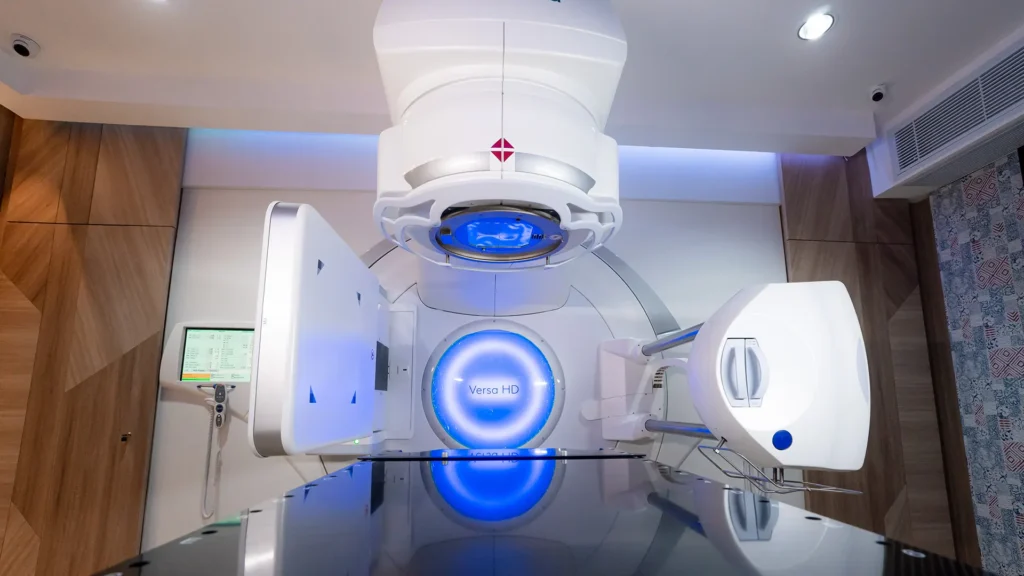
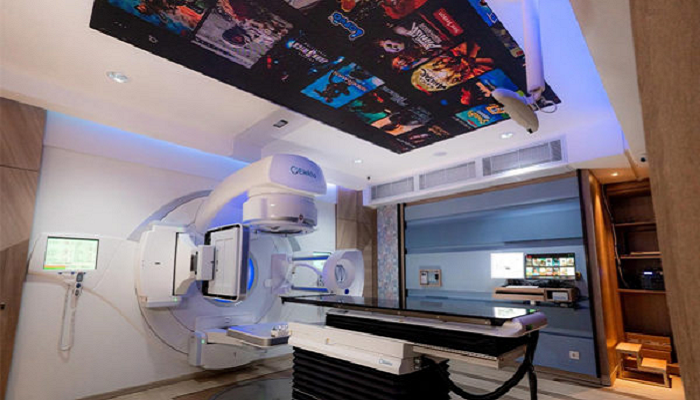
With these technologies, radiation can be directed more precisely toward the intended target while helping limit radiation exposure to surrounding healthy tissue. Some of the advantages of radiotherapy using Elekta Versa HD at Mandaya Royal Puri Hospital include:
1. Submillimeter Radiation Precision
Elekta Versa HD is designed to deliver radiation with a very high level of accuracy, down to the submillimeter scale. This precision helps doctors target the tumor while minimizing radiation exposure to surrounding healthy tissue.
2. Equipped with SRS and SBRT Technology
Elekta Versa HD supports Stereotactic Radiosurgery (SRS) and Stereotactic Body Radiotherapy (SBRT), techniques that allow high-dose radiation to be delivered precisely to a tumor target. In certain cases, this approach may allow treatment to be completed in fewer sessions than conventional radiotherapy.
3. Can Target Multiple Tumors
The technology used in Elekta Versa HD allows doctors to target multiple tumors during a treatment session. This capability can help make the radiotherapy process more efficient while maintaining accurate radiation delivery to the intended areas.
4. Supported by 4D Image-Guided Radiotherapy
4D Image-Guided Radiotherapy (4D IGRT) helps the medical team monitor the position of the treatment target during radiotherapy. This technology can also account for tumor movement caused by breathing, allowing the radiation direction to be adjusted according to the target’s position.
5. Helps Protect Healthy Tissue
More targeted radiation delivery helps limit exposure to healthy tissue surrounding the tumor. This allows treatment planning to take into consideration the need to minimize radiation exposure to areas that are not the intended treatment target.
6. Supports a More Efficient Treatment Process
The ability of Elekta Versa HD to deliver focused radiation at an appropriate dose may allow some patients to undergo fewer treatment sessions, depending on the type and location of the tumor, the patient’s condition, and the treatment plan determined by the doctor.
7. Helps Improve Patient Comfort
Elekta Versa HD is equipped with imaging technology and supporting systems that help the medical team tailor radiation delivery to the location and characteristics of the tumor. More precise treatment planning and delivery can help make the radiotherapy procedure more targeted and comfortable for patients.
Despite the availability of advanced technology, the type of radiotherapy technique, radiation dose, and number of treatment sessions are determined based on each patient’s individual condition. The doctor will evaluate the patient to determine the most appropriate radiotherapy approach based on the type, size, location, and characteristics of the tumor.
To make your visit to Mandaya Royal Puri Hospital easier, use the WhatsApp Chat, Book an Appointment, or the Care Dokter app, which can be downloaded from Google Play and the App Store. These services make it easier to arrange your visit, check your queue number, and access other relevant information.
The information provided on this page is intended for educational purposes and general information only. It does not represent the full range of medical services that may be provided by each doctor. To determine the most appropriate treatment for your individual condition, consultation with the relevant doctor is recommended.
If you have any questions, suggestions, or need further information, please contact our call center at 0811-1900-2000.

References:
- Cleveland Clinic. Glioblastoma. (https://my.clevelandclinic.org/health/diseases/17032-glioblastoma). Accessed August 11, 2026.