


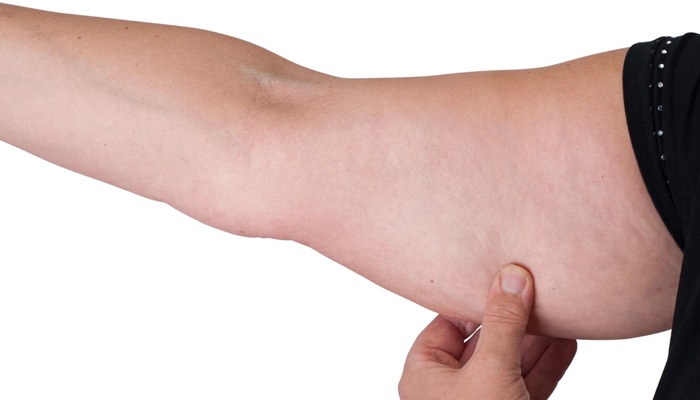
Breast cancer surgery may sometimes involve the removal of some or all of the lymph nodes in the armpit. This procedure can disrupt the flow of lymph fluid from the arm and surrounding breast area, potentially causing lymphedema and arm swelling.
In breast cancer patients, lymphedema most commonly causes swelling on the side of the body that underwent cancer treatment. If left untreated, the swelling may become more severe and increase the risk of skin problems and infection. Therefore, persistent arm swelling after breast cancer surgery should not simply be considered something that patients have to live with.

One treatment option for arm swelling after breast cancer surgery is lymphovenous anastomosis (LVA). This microsurgical technique connects very small lymphatic vessels to nearby veins to help redirect the flow of lymph fluid. At Mandaya Royal Puri Hospital, post-breast cancer surgery lymphedema can be treated with the LVA technique by dr. Sara Ester Triatmoko, Sp.B.P.R.E., Subsp.M.O. (K), a Plastic Reconstructive and Aesthetic Surgery specialist with expertise in microsurgery and oncoplastic surgery.

Contents
What is LVA for arm swelling after breast cancer surgery?
In the early stages of lymphedema, lymph fluid can build up in the arm because its flow is disrupted and cannot return to the bloodstream normally.
LVA is performed by connecting very small lymphatic vessels to nearby veins. This creates an alternative pathway that allows lymph fluid to return to the bloodstream.
Simply put, LVA works like creating a new route when an existing road becomes congested. When the normal lymphatic pathway is blocked or impaired, the doctor creates an alternative route so that accumulated lymph fluid can be drained. Because the lymphatic vessels and veins involved are extremely small, LVA is a microsurgical procedure that requires a high degree of precision.
Read also: Recommended Lymphedema Doctors in Jakarta and Tangerang
LVA procedure for treating lymphedema
In general, LVA is performed by connecting lymphatic vessels to veins so that lymph fluid accumulated in the arm can be redirected through an alternative pathway. The procedure may involve the following steps:
1. Identifying functioning lymphatic vessels
The plastic surgeon uses a special dye that is injected to help identify very small lymphatic vessels in the armpit area.
2. Making a small incision
Once the lymphatic vessels have been identified, the doctor makes a small incision in the armpit area to access the lymphatic vessels and nearby veins.
3. Connecting the lymphatic vessel to a vein
The functioning lymphatic vessel is then directly connected to a vein. This connection creates a new pathway that allows lymph fluid to enter the bloodstream instead of continuing to accumulate in the arm.
4. Closing the surgical wound
Once the procedure is completed, the incision is closed with absorbable stitches, which generally do not require removal.
5. Patients can generally go home on the same day
LVA is generally performed as a day-case procedure and does not require an overnight hospital stay. However, the duration of care and monitoring after the procedure may vary depending on each patient’s condition.
Read also: Mandaya Royal Puri Hospital Opens a Lymphedema Center for Patients with Post-Surgery Arm Swelling
Recognizing the signs and symptoms of lymphedema after breast cancer treatment
Lymphedema does not always immediately appear as obvious swelling. In some patients, symptoms may develop gradually and begin with sensations that may seem minor, such as tingling, numbness, or an arm that feels heavier than usual. Therefore, patients who have undergone breast cancer surgery should be aware of changes in their body, even when visible swelling has not yet developed.
Some signs and symptoms of lymphedema to watch for include:
- The arm, hand, breast, chest, or armpit feels heavier or fuller than the opposite side.
- Mild swelling develops, particularly in the arm or hand on the side that underwent breast cancer treatment.
- The skin feels tight, itchy, or harder than usual, or develops changes in texture or color, such as redness.
- Pain, aching, discomfort, tingling, or numbness develops in the arm or surrounding areas.
- The affected area feels warmer than usual.
- Movement of the shoulder, wrist, or hand becomes stiffer, with reduced flexibility.
- Veins or tendons in the hand become more difficult to see, while previously visible skin creases may appear smoother.
- Pressing the swollen area with a finger may leave a temporary indentation in the skin before it returns to its previous appearance.
These symptoms can vary from person to person and do not necessarily occur at the same time. In some cases, a person may only recognize the changes after lymphedema has progressed. Therefore, if swelling or unusual changes develop after breast cancer treatment, consult a doctor so that the condition can be properly evaluated and treated.
If swelling develops suddenly and increases significantly within one to two days, seek medical attention promptly. Rapidly developing swelling may be associated with other conditions, such as an infection or blood clot, and requires immediate medical evaluation.
Profile of dr. Sara, a plastic surgeon specializing in lymphedema treatment with LVA
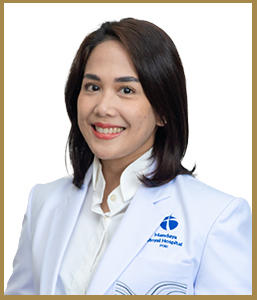
dr. Sara Ester Triatmoko, Sp.B.P.R.E., Subsp.M.O. (K) is a Plastic Reconstructive and Aesthetic Surgery specialist with expertise in microsurgery and oncoplastic surgery. She completed her medical degree and Plastic Reconstructive and Aesthetic Surgery specialist training at the University of Indonesia, and subsequently further developed her expertise in microsurgery and oncoplastic surgery to manage various reconstructive needs in cancer patients.
Her expertise includes breast reconstruction after mastectomy as well as lymphedema treatment using the LVA technique. In breast cancer patients, LVA can be considered as one of the treatment options for lymphedema, particularly when arm swelling occurs due to disrupted lymphatic flow following surgery or radiotherapy.
When providing treatment, dr. Sara first evaluates the patient’s condition to determine the appropriate technique. Consultation is also an important part of the process, allowing patients to understand their condition, available treatment options, and the goals of the procedure.
dr. Sara’s practice schedule at Mandaya Royal Puri Hospital
dr. Sara Ester Triatmoko, Sp.B.P.R.E., Subsp.M.O. (K) is available at Mandaya Royal Puri Hospital on:
- Tuesday: 17:00–19:30 WIB
- Thursday: 17:00–19:30 WIB
To make your visit to Mandaya Royal Hospital Puri easier, use the Chat via WhatsApp, Book an Appointment, or the Care Dokter app, which can be downloaded from Google Play and the App Store. These services can help you arrange your visit, check your queue number, and access other information.
*The information provided on this page is intended for educational purposes and offers a general overview. It does not represent the full range of medical services that may be provided by each doctor. To determine the most appropriate treatment for your condition, consultation with the relevant doctor is recommended.
If you have any questions, suggestions, or need further information, please contact our call center at 0811-1900-2000.

References:
- Johns Hopkins Medicine. Breast Cancer Lymphedema After Treatment. https://www.hopkinsmedicine.org/health/conditions-and-diseases/breast-cancer/breast-cancer-lymphedema-after-treatment. Accessed October 1, 2026.
- OLP Surgery. Treatments. https://olp.surgery/how-we-can-help-lymphoedema-treatment/treatments/. Accessed October 1, 2026.
- Guy’s and St Thomas’ NHS Foundation Trust. LVA – Axillary Lymph Node Clearance. https://www.guysandstthomas.nhs.uk/health-information/lva-axillary-lymph-node-clearance. Accessed October 1, 2026.
- Breastcancer.org. Lymphedema. https://www.breastcancer.org/treatment-side-effects/lymphedema. Accessed October 1, 2026.