



Adenomyosis is a condition in which tissue that normally lines the inside of the uterus grows into the muscular wall of the uterus. This can cause severe menstrual pain, heavy bleeding, and a decreased quality of life. Treatment options for adenomyosis vary, ranging from pain-relieving medications and adenomyomectomy to hysterectomy (uterus removal) in certain cases.
However, for patients who want to avoid surgery, a modern alternative is now available in the form of HIFU (High-Intensity Focused Ultrasound) technology at Mandaya Royal Puri Hospital. This method uses focused ultrasound waves to help treat adenomyosis in a non-invasive way.

Contents
Ways to Treat Adenomyosis
Some of the available treatment options for adenomyosis include:
1. Pain-relieving medications
Nonsteroidal anti-inflammatory drugs (NSAIDs) such as ibuprofen or naproxen can help reduce pain and menstrual cramps.
2. Hormonal medications
Hormone therapy can help regulate the menstrual cycle and reduce abnormal bleeding. Options include birth control pills, hormone injections, and intrauterine devices (IUDs).
3. Non-hormonal medications
Non-hormonal medications such as tranexamic acid can help reduce the amount of menstrual bleeding without affecting hormones.
4. Adenomyomectomy
This surgical procedure aims to remove adenomyosis tissue from the uterine muscle. It is similar to a myomectomy, which removes uterine fibroids.
5. Hysterectomy (uterus removal)
A hysterectomy is a surgical procedure to remove the uterus entirely. After undergoing a hysterectomy, patients will no longer have menstrual periods and cannot become pregnant.
The choice of treatment should be tailored to each patient’s condition, so consulting a doctor is essential to determine the most appropriate approach.
Non-Surgical Adenomyosis Treatment with HIFU at Mandaya Royal Puri Hospital
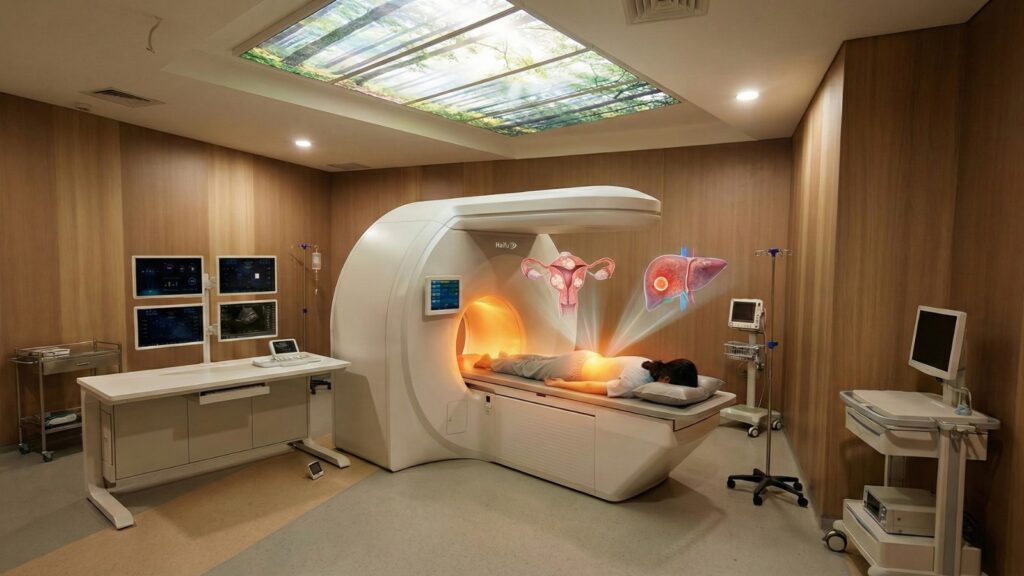
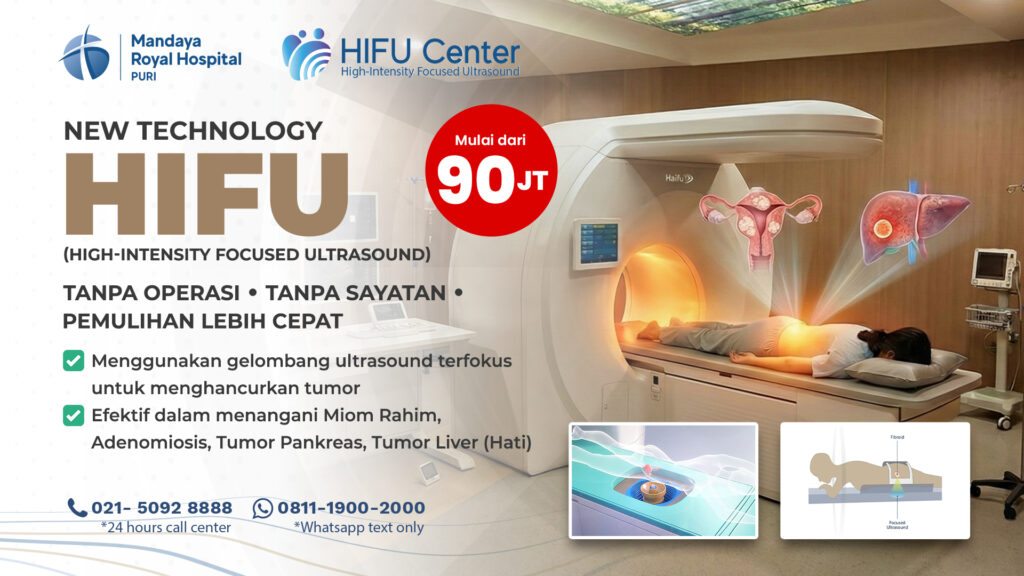
Mandaya Royal Puri Hospital provides HIFU technology as a non-surgical option to treat adenomyosis.
HIFU (High-Intensity Focused Ultrasound) is a medical procedure that uses high-intensity sound waves to destroy abnormal tissue, including in cases of adenomyosis. Unlike ultrasound (USG), which is used only for imaging internal organs, HIFU uses focused ultrasound waves specifically for therapeutic purposes. Because it does not require incisions, this procedure is considered minimally invasive and can be a more comfortable option for patients.
The way HIFU works is often compared to a magnifying glass focusing sunlight onto a single point. The ultrasound waves are precisely directed at the targeted area to generate heat, which destroys abnormal tissue without damaging surrounding healthy tissue. These waves can also penetrate the skin without causing wounds. In practice, doctors usually use imaging guidance such as MRI or ultrasound to ensure the procedure is accurate, safe, and targeted.
Some of the advantages of HIFU include:
- No incisions and no radiation involved
- Precisely targets abnormal tissue without damaging surrounding healthy tissue
- Typically performed as an outpatient procedure with relatively quick recovery, allowing patients to resume daily activities soon
- Lower risk of side effects compared to more invasive methods such as open surgery, chemotherapy, or radiation therapy
What Happens If Adenomyosis Is Left Untreated?
If left untreated, adenomyosis can lead to fertility problems and increase the risk of miscarriage. This occurs because the embryo may have difficulty implanting properly in the uterine lining. In addition, the condition can cause chronic pelvic and abdominal pain.
Symptoms of adenomyosis generally worsen over time. Heavy menstrual bleeding can also increase the risk of anemia, a condition in which the body lacks enough iron-rich red blood cells. Anemia may cause fatigue, weakness, or increased sensitivity to cold.
If you would like to consult about adenomyosis and its treatment with HIFU, do not hesitate to visit the obstetrics and gynecology (OB-GYN) team at Mandaya Royal Hospital Puri.
To make your visit easier, you can use the WhatsApp Chat feature, Book Appointment service, or the Care Dokter application available for download on Google Play and the App Store to manage appointments, check queue numbers, and access additional information.