


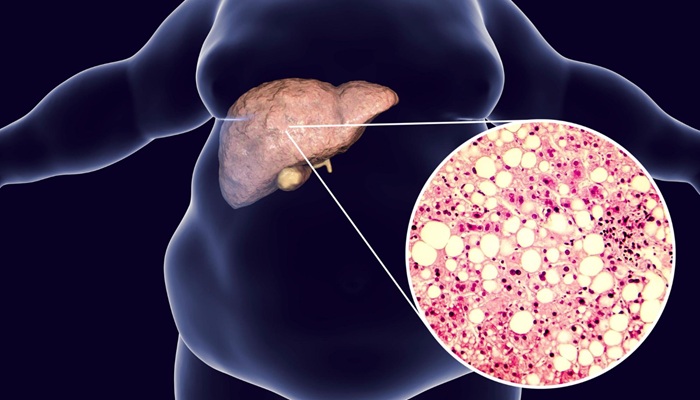
Liver cancer is one of the types of cancer that requires a more complex assessment compared to many other cancers. Beyond looking at tumor size and number, doctors also need to evaluate how well the patient’s liver function is still working. This is important because most liver cancer patients have chronic liver disease, which can affect treatment options and long-term prognosis.
To help determine liver cancer staging more accurately, doctors generally use two complementary assessment systems: the Barcelona Clinic Liver Cancer (BCLC) staging system and the Child-Pugh Score. Both systems play an important role in assessing disease severity, liver function, and determining the most suitable type of treatment for each patient. So, what are BCLC and Child-Pugh, and how are they used in managing liver cancer? Find the explanation below.

Contents
What Are BCLC and Child-Pugh?
Here is an explanation of BCLC and Child-Pugh for determining liver cancer staging:
1. BCLC
The BCLC system takes the following factors into account:
- The number and size of tumors in the liver
- The patient’s overall health and fitness condition, known as performance status (PS)
- The level of a tumor marker called alpha-fetoprotein (AFP)
- How well the patient’s liver is functioning, including through an assessment system known as the Child-Pugh Score
BCLC is generally used to determine the stage of hepatocellular carcinoma (HCC), or primary liver cancer.
There are 5 stages in the BCLC system:
- Stage 0 At this stage, there is a single tumor smaller than 2 cm. The patient is in good condition and liver function is still normal.
- Stage A Stage A is characterized by up to three tumors, each smaller than 3 cm. The patient still feels healthy and liver function is still working well.
- Stage B At this stage, there are multiple tumors in the liver. Even so, the patient is still in good condition and liver function remains good.
- Stage C Stage C indicates that the cancer has spread to blood vessels, lymph nodes, or other organs in the body. Patients usually begin to experience a decline in physical condition and activity, but liver function is still generally good.
- Stage D At this stage, tumor size can vary. The patient experiences severe liver damage or a significantly declined health condition, requiring assistance with daily activities.
2. Child-Pugh
The Child-Pugh Score is an assessment system used to determine how well liver function is still working. This system assesses 5 parameters:
- Bilirubin level in the blood
- Albumin level in the blood (albumin is a protein produced by the liver)
- The blood’s ability to clot, measured through prothrombin time
- The presence of fluid buildup in the abdominal cavity (ascites)
- The presence of brain function impairment due to liver disease (hepatic encephalopathy)
Each parameter is given a certain score. Based on the total score obtained, patients are grouped into one of three categories:
- Child-Pugh Class A Class A indicates that liver function is still good or close to normal.
- Child-Pugh Class B Class B indicates mild to moderate liver damage.
- Child-Pugh Class C Class C indicates severe liver damage and significantly decreased liver function.
Mandaya Royal Puri Hospital’s Liver Cancer Center, equipped with advanced diagnostic technology and treatment methods
Mandaya Royal Puri Hospital offers a range of the latest therapy modalities to treat liver cancer according to each patient’s stage and condition. Treatment options include surgery or liver resection, radiofrequency ablation (RFA), microwave ablation (MWA), chemotherapy, immunotherapy, Transarterial Chemoembolization (TACE), and High Intensity Focused Ultrasound (HIFU) technology, which uses ultrasound waves to help destroy tumors without surgery. In addition, the da Vinci Xi robotic surgery system and the latest Y-90 SIRT radionuclide therapy are also available. As a comprehensive liver care center, Mandaya Royal Puri Hospital also provides liver transplant services for patients with advanced liver disease or liver cancer who meet the indications.
On the diagnostic side, Mandaya Royal Puri Hospital is supported by complete examination facilities to help detect, evaluate, and monitor liver disease thoroughly. Available examinations include specialized laboratory tests such as PIVKA-II and M2BPGi, MRI Liver with Primovist & PDFF, and Digital PET/CT Scan. To help establish a more accurate diagnosis, biopsy procedures and gastrointestinal evaluation using advanced endoscopy technology such as EUS (Endoscopic Ultrasound) and ERCP (Endoscopic Retrograde Cholangiopancreatography) are also available. With this support, Mandaya Royal Puri Hospital is one of the integrated liver cancer centers offering comprehensive services, from diagnosis to liver transplantation.
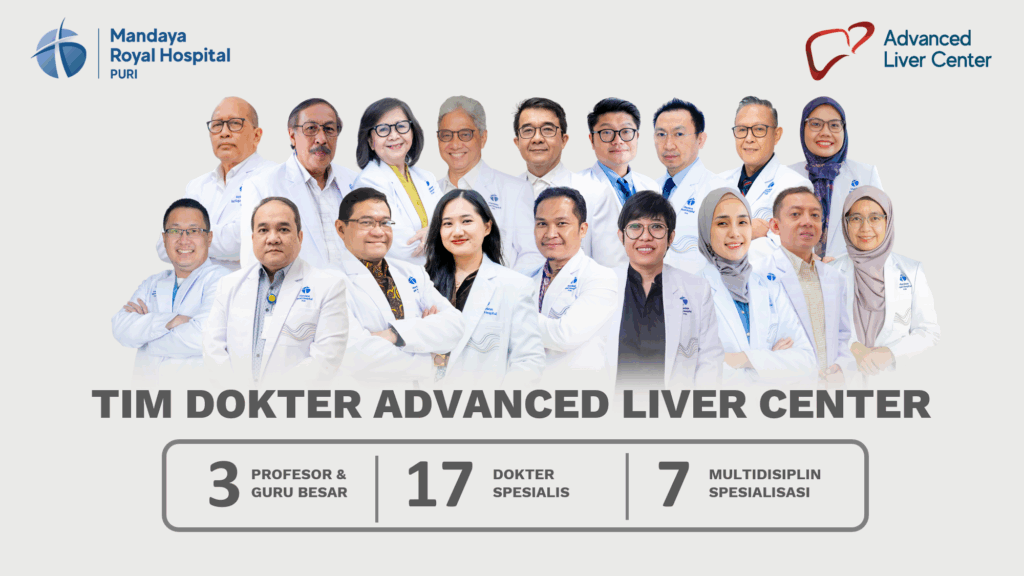
The Liver Cancer Center at Mandaya Royal Puri Hospital is supported by an experienced team of gastroenterohepatology subspecialists and digestive surgeons, including dr. Hendra Koncoro, Sp.PD-KGEH, dr. Hendra Nurjadin, Sp.PD-KGEH, Prof. Dr. dr. Toar Jean Maurice Lalisang, Sp.B. Subsp.BD (K), dr. Ocsyavina, Sp.B. Subsp.BD (K), dr. Emerson Budiarman Masli, Sp.B. Subsp.BD (K), and dr. Sugianto Santoso, Sp.Rad (K)RI.
For the treatment of liver disease in children, Mandaya Royal Puri Hospital also has a competent team of specialists, namely dr. Sastiono, Sp.B Subsp.Ped(K), dr. Kshetra Rinaldhy, Sp.B, Subsp.Ped(K), and dr. Annisa Rahmania Yulman, Sp.A, Subsp.GH (K), so that pediatric patients can receive treatment suited to their needs and clinical condition.
To make your visit easier, you can use the WhatsApp Chat feature, Book Appointment service, or the Care Dokter app available on Google Play and the App Store to check queue numbers and access complete information.
The information on this page is intended for educational purposes and general understanding only and does not represent the full range of medical services provided by each doctor. For appropriate treatment based on your condition, a direct consultation with a specialist is recommended.
For further questions or assistance, please contact our call center at 0811-1900-2000.