


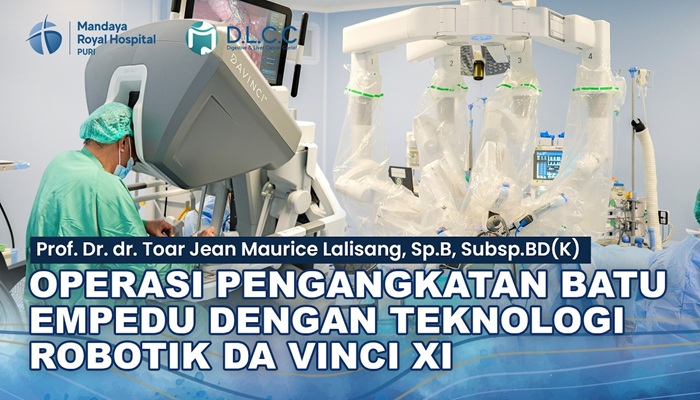
Gallbladder removal surgery, also known as a cholecystectomy, is a surgical procedure to remove the gallbladder, a small pear-shaped organ located beneath the liver on the upper right side of the abdomen. The gallbladder stores bile produced by the liver, which helps digest fats. This procedure is commonly performed to treat gallstones and their complications, including severe pain, gallbladder inflammation, and bile duct obstruction.

As medical technology continues to evolve, gallbladder removal can now be performed using the Da Vinci Xi Surgical System. This advanced robotic platform enables surgeons to operate with exceptional precision through smaller incisions, helping minimize blood loss, reduce the risk of complications, lessen postoperative pain, and promote a faster recovery.
One of the specialists offering this advanced procedure is Prof. Dr. dr. Toar Jean Maurice Lalisang, Sp.B. Subsp.BD (K), a Digestive Surgery Consultant at Mandaya Royal Hospital Puri. By utilizing the Da Vinci Xi Surgical System, Prof. Toar performs minimally invasive robotic gallbladder surgery with enhanced precision while improving patient comfort and recovery.

Contents
Prof. Toar Explains the Da Vinci Xi Robotic Gallbladder Surgery Procedure
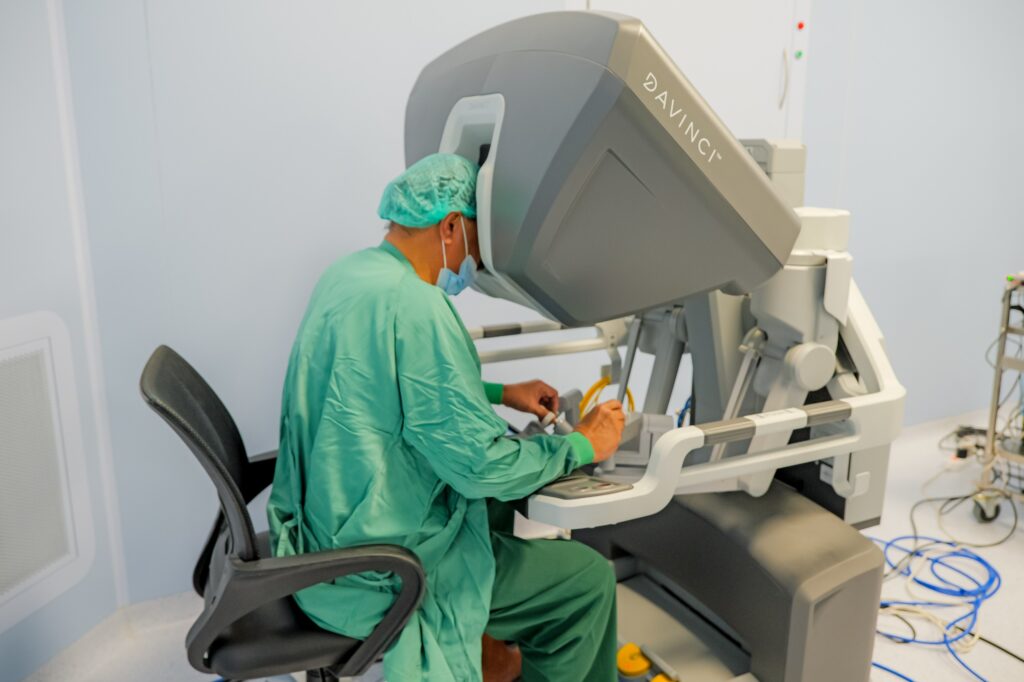
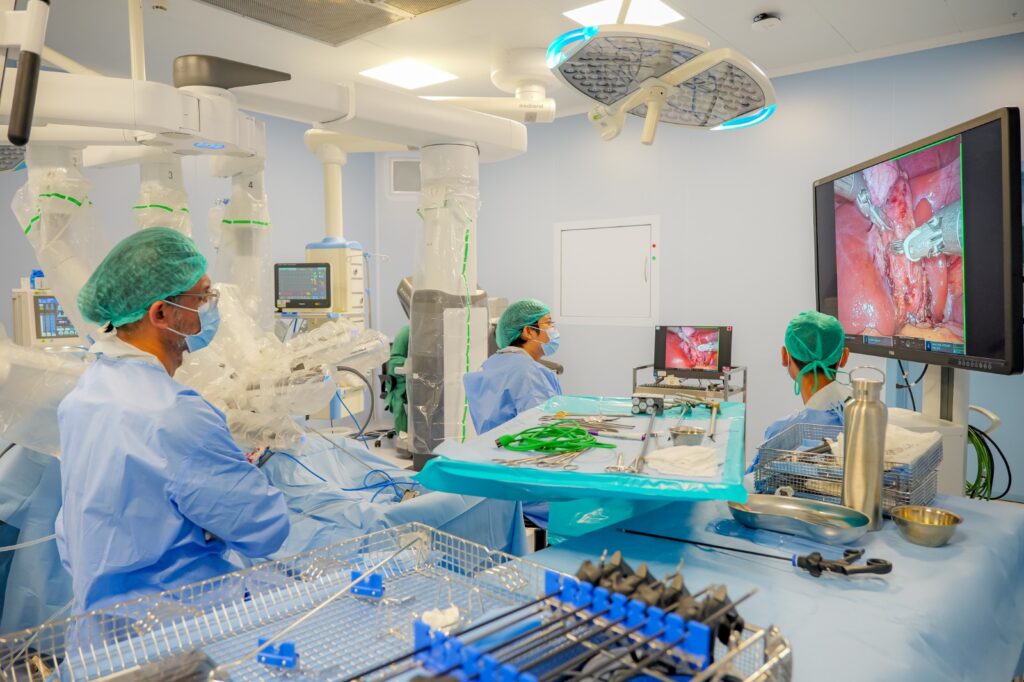
Prof. Toar and the surgical team at Mandaya Royal Hospital Puri recently completed a robotic cholecystectomy using the Da Vinci Xi Surgical System. The procedure was performed on a 20-year-old male patient diagnosed with gallstones who had been experiencing recurrent biliary colic.
According to Prof. Toar, the patient’s gallbladder had mild adhesions. Nevertheless, the surgery was completed successfully with the assistance of robotic technology.
“My team and I have just completed a robotic cholecystectomy on a relatively young, 20-year-old male patient with gallstones who had recurrent biliary colic. The gallbladder had mild adhesions, but they were successfully managed,” explained Prof. Toar.
Prof. Toar also highlighted that one of the greatest advantages of the Da Vinci Xi system is its outstanding visualization, which significantly improves surgical precision during tissue dissection.
“One of the advantages of the Da Vinci Xi is the excellent, highly detailed view it provides. This makes tissue dissection much easier,” he said.
Because the procedure went smoothly, the patient is expected to have a shorter hospital stay.
“The robotic surgery went very well and produced satisfying results. We hope the patient will be able to go home the day after spending two nights in the hospital,” Prof. Toar concluded.
Understanding the Da Vinci Xi Surgical Robot
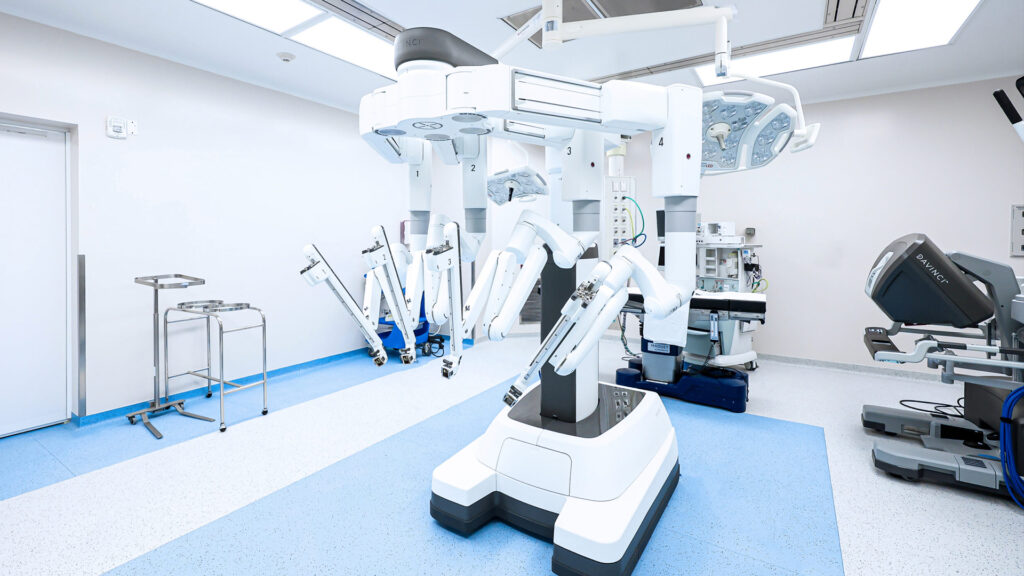
The Da Vinci Xi Surgical System is a next-generation robotic surgical platform equipped with four highly precise robotic arms controlled entirely by the surgeon through an advanced console featuring high-definition 3D visualization. This technology provides a clear, sharp, and highly detailed view of internal organs, allowing surgeons to identify anatomical structures with greater accuracy throughout the procedure.
The robotic arms are designed with exceptional flexibility, closely mimicking the movements of the human hand while reaching areas that are difficult to access. The combination of superior visualization and precise instrument control enables surgeons to perform complex procedures more accurately and consistently.
Advantages of Surgery with the Da Vinci Xi Surgical System
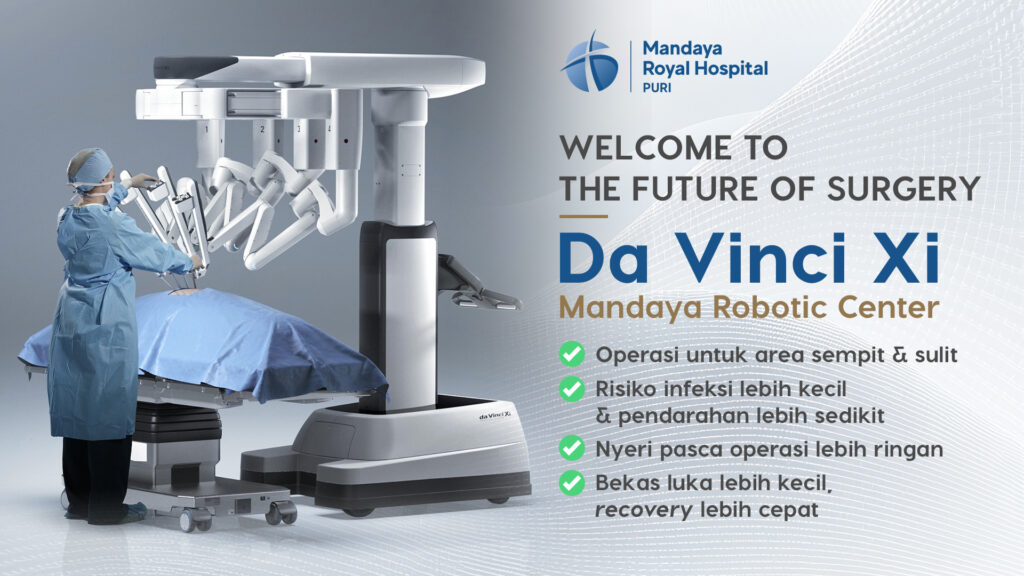
1. Better Access to Difficult-to-Reach Areas
The Da Vinci Xi enables surgeons to operate in narrow or hard-to-reach anatomical spaces, making complex procedures easier to perform with greater precision.
2. Enhanced 3D High-Definition Visualization
During surgery, the surgeon views the operative field through a magnified high-definition 3D display that provides excellent depth perception. Important structures such as blood vessels, bile ducts, and surrounding tissues become much easier to identify.
3. Greater Surgical Precision
The robotic instruments offer a wider range of motion than the human wrist while filtering out natural hand tremors. This results in smoother, steadier, and more precise surgical movements.
4. Patient Position Can Be Adjusted Without Interrupting Surgery
If repositioning the patient becomes necessary during the operation, the surgical table can be adjusted without stopping the procedure. This allows surgeons to maintain optimal access to the surgical site more efficiently.
5. Advanced Imaging to Visualize Blood Flow and Tissue
The Da Vinci Xi features advanced fluorescence imaging technology that allows surgeons to visualize blood flow, bile ducts, and tissue perfusion in real time using a safe fluorescent dye. This helps preserve healthy tissue and improves surgical accuracy.
6. Compatibility with Advanced Surgical Instruments
The system supports a wide range of modern surgical instruments, including vessel-sealing devices and specialized cutting tools, allowing procedures to be performed more safely, efficiently, and precisely.
When Is Gallbladder Surgery Necessary?
Gallbladder surgery is generally recommended when gallbladder disease begins to interfere with daily life or poses a significant risk of serious complications. The most common reason for surgery is gallstones, particularly when they become symptomatic.
Not everyone with gallstones requires surgery. However, gallbladder removal is typically recommended if the condition:
- Causes recurrent pain, especially in the upper right abdomen.
- Significantly affects quality of life because symptoms frequently recur.
- Increases the risk of serious complications, such as infection or bile duct obstruction.
- Is expected to worsen if left untreated.
In addition to gallstones, gallbladder surgery may also be indicated for conditions such as chronic cholecystitis and gallbladder cancer. The decision to proceed with surgery depends on the patient’s overall health, examination findings, and disease severity.
Recognizing the Symptoms of Gallstones
Gallstones are a common condition and often do not cause symptoms. However, when a gallstone blocks the bile duct—the small tube connecting the gallbladder to the liver and digestive tract—it can trigger severe abdominal pain.
Typical symptoms of gallstone-related pain include:
- Severe or sharp abdominal pain.
- Continuous pain rather than intermittent discomfort.
- Pain lasting more than 30 minutes and potentially several hours.
- Pain located in the center of the abdomen or beneath the right rib cage.
- Nausea and vomiting.
This pain, known as biliary colic, occurs when a gallstone temporarily blocks the bile duct. If the pain recurs or is accompanied by fever, jaundice, or worsening abdominal pain, immediate medical attention is recommended, as these symptoms may indicate serious complications.
Consult Prof. Toar for Gallstone Treatment at Mandaya Royal Hospital Puri

Prof. Dr. dr. Toar Jean Maurice Lalisang, Sp.B. Subsp.BD (K) is a Digestive Surgery Consultant with extensive experience in treating diseases affecting the digestive tract, liver, pancreas, and hepatobiliary system. His expertise includes complex gastrointestinal surgery, liver surgery, and liver transplantation.
Prof. Toar completed his medical degree, General Surgery residency, Digestive Surgery fellowship, and Doctorate at the University of Indonesia. He is also an active member of the Indonesian Society of Digestive Surgeons (IKABDI) and continues to contribute to the advancement of digestive surgery in Indonesia.
With extensive experience in digestive and hepatobiliary surgery, Prof. Toar treats a wide range of conditions, including liver cancer, liver tumors, liver cirrhosis, and other diseases requiring digestive surgery. He also performs various surgical procedures, including liver transplantation, gallbladder removal (including laparoscopic cholecystectomy), laparoscopic appendectomy, hernia repair, hemorrhoid surgery, stomach surgery, gastric bypass, colorectal cancer surgery, colon polyp removal, surgery for intestinal adhesions, Nissen fundoplication, and surgery for undescended testes.
Prof. Dr. dr. Toar Jean Maurice Lalisang, Sp.B. Subsp.BD (K) is available for consultation at Mandaya Royal Hospital Puri according to the following schedule:
- Tuesday: 3:30 PM – 5:30 PM
- Thursday: 3:30 PM – 5:30 PM
- Saturday: 11:00 AM – 1:00 PM
To make your visit easier, you can contact Mandaya Royal Hospital Puri via WhatsApp Chat, Book Appointment, or the Care Dokter mobile application, available on Google Play and the App Store, to book appointments, monitor queue numbers, and access additional information.
The information provided on this page is intended for educational purposes and general reference only. It does not represent the full scope of medical services offered by each physician. For appropriate diagnosis and treatment tailored to your condition, please consult the relevant specialist directly.
If you have any questions, suggestions, or require further information, please contact our call center at 0811-1900-2000.

References
- Mayo Clinic. Cholecystectomy (Gallbladder Removal). (https://www.mayoclinic.org/tests-procedures/cholecystectomy/about/pac-20384818). Last reviewed March 20, 2025. Accessed July 23, 2026.
- Intuitive. Da Vinci Xi Surgical System. (https://www.intuitive.com/en-us/products-and-services/da-vinci/xi). Accessed July 23, 2026.
- Cleveland Clinic. Gallbladder Removal (Cholecystectomy): Surgery & Recovery. (https://my.clevelandclinic.org/health/procedures/21614-gallbladder-removal). Last reviewed November 8, 2022. Accessed July 23, 2026.
- NHS. Gallstones. (https://www.nhs.uk/conditions/gallstones/). Last reviewed January 17, 2025. Accessed July 23, 2026.