



Radiation therapy for cervical cancer is a treatment method used to help kill cancer cells and shrink tumor size. Also known as radiotherapy, this treatment utilizes high-energy radiation — typically X-rays — directed precisely at the cancer site. Beyond controlling cancer growth, radiation therapy can also help relieve symptoms experienced by patients, helping to maintain their quality of life. In treating cervical cancer, radiotherapy may be given as a standalone therapy or combined with other treatment methods, such as surgery or chemotherapy, depending on the patient’s condition and disease stage.
At Mandaya Royal Puri Hospital, radiation therapy for cervical cancer is performed by experienced specialist radiation oncologists. A full range of radiation therapy types is available, including external beam radiation therapy (EBRT) and internal radiation therapy (brachytherapy), allowing treatment to be tailored to each patient’s individual condition.

Contents
Types and How Radiation Therapy for Cervical Cancer Works
The following explains the types and mechanisms of radiation therapy for cervical cancer:
1. External Beam Radiation Therapy (EBRT)
External beam radiation therapy works by directing high-energy X-rays at the cancerous area using a machine positioned outside the body. The procedure is similar to a standard X-ray examination, but the radiation dose used is far more powerful in order to destroy cancer cells.
Each therapy session typically lasts only a few minutes and is generally painless.
In treating cervical cancer, external radiotherapy is often combined with chemotherapy — a combination known as concurrent chemoradiotherapy. One of the most commonly used chemotherapy drugs is cisplatin, though doctors may choose other medications based on each patient’s condition. Radiotherapy is typically administered five times a week for approximately five weeks, with chemotherapy given concurrently.
After completing the chemoradiotherapy course, patients whose cancer has not spread to distant organs may continue treatment with brachytherapy to further enhance the effectiveness of therapy.
External beam radiotherapy can also be used as the primary treatment for patients who are unable to undergo chemoradiotherapy, are not candidates for surgery, or choose not to have surgical intervention. It can also be used to treat other areas of the body where the cancer has spread.
2. Brachytherapy
Brachytherapy is a radiation therapy method in which a radiation source is placed inside or very close to the location of the cancer. Because radiation is delivered directly to the target area, its range is relatively short, minimizing exposure to surrounding healthy tissue.
The most commonly used type of brachytherapy for cervical cancer is intracavitary brachytherapy. In this procedure, the radiation source is placed inside a specialized device inserted into the vagina, and in some cases also into the cervical area.
Brachytherapy is generally given as a complement to external beam radiotherapy in the primary treatment of cervical cancer. However, in certain early-stage cases, it may be used as a standalone treatment.
There are two commonly used types of brachytherapy:
- Low-Dose Rate (LDR) Brachytherapy In this method, therapy takes place over several days. During the process, the patient typically requires hospitalization and must remain in bed while the device containing the radioactive material is positioned in the treatment area.
- High-Dose Rate (HDR) Brachytherapy HDR is an outpatient procedure performed over several sessions with intervals in between, usually about one week or more apart. During each session, the radioactive material is inserted for a few minutes and then removed. The key advantage of this method is that patients do not need to be hospitalized or remain immobile for extended periods.
For patients who have undergone a hysterectomy, the radiation source is typically placed inside a specialized tube inserted into the vagina. For patients who still have a uterus, the radiation source may be delivered using a small metal tube inserted into the uterus (tandem), along with small rounded devices (ovoids) placed near the cervix. This technique is known as tandem and ovoid.
Another option is the tandem and ring technique, which uses a tandem tube combined with a ring-shaped device placed near the uterus to help direct radiation toward the targeted area.
Radiation Therapy for Cervical Cancer at Mandaya Royal Puri Hospital — Powered by Advanced Technology
Mandaya Royal Puri Hospital provides radiation therapy services for cervical cancer supported by modern radiotherapy technology, helping to deliver more effective and precise treatment. Both external beam radiotherapy and brachytherapy are performed using internationally standardized equipment designed to accurately target cancer cells while minimizing exposure to surrounding healthy tissue.
1. External Radiotherapy with Elekta Versa HD
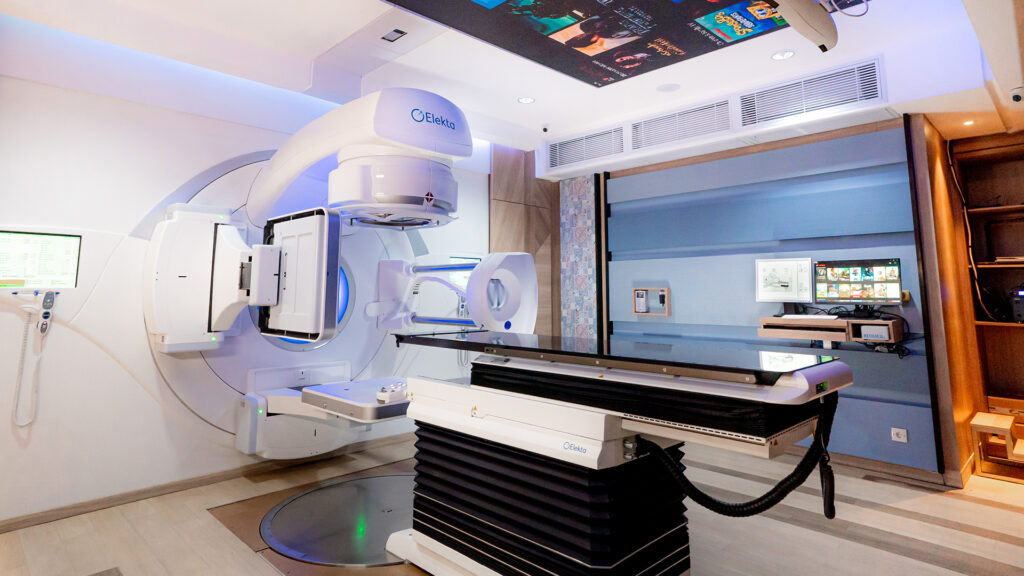
For external beam radiotherapy, Mandaya Royal Puri Hospital uses the Elekta Versa HD, a machine capable of delivering radiation with a precision of up to 1 millimeter (mm), allowing radiation to be focused more accurately on the cancerous area.
This high level of precision helps ensure that the optimal radiation dose is delivered to the tumor while reducing unnecessary exposure to surrounding organs and healthy tissue. The technology also allows doctors to tailor therapy according to the location, size, and shape of each patient’s tumor.
2. Brachytherapy with the Flexitron Brachytherapy System
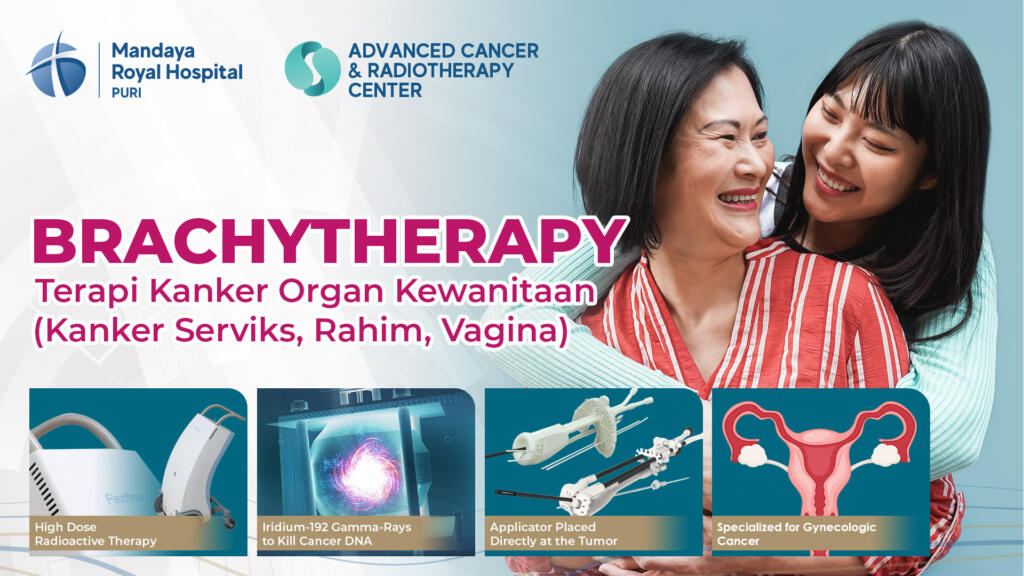
For brachytherapy procedures, Mandaya Royal Puri Hospital uses the Flexitron Brachytherapy System, an advanced technology designed to deliver a radiation source directly to the cancerous area or very close to the tumor.
This technology is used at leading cancer centers around the world, including MD Anderson Cancer Center in the United States, the National Cancer Center in Singapore, the University of Erlangen in Germany, and the Medical University AKH in Austria. With its modern, integrated system, Flexitron helps doctors plan and deliver therapy with greater accuracy tailored to each patient’s individual needs.
The combination of external radiotherapy and brachytherapy technologies available at Mandaya Royal Puri Hospital enables cervical cancer patients to receive comprehensive treatment appropriate to their disease stage and the recommendations of their medical team.
Radiation Therapy Specialist Doctors at Mandaya Royal Puri Hospital
The following are the radiation therapy specialist doctors at Mandaya Royal Puri Hospital:
1. Prof. Dr. dr. Soehartati A. Gondhowiardjo, Sp.Onk.Rad (K)

Prof. Dr. dr. Soehartati A. Gondhowiardjo, Sp.Onk.Rad (K) is a consultant specialist in radiation oncology, widely recognized as one of the key figures in the development of radiotherapy in Indonesia. She completed her medical degree at the University of Indonesia in 1980, then pursued specialist training in radiology at the same institution, graduating in 1987.
To deepen her expertise in radiation oncology, Prof. Soehartati underwent advanced training at the University of Indonesia and the Strahlentherapie Abteilung Wilhelm-Westfälischen Universität Münster in Germany. She also earned her Doctorate in Medical Science through a collaboration between the University of Indonesia and AKH Vienna, Austria, in 1998.
Beyond patient care, Prof. Soehartati actively contributes to education and research, regularly participating in international scientific forums, including the Workshop Indonesia-IAEA Radiation Medicine and the ESTRO Evidence-Based Radiation Oncology Course in 2023. Her extensive experience and dedication make her one of the most trusted radiation oncology specialists in the field.
Schedule at Mandaya Royal Puri Hospital:
- Wednesday: by appointment.
2. dr. Novina Fortunata, Sp.Onk.Rad

dr. Novina Fortunata, Sp.Onk.Rad is a radiation oncology specialist providing radiotherapy services at Mandaya Royal Puri Hospital. After completing her general medical degree at Airlangga University, she went on to pursue specialist training in Radiation Oncology at the University of Indonesia.
In her clinical practice, dr. Novina continuously updates her knowledge and skills through various seminars and scientific training programs at both national and international levels. Events she has participated in include The 3rd Jakarta Annual Collaborative Cancer Meeting (JACCM) 2022, the FARO Webinar Series, and Continuing Medical Education (CME) programs organized by the Indonesian Radiation Oncology Society (IROS).
Her commitment to ongoing professional development helps dr. Novina deliver radiation therapy services that keep pace with the latest technological advances while being tailored to each patient’s individual needs.
Schedule at Mandaya Royal Puri Hospital:
- Monday – Friday: 08:00 – 16:00 WIB
- Saturday: 08:00 – 13:00 WIB
3. dr. Riyan Apriantoni, Sp.Onk.Rad

dr. Riyan Apriantoni, Sp.Onk.Rad is a radiation oncology specialist with experience in a range of modern, high-precision radiotherapy techniques. He completed his general medical degree at Sriwijaya University before pursuing specialist training in Radiation Oncology at the University of Indonesia.
In his clinical practice, dr. Riyan is proficient in a variety of cutting-edge radiotherapy technologies, including Stereotactic Radiosurgery (SRS) and Stereotactic Body Radiation Therapy (SBRT). Both methods allow high-dose radiation to be delivered in a highly targeted manner, improving treatment precision while helping to minimize side effects on healthy tissue.
He also has experience in brachytherapy procedures and various other radiotherapy techniques adapted to the type and stage of each patient’s cancer. With an approach focused on safety and treatment efficacy, dr. Riyan is committed to delivering cancer care that aligns with modern practice standards.
Schedule at Mandaya Royal Puri Hospital:
- Monday – Friday: 17:00 – 20:00 WIB
Cervical Cancer Detection and Screening Facilities at Mandaya Royal Puri Hospital
In addition to cervical cancer treatment services, Mandaya Royal Puri Hospital is supported by a range of early detection and screening facilities. These examinations are important because cervical cancer often presents no symptoms in its early stages, meaning early detection can significantly improve the chances of successful treatment.
1. Pap Smear
A Pap smear is a screening method used to detect cellular changes in the cervix that have the potential to develop into cervical cancer. The procedure involves collecting a cell sample from the cervix using a specialized instrument; the sample is then analyzed in a laboratory to determine the presence or absence of abnormal cells, precancerous lesions, or signs of certain infections.
Through a Pap smear, cellular changes can be identified at an early stage before they develop into cancer. If an abnormality is found, the doctor can promptly carry out the necessary evaluation and management. In general, this examination is recommended on a regular basis based on age, risk factors, and the doctor’s recommendation.
2. HPV Test
An HPV test is an examination designed to detect infection with the Human Papillomavirus (HPV), the virus known to be the primary cause of most cervical cancer cases. The procedure involves collecting a cell sample from the cervix — similar to a Pap smear — which is then tested to identify the presence of high-risk HPV types associated with the development of cervical cancer.
An HPV test can be performed simultaneously with a Pap smear to enhance early detection capability. If a high-risk HPV infection is found, the doctor may recommend further examination, such as colposcopy, to evaluate the cervix in greater detail. With earlier detection, preventive measures or treatment can be initiated before the condition progresses to cancer.
Prevent Cervical Cancer with the HPV Vaccine at Mandaya Royal Puri Hospital
Alongside screening services, Mandaya Royal Puri Hospital also provides the HPV vaccine as a preventive measure against cervical cancer. Vaccination is one of the most effective ways to reduce the risk of HPV infection, which can trigger abnormal cellular changes in the cervix.
The majority of cervical cancer cases are known to be associated with high-risk HPV types, particularly types 16 and 18. For this reason, receiving the HPV vaccine before exposure to the virus can provide optimal protection against the risk of cervical cancer later in life.
The HPV vaccine works by stimulating the immune system to produce antibodies against the HPV virus. With these antibodies in place, the body is better prepared to recognize and fight the virus if exposure occurs in the future. Through this mechanism, the risk of HPV infection developing into precancerous lesions or cervical cancer can be significantly reduced.
To make your visit to Mandaya Royal Puri Hospital more convenient, use the WhatsApp Chat feature, Book Appointment, or download the Care Dokter app on Google Play and the App Store to streamline your visit, view your queue number, and access complete information.
Information available on this page is compiled for educational and general informational purposes and does not reflect the full range of medical services that each doctor may provide. To ensure treatment appropriate to your health condition, a direct consultation with the relevant doctor is recommended.
For questions, suggestions, or further information, please contact our call center at 0811-1900-2000.