


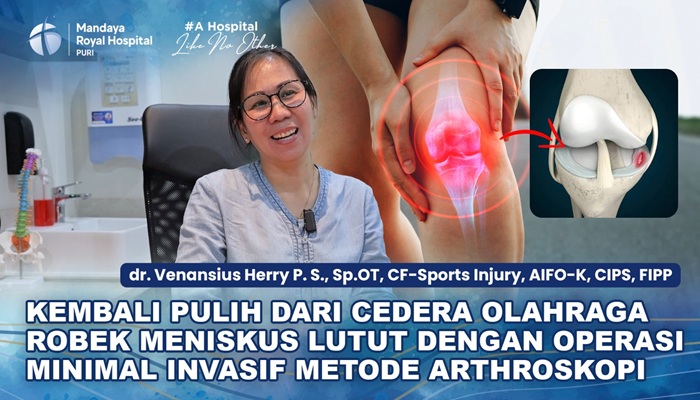
A meniscus tear is one of the most common knee injuries. It can occur when the knee is forcefully twisted or rotated, particularly when the body places its full weight on the knee. Each knee has two C-shaped pieces of cartilage called the menisci, which are located between the thighbone and shinbone. They help absorb pressure and provide stability to the knee.
When the meniscus is torn, a person may experience symptoms such as pain, swelling, stiffness, and a sensation that the knee is locking. Straightening the knee may also become more difficult. These symptoms can become more noticeable during activities that place stress on the knee, such as exercising, climbing stairs, or walking.

This was also experienced by a 44-year-old female patient who regularly participated in various activities, including mountain climbing, trekking, badminton, swimming, and jogging. At first, she experienced pain in her right knee and did not seek treatment. However, the pain gradually became more severe, particularly while playing badminton, eventually occurring even when walking. After consulting dr. Venansius Herry Perdana Suryanta, Sp.OT, CF-Sports Injury, AIFO-K, CIPS, FIPP, the patient underwent arthroscopic surgery to repair the torn meniscus.
“It has now been two months since the surgery, and I feel much better. The pain is gone. I can walk briskly and swim again. I am still limiting some sports activities. For now, I am focusing on recovery and continuing physical therapy,” the patient said.

Contents
Patient’s Story: Living with Pain from a Torn Meniscus
The patient explained that the pain in her knee initially felt mild but gradually began to interfere with her daily activities.
The symptoms became more severe when she played badminton. Eventually, the pain was present every day, even while walking. She temporarily used a knee support and stopped exercising because the pain had become quite severe.
Because the symptoms did not improve, the patient decided to consult dr. Venan. During the initial consultation, dr. Venan suspected a meniscus injury and recommended an MRI to confirm the condition of the knee.
The MRI results confirmed a meniscus tear, consistent with the initial suspicion. The patient initially underwent physical therapy for approximately two months to monitor her progress. Although her muscle strength improved with physical therapy, the knee pain persisted, leading her to ultimately decide to undergo surgery.
Read also: Recommended Doctors for Meniscus Injuries in Jakarta and Tangerang
Torn Meniscus Repaired with Minimally Invasive Arthroscopy
According to dr. Venan, the patient presented with pain in her right knee, particularly when bending it. She also occasionally experienced a sensation as though something was locking inside the knee. These symptoms occurred during exercise as well as when going up and down stairs.
An MRI examination showed a tear in the outer portion of the meniscus. Under normal conditions, the meniscus appears C-shaped when viewed from above and is relatively thin. In this patient, however, the meniscus appeared thicker due to the tear.
The tear also allowed joint fluid to pass through the damaged area and form a cyst. To treat the condition, dr. Venan performed minimally invasive arthroscopic surgery.
The arthroscopic procedure was performed through approximately two small incisions in the knee, each measuring around 1 cm. A small camera was inserted through one of the incisions to allow the inside of the knee to be viewed directly. Using specialized instruments, the affected portion of the meniscus was then cleaned and repaired with sutures.
Read also: 10 Types of Knee Injuries and Their Treatment
Two Months After Surgery, Knee Pain Had Improved
Following surgery, the patient underwent a gradual recovery process supported by physical therapy. Two months after the procedure, she reported a significant improvement in her condition. The pain that had previously interfered with her daily activities was no longer present.
The patient is currently still limiting certain sports activities while continuing physical therapy to support her recovery. With appropriate treatment and gradual rehabilitation, patients can work toward safely returning to their usual activities and sports.
Be Aware of Torn Meniscus Symptoms That May Interfere with Daily Activities
The most common symptoms of a torn meniscus include:
- Knee pain and stiffness
- Swelling of the knee joint
- Limited range of motion in the knee joint
- A knee that feels locked or catches, makes a clicking sound when moved, or feels as though it may give way
When Should You See a Doctor?
Not all knee pain requires immediate medical attention. However, if the pain persists, becomes more severe, or begins to interfere with daily activities, you should consult a doctor to determine the underlying cause and receive appropriate treatment.
Signs that indicate you should have your knee pain evaluated by a doctor include:
- Knee pain that interferes with daily activities or affects your sleep
- Pain that is getting worse or keeps coming back
- Symptoms that do not improve after home treatment
- Knee stiffness that lasts for more than 30 minutes after waking up
Profile and Practice Schedule of dr. Venan at Mandaya Royal Puri Hospital
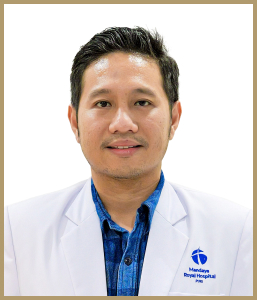
If you are looking for treatment for a sports injury in Jakarta or Tangerang, dr. Venansius Herry Perdana Suryanta, Sp.OT, CF-Sports Injury, AIFO-K, CIPS, FIPP at Mandaya Royal Puri Hospital may be an option. As an Orthopaedic and Traumatology Specialist with specific expertise in sports injuries, he treats various musculoskeletal conditions, including injuries involving the ligaments, tendons, muscles, and joints, as well as fractures resulting from sports and other physical activities.
dr. Venansius’ expertise is supported by various training programs and certifications related to the treatment of sports injuries and musculoskeletal pain. His CF-Sports Injury qualification supports his expertise in sports injury management, while AIFO-K (Ahli Ilmu Faal Olahraga Konsultan) reflects his competency in injury prevention, rehabilitation, and helping patients return to physical activities and sports. His CIPS (Certified Interventional Pain Sonologist) and FIPP (Fellow of Interventional Pain Practice) certifications also support his expertise in managing musculoskeletal pain through minimally invasive, ultrasound-guided intervention techniques.
To further develop his expertise in orthopaedics and sports injuries, dr. Venansius completed the following education and training:
- General Medicine: Faculty of Medicine, Universitas Padjadjaran
- Orthopaedic and Traumatology Specialist: Universitas Padjadjaran
- Overseas Orthopaedic Training Program: Semmelweis University, Budapest, Hungary
dr. Venansius Herry Perdana Suryanta, Sp.OT, CF-Sports Injury, AIFO-K, CIPS, FIPP is available for consultation at Mandaya Royal Puri Hospital according to the following schedule:
- Tuesday: 10:00 AM–12:00 PM WIB
- Wednesday: 4:00 PM–8:00 PM WIB
- Friday: 4:00 PM–8:00 PM WIB
- Saturday: 4:00 PM–8:00 PM WIB
To make your visit to Mandaya Royal Hospital Puri more convenient, you can use the Chat via WhatsApp, Book an Appointment, or the Care Dokter app, which can be downloaded from Google Play and the App Store. The app allows you to make appointments, check queue numbers, and access other information.
*The information provided on this page is intended for educational purposes and general information only and does not represent the full range of medical services that may be provided by each doctor. To determine the most appropriate treatment for your condition, consultation with the relevant doctor is recommended.
If you have any questions, suggestions, or require further information, please contact our call center at 0811-1900-2000.

References:
- Mayo Clinic. Torn Meniscus – Symptoms and Causes. (https://www.mayoclinic.org/diseases-conditions/torn-meniscus/symptoms-causes/syc-20354818). Accessed September 3, 2026.
- UCSF Health. Meniscus Tear. (https://www.ucsfhealth.org/care/conditions/meniscus-tear). Accessed September 3, 2026.
- NHS. Meniscus Tear. (https://www.nhs.uk/conditions/meniscus-tear/). Accessed September 3, 2026.