


Pancreatic cancer is a type of cancer that begins when abnormal cells grow in the pancreas, an organ located behind the lower part of the stomach that plays a role in digestion and blood sugar regulation. This cancer is often difficult to detect in its early stages because symptoms may not appear until the disease has progressed or spread to other organs. Treatment depends on the cancer stage and the patient’s condition. One treatment option is surgery to remove the cancerous tissue when feasible.

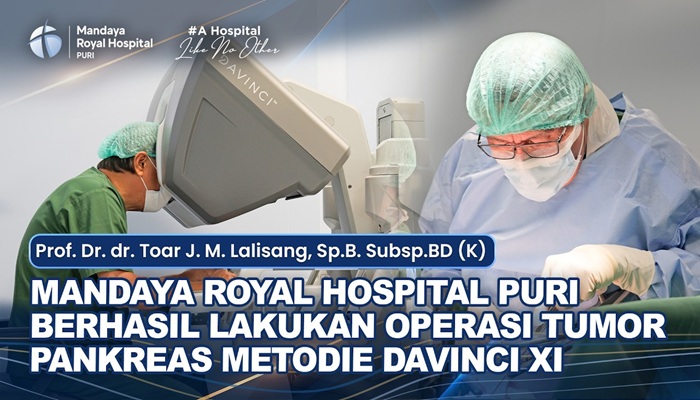
Recently, Prof. Dr. dr. Toar J. M. Lalisang, Sp.B. Subsp.BD (K), a digestive surgery subspecialist at Mandaya Royal Puri Hospital, performed surgery for pancreatic cancer located in the uncinate process using the Da Vinci Xi surgical robot. This robotic technology assists surgeons by providing three-dimensional visualization and precisely controlled instruments during the procedure.

Contents
Condition and Surgical Procedure: An Explanation by Prof. Toar
Prof. Dr. dr. Toar J. M. Lalisang, Sp.B. Subsp.BD (K), explained that the pancreatic cancer surgery was performed on a 65-year-old female patient with a malignant tumor in the uncinate process of the pancreas. The medical team used a robotic-assisted surgical approach to dissect or separate tissue around the pancreas while freeing important surrounding blood vessels.
During the initial stage, a hybrid robotic technique was used to assist with dissection and identification of anatomical structures, including the portal vein, gastroduodenal artery, superior mesenteric artery, and common bile duct. Following this stage, the surgical technique was converted to complete the pancreaticoduodenectomy as required by the procedure.
After removing the targeted tissue, the surgical team reconstructed the digestive tract. This stage involved connecting the pancreas to the small intestine (pancreaticojejunostomy), connecting the bile duct to the small intestine (hepaticojejunostomy), and connecting the stomach to the small intestine (gastrojejunostomy). A drain was also placed in the upper right area to help monitor the patient’s condition after surgery.
Prof. Toar stated that the patient remained stable during the operation. However, tumor removal took longer because the tumor was firmly attached to the inferior vena cava and superior mesenteric artery, two major blood vessels that play important roles in blood circulation. Together with his team, including dr. Ocsyavina, Sp.B. Subsp.BD (K), Prof. Toar completed the procedure and expressed hope that the patient would recover well and eventually be discharged from the hospital.
Read also: 5 Pancreatic Cancer Treatment Options, From Surgery to HIFU at Mandaya Royal Puri Hospital
Understanding the Da Vinci Xi Surgical Robot and Its Benefits in Surgery
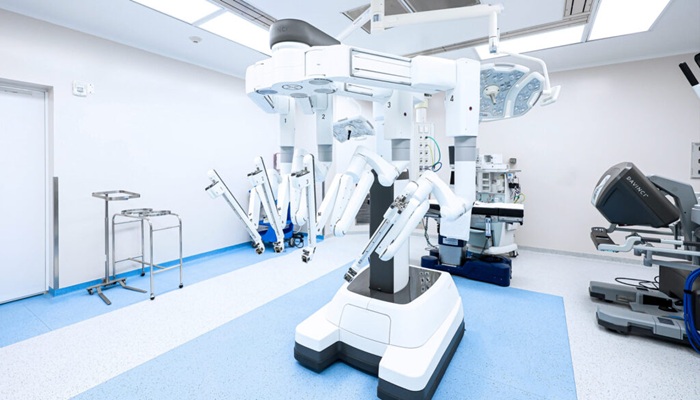
The Da Vinci Xi robotic system is a form of robot-assisted surgery. This technology helps enhance a surgeon’s dexterity and range of motion while providing greater precision when operating in areas of the body that are difficult to reach.
The system has four robotic arms that hold surgical instruments and an endoscopic camera, allowing the surgeon to view the inside of the patient’s body. These instruments are inserted through small incisions, eliminating the need for large incisions associated with conventional open surgery. In many cases, this approach may reduce the risk of postoperative wound complications and support faster recovery.
One important point to understand is that the robotic instruments only move under the surgeon’s control. The robot does not perform surgery independently.
What Are the Benefits of Da Vinci Xi Robotic Surgery?
During surgery, potential benefits of Da Vinci robotic surgery include:
- Reduced blood loss.
- Minimized tissue trauma.
- Smaller surgical incisions.
After surgery, potential benefits may include:
- Reduced risk of complications and infection.
- Less pain.
- Smaller scars.
- A faster return to normal activities.
- A shorter hospital stay.
- Faster recovery.
Be Aware of the Often-Overlooked Symptoms of Pancreatic Cancer
Pancreatic cancer often causes no symptoms in its early stages. When symptoms do appear, they can be difficult to recognize because they may resemble those of other health conditions. Therefore, it is important to recognize changes in the body that may indicate pancreatic cancer.
Some symptoms of pancreatic cancer to watch for include:
- Yellowing of the skin and whites of the eyes (jaundice): This may be accompanied by itchy skin, darker urine, and paler-than-usual stools.
- Loss of appetite and unexplained weight loss: Weight may decrease without changes in eating habits or deliberate efforts to lose weight.
- Fatigue: The body may feel weak or lack energy even without strenuous activity.
- Fever or chills: Patients may experience an elevated body temperature, feel unusually hot or cold, or develop chills.
- Nausea and vomiting: These symptoms may occur due to disruptions in the digestive system.
- Changes in bowel habits: These may include diarrhea, constipation, or other changes in stool appearance and bowel movements.
- Upper abdominal and back pain: The pain may worsen after eating or when lying down and may improve when leaning forward.
- Digestive problems: These may include bloating or a feeling of fullness in the abdomen.
These symptoms do not always indicate pancreatic cancer, as they may be caused by other conditions. However, if symptoms persist, become more severe, or are accompanied by unexplained weight loss, consult a doctor promptly for further evaluation.
When Should You See a Doctor?
Consult a doctor promptly if you experience symptoms that may indicate pancreatic cancer, such as yellowing of the skin and whites of the eyes, upper abdominal pain that radiates to the back, unexplained weight loss, or persistent digestive problems. Do not delay seeking medical attention, especially if the symptoms worsen or interfere with daily activities. A doctor can perform further examinations to identify the cause of the symptoms and determine the appropriate treatment.
Prof. Toar’s Profile and Practice Schedule at Mandaya Royal Puri Hospital
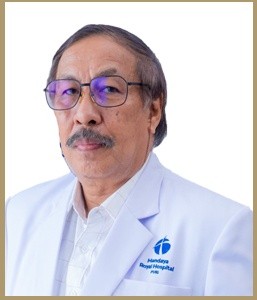
Prof. Dr. dr. Toar J. M. Lalisang, Sp.B. Subsp.BD (K), is a general surgeon with a subspecialty in digestive surgery who has experience treating various conditions affecting the digestive system. In addition to his expertise in digestive surgery, he also specializes in liver transplantation.
Prof. Toar completed his medical degree, general surgery residency, digestive surgery subspecialty training, and doctoral studies at the University of Indonesia. He is also a member of the Indonesian Digestive Surgeons Association (IKABDI) and provides consultations for digestive surgical procedures.
Prof. Dr. dr. Toar J. M. Lalisang, Sp.B. Subsp.BD (K) can be consulted at Mandaya Royal Puri Hospital on:
- Tuesday: 15.30 – 17.30 WIB
- Thursday: 15.30 – 17.30 WIB
- Saturday: 11.00 – 13.00 WIB
Facilities for Out-of-Town and International Patients at Mandaya Royal Puri Hospital


Mandaya Royal Puri Hospital offers a range of support facilities to provide additional comfort for patients traveling from other cities or from abroad:
- VIP Transportation: Pickup services from Soekarno-Hatta International Airport, train stations, or seaports to the hospital in comfortable vehicles, accompanied by a Patient Experience Officer (PEO).
- Medical Ambulance Pickup: Specialized transportation for patients with specific medical needs from arrival points, including airports, train stations, and seaports. The service includes medical equipment and assistance from professional healthcare personnel.
- Accommodation (Sleep Hub and Apartments): Comfortable accommodation for families accompanying patients. The Sleep Hub is located on the eighth floor of the Mandaya Royal Puri building, with nearby apartments also available.
- International Patient Relations: Dedicated assistance for international patients with medical coordination, interpretation, and administrative arrangements. For information and assistance from International Patient Relations, contact 021 5092 8888 or email [email protected].
To make your visit to Mandaya Royal Hospital Puri easier, use the WhatsApp Chat service, Book Appointment, or the Care Dokter app, available for download on Google Play and the App Store. These options help you arrange visits, check queue numbers, and access other relevant information.
The information on this page is intended for educational purposes and provides a general overview. It does not represent the full range of medical services that each doctor may provide. To determine the most appropriate care for your health condition, you are advised to consult the relevant doctor directly.
If you have questions, suggestions, or need further information, please contact our call center at 0811-1900-2000.

References:
- Mayo Clinic. Pancreatic Cancer: Symptoms and Causes. https://www.mayoclinic.org/diseases-conditions/pancreatic-cancer/symptoms-causes/syc-20355421. Accessed on October 12, 2026.
- Cleveland Clinic. Da Vinci Surgery. https://my.clevelandclinic.org/health/treatments/16908-da-vinci-surgery. Accessed on October 12, 2026.
- National Health Service (NHS). Pancreatic Cancer: Symptoms. https://www.nhs.uk/conditions/pancreatic-cancer/symptoms/. Accessed on October 12, 2026.