


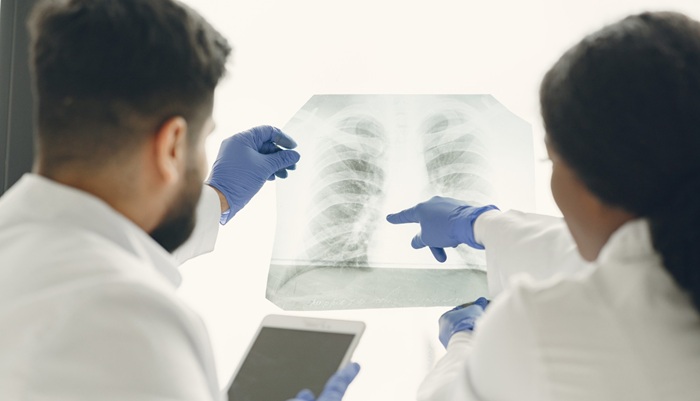
Lung cancer is a type of cancer that begins when cells in the lungs grow uncontrollably and form a tumor. The lungs are a pair of spongy organs in the chest cavity that play an essential role in breathing. Lung cancer is the leading cause of cancer-related deaths worldwide, making an understanding of the disease important in helping determine appropriate treatment.
One important aspect of lung cancer management is determining its stage. Lung cancer is classified into stages 1 through 4, which describe the size of the tumor, how far the cancer has spread to surrounding tissues or lymph nodes, and whether it has spread to other organs. Staging helps doctors plan treatment based on each patient’s condition.

Contents
Lung Cancer Stages 1, 2, 3, and 4
Cancer staging describes the size of the cancer and how far it has spread to other parts of the body. Knowing the cancer stage helps doctors determine the most appropriate treatment for each patient.
Examinations and imaging tests performed to diagnose cancer can provide information about its stage. However, in certain cases, the stage may only be confirmed after the patient undergoes surgery.
Doctors may use the TNM system or a numerical staging system to determine the stage of lung cancer. For small cell lung cancer (SCLC), a simpler classification is also used: limited stage and extensive stage. This classification is based on how far the cancer has spread.
1. Stage 0 (in situ)
At stage 0, abnormal cells are found in the lining of the airways. These cells have not spread into the deeper lung tissue.
2. Stage 1
At stage 1, the tumor is less than 3 cm in size and has not spread beyond the lung where the cancer first developed. At this stage, the cancer remains confined to that lung.
3. Stage 2
At stage 2, the tumor may measure approximately 3–7 cm and/or may have spread to nearby lymph nodes, structures, or tissues. However, the cancer has not spread to a different lobe of the lung, the opposite lung, or distant organs.
4. Stage 3
At stage 3, the tumor may be larger than 5 cm and/or may have spread to nearby lymph nodes, structures, or organs. Although the cancer has spread more extensively, it has not reached the opposite lung or distant organs.
5. Stage 4
At stage 4, the cancer has spread to other parts of the body. It may spread to the opposite lung, the lining surrounding the lungs, fluid around the lungs or heart, the sac surrounding the heart, or more distant organs such as the liver, brain, or bones.
Read also: Cryotherapy for Lung Cancer: Cancer Treatment Using Freezing Technology at Mandaya Puri Hospital
Staging of Small Cell Lung Cancer (SCLC)
In addition to the stage 0–4 classification, small cell lung cancer (SCLC) can also be grouped into limited stage and extensive stage. This classification is based on how far the cancer has spread and whether the affected area can be treated within a single radiation field.
- Limited-stage SCLC: The cancer is confined to one lung. In certain cases, it may also involve lymph nodes in the middle of the chest or above the collarbone on the same side of the body.
- Extensive-stage SCLC: The cancer has spread extensively within one lung, to the opposite lung, to lymph nodes on the opposite side, or to other parts of the body.
Note: The staging descriptions above provide a general overview and should not be used to determine lung cancer stage independently. In clinical practice, doctors primarily use the TNM system to stage lung cancer by considering the size and extent of the primary tumor (Tumor), involvement of lymph nodes (Node), and spread to other organs (Metastasis). Therefore, tumor size alone is not sufficient to determine the cancer stage. Staging is established based on clinical examinations, imaging, and other tests as required by the patient’s condition.
How Is Lung Cancer Treated?
Lung cancer treatment aims to eliminate cancer cells from the body or slow their growth. The type of treatment depends on the type of cancer, tumor location, how far the cancer has spread, and other factors related to the patient’s condition. In many cases, doctors may combine two or more treatment methods that work in different ways to manage the cancer.
The following are some treatment options for lung cancer:
- Surgery: The surgeon removes the tumor or the part of the lung affected by cancer. Surgery may be an option for patients whose tumors have not spread to other parts of the body and who meet the medical criteria for the procedure.
- Chemotherapy: This treatment uses medications, often a combination of two or more drugs, to shrink tumors and inhibit cancer cell growth.
- Radiation therapy: This method uses high-energy radiation to damage and destroy cancer cells.
- Radiofrequency ablation (RFA): This procedure uses high-energy radio waves to generate heat that destroys cancer cells.
- Targeted therapy: This treatment uses drugs that target specific genetic changes that help cancer grow, such as KRAS, EGFR, HER2, and ALK. It may be given to patients whose cancer has the relevant genetic changes.
- Angiogenesis inhibitors: This type of targeted therapy works by inhibiting the formation of new blood vessels that tumors need to grow and develop.
- Immunotherapy: This treatment helps the immune system recognize and fight cancer cells.
In addition to treatments intended to control or eliminate cancer, procedures may also be performed to relieve symptoms and improve patient comfort. Examples include procedures to shrink or remove tumors blocking the airways and procedures to drain fluid that has accumulated around the lungs. These options are selected according to the patient’s symptoms, condition, and treatment goals.
Read also: Detecting the Spread of Lung Cancer with Digital PET/CT Scan Technology at Mandaya Puri Hospital
Lung Cancer Treatment at Mandaya Royal Hospital Puri
Mandaya Royal Hospital Puri provides comprehensive lung cancer care, from examination and detection to diagnosis and the development of treatment plans based on the type and stage of cancer. Supported by a multidisciplinary team of specialist doctors and modern diagnostic facilities, patients can undergo comprehensive evaluations to help doctors determine an appropriate treatment approach.
Lung cancer treatment options may include surgery, chemotherapy, radiation therapy, targeted therapy, immunotherapy, and other methods according to medical indications. Treatment decisions take into account the type of cancer, tumor size and location, extent of spread, the patient’s overall health, and the results of supporting examinations. This approach aims to provide targeted care and support patients’ quality of life throughout treatment.
Facilities for Patients from Outside the City and International Patients at Mandaya Royal Hospital Puri
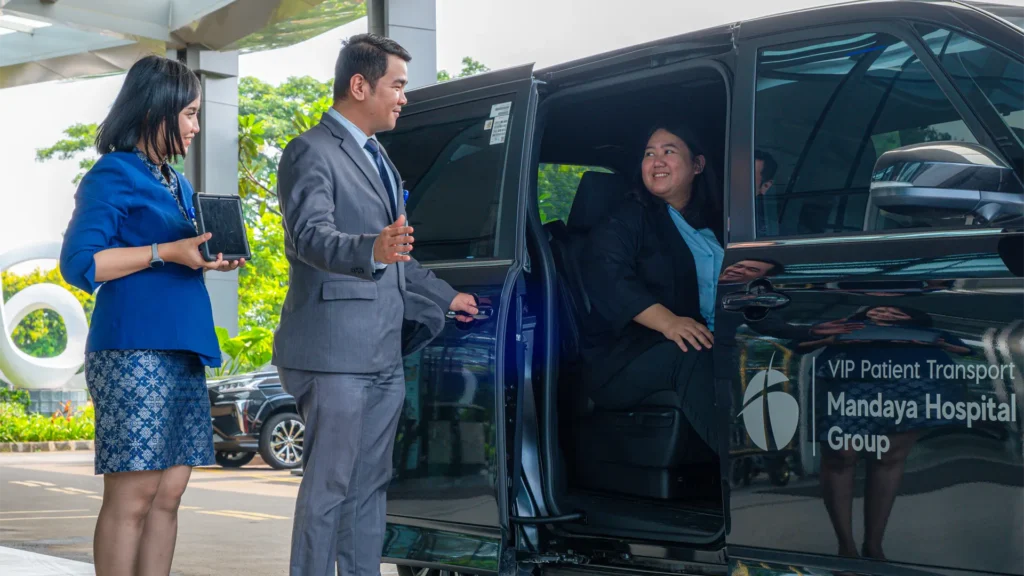
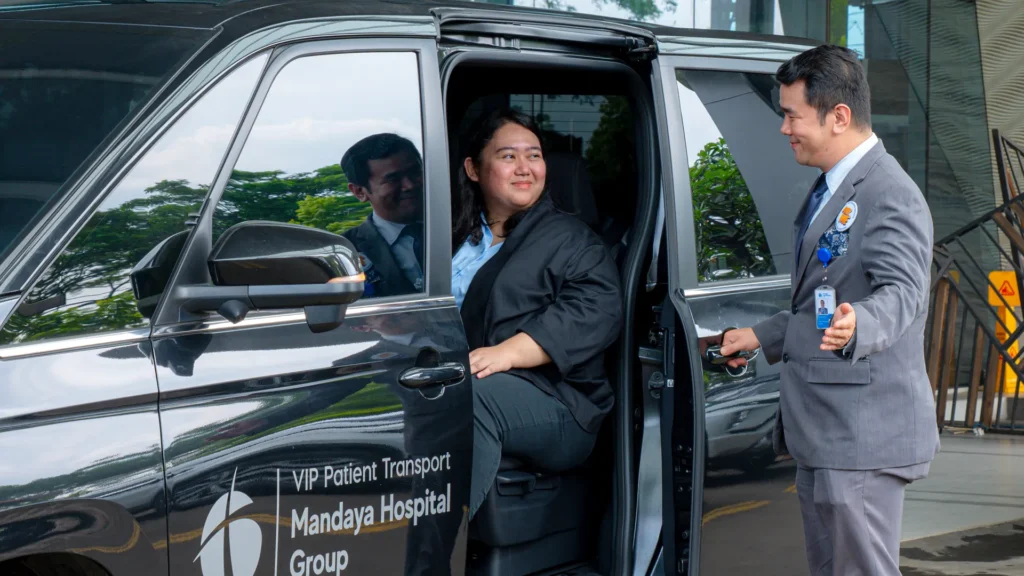
Mandaya Royal Hospital Puri provides various support services to offer additional comfort to patients traveling from other cities or countries.
- VIP transportation: A pickup service from Soekarno-Hatta International Airport, train stations, or ports to the hospital in a comfortable vehicle, accompanied by a Patient Experience Officer (PEO).
- Medical ambulance transportation: A dedicated pickup service for patients with specific medical needs from arrival points, including airports, train stations, and ports. The service is equipped with medical equipment and supported by professional healthcare personnel.
- Accommodation (Sleep Hub and apartments): Comfortable accommodation for families accompanying patients, located on the eighth floor of the Mandaya Royal Puri building, with nearby apartments also available.
- International Patient Relations: Dedicated assistance for international patients, including medical coordination, interpreter services, and administrative support. For information and assistance from International Patient Relations, contact 021 5092 8888 or email [email protected].
To make your visit to Mandaya Royal Hospital Puri easier, use the WhatsApp chat feature, book an appointment, or download the Care Dokter app from Google Play or the App Store to manage visits, check queue numbers, and access other useful information.
The information on this page is provided for educational purposes and as a general overview. It does not represent the full range of medical services that each doctor may perform. To ensure that you receive care appropriate to your health condition, you are advised to consult the relevant doctor directly.
If you have questions, suggestions, or need further information, please contact our call center at 0811-1900-2000.

References
- Mayo Clinic. Lung Cancer: Symptoms and Causes. Accessed October 19, 2026.
- Cancer Research UK. Stages of Lung Cancer. Accessed October 19, 2026.
- Cleveland Clinic. Lung Cancer: Causes, Signs, Diagnosis & Treatment. Accessed October 19, 2026.