


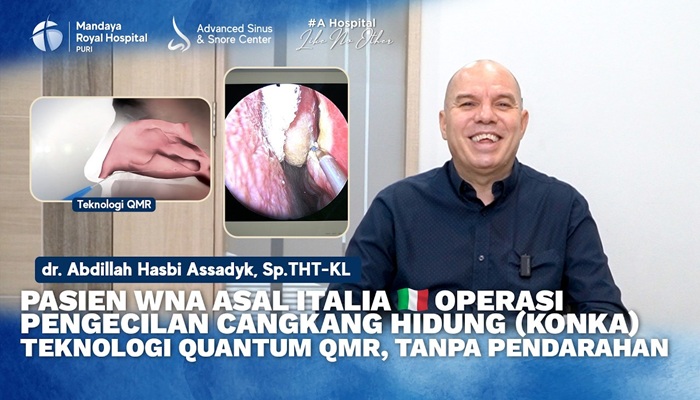
The nasal turbinates are elongated structures inside the nasal cavity that help warm, humidify, and filter the air before it enters the respiratory tract. However, in some individuals, the turbinates can become enlarged, restricting airflow through the nose. This condition may lead to chronic nasal congestion, difficulty breathing, an increased risk of nasal infections, and recurrent nosebleeds if left untreated.

One patient who experienced this condition was David Pagani, an Italian citizen working in Jakarta, Indonesia. Due to persistent nasal obstruction that prevented him from breathing comfortably, he decided to undergo turbinate reduction using Quantum Molecular Resonance (QMR) technology with dr. Abdillah Hasbi Assadyk, Sp.ENT-KL at Mandaya Royal Hospital Puri. Following the procedure, he reported that he could breathe much more freely than before the surgery.
“Of course, after the surgery I didn’t feel anything. Honestly, I can confirm the operation went very smoothly. From the very next day, I felt good. I didn’t experience any pain at all. I took pain medication for only two or three days after the operation, but I truly didn’t have any pain in my nose. I can already notice the difference—I can see that the turbinate has really been reduced, and I expect that over the next few days I’ll feel even better,” the patient happily shared.

Contents
The Patient’s Journey: Living with Enlarged Turbinates Before Undergoing QMR at Mandaya Royal Hospital Puri
An Italian man who has been working in Jakarta for several years decided to undergo turbinate reduction at Mandaya Royal Hospital Puri after living with breathing difficulties caused by enlarged turbinates for many years.
He explained that he had been experiencing nasal obstruction for a long time. In fact, nearly ten years earlier, doctors in Italy had already recommended turbinate reduction surgery. However, due to his busy work schedule, he continued postponing the procedure.
For years, he was unable to breathe properly through his nose. According to his physician in Italy, his condition was likely associated with prolonged exposure to environmental pollution where he lived. Although he had become accustomed to the symptoms, he felt that his quality of life was affected because he never experienced completely unobstructed breathing.
After relocating to Jakarta for work, he resumed his search for a long-term solution. He searched online for hospitals offering turbinate reduction procedures and came across Quantum Molecular Resonance (QMR) technology, which offers several advantages, including minimal tissue trauma, reduced postoperative pain, and faster recovery compared with conventional surgical techniques.
After discovering that Mandaya Royal Hospital Puri provides turbinate reduction using QMR technology, he scheduled a consultation with dr. Abdillah Hasbi Assadyk. Dr. Abdillah’s expertise and experience gave him confidence to proceed with the treatment at Mandaya Royal Hospital Puri.
What Is QMR, How Does It Work, and What Are Its Advantages?
Quantum Molecular Resonance (QMR) is an advanced technology used for turbinate reduction. It utilizes low-frequency energy delivered at relatively low temperatures to reduce the size of the turbinate tissue while preserving most of the nasal mucosa. Several studies have shown that QMR effectively relieves nasal obstruction with rapid recovery and minimal thermal tissue damage.
Some of the advantages of QMR for turbinate reduction include:
- Improves airflow through the nose, allowing patients to breathe more comfortably after the procedure.
- Causes minimal thermal damage to the nasal mucosa, which is essential for maintaining moisture, filtering airborne particles, and protecting the respiratory tract from pathogens.
- Produces better outcomes when combined with medical therapy than medication alone.
- Helps reduce nasal sensitivity or reactivity to allergy triggers, improving symptoms in patients with persistent allergic rhinitis.
Symptoms of Enlarged Turbinates You Should Watch For
Enlarged turbinates can make nasal breathing increasingly difficult. Other symptoms may include:
- Persistent nasal congestion.
- Reduced sense of smell.
- Dry mouth upon waking due to mouth breathing during sleep.
- Pressure or fullness around the forehead.
- Mild facial pain.
- Long-lasting or recurrent nasal blockage.
- Runny nose.
- Snoring during sleep.
The symptoms of turbinate hypertrophy often resemble a common cold that never seems to resolve. As a result, many people assume they simply have recurrent colds, when the underlying cause may actually be enlarged turbinates requiring medical treatment.
What Happens If Enlarged Turbinates Are Left Untreated?
Without proper treatment, enlarged turbinates may gradually worsen over time. Patients can experience increasing difficulty breathing through the nose, making everyday activities less comfortable.
Persistent nasal obstruction may also negatively affect sleep quality because patients tend to breathe through their mouths while sleeping. As a result, sleep becomes less restful, and the body may not receive adequate recovery.
In some cases, untreated turbinate hypertrophy can also increase the risk of recurrent sinus infections (sinusitis), which may interfere with work, school, and daily activities.
Consult Dr. Abdillah at Mandaya Royal Hospital Puri

If you frequently experience persistent nasal congestion, difficulty breathing through your nose, snoring during sleep, or sleep disturbances caused by restricted nasal airflow, consider consulting dr. Abdillah Hasbi Assadyk, Sp.ENT-KL at Mandaya Royal Hospital Puri.
Dr. Abdillah has extensive experience treating a wide range of ear, nose, and throat (ENT) conditions, including enlarged turbinates using Quantum Molecular Resonance (QMR) technology. This advanced technique utilizes low-frequency energy to reduce turbinate tissue while minimizing heat-related tissue damage and preserving the nasal mucosa.
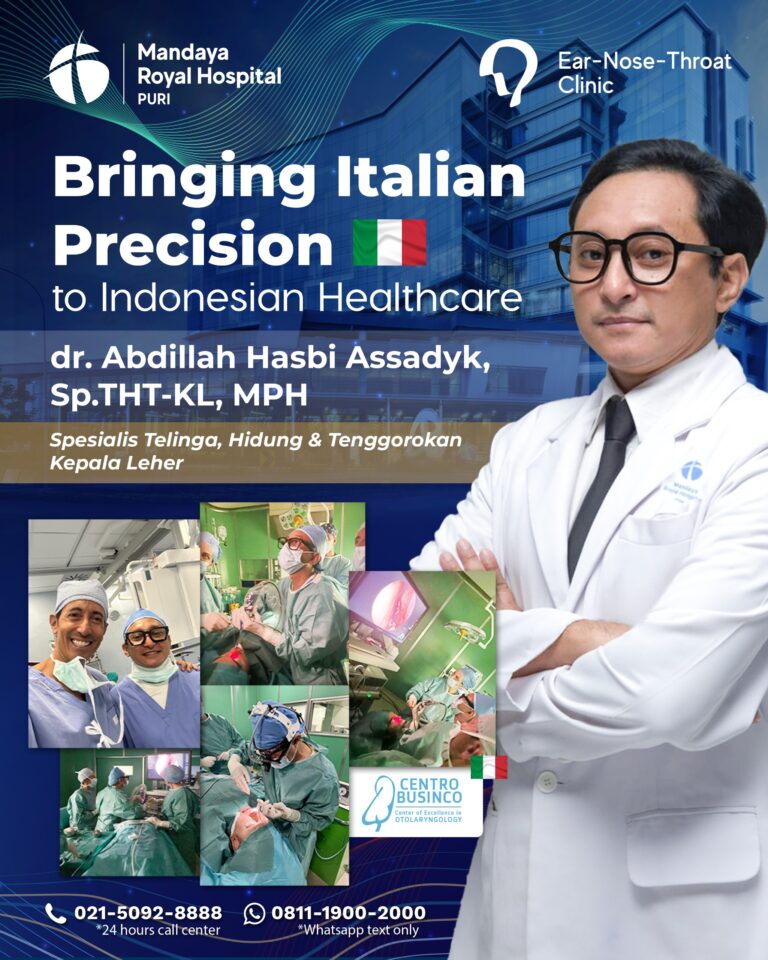
In addition to turbinate reduction, Dr. Abdillah also specializes in treating various ENT disorders, including tonsillitis and adenoid hypertrophy using Plasma Coblation, as well as sinusitis with Balloon Sinuplasty.
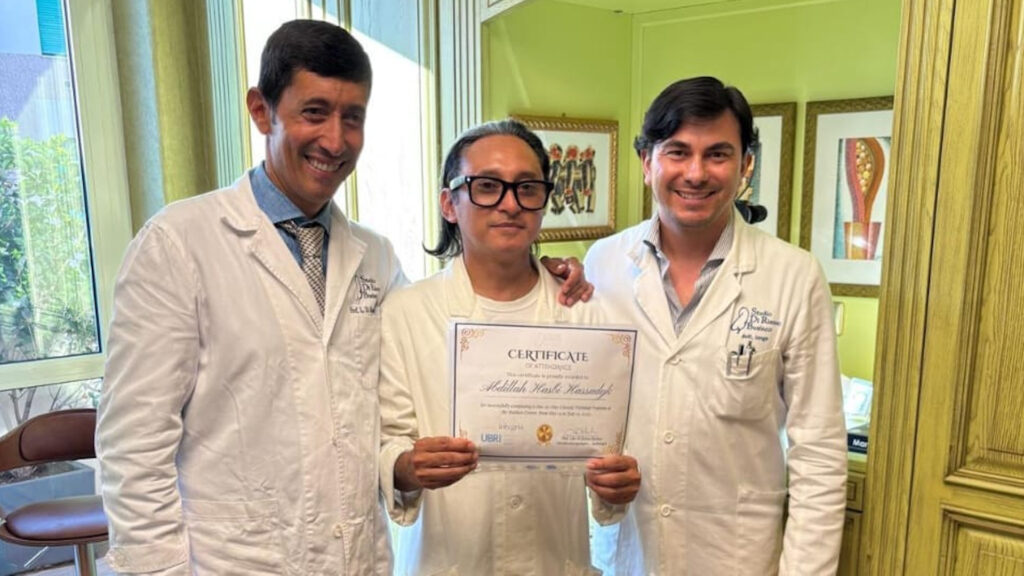
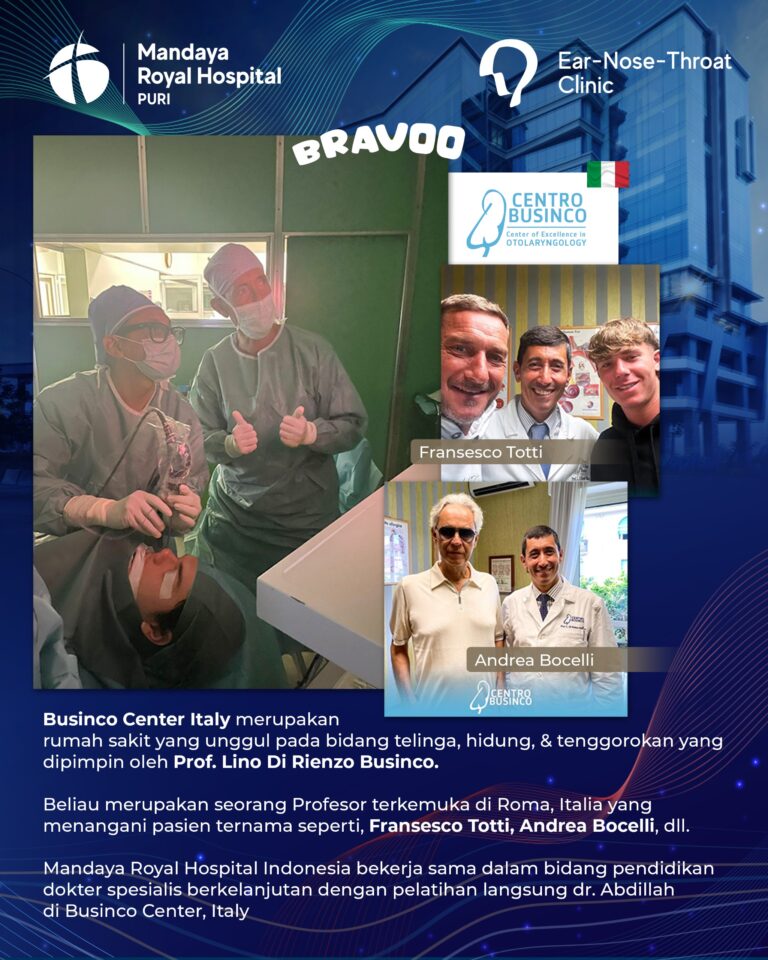
His expertise is further strengthened by intensive training in Italy under Prof. Lino Businco, a renowned ENT specialist with extensive experience managing complex ENT conditions. Through this advanced training, Dr. Abdillah provides modern ENT care that emphasizes minimally invasive techniques and optimal patient recovery.
Practice Schedule
dr. Abdillah Hasbi Assadyk, Sp.ENT-KL practices at Mandaya Royal Hospital Puri with the following schedule:
- Monday: 8:00 AM – 12:00 PM & 5:00 PM – 8:00 PM
- Tuesday: 8:00 AM – 12:00 PM & 5:00 PM – 8:00 PM
- Wednesday: 8:00 AM – 12:00 PM & 5:00 PM – 8:00 PM
- Thursday: 8:00 AM – 12:00 PM & 5:00 PM – 8:00 PM
- Friday: 8:00 AM – 12:00 PM & 5:00 PM – 8:00 PM
- Saturday: 10:00 AM – 8:00 PM
To make your visit to Mandaya Royal Hospital Puri more convenient, you can use the WhatsApp Chat, Book Appointment, or Care Dokter mobile application, available on Google Play and the App Store, to schedule appointments, check queue numbers, and access additional hospital information.
The information provided on this page is intended for educational and general informational purposes only and does not represent the full range of medical services offered by each physician. To receive treatment tailored to your individual health condition, please consult the appropriate medical specialist directly.
If you have any questions, suggestions, or require additional information, please contact our call center at +62 811-1900-2000.

References
- Healthline. Turbinate Hypertrophy. Last reviewed April 29, 2022. Accessed July 21, 2026.
- Lee KC, Chen HH, Lee TJ. Surgical Management of Inferior Turbinate Hypertrophy in the Era of Widespread Communicable Disease. Medicina. Published February 2023.
- Passali D, De Corso E, Camaioni A, et al. The Role of Quantic Molecular Resonance (QMR) in the Treatment of Inferior Turbinate Hypertrophy. Ear, Nose & Throat Journal. Published June 2021.
- Passali D, De Corso E, Camaioni A, et al. Turbinoplasty with Quantic Molecular Resonance in the Treatment of Persistent Moderate-Severe Allergic Rhinitis: Comparative Analysis of Efficacy. American Journal of Rhinology & Allergy. Published May 2014.