



Hydronephrosis in children is a condition in which one or both kidneys become enlarged or swollen due to a buildup of urine. This condition occurs in an area of the kidney called the renal pelvis, which is where urine collects before being drained into the urinary tract. When urine flow is obstructed, urine cannot drain properly, causing the kidneys to swell.
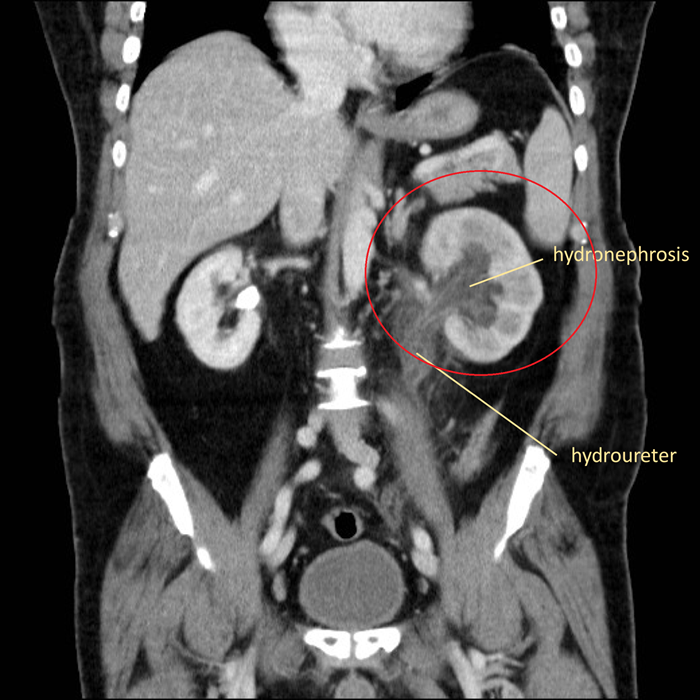
In many cases, hydronephrosis can already be detected while the baby is still in the womb through pregnancy ultrasound examinations. Some cases may improve on their own as the child grows. However, more severe hydronephrosis may indicate a blockage in the urinary tract or other abnormalities that require monitoring and further treatment after birth. Therefore, it is important for parents to understand the causes, symptoms, and treatment options for hydronephrosis in children.
At RS Mandaya Royal Puri, pediatric hydronephrosis can be managed by a pediatric urology consultant, dr. Hendy Mirza, Sp.U(K).

Contents
What are the symptoms of hydronephrosis in children?
Most babies with hydronephrosis show no symptoms at all. In older children, mild to moderate hydronephrosis also often causes no complaints and may even resolve on its own over time.
However, in moderate to severe cases, children may experience the following symptoms:
- Abdominal pain
- Pain in the side or lower back (flank pain)
- Blood in the urine (hematuria)
In addition, children with hydronephrosis are at risk of developing urinary tract infections (UTIs). If a UTI occurs, symptoms may include:
- Frequent or urgent need to urinate
- Pain or burning sensation during urination
- Cloudy urine
- Back pain
- Fever
- Vomiting
If a child experiences these symptoms, especially when accompanied by fever or persistent pain, it is important to consult a doctor immediately for proper examination and treatment.
What causes hydronephrosis in children?
In general, hydronephrosis is caused by two main problems. The first is obstruction (blockage), where urine flow is blocked and cannot drain normally from the kidneys. This blockage can occur anywhere in the urinary tract, from the kidneys to the urethra. The second is urine reflux, where urine flows backward toward the kidneys instead of exiting the body properly.
Causes of hydronephrosis due to obstruction
1. Ureteropelvic junction (UPJ) obstruction
This is a blockage at the junction between the kidney and the ureter, the tube that carries urine from the kidney to the bladder. It is usually caused by narrowing at the upper part of the ureter.
2. Ureterovesical junction (UVJ) obstruction
This occurs when there is a blockage at the junction between the ureter and the bladder, disrupting urine flow.
3. Posterior urethral valves (PUV)
A congenital condition found only in boys. In this condition, abnormal tissue folds in the urethra block urine flow from the bladder. PUV is also often associated with urine reflux to the kidneys.
4. Ureterocele
A swelling or bulging at the end of the ureter that can block urine flow from part of the kidney and, in some cases, affect bladder function.
Causes of hydronephrosis due to urine reflux
- Vesicoureteral reflux (VUR)
VUR occurs when the valve mechanism between the ureter and bladder does not function properly. As a result, urine flows backward into the ureters and kidneys when the bladder fills or during urination.
Other causes of hydronephrosis in children
- Ectopic ureter
A rare condition in which the ureter does not connect to the bladder at the correct location. This can disrupt urine flow and lead to hydronephrosis.
- Unknown causes
In more than half of prenatal hydronephrosis cases, the condition may improve or resolve on its own as the child grows. In these cases, the exact cause is often unknown.
How is hydronephrosis in children treated?
Mild hydronephrosis in newborns often does not require specific treatment. Management depends on the severity of the condition, how many kidneys are affected, and the underlying cause.
In general, treatment may include:
1. Regular monitoring
If the condition is not severe and kidney function is not at risk, doctors usually recommend regular monitoring. The baby will undergo routine examinations to see whether the condition improves, resolves, or worsens. If it worsens, further treatment such as surgery may be required.
2. Prevention and treatment of UTIs
Doctors may prescribe antibiotics to help prevent urinary tract infections in babies with hydronephrosis. Antibiotics are also used if a UTI develops. In male infants, some studies suggest that circumcision may help reduce the risk of UTIs.
3. Surgery
Surgery may be recommended if hydronephrosis is severe or progressively worsening. The goal of surgery is to improve urine flow, reduce pressure on the kidneys, and lower the risk of complications. Surgery is generally not performed while the baby is still in the womb due to high risk. After birth, doctors determine the most appropriate timing and procedure based on the child’s condition.
Hydronephrosis treatment in children at RS Mandaya Royal Puri

Pediatric hydronephrosis at RS Mandaya Royal Puri can be managed by dr. Hendy Mirza, Sp.U(K), a pediatric urology consultant specializing in urinary tract and kidney disorders in children. With his expertise in pediatric urology, dr. Hendy provides comprehensive evaluation, identifies the underlying cause of hydronephrosis, and delivers appropriate treatment, ranging from observation to medical or surgical intervention when needed.
Dr. Hendy completed his medical degree at the Faculty of Medicine, University of Sumatera Utara, before pursuing a specialization in Urology Surgery at the University of Indonesia. To further deepen his expertise in pediatric urology cases, he completed a fellowship in Pediatric Reconstruction (Laparoscopy) at the University of Indonesia and later earned the qualification of Pediatric Urology Consultant. His educational and clinical background equips him with specialized competence in managing pediatric urological conditions, including hydronephrosis, vesicoureteral reflux, congenital urinary tract abnormalities, and various kidney and urinary tract disorders.
Dr. Hendy Mirza, Sp.U(K) is available at RS Mandaya Royal Puri on:
- Monday: 16.00 – 19.00 WIB
- Wednesday: 16.00 – 19.00 WIB
- Friday: 16.00 – 19.00 WIB
To make your visit easier, you can use WhatsApp Chat, Book Appointment, or the Care Dokter app available on Google Play and the App Store to check queues and access complete information.
The information on this page is intended for educational and general informational purposes only and does not represent all medical services available from each doctor. For appropriate treatment, patients are advised to consult directly with a doctor.
If you have questions or need further information, please contact our call center at 0811-1900-2000.