



Heart bypass surgery, medically known as Coronary Artery Bypass Grafting (CABG), is a surgical procedure aimed at restoring blood flow to the heart muscle that has been compromised due to narrowing or blockage of the coronary arteries. The procedure involves harvesting a blood vessel from another part of the body — typically the leg, arm, or chest wall — and connecting it as an alternative pathway around the blocked area. Heart bypass surgery becomes the primary option when the blockage is too severe to be treated with stent placement or medication, particularly in patients with multiple blocked coronary arteries or blockages located in areas that are difficult to reach through catheter-based procedures.
View this post on Instagram
For many years, this procedure was synonymous with major open-heart surgery requiring the surgeon to split the breastbone (sternotomy) and temporarily stop the patient’s heart using a cardiopulmonary bypass machine. However, medicine continues to advance. Today, the Minimally Invasive Cardiac Surgery (MICS) method offers a different approach — one that requires only a small incision between the ribs without splitting the breastbone, and in many cases can be performed without stopping the patient’s heart at all. As a result, physical trauma to the body is significantly reduced, the risk of complications decreases, and the patient’s recovery process is considerably faster.
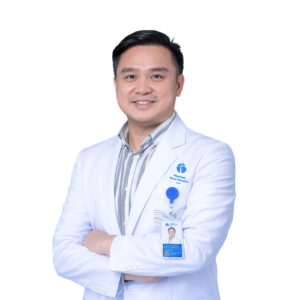
This very advancement was recently brought to life by dr. Wirya A. Graha, Sp.BTKV, Subsp.JD(K), a thoracic and cardiovascular surgery specialist with a subspecialty in adult cardiac surgery at Mandaya Royal Hospital Puri. He successfully performed a MICS heart bypass surgery on a patient named Lulus Widodo, who had a 95% coronary artery blockage — a critical condition requiring immediate intervention. The results were remarkable: the patient experienced significant symptom improvement, and incredibly, just three days after surgery, he was already able to walk independently.

Contents
dr. Wirya’s Explanation of Heart Bypass Surgery Using the MICS Method
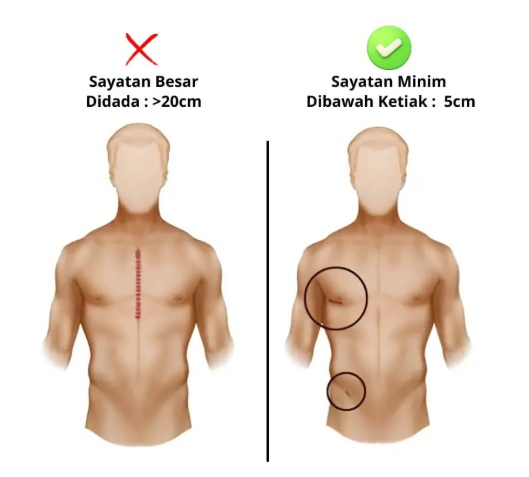
In this procedure, dr. Wirya performed the bypass surgery without stopping the patient’s heartbeat at all. Unlike the conventional method, which requires the heart to be temporarily stopped while a machine takes over its function, the MICS approach allows the entire procedure to be carried out while the patient’s heart continues to beat naturally. The surgery was performed through a small incision of just 6–7 cm on the left side of the chest — far less invasive than the standard procedure that involves fully splitting the breastbone.
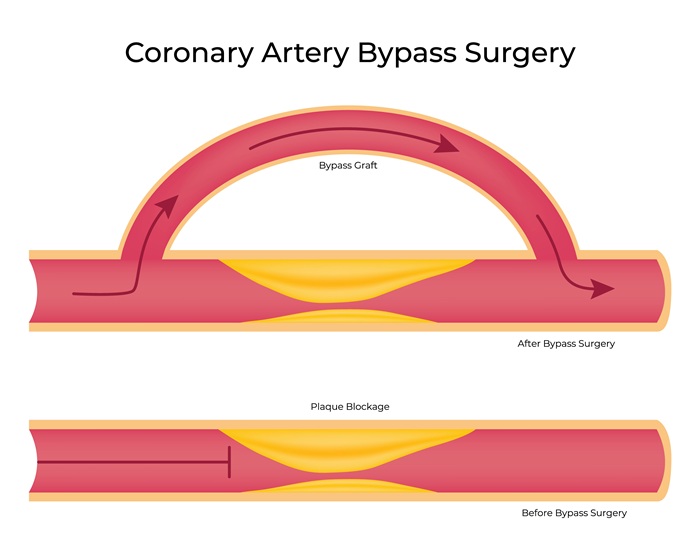
For the bypass grafts, dr. Wirya used arterial blood vessels taken from the patient’s arm. This choice was deliberate — arterial vessels share a similar structure to the coronary arteries of the heart, meaning that once transplanted and connected as bypass grafts, they offer significantly better long-term durability.
In this particular case, dr. Wirya created a total of three bypass points: two on the left side of the heart and one on the right. The entire procedure went smoothly and was completed safely. Thanks to the small incision, the healing process progressed faster than expected. During a follow-up visit just three days after the surgery, dr. Wirya found that the patient was already able to walk — a strong indicator of a positive recovery. According to dr. Wirya, once a patient is able to walk, it means they are ready to be discharged sooner.
From Chest Tightness to Walking Three Days After Surgery
For Lulus Widodo, the journey to the operating table began with symptoms that may sound familiar to many — yet are often overlooked. Since late January, he had been experiencing a tight, burning sensation in his chest, frequently accompanied by cold sweats. Sensing something was wrong, Lulus decided to get himself checked, and the results were startling: his coronary artery was blocked by as much as 95%.
After evaluating his condition, dr. Wirya concluded that heart bypass surgery was the most appropriate course of action. Lulus underwent the procedure using the MICS method. He admitted feeling relieved upon learning that the surgery would not require splitting his breastbone down the middle, as he had always imagined. The incision made was small — a far cry from the conventional procedure, which typically leaves a scar of around 25 cm.
Today, Lulus feels a tangible difference. Just three days after surgery, he was able to get up and walk on his own. His condition has continued to improve, and the chest tightness that had shadowed his daily life has gradually faded. “Alhamdulillah, I’m feeling much better,” he said.
Advantages of MICS Heart Bypass Surgery Over Conventional Methods
As a more modern approach, MICS offers several significant advantages over conventional open-heart bypass surgery, including:
- Faster recovery — patients can generally return to their normal activities within 2–4 weeks after surgery
- Less postoperative pain and a significantly smaller scar, contributing to greater comfort and confidence during recovery
- Reduced physical and psychological trauma associated with major surgery
- Shorter hospital stay — typically around 3–4 days
- Better early lung function recovery in the initial phase following surgery
- Lower risk of infection and bleeding compared to conventional open-heart procedures
Who Is a Good Candidate for MICS Heart Bypass Surgery?
MICS is not necessarily suitable for every patient, but it may be the right choice for those who:
- Have been diagnosed with coronary artery disease involving narrowing or blockage of the coronary arteries
- Require bypass surgery but wish to avoid a highly invasive procedure
- Are looking for a faster recovery to return to daily activities sooner
- Have undergone a thorough evaluation and been deemed suitable candidates by a specialist
Profile and Practice Schedule of dr. Wirya at Mandaya Royal Hospital Puri
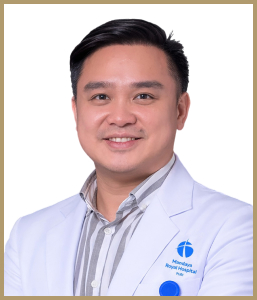
dr. Wirya A. Graha, Sp.BTKV, Subsp.JD(K) is a specialist in thoracic, cardiac, and vascular surgery with a subspecialty in adult cardiac surgery, bringing extensive experience in handling a wide range of cardiac and vascular surgical cases. He completed his specialist training at the Faculty of Medicine, Universitas Indonesia, and has deepened his expertise in various advanced cardiac surgical techniques, including minimally invasive procedures.
One of dr. Wirya’s hallmark areas of expertise is Minimally Invasive Cardiac Surgery (MICS) — a technique that requires only a small incision without the need to fully open the breastbone. This approach allows cardiac surgery to be performed with significantly less trauma to the body. As a result, patients benefit from less postoperative pain, a lower risk of complications, and a recovery period that tends to be considerably shorter than that of conventional open-heart surgery.
dr. Wirya continuously sharpens his skills through active participation in various internationally recognized training programs and conferences, including:
- 2017: 25th Annual Meeting of the Asian Society for Cardiovascular and Thoracic Surgery, Seoul, South Korea
- 2018: 28th Annual Meeting of the Association of Thoracic and Cardiovascular Surgeons of Asia
- 2019: 1st Joint Biennial South East Asian Regional Congress on Cardiovascular and Thoracic Surgery alongside the 20th MATCVS Annual Scientific Meeting, Malacca
- 2021: 25th European Vascular Course and 5th European Cardiovascular Course
dr. Wirya A. Graha, Sp.BTKV, Subsp.JD(K) is available for consultations at Mandaya Royal Hospital Puri on:
- Tuesday: 4:30 PM – 8:00 PM
- Thursday: 4:30 PM – 8:00 PM
- Saturday: 10:00 AM – 1:00 PM
To make your visit to Mandaya Royal Hospital Puri as convenient as possible, you can use the WhatsApp Chat feature, Book an Appointment online, or download the Care Dokter app on Google Play or the App Store to easily manage your queue number and access complete information.
The information provided on this page is compiled for educational and general informational purposes and does not reflect the full range of medical services that each doctor may perform. For treatment tailored to your specific health condition, it is advised to consult directly with the relevant doctor.
If you have any questions, suggestions, or require further information, please contact our call center at 0811-1900-2000.