


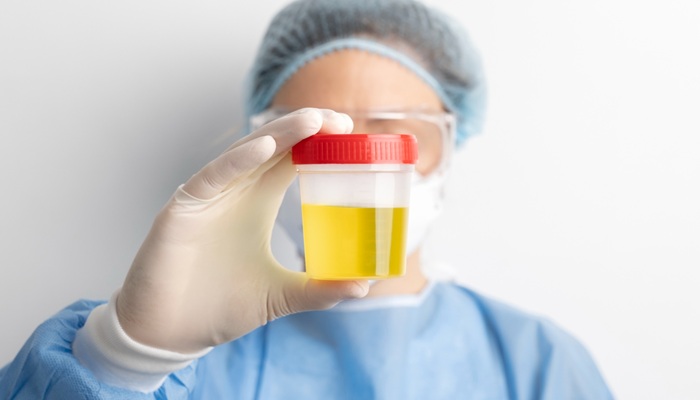
Foamy urine when urinating is a fairly common occurrence. Sometimes, urine may appear foamy because it flows too quickly when the bladder is full, creating multiple bubbles in the toilet. Toilet cleaning products can also make urine look foamy. In addition, this condition may occur when the body is dehydrated or lacks sufficient fluids.
Occasional foamy urine is generally not something to worry about. However, if your urine frequently appears foamy, contains numerous bubbles, or produces foam that lasts for a long time, you should pay attention to it. Persistent foamy urine may be a sign of an underlying health condition, including kidney problems.

Contents
What Causes Foamy Urine When Urinating?
Occasional foamy urine is relatively common and does not always indicate a health problem. Sometimes, bubbles in the urine can even cover most of the toilet water’s surface. However, if this happens frequently, the foam does not disappear even after flushing the toilet more than once, or your urine looks excessively frothy and white, you should consult a doctor to identify the underlying cause.
Here are some possible causes of foamy urine:
1. Kidney Disease
Foamy urine can be a sign of kidney problems, especially when it occurs persistently. In chronic kidney disease (CKD), foamy urine may develop when kidney damage causes protein to leak into the urine, a condition known as proteinuria.
For example, people with stage 2 chronic kidney disease may experience foamy urine if their urine protein levels are elevated. However, early-stage chronic kidney disease often does not cause noticeable symptoms. Therefore, urine and kidney function tests are necessary to assess kidney health more accurately.
Read also: Chronic Kidney Disease: Definition, Causes, Symptoms, and Treatment
2. Diabetes
Diabetes can also cause foamy urine, particularly when blood sugar levels remain above the normal range for a prolonged period. This can lead to diabetes-related kidney damage, also known as diabetic nephropathy.
The damage can interfere with the kidneys’ ability to filter blood and prevent protein from leaking into the urine. As a result, protein levels in the urine increase, making it appear foamy.
3. Dehydration
Dehydration, or a lack of fluids, can also cause foamy urine. When the body does not receive enough fluids, urine becomes more concentrated and usually appears darker yellow than normal.
This can make urine look foamy when it is released. If your urine is dark yellow and foamy, try to meet your daily fluid needs by drinking enough water. However, if the foam persists even after you are adequately hydrated, you should consult a doctor.
4. Retrograde Ejaculation
Retrograde ejaculation is a condition in which semen enters the bladder instead of leaving the penis during ejaculation. This can make urine appear foamy after a man experiences an orgasm.
Retrograde ejaculation can occur due to problems with the muscles that regulate semen flow. Although the condition is generally not dangerous, it may affect male fertility because semen does not exit the body as it normally would.
5. Amyloidosis
Amyloidosis is a rare disease caused by the buildup of abnormal proteins called amyloid in various tissues and organs. When these proteins accumulate in the kidneys, they can interfere with the organs’ ability to filter blood.
Kidney damage caused by amyloidosis can lead to protein leakage into the urine, making it appear foamy. This condition may also cause fluid buildup in the body or swelling in certain areas, such as the feet and ankles.
6. Medication Side Effects
Certain medications can also cause foamy urine. One example is phenazopyridine, a medication used to relieve pain or discomfort associated with urinary tract conditions.
If foamy urine develops after taking a particular medication, consult your doctor or pharmacist to determine whether it may be a side effect. Do not stop taking prescribed medication without consulting your doctor first.
When Should You See a Doctor for Foamy Urine?
Occasional foamy urine is generally harmless and may be caused by simple conditions, such as a forceful urine stream or dehydration. However, if foamy urine lasts for several days, occurs more frequently, or appears increasingly frothy, you should consult a doctor.
It is especially important to seek medical attention if foamy urine is accompanied by any of the following symptoms:
- Swelling (edema): Particularly in the hands, feet, or ankles due to fluid buildup.
- Fatigue: Feeling unusually weak or exhausted even after getting enough rest.
- Nausea and vomiting: Digestive symptoms that may accompany impaired kidney function.
- Loss of appetite: A reduced desire to eat without an obvious reason.
- Changes in urine color and appearance: Urine becomes darker, cloudy, or contains blood (hematuria).
These symptoms should not be ignored because they may be associated with impaired kidney function or other health conditions. Early examination can help doctors identify the cause of foamy urine and determine the appropriate treatment.
How Do Doctors Diagnose the Cause of Foamy Urine?
To determine the cause of foamy urine, doctors will evaluate your symptoms, medical history, and any other complaints you may have. If kidney problems or protein leakage into the urine are suspected, your doctor may recommend several of the following tests:
1. Urine Test
Your doctor will ask for a urine sample to check for protein, blood, and other substances. The test may be performed using a dipstick or through laboratory urine analysis. Your doctor may also recommend a urine albumin-to-creatinine ratio (UACR) test to measure the amount of albumin being released into your urine.
2. Blood Test
Blood tests are performed to measure creatinine levels and estimate the glomerular filtration rate (estimated glomerular filtration rate/eGFR). The results help doctors assess how effectively the kidneys filter waste products from the blood.
3. Imaging Tests
Your doctor may recommend a kidney and urinary tract ultrasound or CT scan if kidney stones, blockages, or other structural abnormalities are suspected.
4. Kidney Biopsy
In certain cases, your doctor may recommend a kidney biopsy, which involves taking a small sample of kidney tissue for laboratory examination. This test can help identify the cause and extent of kidney damage.
Mandaya Urology Center: Comprehensive Care for Kidney, Urinary Tract, and Men’s Health Conditions

The Mandaya Urology Center at Mandaya Royal Hospital Puri provides diagnostic and treatment services for various urinary tract and male reproductive system conditions, ranging from common problems to complex urological cases.
Supported by modern medical facilities and minimally invasive technologies, the center treats various conditions, including kidney stones, urinary tract infections, prostate enlargement, bladder disorders, and cancers affecting the urinary and male reproductive systems.
Available services also include various modern urological procedures, such as RIRS, PCNL, Rezum, and robotic surgery for selected cases. Even complex urological procedures, such as kidney transplantation, are included in the range of services available at the Mandaya Urology Center.
To provide comprehensive care, the Mandaya Urology Center is supported by a multidisciplinary team of doctors with various subspecialties, including general urology, pediatric urology, uro-oncology, female urology, neuro-urology, and andrology. With this range of expertise, patients can receive treatment tailored to their medical condition, age, and individual healthcare needs.
Facilities for Out-of-Town and International Patients at Mandaya Royal Hospital Puri


Mandaya Royal Hospital Puri provides various supporting facilities to offer additional comfort and convenience for patients traveling from other cities or countries.
- VIP Transport: A pickup service from Soekarno-Hatta International Airport, train stations, or seaports to the hospital using comfortable vehicles accompanied by a Patient Experience Officer (PEO).
- Medical Ambulance Pickup: Special transportation for patients with specific medical conditions from their arrival point (airport, train station, or seaport), equipped with medical equipment and accompanied by professional healthcare personnel.
- Accommodation (Sleep Hub and Apartments): Comfortable accommodation facilities for patients’ families and companions, located on the 8th floor of the Mandaya Royal Puri building, as well as nearby apartment options.
- International Patient Relation: Dedicated assistance for international patients, including medical coordination, translation services, and administrative support. For more information and assistance from International Patient Relation, you can call 021 5092 8888 or email [email protected].
To make your visit to Mandaya Royal Hospital Puri more convenient, use the WhatsApp Chat feature, Book Appointment service, or the Care Dokter application, available for download on Google Play and the App Store. These services make it easier to arrange visits, check queue numbers, and access other important information.
The information provided on this page is intended for educational purposes and general guidance. It does not represent the full range of medical services that each doctor may provide. To ensure that you receive care appropriate to your health condition, we recommend consulting the relevant doctor directly.
If you have any questions, suggestions, or need further information, please contact our call center at 0811-1900-2000.

References:
- Cleveland Clinic. Foamy Urine. (https://my.clevelandclinic.org/health/symptoms/foamy-urine). Accessed on November 3, 2026.
- Advanced Urology. Why Is My Urine Foamy? (https://www.advancedurology.com/blog/why-is-my-urine-foamy). Accessed on November 3, 2026.
- UPMC. Foamy Urine. (https://www.upmc.com/healthbeat/urology/foamy-urine). Accessed on November 3, 2026.