



Endoscopy in children is a medical procedure that uses a thin, flexible tube with a camera at its tip to examine the digestive organs from inside the body. This examination helps doctors detect various conditions, including stomach ulcers, gastroesophageal reflux disease (GERD), food allergies, infections, celiac disease, and inflammation of the esophagus.
Doctors usually recommend endoscopy when children experience digestive symptoms with an unclear cause, such as abdominal pain, nausea, vomiting, diarrhea, or other digestive problems. During the procedure, children are given sedatives or general anesthesia so they can sleep comfortably and avoid pain. If necessary, doctors may also take a small tissue sample (biopsy) for further laboratory examination.
So, what conditions can be diagnosed through endoscopy in children? What are the different types of endoscopy, and how are these procedures performed? Here is a complete explanation.

Contents
Conditions That Can Be Diagnosed Through Endoscopy in Children
Endoscopy in children is most commonly used to help diagnose various digestive tract disorders. Through this examination, doctors can directly observe the esophagus, stomach, and the upper part of the small intestine.
Some conditions that can be detected or evaluated through endoscopy include:
- Food allergies and intolerances: The body’s reactions to certain foods that may cause digestive problems.
- Eosinophilic esophagitis: Inflammation of the esophagus caused by a buildup of a type of white blood cell called eosinophils.
- Celiac disease: An autoimmune disorder in which consuming gluten triggers damage to the lining of the small intestine.
- Gastroesophageal reflux disease (GERD): A condition in which stomach acid flows back into the esophagus and may cause irritation.
- Stomach or intestinal inflammation: Inflammation of the digestive tract that can be further evaluated by examining tissue.
- Gastric and duodenal ulcers: Sores in the lining of the stomach or duodenum (the first part of the small intestine) that may cause abdominal pain and digestive problems.
When Is Endoscopy Necessary for Children?
Doctors may recommend endoscopy if a child experiences certain digestive symptoms or conditions. The indications may vary depending on which part of the digestive tract needs to be examined.
Upper gastrointestinal endoscopy may be recommended if a child experiences:
- Difficulty swallowing.
- Reflux or gastroesophageal reflux disease (GERD).
- Recurrent vomiting that does not improve with treatment.
- Unexplained weight loss.
- Persistent diarrhea.
- Narrowing of the digestive tract.
- Gastrointestinal bleeding.
- Swallowing a small but potentially dangerous foreign object.
Lower gastrointestinal endoscopy may be considered if a child experiences:
- Suspected allergies affecting the digestive tract.
- Persistent diarrhea with no known cause.
- Bloody bowel movements, even when the stool is not hard.
- A swallowed foreign object that has become lodged in the lower digestive tract.
Types of Endoscopy for Examining a Child’s Digestive Tract and How They Are Performed
There are several types of endoscopy for children, depending on which part of the digestive tract the doctor needs to examine.
-
Gastroscopy (Upper Gastrointestinal Endoscopy)
This procedure is used to examine the upper digestive tract, including the esophagus, stomach, and duodenum (the first part of the small intestine). The doctor inserts a thin, flexible tube with a camera, specifically sized for children, through the mouth.
Gastroscopy is generally performed to evaluate recurrent vomiting, difficulty swallowing, chronic abdominal pain, or to remove a swallowed foreign object.
-
Colonoscopy (Lower Gastrointestinal Endoscopy)
This procedure is used to examine the lower digestive tract, including the large intestine (colon) and the end of the small intestine. The examination is performed by inserting a flexible tube with a camera through the anus.
Colonoscopy is usually recommended for children who experience chronic diarrhea, bloody bowel movements, or suspected inflammatory bowel disease.
-
Capsule Endoscopy
This method uses a miniature wireless camera enclosed in a capsule about the size of a vitamin supplement. The child is asked to swallow the capsule so the camera can capture images throughout the digestive tract, particularly in parts of the small intestine that are difficult to reach with a conventional endoscope.
This procedure is generally used for older children, usually those above 4–5 years of age, who are able to swallow the capsule safely.
Is Endoscopy Safe for Children?
Endoscopy in children is considered a relatively safe procedure because it is minimally invasive and does not require surgical incisions. A diagnostic examination without additional interventions generally takes around 5–10 minutes.
During the procedure, children are given sedatives or anesthesia as needed to keep them comfortable. Endoscopy generally does not cause pain, although taking tissue samples for a biopsy may cause slight discomfort.
What Are the Possible Side Effects of Endoscopy in Children?
Endoscopy in children generally causes only mild side effects and rarely leads to serious complications. Before the child is discharged, the medical team will explain the warning signs of complications that parents should watch for.
Some mild side effects that children may experience after endoscopy include:
- Mild sore throat: This may occur when the endoscope is inserted through the mouth and passes through the throat.
- Nausea, abdominal cramps, or bloating: These symptoms may occur after an endoscopic examination of the digestive tract.
If a child feels uncomfortable after the procedure, the doctor can provide advice on managing symptoms at home, including the use of over-the-counter pain relievers or prescription medication when necessary.
Profile and Expertise of dr. Annisa Rahmania Yulman, Sp.A, Subsp. GH (K)

dr. Annisa Rahmania Yulman, Sp.A, Subsp. GH (K), is a pediatrician with specialized expertise in performing diagnostic examinations and endoscopic procedures for children’s digestive tracts. As a pediatric gastroenterology and hepatology subspecialist, she has experience treating various digestive and liver disorders in children. Her work also includes evaluating symptoms to identify their underlying causes and determine appropriate treatment based on each patient’s condition.
She is also a member of the Indonesian Medical Association (IDI) and the Indonesian Pediatric Society (IDAI).
Some of dr. Annisa’s services and areas of expertise include:
- Treatment of digestive disorders in children: Including recurrent abdominal pain, diarrhea, constipation, vomiting, and nutrient absorption disorders that may affect a child’s growth and development.
- Diagnosis and treatment of liver diseases in children: Including hepatitis, liver function disorders, and monitoring patients with chronic liver disease.
- Endoscopic examination of the digestive tract in children: To directly examine the digestive tract, help identify the causes of symptoms, and support diagnosis and treatment planning.
dr. Annisa Rahmania Yulman, Sp.A, Subsp. GH (K), sees patients at Mandaya Royal Hospital Puri according to the following schedule:
- Monday: 17:00–20:00 WIB
- Thursday: 17:00–20:00 WIB
- Saturday: 17:00–20:00 WIB
Facilities for Out-of-Town and International Patients at Mandaya Royal Hospital Puri

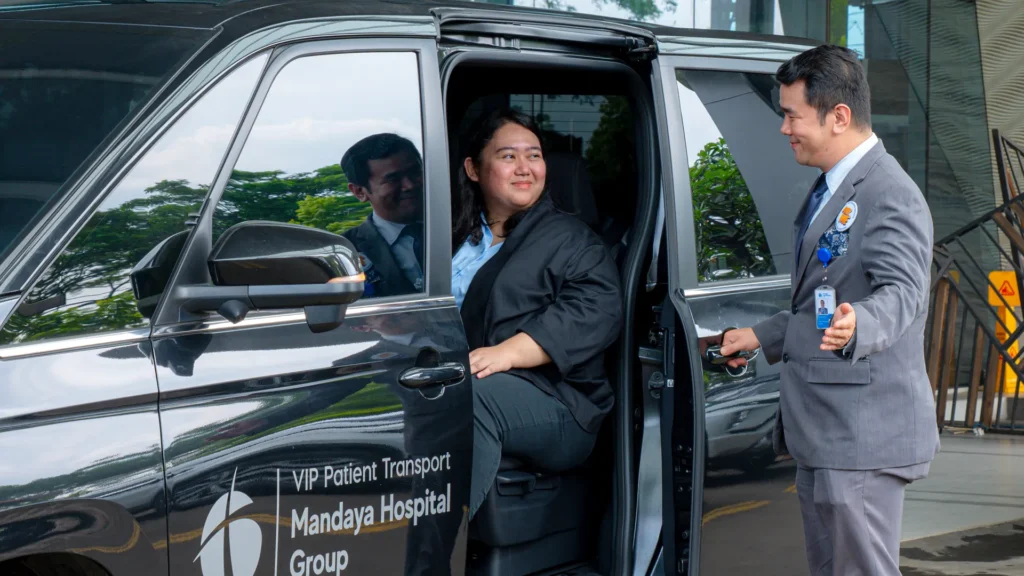
Mandaya Royal Hospital Puri provides various support facilities to help patients traveling from other cities or countries feel more comfortable during their treatment:
- VIP transportation: A pickup and drop-off service from Soekarno-Hatta International Airport, train stations, or seaports to the hospital in comfortable vehicles, accompanied by a Patient Experience Officer (PEO).
- Medical ambulance pickup: A dedicated service for patients with specific medical needs, providing transportation from their arrival point (airport, train station, or seaport) with medical equipment and assistance from professional healthcare personnel.
- Accommodation (Sleep Hub and apartments): Comfortable accommodation for family members accompanying patients, located on the 8th floor of the Mandaya Royal Puri building, with additional apartment options nearby.
- International Patient Relation: Dedicated assistance for international patients, including medical coordination, interpretation, and administrative support. For information and assistance, contact International Patient Relation at 021 5092 8888 or email [email protected].
To make your visit to Mandaya Royal Hospital Puri easier, you can use the WhatsApp chat feature, Book Appointment service, or the Care Dokter app, available on Google Play and the App Store. These services allow you to arrange visits, check queue numbers, and access other useful information.
The information on this page is intended for educational purposes and provides a general overview. It does not represent the full range of medical services that each doctor may provide. To determine the most appropriate treatment for your health condition, we recommend consulting the relevant doctor directly.
If you have any questions, suggestions, or need further information, please contact our call center at 0811-1900-2000.

References
- Children’s Hospital of Philadelphia (CHOP). Pediatric Endoscopy Procedure: What to Expect. (https://www.chop.edu/treatments/endoscopy). Accessed on November 13, 2026.
- PBPEGI. Is Endoscopy Safe for Children? (https://pbpegi.com/language/en/is-endoscopy-safe-for-children/). Accessed on November 13, 2026.