



Chest pain or discomfort can often make someone worry that they are having a heart attack. However, similar symptoms can also occur due to digestive problems, including gastroesophageal reflux disease (GERD). Both conditions can cause pain or a burning sensation in the chest, making them sometimes difficult to distinguish based on symptoms alone.
Heart attacks and GERD are two different conditions that require different treatments. A heart attack occurs when blood flow to the heart muscle is disrupted, while GERD occurs when stomach acid flows back into the esophagus. Recognizing the differences between their symptoms is important, but chest discomfort should not automatically be assumed to be GERD, especially when it appears suddenly or is accompanied by other concerning symptoms.

To help distinguish between these two conditions, dr. Nina Widasari, Sp.JP, a cardiologist at Mandaya Royal Hospital Puri, explains the differences between heart attack and GERD symptoms, including warning signs that should not be ignored. Medical evaluation is still necessary to determine the underlying cause and the appropriate treatment.

Contents
Differences Between Heart Attack and GERD Symptoms
According to dr. Nina, chest pain caused by a heart attack has several characteristic features. These may include:
- Pain or discomfort in the chest, particularly on the left side.
- A squeezing or heavy pressure sensation in the chest, as if the chest is being compressed or pressed by something heavy.
- Pain that radiates to the jaw, chin, or left arm.
- Cold sweats.
If several of these symptoms occur, particularly if the discomfort develops suddenly and feels severe, a heart attack should be suspected and immediate medical evaluation is necessary.
Although chest pain is commonly associated with heart attacks, not every patient experiences typical symptoms. Some people may instead experience symptoms such as unusual fatigue or shortness of breath during physical activity.
This is particularly important for people with risk factors for heart disease, such as a long-standing history of hypertension, diabetes, or high cholesterol. For people at higher risk, regular heart screening can help detect potential heart problems earlier, before a heart attack occurs.
Read also: 8 Causes of Heart Attack You Should Be Aware Of
Upper Abdominal Pain: GERD or a Heart Attack?
One of the reasons heart attacks and GERD can sometimes be difficult to distinguish is that they may cause similar symptoms. In some people, heart-related problems are not necessarily felt as chest pain but may instead appear as pain or discomfort in the upper abdomen.
Meanwhile, GERD occurs when stomach contents or acid flow back into the esophagus. Common symptoms include:
- A burning or hot sensation in the middle of the chest.
- A sensation that something is rising from the stomach toward the esophagus.
Because some symptoms can overlap, chest or upper abdominal discomfort should not immediately be assumed to be GERD. Further examination may be necessary to determine whether the symptoms originate from the digestive system or are related to the heart.
Read also: Heart Disease Symptoms That Are Often Ignored: Recognize Them Before It’s Too Late
When Should Chest Pain Be Taken to the Emergency Room?
According to dr. Nina, if you experience symptoms that may indicate a heart attack, particularly typical chest pain that does not improve with rest and lasts for more than 10 minutes, you should be taken to the Emergency Department (ED) immediately.
These symptoms require further medical evaluation that cannot be performed at home. Doctors need to determine whether the symptoms are actually caused by a heart attack or another condition so that appropriate treatment can be provided as quickly as possible.
To determine the cause of chest pain, doctors will conduct an assessment in several stages. The diagnostic process begins with an in-depth interview or medical history to understand the characteristics of the patient’s symptoms.
The doctor may ask:
- What does the pain or discomfort feel like?
- Where exactly does the pain occur?
- How long does the pain last?
- When did the symptoms begin?
- What triggers the pain?
- What makes the pain improve or go away?
The doctor may then perform an electrocardiogram (ECG), which records the electrical activity of the heart. An ECG is an important examination that can help identify signs of heart problems.
If the medical history and ECG indicate an emergency, the patient may require immediate medical intervention. However, if the initial evaluation does not provide a clear diagnosis, the doctor may recommend additional examinations.
Depending on the patient’s condition and medical needs, these may include:
- Echocardiography (heart ultrasound) to assess the structure and function of the heart.
- Treadmill exercise testing to evaluate the heart’s response to physical activity.
- Cardiac CT scan to help assess the heart and blood vessels.
- Angiography to examine the condition of the heart’s blood vessels in greater detail.
The tests required are not necessarily the same for every patient. The doctor will determine the appropriate examination based on the patient’s symptoms, risk factors, initial examination results, and overall condition.
Heart Check-Up Packages at Mandaya Royal Hospital Puri
1. Basic Heart Check-Up
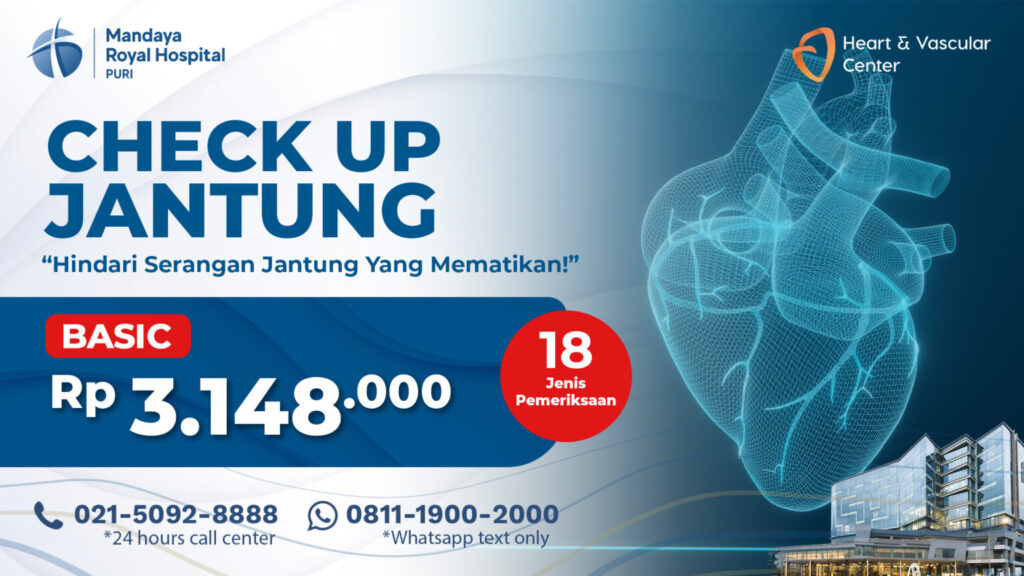
Consultation
- Physical examination by a PHC doctor
- Examination by a cardiologist
Non-Laboratory Tests
- Chest X-ray
- ECG
- Treadmill test
Laboratory Tests
- Complete blood count
- Fasting blood glucose
- Total cholesterol
- HDL cholesterol
- LDL cholesterol
- Triglycerides
- SGOT
- SGPT
- Urea
- Creatinine
- Uric acid
- Electrolytes
- Complete urinalysis
2. Standard Heart Check-Up
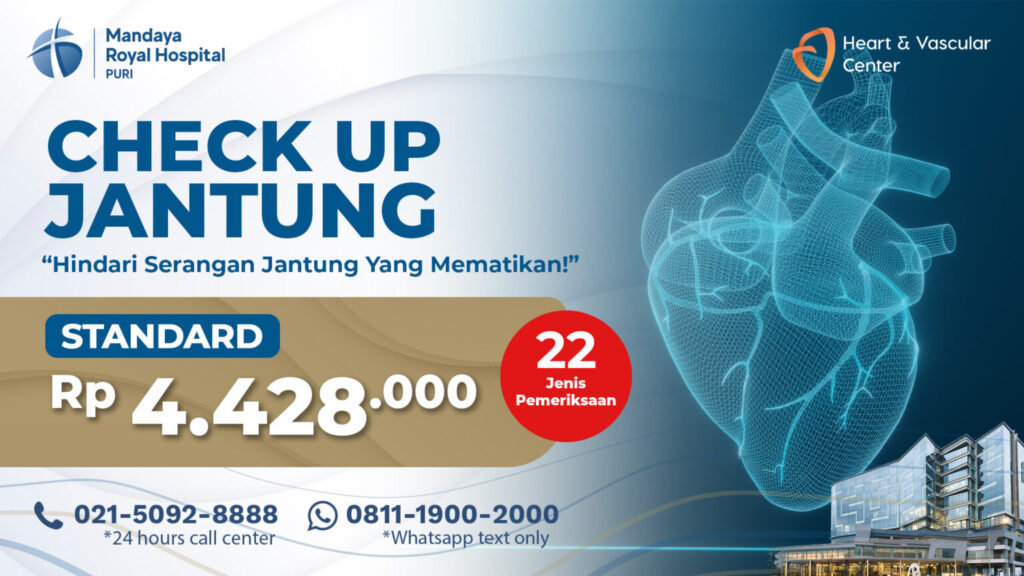
Consultation
- Physical examination by a PHC doctor
- Examination by a cardiologist
Non-Laboratory Tests
- Chest X-ray
- ECG
- Treadmill test
- Echocardiography
Laboratory Tests
- Complete blood count
- Fasting blood glucose
- HbA1C
- Total cholesterol
- HDL cholesterol
- LDL cholesterol
- Triglycerides
- Alkaline phosphatase
- SGOT
- SGPT
- Gamma GT
- Urea
- Creatinine
- Uric acid
- Electrolytes
- Complete urinalysis
3. Ultimate Heart Check-Up
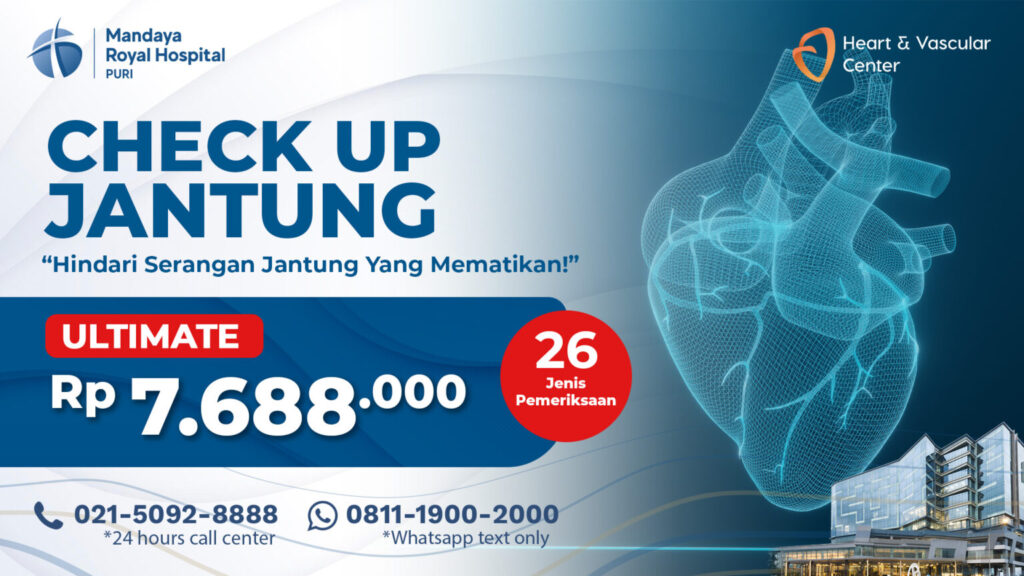
Consultation
- Physical examination by a PHC doctor
- Examination by a cardiologist
Non-Laboratory Tests
- Chest X-ray
- ECG
- Treadmill test
- Echocardiography
- Carotid Doppler ultrasound
- CT Calcium Score (coronary MSCT without contrast)
Laboratory Tests
- Complete blood count
- Fasting blood glucose
- HbA1C
- Total cholesterol
- HDL cholesterol
- LDL cholesterol
- Triglycerides
- Alkaline phosphatase
- SGOT
- SGPT
- Gamma GT
- Urea
- Creatinine
- Uric acid
- Electrolytes
- Lipoprotein (a)
- hs-CRP
- Complete urinalysis
Get Your Heart Checked at Mandaya Royal Hospital Puri
If you experience symptoms that may indicate a heart problem, such as chest pain, shortness of breath, unusual fatigue during physical activity, or pain radiating to the arm or jaw, do not delay seeking medical attention. Mandaya Royal Hospital Puri provides cardiovascular services to support comprehensive evaluation, from initial examinations to additional diagnostic tests based on each patient’s condition.
One of the doctors who can help evaluate heart-related complaints is dr. Nina Widasari, Sp.JP, a cardiologist at Mandaya Royal Hospital Puri. Through appropriate examination, doctors can help determine whether symptoms are related to the heart, GERD, or another condition and recommend the appropriate treatment.
If you experience severe chest pain that does not improve with rest, lasts for more than 10 minutes, or is accompanied by cold sweats, shortness of breath, or pain radiating to the arm or jaw, go to the Emergency Department at Mandaya Royal Hospital Puri immediately for medical evaluation and treatment.
To make your visit to Mandaya Royal Hospital Puri more convenient, you can use Chat via WhatsApp, Book an Appointment, or the Care Dokter app, which can be downloaded from Google Play and the App Store to help manage your visit, check queue numbers, and access other information.