



Cryptorchidism in children is a condition in which one or both testicles fail to descend into the scrotum (the sac behind the penis) as they should. During fetal development, the testicles form in the abdominal cavity and normally descend into the scrotum before birth. However, in children with cryptorchidism, this process does not occur completely, causing the testicles to remain in the abdomen or along the path of descent.
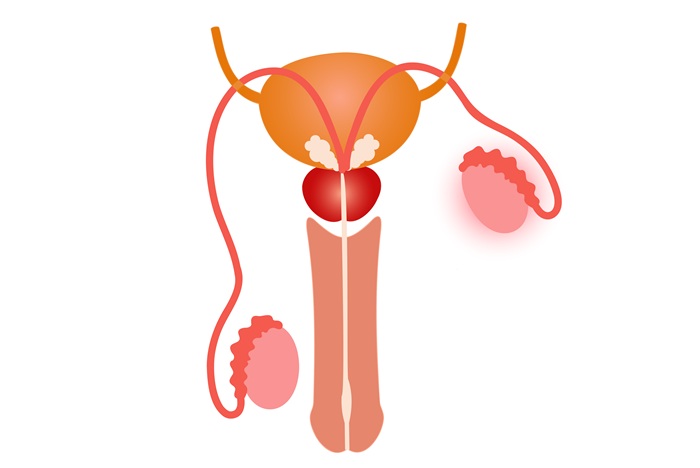
This condition is relatively common in newborns, especially in premature babies or those with low birth weight. Although the testicles may sometimes descend on their own within the first few months of life, cryptorchidism still requires medical attention. If left untreated, this condition can affect testicular function, including testosterone production and future sperm quality. In addition, children with cryptorchidism have a slightly higher risk of developing testicular cancer, although this risk can be reduced with early treatment.
At RS Mandaya Royal Puri, this condition can be managed by a pediatric urology consultant, dr. Hendy Mirza, Sp.U(K).

Contents
What are the symptoms of cryptorchidism in children?
The main symptom of cryptorchidism is the absence of one or both testicles in the scrotum (undescended testicles). Normally, both testicles should already be in the scrotum at birth or within the first few months of life.
Aside from the absence of testicles in the scrotum, cryptorchidism usually does not cause any other symptoms. It is generally painless and does not affect a baby’s ability to urinate. For this reason, many cases are only discovered during routine physical examinations by a doctor after birth.
What causes cryptorchidism in children?
The exact cause of cryptorchidism is not fully understood. However, several factors are believed to contribute to this condition, including:
- Disruption in fetal development that affects the normal descent of the testicles into the scrotum.
- Low testosterone levels during fetal development, which may interfere with testicular formation and descent.
- Premature birth, as the testicles may not have had enough time to descend before delivery.
- Low birth weight, which is associated with a higher risk of cryptorchidism.
It is important to note that there is no evidence that a mother’s activities, diet, or habits during pregnancy cause cryptorchidism. This condition is generally related to developmental factors during fetal growth.
What are the complications of cryptorchidism in children?
Children with cryptorchidism have a higher risk of developing several complications if the condition is not properly treated. These include:
-
Testicular cancer
Cryptorchidism increases the risk of testicular cancer later in life. Testicular cancer is one of the most common cancers affecting males aged 15 to 35 years.
-
Testicular torsion
This occurs when the spermatic cord, which supplies blood to the testicle, becomes twisted and cuts off blood flow. It causes severe pain and requires immediate treatment to prevent permanent damage to the testicle.
-
Inguinal hernia
An inguinal hernia occurs when part of an internal organ or tissue protrudes through a weak area in the abdominal wall near the groin. This condition is more commonly seen in children with undescended testicles.
-
Hypogonadism
Hypogonadism is a condition in which the testicles do not produce enough testosterone. This can affect normal growth and sexual development.
In addition to these complications, untreated cryptorchidism can also affect fertility in adulthood, as sperm production requires a lower temperature environment, which is naturally provided in the scrotum. Therefore, early diagnosis and treatment are essential to reduce long-term risks.
Treatment of cryptorchidism in children by dr. Hendy Mirza, Sp.U(K) at RS Mandaya Puri

Treatment of cryptorchidism using the orchiopexy procedure at RS Mandaya Royal Puri can be performed by dr. Hendy Mirza, Sp.U(K), a pediatric urology consultant experienced in treating various urinary tract and reproductive system disorders in children.
Orchiopexy is a surgical procedure aimed at moving the undescended testicle into its normal position in the scrotum. It is the standard treatment for cryptorchidism.
During the procedure, the doctor makes a small incision in the groin area to locate the undescended testicle. Another small incision is made in the scrotum to create a space for proper placement. The testicle is then moved and fixed in position within the scrotum. In some cases, if the testicle is underdeveloped or non-functional, removal may be considered.
With expertise in pediatric urology and reconstructive surgery, dr. Hendy performs comprehensive evaluations to determine the most appropriate timing and treatment approach for each patient, helping minimize long-term complications.
Dr. Hendy Mirza, Sp.U(K) is available at RS Mandaya Royal Puri on:
- Monday: 16.00 – 19.00 WIB
- Wednesday: 16.00 – 19.00 WIB
- Friday: 16.00 – 19.00 WIB
When should orchiopexy be performed?
If a child’s testicles have not descended by 6 months of age, it is recommended to consult a doctor to determine the appropriate next steps. If orchiopexy is required, it is generally recommended to be performed between 12 and 24 months of age.
If cryptorchidism is left untreated, the undescended testicles may not function properly and may be unable to produce healthy sperm. This condition can also increase the risk of infertility or fertility problems later in life.
To make your visit easier, you can use WhatsApp Chat, Book Appointment, or the Care Dokter app available on Google Play and the App Store to check queues and access complete information.
The information on this page is intended for educational and general informational purposes only and does not represent all medical services available from each doctor. For appropriate treatment, patients are advised to consult directly with a doctor.
If you have questions or need further information, please contact our call center at 0811-1900-2000.