


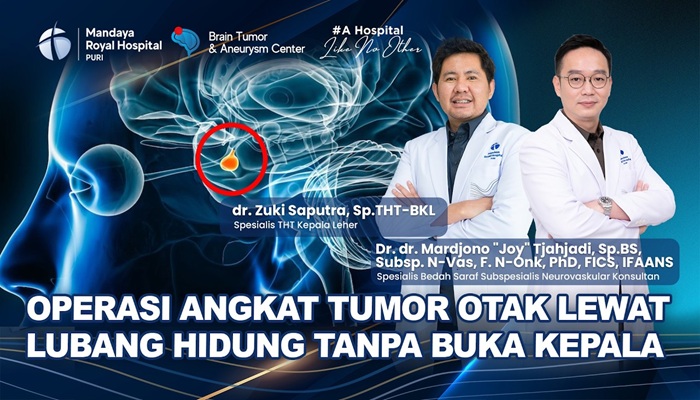
A pituitary macroadenoma is a tumor that is generally benign and develops from glandular tissue in the pituitary gland, measuring more than 10 mm in size. Meanwhile, pituitary tumors measuring less than 10 mm are known as microadenomas. The term “macro” in macroadenoma refers to the larger size of the tumor.
Although most pituitary macroadenomas are benign, they can still cause various symptoms as they grow larger and press on nearby brain structures or surrounding tissues. Macroadenomas can also cause problems by producing excessive amounts of hormones, which can ultimately affect various bodily functions.
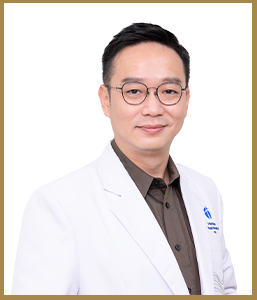
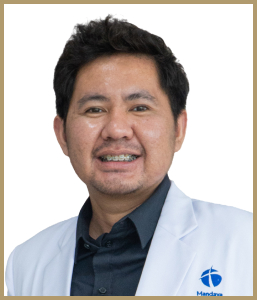
Treating a large pituitary tumor requires an appropriate approach, particularly because of its location at the base of the brain and its proximity to several important structures. Recently, a team of doctors at Mandaya Royal Hospital Puri, consisting of dr. Zuki Saputra, Sp.THT-BKL and Dr. dr. Mardjono Joy Tjahjadi, Sp.BS, Subsp. N-Vas, F. N-Onk, PhD, FICS, IFAANS, collaborated to remove a pituitary macroadenoma brain tumor through the nose. The procedure was performed using Endoscopic Endonasal Transsphenoidal Surgery (EETS), a minimally invasive surgical technique that allows doctors to reach the tumor through the nasal cavity without opening the skull from above.

Contents
Patient Condition and EETS Procedure Explained
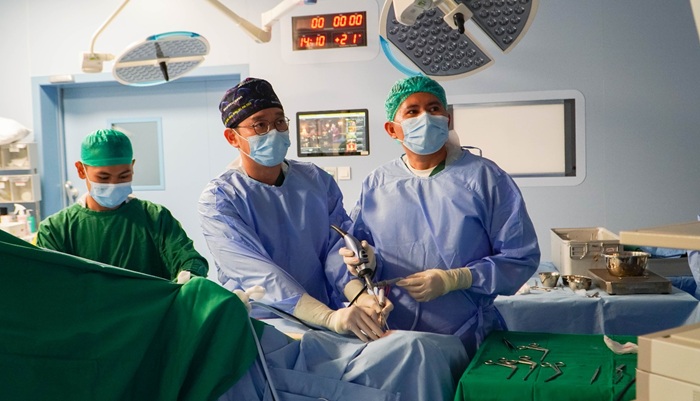
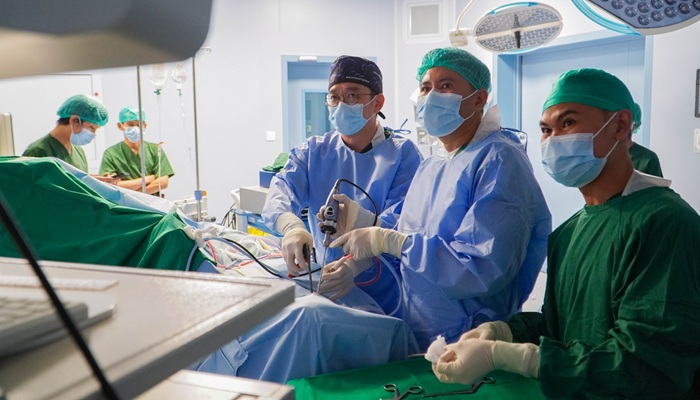
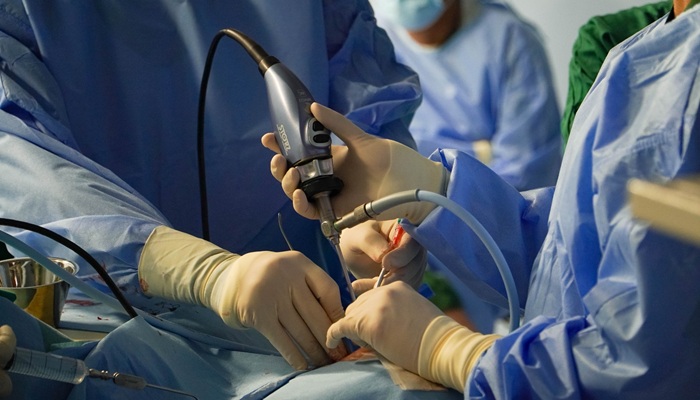
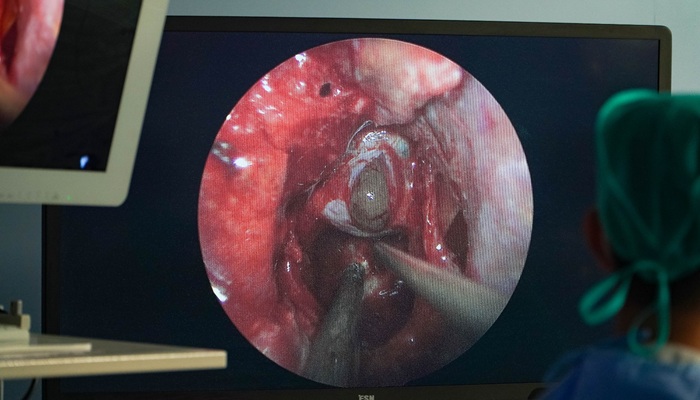
According to dr. Zuki, the procedure performed on the patient was surgery to remove a pituitary macroadenoma through the nasal passage. This procedure is known as EETS.
During EETS, the nasal passage is used as a pathway to reach the tumor located in the sellar region. The pituitary tumor itself is located near the sphenoid sinus, one of the paranasal sinuses located toward the back of the nasal cavity.
During the procedure, the ENT team prepares and opens the pathway through the nasal cavity toward the tumor. Once access has been established, the neurosurgeon can insert an endoscope and surgical instruments through the nose to reach and remove the tumor.
The surgery involves collaboration between the ENT and neurosurgery teams. The ENT team helps prepare the nasal pathway while maintaining the condition of the nasal cavity throughout the operation, allowing the neurosurgeon to access the tumor safely.
In this case, the patient was a 66-year-old man who presented with visual disturbances. After the surgery, the medical team used an endoscope with high-definition visualization, along with various supporting instruments, to assist in removing the tumor.
According to dr. Zuki, in addition to advanced technology, collaboration between the ENT and neurosurgery teams was an important part of the procedure. The cooperation between the two teams allowed the surgical pathway to be prepared properly, enabling the tumor to be removed quickly, accurately, and effectively.
Goals of EETS
The main goal of EETS is to remove a pituitary tumor while preserving pituitary gland function as much as possible. The procedure also aims to reduce the risk of tumor recurrence and prevent the tumor from pressing on important structures around it.
In addition to tumor removal, EETS may be performed for the following purposes:
- Relieving tumor-related symptoms, such as headaches and visual disturbances caused by pressure on tissues surrounding the pituitary gland.
- Addressing hormone production disorders, particularly when a tumor causes the pituitary gland to produce excessive hormones or disrupt the body’s hormonal balance.
- Stopping or controlling tumor growth to prevent further pressure on the pituitary gland, optic nerves, and surrounding brain structures.
- Obtaining a tumor tissue sample for biopsy, allowing doctors to determine the tumor’s characteristics and type and plan further treatment.
- Reducing tumor size when complete tumor removal is considered too risky. Reducing the tumor burden may also help make additional treatments more effective.
- Treating pituitary apoplexy, a condition involving sudden bleeding or impaired blood flow within a pituitary tumor that can result in a medical emergency.
- Treating acromegaly, a disorder caused by excessive production of growth hormone and often associated with a pituitary tumor.
Read also: Brain Tumor Removed Through the Nose by Dr. Joy, Patient Regains Vision
Conditions That Can Be Treated with EETS
EETS is primarily used to treat tumors or abnormalities located around the pituitary gland and skull base. Conditions that may be treated using this approach include:
- Pituitary adenoma, a tumor that originates from cells of the pituitary gland. These tumors may be functional and produce excessive hormones or may not produce excess hormones.
- Craniopharyngioma, a tumor that is generally benign and develops from tissue around the pituitary stalk. In some cases, the tumor can grow toward or into the third ventricle of the brain.
- Rathke’s cleft cyst, a fluid-filled cyst that develops in the area between the anterior and posterior parts of the pituitary gland.
- Meningioma, a tumor originating from the meninges, the membranes that cover and protect the brain and spinal cord.
- Chordoma, a type of malignant tumor that can develop in the bones at the base of the skull.
EETS Procedure
EETS is generally performed under general anesthesia. Before surgery, patients undergo several preparations to ensure that their overall condition is suitable for the procedure.
Before EETS
Patients are generally instructed to fast before surgery, including avoiding food and drinks starting at a time determined by their doctor. The doctor will also review the medications the patient is taking. Certain medications may need to be temporarily discontinued, particularly those that can increase the risk of bleeding. However, medications should only be stopped under a doctor’s instructions and should not be discontinued independently.
Before surgery, patients may also undergo supporting examinations, such as blood tests, cardiac evaluations, and chest X-rays. The anesthesiologist will then evaluate the results to determine whether the patient is ready for anesthesia and surgery.
During the EETS Procedure
EETS can take several hours, depending on the size, location, and characteristics of the tumor. The procedure may involve collaboration between an ENT specialist and a neurosurgeon.
In general, the surgical steps include:
- Inserting the endoscope through the nose. The ENT specialist inserts an endoscope, a small tube equipped with a camera and light source, through the nasal cavity.
- Reaching the sphenoid sinus. The endoscope is guided through the nasal cavity toward the sphenoid sinus located at the back of the nasal cavity.
- Creating access through the sphenoid sinus. The doctor creates an opening in the sphenoid sinus to reach the area behind it.
- Opening the skull base. The doctor creates an opening in the back of the sphenoid sinus to gain access to the pituitary gland area.
- Identifying the tumor. In certain cases, imaging such as MRI may be used as an intraoperative guide to help doctors identify the tumor’s location and boundaries.
- Removing the tumor. Once the pituitary gland area can be reached, the neurosurgeon gradually removes the tumor through the opening, usually in small pieces.
- Closing and completing the procedure. Once tumor removal is complete, the endoscope is removed. The doctor may then use specific materials at the surgical site to support closure and tissue healing.
After EETS
After surgery, patients generally remain under observation in the hospital. The length of hospitalization varies from patient to patient, but in certain cases, patients may stay for approximately one to two days.
During recovery, the medical team monitors the patient’s condition, including pituitary gland function, fluid balance, and urine output. Patients are also encouraged to gradually move and walk according to their condition.
After being discharged, the doctor may provide several recommendations to support recovery, such as:
- Taking pain medication as prescribed to help manage pain or headaches after surgery.
- Limiting certain physical activities, including heavy lifting and straining, until the doctor determines that these activities are safe.
- Attending regular follow-up appointments to monitor the patient’s condition and pituitary gland function.
- Undergoing follow-up MRI examinations to evaluate the surgical area and check for residual tumor or tumor recurrence.
- Having vision assessments to evaluate visual function after the tumor has been removed.
Read also: Dr. Joy Removes Brain Tumor Through the Nose Using Endoscopic Endonasal Transsphenoidal (EETH)
Benefits of EETS
Pituitary tumors can affect hormonal balance and put pressure on the optic nerves, potentially causing visual disturbances. Removing the tumor can reduce pressure on surrounding structures, and in some patients, vision and hormonal balance may improve.
EETS is also a minimally invasive approach because doctors reach the tumor through the nasal cavity without requiring a large incision in the head or opening the skull as in a craniotomy. When appropriate, this approach may offer several benefits, including:
- No external incision on the head is required, as the tumor is accessed through the nasal cavity.
- Less postoperative discomfort compared with certain surgical approaches that require opening the skull.
- A potentially shorter recovery period, allowing patients to return to their usual activities sooner.
- A potentially lower risk of injury to brain tissue, as doctors do not need to pass through brain tissue to reach the tumor.
- Direct access to the tumor, particularly for tumors located around the pituitary gland and skull base.
However, not every pituitary or skull-base tumor can be treated using EETS. The choice of surgical technique depends on the tumor’s type, size, location, the patient’s condition, and the tumor’s proximity to important surrounding structures. Therefore, a comprehensive examination and evaluation by a doctor are necessary before determining the most appropriate surgical approach.
If you would like to learn more about EETS, you can consult with the medical team at Mandaya Royal Hospital Puri. To make your visit more convenient, use WhatsApp Chat, Book Appointment, or the Care Dokter app, available for download on Google Play and the App Store. These services make it easier to arrange appointments, check queue numbers, and access other information.

References:
- Barrow Neurological Institute. Pituitary Macroadenoma. (https://www.barrowneuro.org/condition/macroadenoma/). Accessed August 13, 2026.
- Mayo Clinic. Transsphenoidal Surgery. (https://www.mayoclinic.org/tests-procedures/transsphenoidal-surgery/about/pac-20583059). Accessed August 13, 2026.
- University of Florida Health. Transsphenoidal Surgery. (https://ufhealth.org/conditions-and-treatments/transsphenoidal-surgery). Accessed August 13, 2026.
- Johns Hopkins Medicine. Endoscopic Pituitary Surgery. (https://www.hopkinsmedicine.org/health/treatment-tests-and-therapies/endoscopic-pituitary-surgery). Accessed August 13, 2026.