


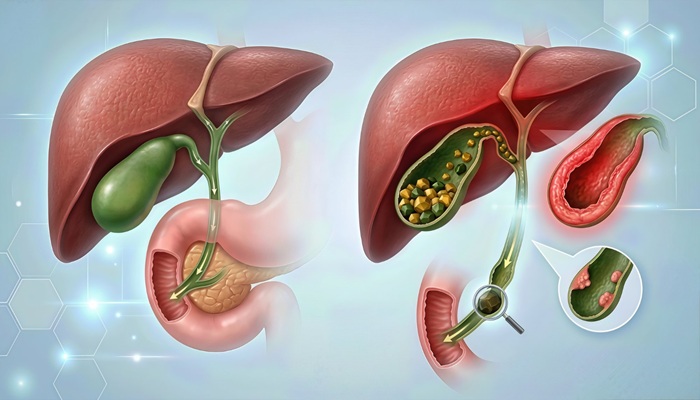
The gallbladder is a small, pear-shaped organ located beneath the liver and near the pancreas. It is part of the biliary system, which helps support digestion. However, if gallstones cause problems, such as recurring abdominal pain, a doctor may recommend gallbladder removal surgery, also known as a cholecystectomy.
So, can you live without a gallbladder? What effect does its removal have on digestion, and how does the body adapt after surgery?

Contents
Why Does the Gallbladder Need to Be Removed?
A person can live a long life and continue their usual activities without a gallbladder. Therefore, gallbladder removal is a relatively common surgical procedure.
Gallbladder removal surgery is called a cholecystectomy. It may be performed to treat several conditions, including:
- Gallbladder infection.
- Gallbladder inflammation, or cholecystitis.
- Gallstones.
- Gallbladder polyps.
Although people can live without a gallbladder, lifestyle and dietary changes may be necessary to prevent problems after surgery. With these adjustments, most people can return to their daily activities without noticing a significant difference.
Can You Live Without a Gallbladder?
To understand how the body functions without a gallbladder, it is important to first understand the role of this organ.
The gallbladder is a small organ located beneath the liver that temporarily stores bile. This fluid helps with digestion and is released into the digestive tract after a person eats.
After the gallbladder is removed, the body no longer has a place to store bile between meals. Instead, the liver continues to produce bile, which flows directly into the small intestine to help with digestion.
Therefore, although the gallbladder helps the body regulate bile storage and release, it is not essential for survival. Without a gallbladder, the body continues to produce bile throughout the day. The difference is that bile is no longer stored and released in a large amount after meals. Instead, it flows directly from the liver into the small intestine.
So, how does this change affect daily life after gallbladder removal?
What Is Life Like After Gallbladder Removal?
Gallbladder removal changes how the body regulates bile to support digestion. Some people experience digestive problems after surgery, but these symptoms are generally temporary and can be reduced through dietary adjustments.
Here are some changes that may occur after gallbladder removal.
1. Diarrhea Caused by Bile
After the gallbladder is removed, the body needs time to adapt to the absorption and flow of bile. Bile has a laxative effect, meaning it can stimulate bowel movements. As a result, some people experience diarrhea after surgery.
For most people, these symptoms improve over time. However, others may develop persistent bile acid diarrhea. If diarrhea continues, consult a doctor, as bile acid sequestrants may be needed to help relieve the symptoms.
2. Changes in Diet and Digestion
The gallbladder helps the body digest fat by storing and releasing bile when needed. After the organ is removed, bile flows directly from the liver into the small intestine. As a result, the body no longer has a reserve of bile that can be released in a large amount after meals.
To help the body adapt, consider the following steps:
- Limit high-fat foods: Oily foods, fatty foods, and foods containing large amounts of butter may trigger digestive problems, especially during the early stages of recovery.
- Eat smaller portions: Avoid consuming large amounts of fatty food in one sitting so that the digestive system can gradually adapt.
- Reintroduce foods gradually: After surgery, gradually expand your food choices according to your body’s tolerance and your doctor’s recommendations.
These dietary adjustments do not mean you must avoid fatty foods forever. Over time, many people can return to eating a variety of foods in appropriate amounts without experiencing significant symptoms.
Gallbladder Removal Surgery Using the Da Vinci Xi Robot at Mandaya Royal Hospital Puri
Mandaya Royal Hospital Puri offers gallbladder removal surgery, or cholecystectomy, supported by Da Vinci Xi robotic surgical technology. This technology allows doctors to control surgical instruments from a console, enabling stable and precise movements during the procedure.
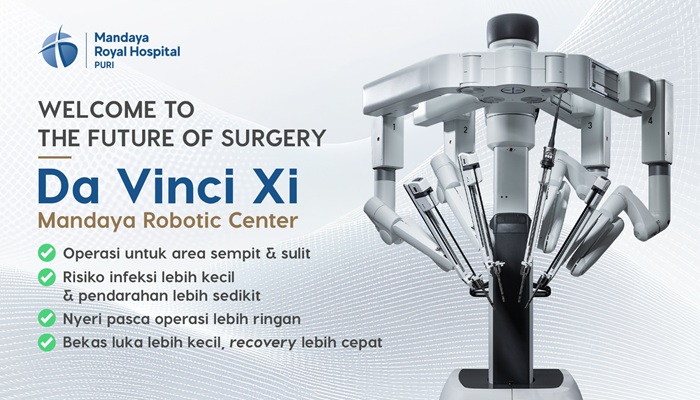
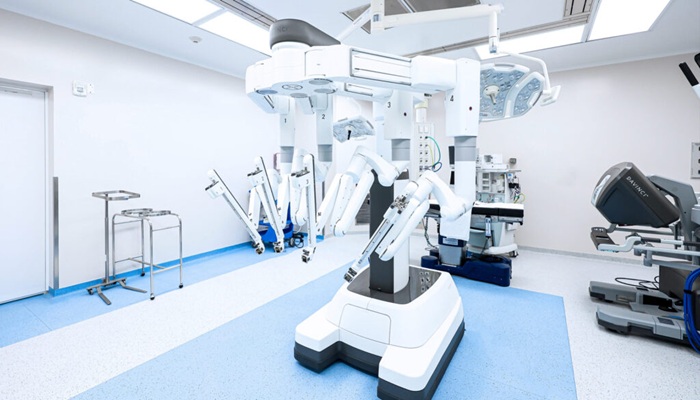
The Da Vinci Xi system has four robotic arms: one equipped with a high-definition camera that provides three-dimensional (3D) visualization, and three others that hold surgical instruments. This technology helps doctors see the structures surrounding the gallbladder more clearly and in greater detail, allowing tissue dissection during surgery to be performed with greater precision.
According to dr. Ocsyavina, Sp.B. Subsp.BD (K), a digestive surgery subspecialist at Mandaya Royal Hospital Puri, enhanced visualization is one of the key advantages of using the Da Vinci Xi system for gallbladder removal.
“With the Da Vinci Xi, we can zoom in and see the gallbladder’s structures more clearly, allowing us to dissect (cut) the tissue with greater precision,” said dr. Ocsyavina.
In addition to supporting precision during surgery, the Da Vinci Xi system may also help with the patient’s recovery process. According to dr. Ocsyavina, patients can generally begin moving around on the first day after surgery without specific restrictions. If their condition is good and pain is minimal, they may be discharged within approximately one to two days.
“As for the patient’s recovery, they can start moving around on the first day, with no restrictions. Usually, once the pain has subsided, they may be able to go home after one or two days,” dr. Ocsyavina added.
Facilities for Patients Traveling From Other Cities and Countries at Mandaya Royal Hospital Puri

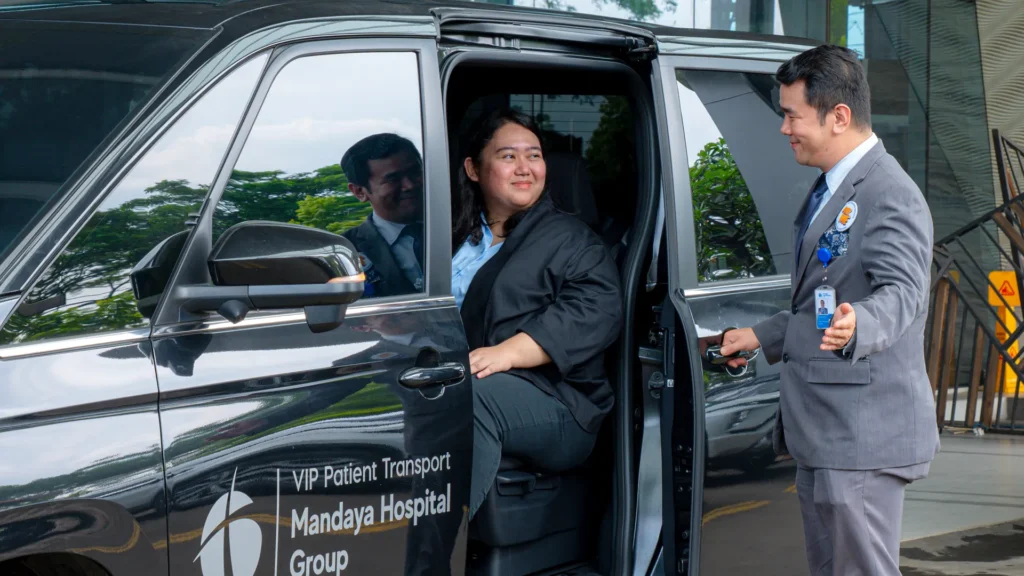
Mandaya Royal Hospital Puri provides a range of support facilities to offer additional comfort for patients traveling from other cities or abroad:
- VIP Transportation: A pickup service from Soekarno-Hatta International Airport, train stations, or seaports to the hospital in a comfortable vehicle, accompanied by a Patient Experience Officer (PEO).
- Medical Ambulance Pickup: A dedicated pickup service for patients with specific medical needs from their arrival point (airport, train station, or seaport), with medical equipment and assistance from professional healthcare personnel.
- Accommodation (Sleep Hub & Apartments): Comfortable accommodation for family members accompanying patients, located on the eighth floor of the Mandaya Royal Hospital Puri building, with nearby apartments also available.
- International Patient Relations: Dedicated assistance for international patients with medical coordination, interpretation, and administrative arrangements. For information and assistance from International Patient Relations, call 021 5092 8888 or email [email protected].
To make your visit to Mandaya Royal Hospital Puri easier, use Chat via WhatsApp, Book an Appointment, or the Care Dokter app, which is available for download on Google Play and the App Store. These options can help you arrange visits, check queue numbers, and access other information.
The information on this page is intended for educational purposes and provides a general overview. It may not cover every type of medical service that each doctor can provide. To ensure that you receive care appropriate to your health condition, we recommend consulting the relevant doctor directly.
If you have any questions, suggestions, or need further information, please contact our call center at 0811-1900-2000.

References:
- UPMC HealthBeat. Can You Live Without a Gallbladder? https://share.upmc.com/2024/05/can-you-live-without-a-gallbladder/. Accessed October 20, 2026.
- NHS. What Is Gallbladder Removal? https://www.nhs.uk/tests-and-treatments/gallbladder-removal/what-is-gallbladder-removal/. Accessed October 20, 2026.
- Healthline. Can You Live Without a Gallbladder? https://www.healthline.com/health/can-you-live-without-a-gallbladder. Accessed October 20, 2026.
- Cleveland Clinic. Can You Live Without a Gallbladder? https://health.clevelandclinic.org/can-you-live-without-a-gallbladder. Accessed October 20, 2026.