


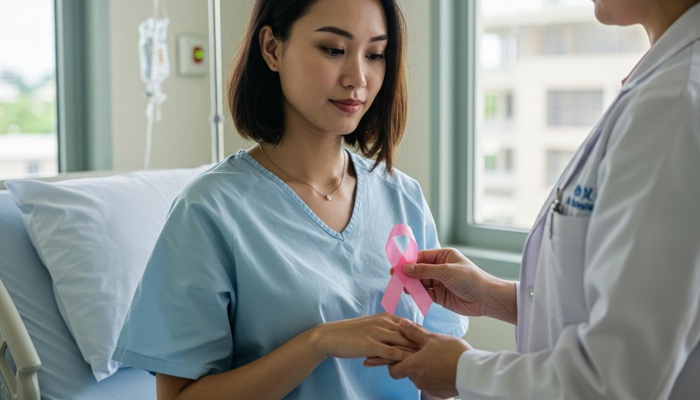
Targeted therapy for breast cancer is a treatment method that uses drugs to target specific proteins in cancer cells involved in their growth, spread, and survival. These drugs work by destroying cancer cells or slowing their growth. Compared with chemotherapy, targeted therapy has a different mechanism of action and side effect profile, which may be milder in certain circumstances.
Targeted therapy drugs may also help the immune system control cancer cells. Because these drugs can enter the bloodstream and reach various parts of the body, targeted therapy may be used to treat breast cancer that has spread to other organs, depending on the type of cancer and the patient’s condition.

Contents
When is targeted therapy for breast cancer given, and who is eligible?
Targeted therapy for breast cancer may be given at different stages of treatment, either before or after breast cancer surgery. For patients who cannot undergo surgery, this therapy may also be an option, depending on their medical condition.
Not all breast cancer patients need targeted therapy. This treatment may be considered for patients with certain cancer characteristics, such as:
- HER2-positive breast cancer: Cancer characterized by an overexpression of the HER2 protein.
- Hormone receptor-positive breast cancer: Cancer whose growth is influenced by estrogen and/or progesterone.
- Triple-negative breast cancer: Cancer that does not have estrogen receptors, progesterone receptors, or the HER2 protein.
- Breast cancer with BRCA1 or BRCA2 gene mutations: These mutations can affect the cells’ ability to repair DNA damage.
To determine whether a patient may benefit from targeted therapy, doctors consider biomarker test results and tumor characteristics. These tests help identify the type of cancer and determine the most appropriate treatment. Not every patient in these groups automatically qualifies for targeted therapy, as the choice of medication also depends on the cancer stage, test results, and treatment history.
How does targeted therapy for breast cancer work?
Targeted therapy works by targeting specific proteins involved in the growth and development of cancer cells. These drugs have different mechanisms of action depending on the type of therapy used. Here are some ways targeted therapy works for breast cancer:
- Inhibiting cancer cell growth: Targeted therapy drugs block specific proteins that help cancer cells grow and divide. This can slow the growth of cancer cells.
- Delivering drugs directly to cancer cells: Some targeted therapy drugs combine antibodies with chemotherapy drugs. These are known as antibody-drug conjugates (ADCs). The antibodies recognize specific proteins on cancer cells and deliver the chemotherapy drugs to those cells to help destroy them.
The mechanism of action depends on the type of drug and the characteristics of the patient’s breast cancer. Therefore, doctors determine the appropriate therapy based on tumor test results and the patient’s condition.
Read also: Stage 4 Breast Cancer: Symptoms, Treatment, and Life Expectancy
How is targeted therapy administered?
Targeted therapy for breast cancer can be administered in several forms, depending on the type of medication and the patient’s condition. These include:
- Oral medication: Targeted therapy drugs are available as tablets or capsules and should be taken according to the doctor’s instructions.
- Injection: Medication is administered by injection, depending on the type of therapy used.
- Intravenous (IV) infusion: Medication is delivered through an IV into a blood vessel, allowing it to circulate through the bloodstream.
Treatment schedules vary from patient to patient. Targeted therapy may be administered daily, weekly, or monthly. The duration also depends on the type of medication and the patient’s response, ranging from a defined treatment period to longer-term therapy as recommended by the doctor.
During targeted therapy, patients need regular follow-up appointments to monitor their health and treatment effectiveness. Doctors may recommend blood tests, X-rays, CT scans, or other examinations as needed. Patients should also report any side effects so that doctors can evaluate their condition and adjust treatment when necessary.
Targeted therapy vs. chemotherapy: What is the difference?
Targeted therapy and chemotherapy are both systemic treatments, meaning they work through the bloodstream to reach different parts of the body. However, they work differently in treating breast cancer.
Here are some key differences between targeted therapy and chemotherapy:
- Mechanism of action: Chemotherapy kills cells that grow and divide rapidly, including cancer cells. Targeted therapy, on the other hand, targets specific proteins involved in cancer cell growth.
- Effects on healthy cells: Chemotherapy can also affect rapidly growing healthy cells, such as those in the mouth, digestive tract, and hair follicles. Targeted therapy is generally more selective because it focuses on specific targets in cancer cells, so it may be less likely to damage healthy cells. However, it can still cause side effects.
- Use in treatment: Chemotherapy and targeted therapy may be given separately or in combination, depending on the cancer’s characteristics and the patient’s condition. For example, targeted therapy drugs that target the HER2 protein may be given before or after chemotherapy.
Doctors determine the appropriate treatment based on breast cancer test results, including tumor characteristics and the proteins present in cancer cells.
What are the side effects of targeted therapy for breast cancer?
The side effects of targeted therapy for breast cancer vary from patient to patient, depending on the medication used and the patient’s overall condition. Possible side effects include:
- Digestive problems: Such as diarrhea or bleeding in the stomach and intestines, which may cause bloody or black stools.
- Blood clots: These can obstruct blood flow.
- Skin problems: Such as dry skin, rashes, or changes in hair color.
- Elevated liver enzymes: This may indicate impaired liver function.
- Heart problems: Such as abnormal heart rhythms or treatment-related damage to the heart muscle.
- High blood pressure: This may develop during treatment.
- Pulmonary fibrosis: The formation of scar tissue in the lungs, which can interfere with breathing.
- Delayed wound healing: Including wounds caused by incisions or injuries that take longer to heal.
Oncologists consider the potential risks of side effects before selecting an appropriate targeted therapy. They may also recommend medications or other treatments to help prevent or reduce side effects during treatment. Patients should consult their doctor promptly if they experience new or concerning symptoms.
Comprehensive breast cancer care at Mandaya Breast Cancer Center
Mandaya Royal Hospital Puri’s Breast Cancer Center offers integrated services for breast cancer, ranging from initial examinations and diagnosis to various treatment options and breast reconstruction. These services are also supported by the Limfedema Center (Lymphedema Center), which focuses on managing lymphedema, or swelling caused by impaired lymphatic fluid flow. This condition may affect patients after breast cancer treatment.
The following services are available at Mandaya Breast Cancer Center:
- Examinations and diagnosis: Includes 2D and 3D mammography, breast ultrasound, Digital PET/CT Scan, and Vacuum-Assisted Breast Biopsy (VABB), which uses a vacuum-assisted device to collect breast tissue samples through a small incision.
- Breast cancer surgery: Available procedures include mastectomy to remove the entire breast and endoscopic lumpectomy to remove tumors while preserving as much breast tissue as possible, depending on the patient’s condition. In selected cases, Sentinel Lymph Node Biopsy (SLNB) may also be performed to assess the possibility of cancer spreading to the lymph nodes.
- Cancer treatment options: Treatment is tailored to the type and stage of cancer and may include radiotherapy, chemotherapy, immunotherapy, targeted therapy, and hormone therapy.
- Breast reconstruction: This procedure aims to help restore the shape of the breast after surgery to remove cancerous tissue, based on the patient’s condition and needs.
- Treatment for benign tumors without open surgery: High-Intensity Focused Ultrasound (HIFU) uses high-intensity sound waves directed at targeted tissue to treat certain benign tumors without an open surgical incision.
- Lymphedema Center services: Lymphedema management includes Manual Lymphatic Drainage (MLD) performed by certified physiotherapists, compression devices, and surgical options such as Lymphovenous Anastomosis (LVA) and lymph node transplantation.
Through these services, Mandaya Royal Hospital Puri provides options for breast cancer examinations, treatment, and the management of related complications within one care center. Recommendations for examinations and treatment are tailored to the doctor’s evaluation, cancer characteristics, and each patient’s condition.
Facilities for out-of-town and international patients at Mandaya Royal Hospital Puri

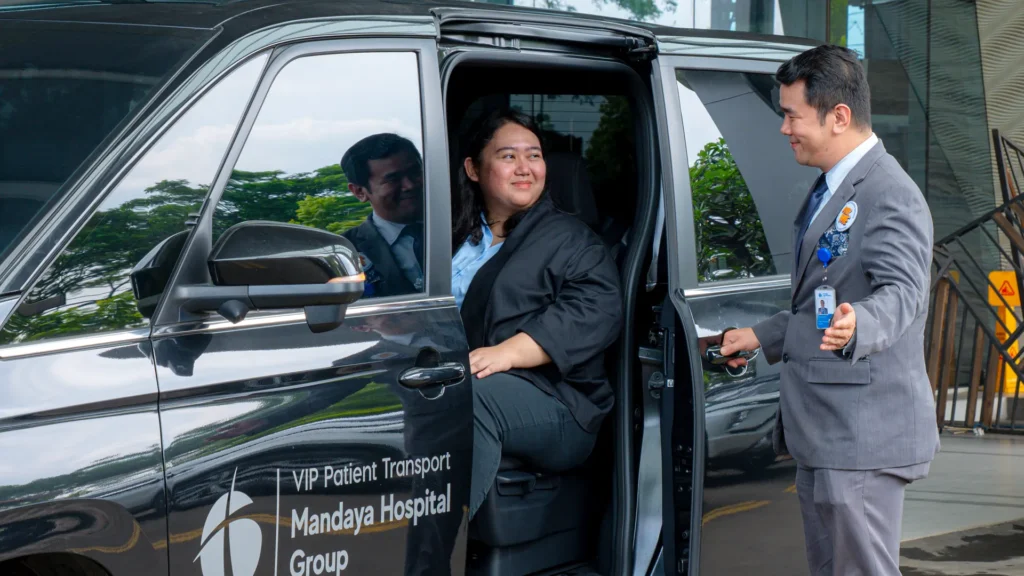
Mandaya Royal Hospital Puri provides a range of support facilities to enhance the comfort of patients traveling from other cities or countries:
- VIP transportation: A pickup service from Soekarno-Hatta International Airport, train stations, or seaports to the hospital in a comfortable vehicle, accompanied by a Patient Experience Officer (PEO).
- Medical ambulance pickup: Specialized transportation for patients with particular medical needs from arrival points such as airports, train stations, or seaports. The service includes medical equipment and assistance from qualified healthcare professionals.
- Accommodation (Sleep Hub and apartments): Comfortable accommodation for family members accompanying patients. Sleep Hub is located on the eighth floor of the Mandaya Royal Puri building, with additional apartment options nearby.
- International Patient Relations: Dedicated assistance for international patients, including medical coordination, interpretation, and administrative support. For information and assistance from International Patient Relations, please call 021 5092 8888 or email [email protected].
To make your visit to Mandaya Royal Hospital Puri easier, use the WhatsApp chat feature, book an appointment, or download the Care Dokter app from Google Play or the App Store. These options can help you arrange visits, check queue numbers, and access other information.
The information on this page is provided for educational purposes and as a general overview. It does not cover every type of medical service that each doctor may provide. To ensure that you receive care appropriate for your health condition, we recommend consulting the relevant doctor directly.
If you have any questions, suggestions, or need further information, please contact our call center at 0811-1900-2000.

References
- Cleveland Clinic. Targeted Therapy. (https://my.clevelandclinic.org/health/treatments/22733-targeted-therapy). Accessed October 16, 2026.
- Breastcancer.org. Targeted Therapy for Breast Cancer. (https://www.breastcancer.org/treatment/targeted-therapy). Accessed October 16, 2026.
- American Cancer Society. Targeted Therapy for Breast Cancer. (https://www.cancer.org/cancer/types/breast-cancer/treatment/targeted-therapy-for-breast-cancer.html). Accessed October 16, 2026.
- National Cancer Institute. Targeted Therapy for Breast Cancer. (https://www.cancer.gov/types/breast/treatment/targeted-therapy). Accessed October 16, 2026.