


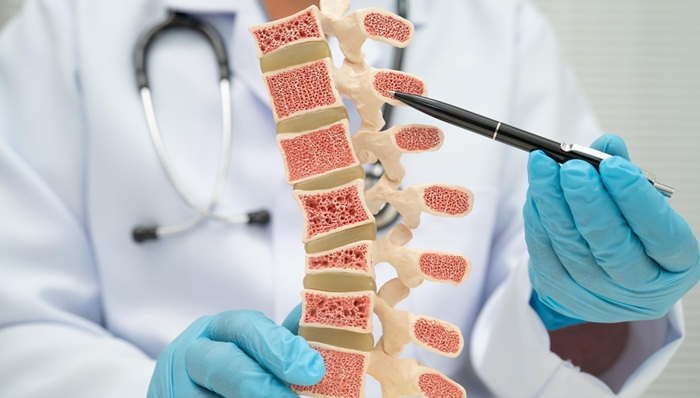
Osteoporosis is a condition that causes bones to become weak and fragile, making them more likely to fracture. Even minor impacts, such as falling, bending over, or coughing, can cause a bone to break. Osteoporosis-related fractures most commonly occur in the hip, wrist, or spine.
Bones are living tissue that constantly undergoes a process of formation and breakdown. Osteoporosis occurs when the formation of new bone cannot keep up with the loss of old bone. As a result, bone density and strength gradually decrease, increasing the risk of fractures.
Therefore, osteoporosis treatment needs to be tailored to each patient’s condition and severity. At Mandaya Royal Puri, osteoporosis treatment is available comprehensively, ranging from diagnosis using bone mineral density (BMD) testing to assess bone density, medication to help maintain bone strength, and surgery when osteoporosis has caused a fracture requiring further treatment.

Contents
Osteoporosis treatment at Mandaya Royal Puri, from diagnosis to surgery
Here are several osteoporosis treatments and management options available at Mandaya Royal Puri:
1. Diagnosing osteoporosis with BMD testing
The first step in determining osteoporosis treatment is assessing the condition of the bones through a bone density test, or bone mineral density (BMD) test. This examination can show how strong the bones are and help determine whether a person has osteoporosis, a condition that causes bones to become weak and more likely to fracture.
A BMD test measures the amount of calcium and other minerals present in the bones. The higher the mineral content, the denser and stronger the bones generally are, which means a lower risk of fractures. BMD testing is generally performed on bones that are more prone to fractures, particularly the spine and hip. In certain conditions, the test may also be performed on the forearm.
At Mandaya Royal Puri, BMD testing is available as part of osteoporosis diagnostic services. The results can help doctors assess bone density and determine the appropriate treatment based on each patient’s condition.
Read also: Osteoporosis Detection with BMD Testing at Mandaya Royal Puri
2. Medications
Once osteoporosis has been diagnosed through BMD testing, doctors can determine treatment based on the patient’s condition and risk of fracture. Treatment may include supplements to help meet the body’s nutritional needs for bone health, as well as medications that help maintain bone density and strength.
Calcium and vitamin D supplements
Patients may need calcium or vitamin D supplements, which may be available over the counter or by prescription. The type, dosage, and frequency of use should be adjusted to each patient’s needs based on their doctor’s recommendations.
Osteoporosis medications
Doctors may prescribe medications to help maintain bone density and strength. Some of the medications that may be used include:
- Hormone therapy, such as estrogen or testosterone.
- Bisphosphonates, a group of medications that can help slow the process of bone loss.
For patients with severe osteoporosis or a high risk of fractures, doctors may consider other types of medications, such as:
- Parathyroid hormone (PTH) analogs.
- Denosumab.
- Romosozumab.
These medications are generally administered by injection. At Mandaya Royal Puri, osteoporosis treatment options can be tailored to the results of the examination and each patient’s individual condition.
3. Surgery
Osteoporosis can cause bones to become fragile and more prone to fractures. When an osteoporosis-related fracture occurs, particularly when the fracture is severe, surgery may be necessary to restore the position of the bone and help restore the function of the bone or joint.
During orthopedic surgery, the doctor can reposition the fractured bone and keep it in the proper position using devices such as screws, plates, wires, or other implants. This helps the bone heal and regain strength so that it can gradually be used for movement and to support the body’s weight.
At Mandaya Royal Puri, fracture treatment is supported by a team of orthopedic specialists with various subspecialties, including hip and knee orthopedics, hand and shoulder orthopedics, and sports injuries. Treatment can be tailored to the location and condition of the fracture.
Be aware of osteoporosis symptoms that often go unnoticed
Osteoporosis is often referred to as a silent disease because it generally does not cause noticeable symptoms. A person may experience a gradual decline in bone density without experiencing headaches, fever, abdominal pain, or other specific signs indicating a problem with the bones.
A sudden fracture, especially after a minor fall or impact that would not normally be expected to cause a fracture, can be a sign that the bones have already lost strength. In addition to fractures, several physical changes may indicate that the bones are beginning to lose density and strength, including:
- Loss of height of around 2.5 cm or more.
- Changes in posture, such as becoming more stooped or leaning forward.
- Shortness of breath, which may occur when changes in the spine put pressure on the lungs and affect lung capacity.
- Lower back pain, particularly when changes occur in the spine.
Changes in height or posture can sometimes be difficult to notice yourself and may be more easily noticed by other people. Therefore, these physical changes should not simply be considered a normal part of aging. Bone density testing can be performed to assess bone health and detect a decline in bone density at an early stage.
When should you see a doctor?
You should see a doctor promptly if you experience physical changes that may indicate osteoporosis. Tell your doctor about any other symptoms you are experiencing, particularly bone pain or difficulty moving.
To make your visit to Mandaya Royal Hospital Puri easier, you can use the Chat via WhatsApp, Book Appointment, or Care Dokter app, which can be downloaded from Google Play and the App Store. These services can help make your visit easier, allow you to check your queue number, and provide other useful information.
*The information provided on this page is intended for educational purposes and general information only and does not represent the full range of medical services that may be provided by each doctor. To determine the appropriate treatment for your health condition, you are advised to consult directly with the relevant doctor.
If you have any questions, suggestions, or need further information, please contact our call center at 0811-1900-2000.

References:
- Mayo Clinic. Osteoporosis – Symptoms and Causes. (https://www.mayoclinic.org/diseases-conditions/osteoporosis/symptoms-causes/syc-20351968). Accessed on September 28, 2026.
- Mayo Clinic. Bone Density Test (DXA/DEXA Scan). (https://www.mayoclinic.org/tests-procedures/bone-density-test/about/pac-20385273). Accessed on September 28, 2026.
- Cleveland Clinic. Osteoporosis: Symptoms, Causes & Treatment. (https://my.clevelandclinic.org/health/diseases/4443-osteoporosis). Accessed on September 28, 2026.
- Healthline. When Is Surgery Needed to Treat Osteoporosis? (https://www.healthline.com/health/osteoporosis-surgery#how-surgery-may-help). Accessed on September 28, 2026.