



The heart pumps blood throughout the body. This blood carries oxygen needed by every cell to function properly. To work effectively, the heart itself also requires an adequate supply of blood and oxygen. This supply is delivered through the coronary arteries, which carry blood to the heart muscle.
Coronary artery disease occurs when the coronary arteries become narrowed or blocked due to plaque buildup along the artery walls. This plaque consists of fat, cholesterol, and other substances that can gradually cause the blood vessels to become narrower and stiffer. As a result, blood and oxygen flow to the heart muscle are reduced. When the heart does not receive enough oxygen, it can lead to angina (chest pain) and even a heart attack.
In certain cases, narrowed or blocked coronary arteries can be treated with the placement of heart stents to help keep the arteries open. However, in more complex or severe cases of coronary artery disease, stenting may no longer be an adequate option, and doctors may consider coronary artery bypass surgery.
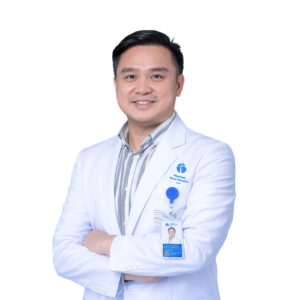
Recently, dr. Wirya A. Graha, Sp.BTKV, Subsp. JD(K), a thoracic, cardiac, and vascular surgeon specializing in adult cardiac surgery at Mandaya Royal Hospital Puri, performed minimally invasive coronary artery bypass surgery (MICS) on a patient with a history of four heart stents. What was the outcome?

Contents
dr. Wirya Explains the Patient’s Condition and MICS CABG Procedure
The patient treated by dr. Wirya had previously undergone the placement of four heart stents. However, the patient continued to experience chest pain after the procedure. Further examination using MRI also showed that the heart muscle was still receiving an inadequate blood supply.
Based on the patient’s condition, dr. Wirya performed minimally invasive coronary artery bypass grafting (MICS CABG) to create new pathways for blood to reach the heart muscle. Three bypass grafts were performed to help reroute blood flow around the affected coronary arteries.
Unlike conventional coronary artery bypass surgery, which generally requires a large incision in the chest, the MICS procedure is performed through smaller incisions. The procedure is also performed while the heart continues to beat, meaning the heart does not need to be stopped during surgery.
After all three bypass grafts were completed, the patient’s blood pressure and heart rhythm were stable. In this case, dr. Wirya estimated that the bypass grafts could potentially remain effective for approximately 20–30 years.
What Is Minimally Invasive Coronary Artery Bypass Surgery (MICS)?
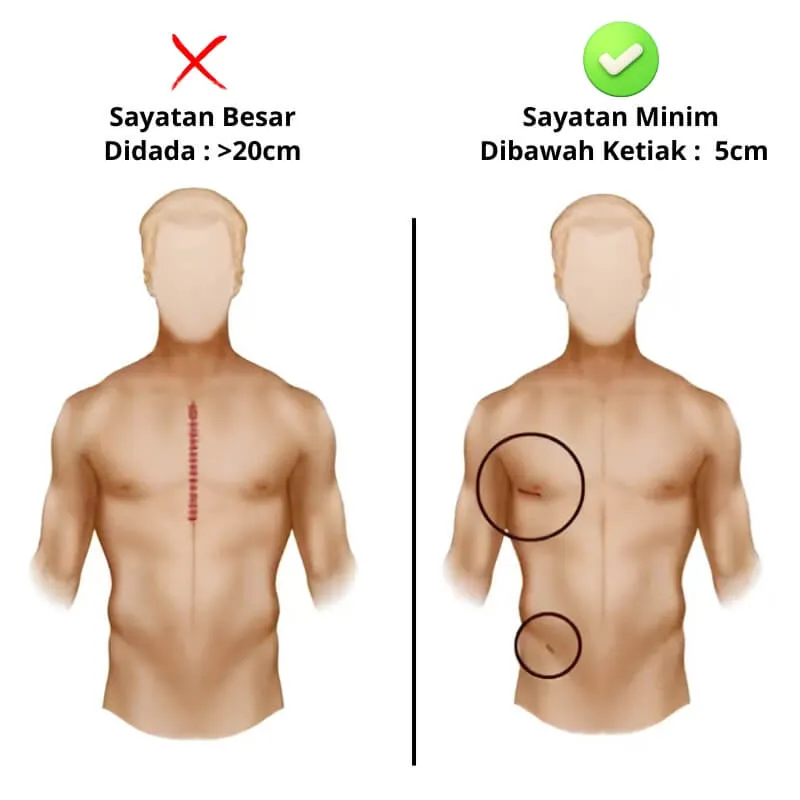
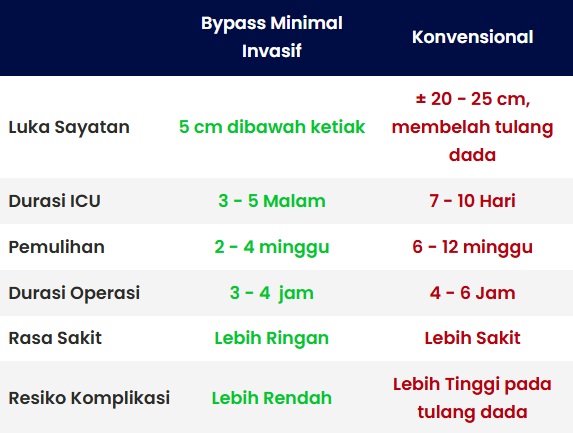
Minimally invasive coronary artery bypass surgery is a procedure that creates a new pathway for blood flow to bypass narrowed or blocked coronary arteries. The surgeon uses specialized instruments to make a small incision of approximately 7–10 cm around the ribs or beneath the left breast, without cutting through the breastbone (sternum).
These specialized instruments are used to connect blood vessels and create the bypass while the heart continues to beat. The surgeon also uses a stabilizing device to keep the heart in a stable position, allowing the bypass connection to be performed safely while minimizing disruption to heart function.
This procedure requires a cardiac surgeon with advanced skills and extensive experience. Compared with conventional coronary artery bypass surgery, MICS CABG can reduce surgical trauma, support a faster recovery, and provide outcomes comparable to those of traditional surgical approaches.
Minimally Invasive Cardiac Surgery vs. Open-Heart Surgery: Which Is Better?
Both minimally invasive cardiac surgery and open-heart surgery aim to treat heart conditions. The main difference lies in how the surgeon accesses the heart during the procedure.
Compared with open-heart surgery, minimally invasive cardiac surgery is performed through smaller incisions in the chest, so the surgeon does not need to cut through the breastbone. This approach may offer several potential benefits, including:
- Faster recovery, with many patients able to return to daily activities within approximately 2–4 weeks.
- Less postoperative pain and smaller surgical scars.
- Reduced physical and psychological trauma associated with major surgery.
- Shorter hospital stays, with patients generally able to go home earlier, often around 3–4 days after surgery.
- Better lung function during the early recovery period after surgery.
- Lower risk of infection and bleeding.
However, open-heart surgery may still be the safest or most effective option for certain conditions, particularly in patients with complex or extensive heart disease. The cardiac surgeon will conduct a comprehensive assessment of the patient’s condition and overall health to determine the most appropriate surgical approach.
Read also: Difference Between Conventional and MICS Coronary Artery Bypass Surgery (Minimally Invasive)
Profile and Practice Schedule of dr. Wirya at Mandaya Royal Hospital Puri
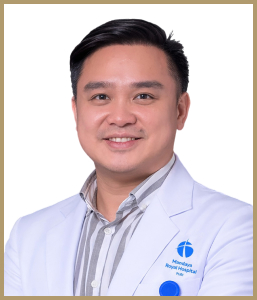
dr. Wirya A. Graha, Sp.BTKV, Subsp. JD(K) is a thoracic, cardiac, and vascular surgeon specializing in adult cardiac surgery. He has experience managing various conditions that require surgical treatment of the heart and blood vessels. He completed his Thoracic and Cardiovascular Surgery Specialist training at the Faculty of Medicine, University of Indonesia, with expertise in various cardiac surgical techniques, including minimally invasive approaches.
One of dr. Wirya’s areas of expertise is Minimally Invasive Cardiac Surgery (MICS), a cardiac surgical technique performed through smaller incisions without requiring full opening of the breastbone. This approach can help reduce surgical trauma and support the patient’s recovery process. In the following video, dr. Wirya also explains the minimally invasive cardiac surgery procedure and approach he performs:
To further develop his expertise and stay up to date with advances in cardiac and vascular surgery, dr. Wirya has also participated in various international training programs and conferences, including:
- 2017: 25th Annual Meeting of the Asian Society for Cardiovascular and Thoracic Surgery, Seoul, South Korea.
- 2018: 28th Annual Meeting of the Association of Thoracic and Cardiovascular Surgeons of Asia.
- 2019: 1st Joint Biennial South East Asian Regional Congress on Cardiovascular and Thoracic Surgery and 20th MATCVS Annual Scientific Meeting, Malacca.
- 2021: 25th European Vascular Course and 5th European Cardiovascular Course.
dr. Wirya A. Graha, Sp.BTKV, Subsp. JD(K) is available for consultation at Mandaya Royal Hospital Puri on:
- Tuesday: 4:30 PM–8:00 PM WIB
- Thursday: 4:30 PM–8:00 PM WIB
- Saturday: 10:00 AM–1:00 PM WIB
To make your visit to Mandaya Royal Hospital Puri more convenient, use the Chat via WhatsApp, Book an Appointment, or the Care Dokter app, which can be downloaded from Google Play and the App Store. The app can also be used to check queue numbers and access other relevant information.
The information provided on this page is intended for educational purposes and general information only and does not represent the full range of medical services that may be provided by each doctor. To determine the appropriate treatment for your specific health condition, consultation with the relevant doctor is recommended.
If you have any questions, suggestions, or require further information, please contact our call center at 0811-1900-2000.

References:
- Heart Foundation. Coronary Heart Disease. (https://www.heartfoundation.org.au/your-heart/coronary-heart-disease). Accessed August 10, 2026.
- Bangkok Hospital. Minimally Invasive Coronary Artery Bypass Grafting (MICS CABG). (https://www.bangkokhospital.com/en/bangkok-heart/content/mics-cabg). Accessed August 10, 2026.
- Mount Elizabeth. Minimally Invasive Cardiac Surgery. (https://www.mountelizabeth.com.sg/tests-treatments/minimally-invasive-cardiac-surgery). Accessed August 10, 2026.