


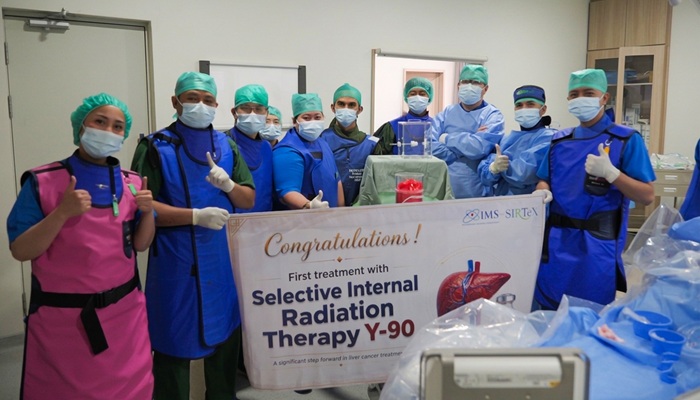
Liver cancer is a type of cancer that begins when abnormal cells grow in the liver, an organ located in the upper right abdomen, just below the diaphragm and above the stomach. The liver performs several important functions, including supporting digestion and processing substances the body needs.
There are several types of cancer that can affect the liver. The most common is hepatocellular carcinoma (HCC), which originates in hepatocytes, the main cells of the liver. Other types include intrahepatic cholangiocarcinoma, which develops in the bile ducts within the liver, and the less common hepatoblastoma.
With advances in medical technology, liver cancer can now be treated using approaches other than surgical tumor removal. One option is Selective Internal Radiation Therapy using Yttrium-90 (SIRT Y-90). In June 2026, Indonesia’s first SIRT Y-90 procedure was successfully performed at Mandaya Royal Puri Hospital by dr. Sugianto Santoso, Sp.Rad (K)RI, together with a team of nuclear medicine specialists. So, what are some key facts about this non-surgical liver cancer treatment?

Contents
What Is SIRT Y-90 for Liver Cancer Treatment?
SIRT Y-90 is a form of internal radiation therapy used to treat liver cancer. The term Y-90 refers to Yttrium-90, a radioactive substance used in this procedure.
During the treatment, doctors deliver tiny microspheres containing Y-90 into the blood vessels supplying the tumor. Once they reach the tumor area, the microspheres release high-dose radiation to damage cancer cells. Because the radiation is delivered in a targeted manner, the treatment helps minimize damage to the surrounding healthy liver tissue.
SIRT Y-90 is not always intended to cure liver cancer, but it may help shrink tumors and control cancer progression. As a result, the treatment may help patients live longer, reduce symptoms, and improve their quality of life.
Key Facts About Indonesia’s First SIRT Y-90 Procedure at Mandaya Royal Puri Hospital


Here are some key facts about Indonesia’s first SIRT Y-90 procedure.
1. Performed by dr. Sugianto Santoso, Sp.Rad (K)RI
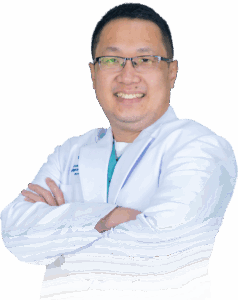
dr. Sugianto Santoso, Sp.Rad (K)RI is a radiologist specializing in interventional radiology, with experience treating tumors and cancer through minimally invasive procedures. He uses medical imaging technologies, including ultrasound, CT scans, MRI, and fluoroscopy, to guide procedures with greater precision.
In addition to SIRT Y-90 and HIFU, dr. Sugianto has experience performing various interventional radiology procedures for cancer treatment, including Transarterial Chemoembolization (TACE), Radiofrequency Ablation (RFA), and Microwave Ablation. He earned his medical degree from Maranatha Christian University before completing his radiology specialist training at the University of Indonesia.
The SIRT Y-90 procedure also involves nuclear medicine specialists, who are responsible for preparing the radioactive Yttrium-90 for treatment. Collaboration between interventional radiologists and nuclear medicine specialists is essential to ensure that preparation and treatment are performed according to established procedures and the patient’s medical needs.
2. Helps Shrink Tumors and Expand Treatment Options
SIRT Y-90 can be combined with other cancer treatments to help shrink large liver tumors or tumors that are difficult to remove surgically. In selected patients, tumor shrinkage may make surgery possible when it was not previously an option.
SIRT Y-90 may also be considered for patients who do not initially qualify for a liver transplant because of tumor size. By helping shrink the tumor, the treatment may improve the possibility of being considered for transplantation. However, eligibility for surgery or transplantation depends on the patient’s condition, tumor characteristics, and the medical team’s evaluation.
3. An Option for Patients With Liver Cancer Who Cannot Undergo Surgery
SIRT Y-90 may be considered for patients with primary liver cancer, which originates in the liver, as well as metastatic liver cancer, which develops when cancer from another organ spreads to the liver.
SIRT Y-90 is often considered when surgery is not feasible, for example, when a tumor is located too close to a major blood vessel and removing it could risk damaging liver tissue. In such cases, this therapy may help control tumor growth while preserving liver function.
For selected patients, SIRT Y-90 may also help shrink tumors and create opportunities for further treatment, such as surgical tumor removal or liver transplantation.
4. Targeted Radiation Through a Minimally Invasive Procedure
SIRT Y-90 delivers radiation directly to a tumor through the blood vessels supplying it. This approach allows high-dose radiation to be delivered to the tumor while helping minimize exposure to the surrounding healthy liver tissue.
This differs from External Beam Radiation Therapy (EBRT), which uses a machine outside the body to direct radiation toward the tumor and may also affect surrounding healthy tissue.
In addition, SIRT Y-90 is a minimally invasive procedure that does not require the large incisions associated with conventional surgery. Recovery may therefore be faster than after surgery. However, side effects and recovery times vary depending on each patient’s health and response to treatment.
5. Encouraging Early Results in Patients With Liver Cancer
To date, at least five patients with liver cancer have undergone SIRT Y-90 treatment at Mandaya Royal Puri Hospital. Of these, two have undergone post-treatment evaluation, with encouraging results.
In one patient, recent imaging showed a reduction in the area of the tumor demonstrating enhancement, or contrast uptake. This finding suggests a decrease in the tumor’s blood supply and a reduction in active tumor tissue. The tumor mass also decreased in size, from 8.8 × 10.4 cm to 6.8 × 6.7 cm. Clinically, the patient also improved, with previously reported symptoms becoming less pronounced.
In another patient, imaging showed that the liver lesion no longer displayed signs of active tumor tissue. This is described as a non-viable tumor, meaning the tumor tissue shows no evidence of viability or activity on imaging. This finding is one indicator of treatment response, although continued follow-up is still necessary to monitor the patient’s condition.
How Is the SIRT Y-90 Procedure Performed?
The SIRT Y-90 procedure generally consists of two main stages: blood vessel mapping (mapping angiography) and the administration of radioactive Yttrium-90. These stages are usually performed approximately two weeks apart and are guided by an interventional radiologist using medical imaging technology.
1. Blood Vessel Mapping (Mapping Angiography)
This stage aims to map the blood vessels supplying the tumor so the doctor can determine the most appropriate route for delivering Yttrium-90. The procedure includes the following steps:
- The doctor makes a small incision near the wrist or groin to access an artery.
- A thin tube called a catheter is inserted into the artery and guided toward the blood vessels supplying the tumor with imaging assistance.
- Contrast material is injected through the catheter to make the blood vessels more visible and help the doctor map the route to the tumor.
- Once mapping is complete, the catheter is removed and the access site is covered with a bandage to stop bleeding.
The mapping stage generally takes around 2–4 hours.
2. Yttrium-90 Administration
After blood vessel mapping is complete, the doctor proceeds by delivering microspheres containing Yttrium-90 through a catheter. These tiny microspheres are carried by the bloodstream toward the blood vessels supplying the tumor.
Once they reach the target area, the microspheres accumulate and release radiation over a short distance to damage cancer cells while helping minimize exposure to nearby healthy tissue. Radiation is released gradually, with most of the radiation energy emitted within approximately 10 days after the procedure.
Yttrium-90 administration usually takes around 1–2 hours. The microspheres remain inside the body, while their radioactivity decreases over time.
dr. Sugianto Santoso, Sp.Rad (K)RI’s Practice Schedule
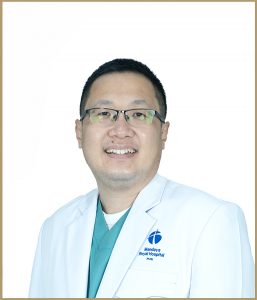
dr. Sugianto Santoso, Sp.Rad (K)RI is available for consultations at Mandaya Royal Puri Hospital on the following schedule:
- Tuesday: 15:00–18:00 WIB
- Thursday: 12:00–16:00 WIB
- Saturday: 10:00–13:00 WIB
Facilities for Out-of-Town and International Patients at Mandaya Royal Puri Hospital

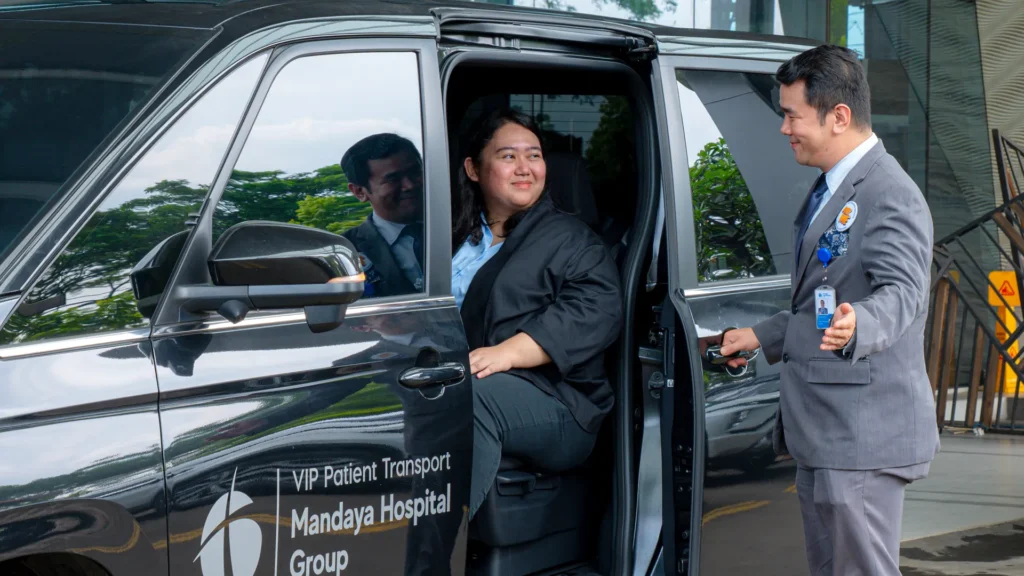
Mandaya Royal Hospital Puri provides a range of support services to ensure greater comfort for patients traveling from other cities or countries.
- VIP Transportation: A pickup service from Soekarno-Hatta International Airport, train stations, or seaports to the hospital in a comfortable vehicle, accompanied by a Patient Experience Officer (PEO).
- Medical Ambulance Pickup: Specialized transportation for patients with specific medical needs, from their arrival point (airport, train station, or seaport), with medical equipment and assistance from professional healthcare personnel.
- Accommodation (Sleep Hub & Apartments): Comfortable accommodation for families accompanying patients, located on the eighth floor of the Mandaya Royal Puri Hospital building, as well as options for nearby apartments.
- International Patient Relations: Dedicated assistance for international patients with medical coordination, interpretation, and administrative arrangements. For information and assistance, contact 021 5092 8888 or email [email protected].
To make your visit to Mandaya Royal Hospital Puri easier, use the WhatsApp chat feature, Book Appointment service, or the Care Dokter application, available for download on Google Play and the App Store. These options can help you manage appointments, check queue numbers, and access other relevant information.
The information on this page is provided for educational purposes and as a general overview. It does not represent the full range of medical services that each doctor may perform. To ensure appropriate care for your specific health condition, we recommend consulting the relevant doctor directly.
If you have any questions, suggestions, or need further information, please contact our call center at 0811-1900-2000.

References
- Mayo Clinic. Liver Cancer – Symptoms and Causes. (https://www.mayoclinic.org/diseases-conditions/liver-cancer/symptoms-causes/syc-20353659). Accessed October 26, 2026.
- Mayo Clinic Health System. Targeted Radiation Therapy. (https://www.mayoclinichealthsystem.org/hometown-health/speaking-of-health/targeted-radiation-therapy). Accessed October 26, 2026.
- Cleveland Clinic. Y90 Treatment (Radioembolization). (https://my.clevelandclinic.org/health/procedures/y90-treatment-radioembolization). Accessed October 26, 2026.