


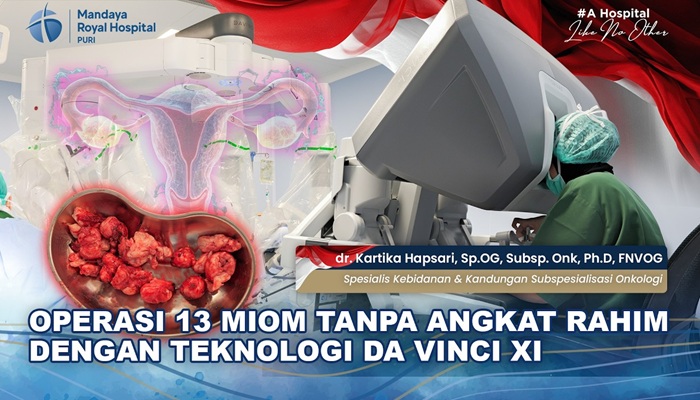
Uterine fibroids are growths made up of muscle and connective tissue that develop in or on the wall of the uterus. Also known as leiomyomas, these growths are relatively common and are generally benign, meaning they are not cancerous.
The size and location of fibroids can affect the symptoms a woman experiences. Some women experience pelvic pain or heavy or irregular menstrual bleeding, while others have no symptoms at all and only discover the fibroids during a medical examination.
Treatment for uterine fibroids must be tailored to the number, size, and location of the fibroids, as well as the patient’s overall condition. In certain cases, fibroids can be surgically removed without removing the uterus. This is an important consideration for women who wish to preserve their uterus.
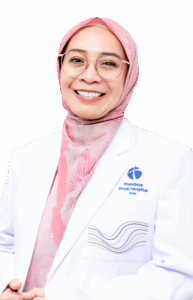
One such procedure was performed by dr. Kartika Hapsari, Sp.OG, Subsp. Onk, Ph.D, FNVOG, an obstetrics and gynecology specialist with a subspecialty in oncology at Mandaya Royal Hospital Puri. Using the Da Vinci Xi robotic system, dr. Kartika successfully removed 13 uterine fibroids in a single procedure without removing the uterus. This case demonstrates how robotic technology can support surgical procedures tailored to an individual patient’s condition.

Contents
When 13 Fibroids Needed to Be Removed, the Patient’s Wish to Preserve Her Uterus Remained a Priority
For a woman around 45 years old, dealing with more than a dozen uterine fibroids is certainly not a simple matter. The patient treated by dr. Kartika at Mandaya Royal Hospital Puri was found to have approximately 12–13 fibroids of varying sizes, ranging from 2 to 8 cm. Amid these circumstances, the patient had one important wish: to have the fibroids removed without losing her uterus.
To help fulfill this wish, dr. Kartika performed a myomectomy, a surgical procedure to remove uterine fibroids while preserving the uterus. Unlike a hysterectomy, which involves removing the uterus, a myomectomy allows doctors to remove fibroid tissue without removing the organ itself. However, the choice of procedure must take into account the number and location of the fibroids, as well as the patient’s condition.
The challenges of surgery did not end once the fibroids had been removed. The doctor also performed uterine reconstruction to repair the uterine tissue following fibroid removal. This is an important part of the procedure because the uterus must be carefully reconstructed to preserve it, depending on the patient’s medical condition.
According to dr. Kartika, the Da Vinci Xi robotic system can help doctors manage complex fibroid cases, including those involving a large number of fibroids of varying sizes. This technology supports robotic surgery in selected cases, including myomectomy for patients who wish to preserve their uterus. Nevertheless, eligibility for the procedure and the choice of surgical method are determined through a comprehensive medical evaluation.
Understanding Robotic Myomectomy: Procedure and Benefits
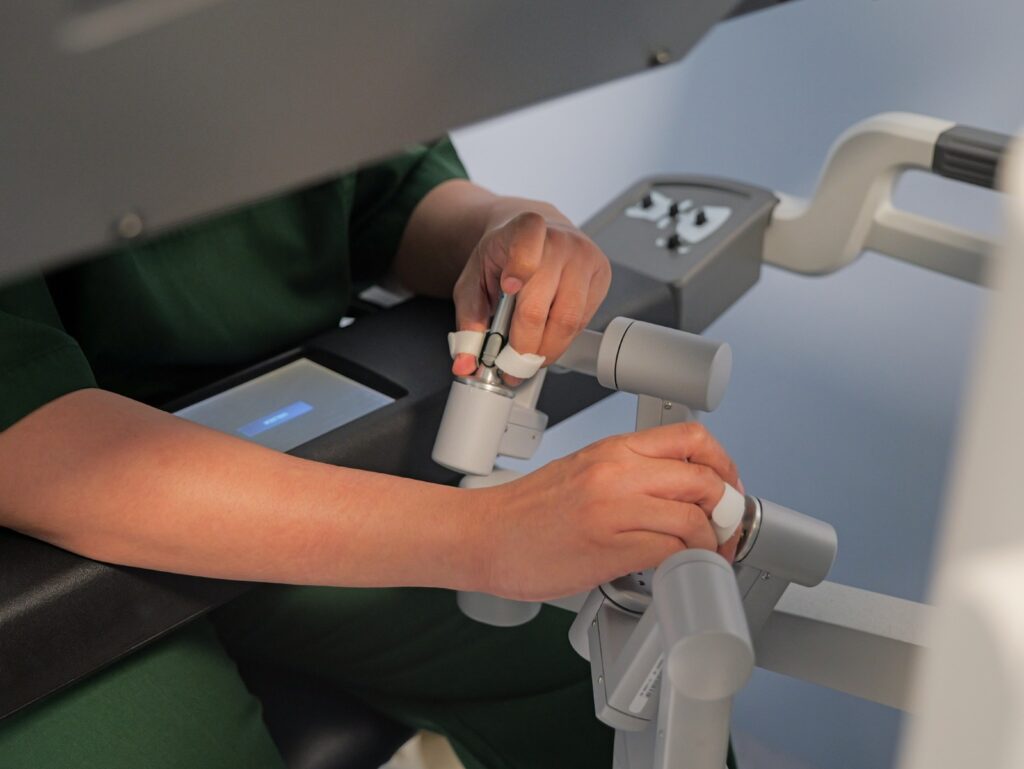
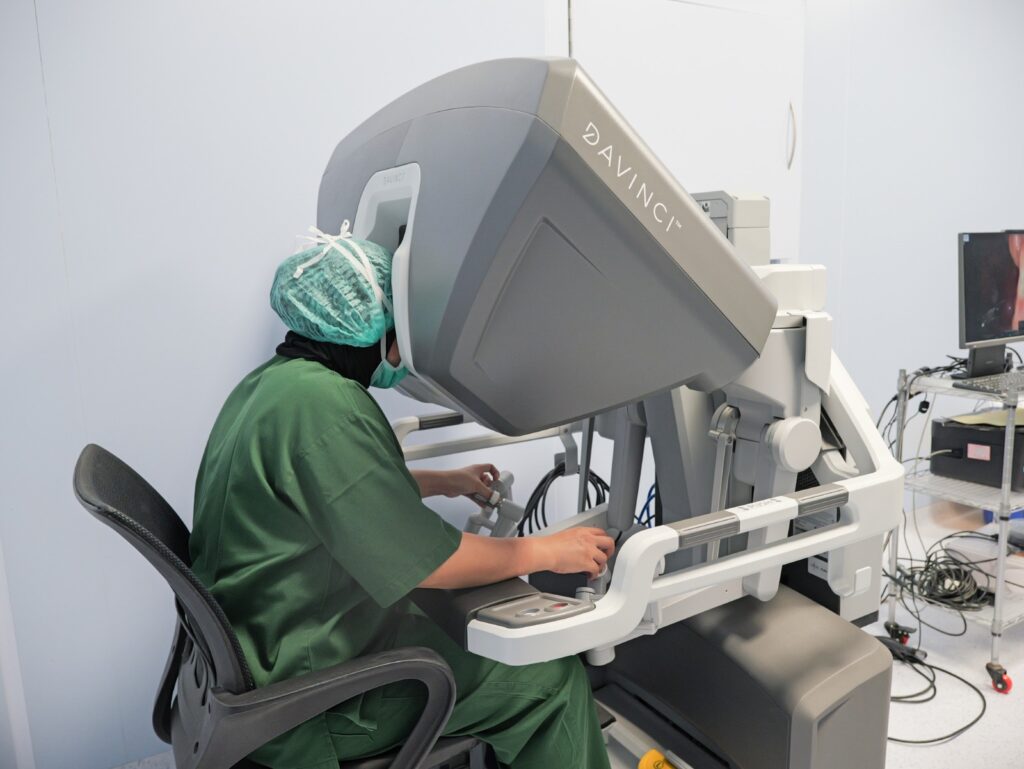
Robotic myomectomy is a surgical procedure to remove uterine fibroids with the assistance of robotic technology. At Mandaya Royal Hospital Puri, the robotic system used is the Da Vinci Xi.
During robotic myomectomy, the doctor uses specialized instruments controlled through a robotic system to perform surgery through small incisions in the abdomen. The procedure is performed under general anesthesia, meaning the patient is asleep throughout the operation. A small camera provides a clearer view of the surgical area, while the robotic instruments support precise movements.
In general, robotic myomectomy involves the following steps:
- Anesthesia and small incisions: The patient receives general anesthesia, after which the doctor makes several small incisions in the abdomen to insert the camera and surgical instruments.
- Examination of the uterus: The camera displays the uterus on a screen, allowing the doctor to identify the location of the fibroids to be removed.
- Fibroid removal: The doctor controls the robotic instruments to remove the fibroids carefully.
- Uterine reconstruction: After the fibroids are removed, the doctor repairs the uterine tissue as needed.
- Closing the incisions: The instruments are removed, and the incisions are closed and dressed.
Compared with open surgery, the robotic approach uses smaller incisions and, in selected patients, may help shorten hospital stays and support faster recovery. The technology may also help doctors reach fibroids that are difficult to access using certain surgical techniques.
The doctor will determine the most appropriate surgical method based on the number, size, and location of the fibroids, as well as the patient’s overall health.
Watch for Uterine Fibroid Symptoms That Often Go Unnoticed
Uterine fibroids do not always cause symptoms. Many women only discover that they have fibroids during a health examination. When symptoms do occur, they can vary depending on the size, number, and location of the fibroids in or around the uterus.
Symptoms of uterine fibroids to watch for include:
- Heavy menstrual bleeding: Menstrual bleeding is heavier than usual or lasts longer than normal.
- Painful menstruation: Menstrual cramps or pain become more uncomfortable.
- Pelvic pain or pressure: The lower abdomen feels painful, full, or under pressure.
- Frequent urination: Fibroids may press against the bladder, causing a more frequent urge to urinate or difficulty emptying the bladder.
- An enlarged abdomen: Fibroid growth may cause the abdomen to increase in size.
- Constipation: Pressure from fibroids on nearby organs may interfere with bowel movements.
- Lower back pain or pain during sexual intercourse: These symptoms may occur depending on the size and location of the fibroids.
In rare cases, a fibroid may lose its blood supply, causing the tissue within it to begin breaking down. This can lead to severe, sudden pain.
Based on their location, uterine fibroids are classified into several types:
- Intramural fibroids: Grow within the muscular wall of the uterus.
- Submucosal fibroids: Project into the uterine cavity.
- Subserosal fibroids: Grow on the outer surface of the uterus.
The location of a fibroid can influence the symptoms it causes and the treatment options a doctor considers.
If you experience very heavy menstrual bleeding, disruptive pelvic pain, or unusual changes in your menstrual cycle, consult an obstetrics and gynecology (OB-GYN) specialist. An examination is necessary to identify the cause of the symptoms and determine the appropriate treatment.
When Should You See a Doctor About Uterine Fibroid Symptoms?
Uterine fibroid symptoms can sometimes resemble ordinary menstrual problems and may therefore be overlooked. However, symptoms that persist or increasingly interfere with daily activities should not be ignored. A medical examination is necessary to determine the cause and identify the appropriate treatment.
Schedule a consultation with an obstetrics and gynecology (OB-GYN) specialist if you experience any of the following:
- Persistent pelvic pain.
- Very heavy or painful menstrual bleeding that interferes with daily activities.
- Spotting or bleeding between menstrual periods.
- Difficulty emptying the bladder when urinating.
- Persistent fatigue and weakness, which may be signs of anemia or a low red blood cell count.
Do not delay seeking medical attention if you experience extremely heavy vaginal bleeding or sudden, sharp pelvic pain. These symptoms require prompt medical evaluation because they may indicate a health problem that needs urgent treatment.
dr. Kartika Hapsari’s Profile and Consultation Schedule at Mandaya Royal Hospital Puri
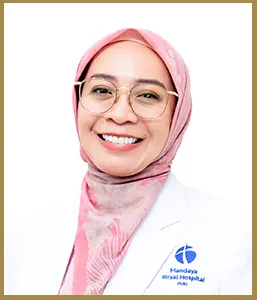
dr. Kartika Hapsari, Sp.OG, Subsp. Onk, Ph.D, FNVOG, is an obstetrics and gynecology (OB-GYN) specialist with a subspecialty in oncology. She specializes in managing tumors and cancers of the female reproductive system.
She earned her medical degree from the Faculty of Medicine at Airlangga University in Surabaya before completing her obstetrics and gynecology specialist training at the Faculty of Medicine, University of Indonesia, in Jakarta. She also undertook subspecialty training and fellowships in gynecologic oncology at UMC Utrecht, Utrecht University, in the Netherlands, and Steve Biko Academic Hospital, University of Pretoria, in South Africa.
In her clinical practice, dr. Kartika treats tumors of the female reproductive organs, including gynecologic cancers such as cervical and endometrial cancer. She also performs gynecologic tumor surgery using minimally invasive and robotic surgical techniques. In addition, she is a Ph.D. candidate at the Radboud Institute of Molecular Life Sciences (RIMLS), Radboud University Medical Center, in Nijmegen, the Netherlands.
Consultation schedule at Mandaya Royal Hospital Puri:
- Wednesday: 2:00–5:00 PM WIB.
- Friday: 2:00–5:00 PM WIB.
Facilities for Out-of-Town and International Patients at Mandaya Royal Hospital Puri


Mandaya Royal Hospital Puri provides various support facilities to offer additional comfort for patients traveling from other cities or overseas.
- VIP transport: Pick-up services from Soekarno-Hatta International Airport, train stations, or seaports to the hospital in comfortable vehicles accompanied by a Patient Experience Officer (PEO).
- Medical ambulance pick-up: Dedicated pick-up services for patients with specific medical needs from arrival points, including airports, train stations, and seaports. The service is equipped with medical equipment and supported by professional healthcare personnel.
- Accommodation (Sleep Hub and apartments): Comfortable accommodation for families accompanying patients. The Sleep Hub is located on the eighth floor of the Mandaya Royal Hospital Puri building, with nearby apartments also available.
- International Patient Relations: Dedicated assistance for international patients with medical coordination, interpretation, and administrative arrangements. For information and assistance, contact International Patient Relations at 021 5092 8888 or email [email protected].
To make your visit to Mandaya Royal Hospital Puri easier, use the WhatsApp chat feature, Book Appointment, or the Care Dokter app, available for download on Google Play and the App Store. These options help you arrange visits, check queue numbers, and access other useful information.
The information provided on this page is intended for educational purposes and general reference. It does not represent the full range of medical services that each doctor may provide. To determine the most appropriate treatment for your health condition, we recommend consulting the relevant doctor directly.
If you have any questions, suggestions, or need further information, please contact our call center at 0811-1900-2000.

References
- Cleveland Clinic. Uterine Fibroids: Causes, Symptoms & Treatment. (https://my.clevelandclinic.org/health/diseases/9130-uterine-fibroids). Accessed October 28, 2026.
- Johns Hopkins Medicine. Robotic-Assisted Myomectomy. (https://www.hopkinsmedicine.org/health/treatment-tests-and-therapies/roboticassisted-myomectomy). Accessed October 28, 2026.
- Mayo Clinic. Uterine Fibroids: Symptoms and Causes. (https://www.mayoclinic.org/diseases-conditions/uterine-fibroids/symptoms-causes/syc-20354288). Accessed October 28, 2026.