



Many women feel fully protected from cervical cancer after receiving the HPV vaccine. However, vaccination alone does not completely eliminate all risks. This often raises the question: is a Pap smear still necessary after HPV vaccination? In fact, routine screening continues to play an important role in detecting early cellular changes, even in those who have been vaccinated. To better understand why, see the explanation below.

Contents
Already Vaccinated Against HPV—Do You Still Need a Pap Smear? Here’s Why
The HPV vaccine is a series of injections designed to protect the body from infection with the human papillomavirus (HPV), a very common virus that can be transmitted through skin-to-skin contact, including during sexual activity. HPV infection is one of the main causes of cervical cancer in women. Vaccination significantly reduces the risk of infection from the most dangerous HPV types.
Meanwhile, a Pap smear is a screening test used to detect cervical cancer early. This test involves collecting a sample of cells from the cervix to determine whether there are abnormal cells that may develop into cancer. It can also help detect certain infections and inflammation.
So, is it necessary to undergo a Pap smear or HPV test before vaccination? The answer is no. However, after receiving the HPV vaccine, you are still recommended to start or continue routine Pap smear screenings. This is because the HPV vaccine does not protect against all types of HPV that can cause cervical cancer. In addition, not everyone gains maximum protection from the vaccine—for example, those who have already been exposed to HPV or have not completed the full recommended vaccine doses.
This means that the HPV vaccine and Pap smear serve complementary roles. The vaccine helps prevent infection, while the Pap smear helps detect early cellular changes that could lead to cervical cancer.
When Is the Best Time for a Pap Smear?
It is best to avoid having a Pap smear during menstruation, as blood may affect the accuracy of the results. However, in certain situations, the test may still be performed toward the end of the menstrual period, especially when bleeding is very light. To determine the most appropriate timing, it is recommended to consult your doctor or reschedule the test when you are not menstruating.
Additionally, there are several factors to consider before undergoing a Pap smear, as they may influence the test results. For optimal accuracy, you are advised to:
- Avoid vaginal intercourse for 2 days before the test
- Not use tampons, vaginal medications or creams, foam or gel contraceptives, lubricants, or perform douching for at least 2 days before the test
- Schedule the Pap smear after your menstrual period has ended
- Contact your doctor if you are currently menstruating or expect to have your period on the day of the examination for further guidance
How Often Should You Get a Pap Smear?
The frequency of Pap smears may vary for each woman, depending on age, medical history, and previous test results (Pap smear or HPV test). In general, women over the age of 65 may no longer need routine Pap smears if their previous results have consistently been normal.
Here are the general guidelines:
- Under 21 years: No Pap smear needed, as the risk of cervical cancer is very low
- Ages 21–29: Recommended every 3 years
- Ages 30–65: Every 3 years, or every 5 years if combined with an HPV test
- Over 65 years: No longer needed if there is no history of abnormal results or cervical cancer and there have been three consecutive normal Pap smear results within the past 10 years
However, in certain conditions, screening may need to be done more frequently or continued beyond age 65, such as:
- Having HIV or a weakened immune system (e.g., due to chemotherapy)
- Exposure to DES while in the womb (a medication previously given to pregnant women before 1971)
- Having a history of cervical cancer
- Having had abnormal Pap smear results
In conclusion, the Pap smear schedule should be tailored to each individual’s condition. Therefore, it is important to consult a doctor to receive the most appropriate screening recommendations.
Pap Smear Test Packages at Mandaya Royal Hospital Puri
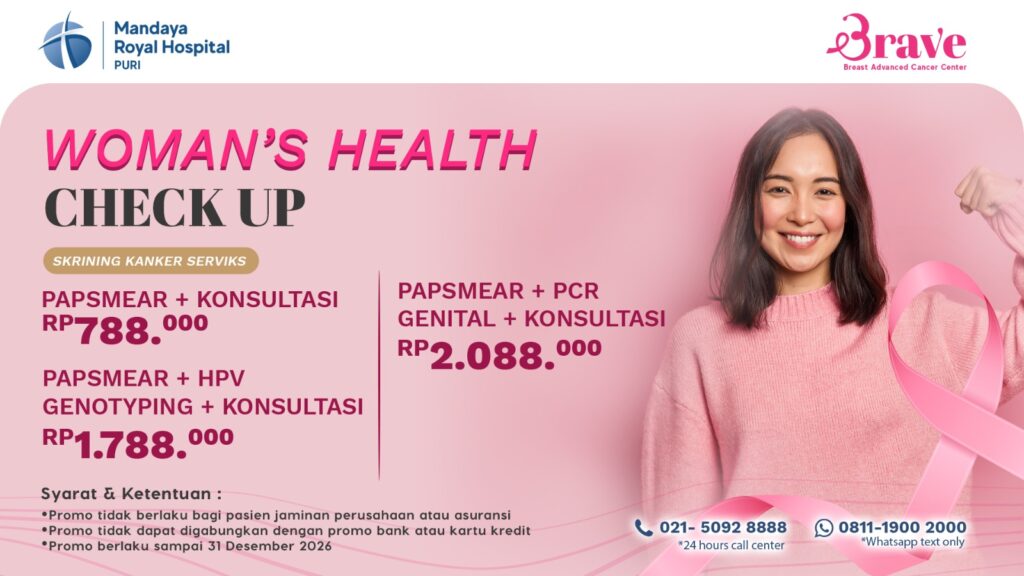
Mandaya Royal Hospital Puri offers Pap smear and HPV test packages with the following details:
Examination Packages:
- Pap Smear + Consultation — Rp 788,000
- Pap Smear + HPV Genotyping + Consultation — Rp 1,788,000
- Pap Smear + PCR Genital + Consultation — Rp 2,088,000
Terms & Conditions:
- The promotion is not valid for patients with corporate guarantees or insurance
- The promotion cannot be combined with bank or credit card promotions
- The promotion is valid until December 31, 2026
To make your visit more convenient, you can use the WhatsApp Chat feature, Book Appointment service, or the Care Dokter application available on Google Play and the App Store to schedule appointments, check queue numbers, and access other important information.