


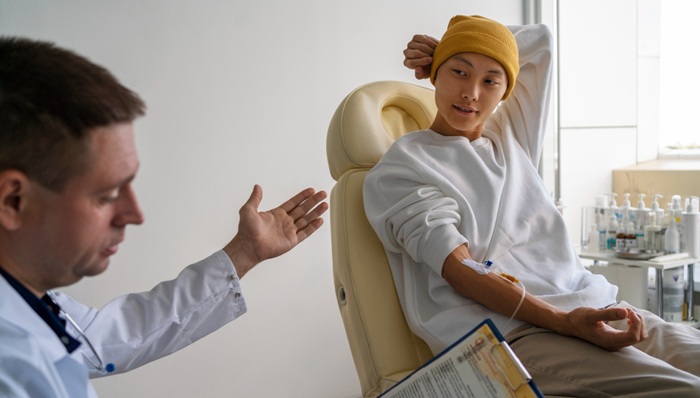
Hematopoietic Stem Cell Therapy (HSCT) is a crucial medical procedure in the treatment of various types of blood cancer. This therapy aims to restore blood-forming stem cells that have been damaged by blood cancer. Stem cells are the body’s essential “building blocks” that can produce all types of blood cells, making HSCT a life-saving option for many blood cancer patients who require optimal recovery of blood function.
The Mandaya Blood Cancer Center has collaborated with the National University Cancer Institute (NCIS) Singapore under the National University Hospital (NUH) Singapore to bring HSCT transplantation to Indonesia. Through this collaboration, blood cancer patients who require HSCT no longer need to travel abroad to undergo the procedure.

Contents
HSCT Transplant Procedure
There are five main stages in the HSCT transplant procedure:
1. Medical Evaluation
At the initial stage, doctors will conduct a comprehensive assessment of the patient’s overall health condition and blood cancer status.
2. Stem Cell Collection
The next step involves collecting stem cells from a donor that will be used in the transplant process.
3. Conditioning
Conditioning is the preparatory phase before transplantation, usually involving chemotherapy to eliminate remaining cancer cells. During this stage, a special tube called a central venous catheter is typically inserted into a large blood vessel in the chest area.
4. Transplantation
The stem cells are infused into the bloodstream through the central venous catheter. This process usually takes about 30–60 minutes.
In allogeneic transplants, patients will receive medications to reduce the risk of graft rejection and Graft-versus-Host Disease (GvHD).
5. Recovery
The stem cells will settle in the bone marrow and begin to grow. White blood cells and platelets usually start to recover within approximately 14–28 days. However, full immune system recovery may take around 3–18 months.
Finding the Right Donor for HSCT Transplantation
In allogeneic HSCT (using a donor), donor–recipient compatibility plays a critical role. A well-matched donor helps reduce the risk of transplant failure (graft rejection) and lowers the likelihood of immune reactions such as GvHD.
-
How Is Donor Compatibility Determined?
To assess compatibility, doctors perform immune system matching through a process known as HLA matching. This examination is the most crucial step in determining the success of the transplant.
-
What Is HLA?
HLA (Human Leukocyte Antigen) is a protein that acts as a “marker” on the body’s cells. It helps the immune system distinguish between the body’s own cells and foreign cells, making it essential in transplantation procedures.
-
Who Is the Ideal Donor?
The best donor is a biological sibling with a perfect HLA match, typically 10 out of 10. If such a donor is unavailable, the next option is a matched unrelated donor with a high level of compatibility.
HSCT Transplant Facilities at Mandaya Royal Puri Hospital
The Mandaya Blood Cancer Center offers Hematopoietic Stem Cell Transplant (HSCT) as one of its leading therapies for blood cancer patients. This procedure aims to replace bone marrow damaged by blood cancer with healthy stem cells capable of regenerating blood cells optimally. Through HSCT, blood cell production can be restored, helping improve patients’ overall health and quality of life.
To support the success of HSCT therapy, Mandaya Royal Puri Hospital is equipped with ICIR/PICIR (Immunocompromised Rooms), which are specialized inpatient rooms for patients with weakened immune systems, especially after stem cell transplantation. These rooms are designed with strict infection control standards as part of an integrated care system, providing maximum protection during the recovery period.
In addition, the Mandaya Blood Cancer Center provides irradiated blood transfusion services as a preventive measure against serious complications such as Transfusion-Associated Graft-Versus-Host Disease (TA-GvHD). Irradiated blood transfusions are a vital component of blood cancer care, particularly during the post-HSCT phase, to ensure patient safety and continuity of recovery.
Mandaya Blood Cancer Center Is Supported by Five Blood Cancer Specialists
Consultant Medical Hematology-Oncology specialists (KHOM), also known as blood cancer subspecialists, are medical professionals with advanced expertise in diagnosing and treating blood disorders, including blood cancer. At Mandaya Royal Puri Hospital, five experienced KHOM specialists are available to provide comprehensive care for various blood cancers, such as Hodgkin and Non-Hodgkin lymphoma, leukemia, and multiple myeloma.
1. dr. Toman T.J. Lumban Toruan, Sp.PD-KHOM
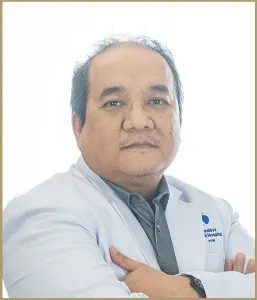
Dr. Toman T.J. Lumban Toruan, Sp.PD-KHOM, is an internal medicine specialist with a subspecialty in Medical Hematology-Oncology. He completed his medical education at the Faculty of Medicine, University of Indonesia, followed by internal medicine training at Dr. Cipto Mangunkusumo Hospital. He also undertook an Honorary Fellowship (Clinical Observership) at the Department of Hematology, National University Hospital (NUH), Singapore.
His clinical expertise includes chemotherapy, immunotherapy, targeted therapy, and apheresis procedures.
Practice schedule at Mandaya Royal Puri Hospital:
- Tuesday: 12.00 – 15.00 WIB
- Thursday: 12.00 – 15.00 WIB
2. dr. Alvin Tagor Harahap, Sp.PD-KHOM
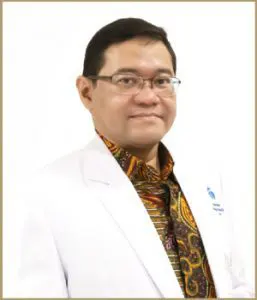
Dr. Alvin Tagor Harahap, Sp.PD-KHOM, is an internal medicine consultant in Medical Hematology-Oncology who completed both his general medical and specialist training at the Faculty of Medicine, University of Indonesia. He is experienced in managing blood cancer and various hematological disorders using a structured and comprehensive medical approach.
His services include chemotherapy, immunotherapy, targeted therapy, and apheresis tailored to each patient’s clinical condition.
Practice schedule at Mandaya Royal Puri Hospital:
- Wednesday: 18.00 – 20.00 WIB
- Saturday: 10.00 – 12.00 WIB
3. Prof. DR. Aru W. Sudoyo, Sp.PD-KHOM, FINASIM, FACP

Prof. DR. Aru W. Sudoyo, Sp.PD-KHOM, FINASIM, FACP, is one of Indonesia’s leading experts in hematology and oncology. He completed his medical, internal medicine, and Medical Hematology-Oncology consultant training at the Faculty of Medicine, University of Indonesia, where he also earned his doctoral degree.
His expertise covers advanced cancer therapies, including chemotherapy, immunotherapy, targeted therapy, bone marrow transplantation, and CAR-T cell therapy.
Practice schedule at Mandaya Royal Puri Hospital:
- Wednesday: 08.00 – 12.00 WIB
4. Dr. dr. Andree Kurniawan, Sp.PD-KHOM, FINASIM
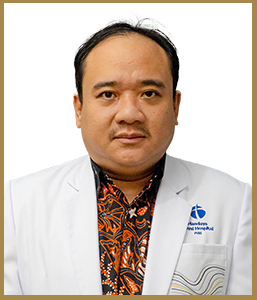
Dr. dr. Andree Kurniawan, Sp.PD-KHOM, FINASIM, is an internal medicine consultant in Medical Hematology-Oncology with extensive experience in treating blood cancer and complex hematological disorders. His expertise includes chemotherapy, immunotherapy, and targeted therapy.
He applies a personalized approach in daily practice, focusing on each patient’s specific clinical needs to achieve optimal treatment outcomes.
Practice schedule at Mandaya Royal Puri Hospital:
- Monday: 17.00 – 19.00 WIB
- Thursday: 17.00 – 19.00 WIB
5. dr. Nia Noviantri Siregar, Sp.PD, Subsp. H-Onk.M (K)
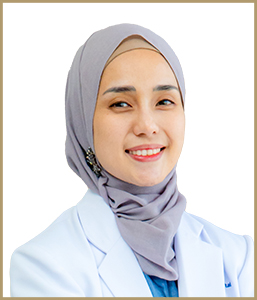
Dr. Nia Noviantri Siregar, Sp.PD, Subsp. H-Onk.M (K), is an internal medicine consultant in Medical Hematology-Oncology who focuses on treating blood cancer and complex hematological disorders. She has expertise in chemotherapy, immunotherapy, and targeted therapy using a comprehensive, evidence-based approach aligned with the latest medical advancements.
Practice schedule at Mandaya Royal Puri Hospital:
- Tuesday: 17.00 – 20.00 WIB
- Friday: 17.00 – 20.00 WIB
Mandaya–NUH Singapore Collaboration for More Precise Blood Cancer Care
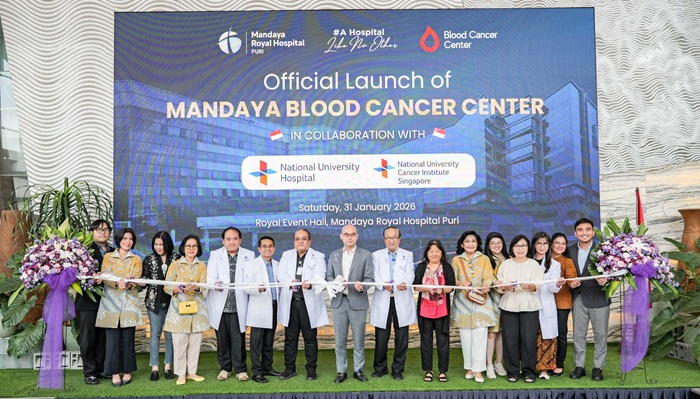
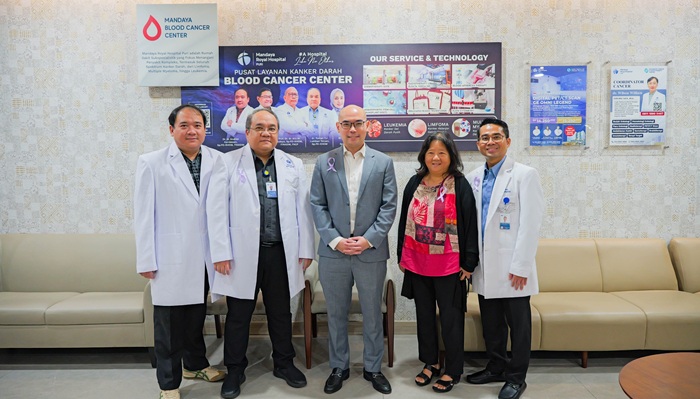
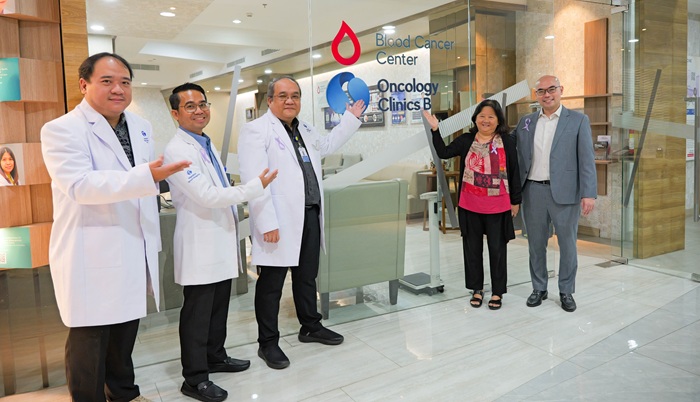
The Mandaya Blood Cancer Center at Mandaya Royal Puri Hospital has established a strategic collaboration with the National Cancer Institute Singapore–National University Hospital (NCIS–NUH Singapore) to deliver more precise blood cancer care. This collaboration includes cross-border multidisciplinary case discussions, allowing each patient to be jointly evaluated by medical teams from Mandaya Royal Puri Hospital and experts from NCIS–NUH Singapore.
Through this partnership, diagnostic accuracy, treatment strategy planning, and therapy selection can be carried out more precisely and tailored to each patient’s individual condition. Patients also have the opportunity to obtain a second opinion directly from internationally experienced blood cancer specialists.
Erwin Suyanto, Public Relations Manager of Mandaya Hospital Group, stated that the establishment of the Mandaya Blood Cancer Center reflects Mandaya Royal Puri Hospital’s commitment to providing cancer services that are not only comprehensive but also integrated with world-class cancer referral centers. According to him, cross-border expert discussions enable more targeted therapy recommendations, continuously improving the quality of care for blood cancer patients.
With comprehensive medical facilities and close collaboration with NCIS–NUH Singapore, Mandaya Royal Puri Hospital continues to strengthen its role as a leading cancer referral hospital in Indonesia, offering internationally standardized blood cancer treatment services.
If you would like to undergo a health check-up at Mandaya Royal Puri Hospital, you can use the WhatsApp chat feature, Book Appointment, or the Care Dokter application, available on Google Play and the App Store, to make your visit easier, check queue numbers, and access complete information.