



Enlarged turbinates (turbinate hypertrophy) occur when the turbinate tissue inside the nasal cavity becomes swollen or thickened, blocking normal airflow in and out of the nose. The turbinates play an important role in filtering, warming, and humidifying the air before it reaches the lungs.
When the turbinates become enlarged, patients may experience chronic nasal congestion, difficulty breathing—especially at night—frequent snoring, headaches, reduced sense of smell, and poor sleep quality. If left untreated, turbinate hypertrophy can lead to recurrent sinus infections (sinusitis), sleep disorders such as sleep apnea, and a significant decline in overall quality of life.
To address this condition, RS Mandaya Royal Puri offers QMR (Quantum Molecular Resonance) technology from Italy as a modern and precise method for turbinate reduction surgery. The procedure is performed by experienced ENT specialist dr. Abdillah Hasbi Assadyk, Sp.THT-KL, who has undergone intensive training in Italy in the use of QMR technology. With a minimally traumatic approach to surrounding tissues, this procedure is designed to help patients breathe more comfortably with optimal recovery.

Contents
Explanation of the Patient’s Condition and QMR Procedure by dr. Abdillah
According to dr. Abdillah Hasbi Assadyk, in this case the patient complained of impaired nasal breathing, frequent congestion, and snoring during sleep.
“The patient feels that breathing through the nose is not smooth, easily becomes congested, and there is snoring during sleep,” explained dr. Abdillah.
After a thorough examination, it was found that the patient’s turbinates were larger than normal, narrowing the nasal cavity and disrupting airflow. This condition was responsible for the breathing difficulties and reduced sleep quality.
To resolve the issue, turbinate reduction was performed using the QMR technique. With QMR cauterization, the mucosal lining is not burned; instead, it is gently dissolved in a controlled manner. This allows the turbinates to be reduced more precisely without damaging the surrounding tissues.
“With QMR cautery, the mucosal lining is not burned at all—it simply dissolves. This allows us to reduce the size of the turbinate more effectively without burning the tissue,” he added.
After the procedure, the turbinate size decreased significantly and the nasal cavity became much more spacious. Even the back of the nasal passage up to the nasopharynx could be clearly visualized and accessed directly, indicating a substantial improvement in airway space.
“We can see that after QMR turbinate reduction, the turbinate size has significantly decreased. The nasal cavity is now much more open, and we can directly access the back of the throat (nasopharynx),” he explained.
Advantages of QMR for Treating Enlarged Turbinates
Here are the key advantages of QMR turbinate reduction compared to conventional methods:
1. Minimal Pain and Tissue Trauma
QMR operates at a relatively low temperature (around 40–50°C). Instead of burning the mucosa, it gently reduces turbinate tissue without extensive thermal damage.
2. Almost Bloodless Procedure
Because it does not involve conventional cutting techniques, the risk of bleeding is minimal.
3. No Nasal Packing
One of the main benefits of QMR is that patients generally do not require nasal tampons (gauze packing) after surgery, which is often uncomfortable.
4. Short Procedure and Fast Recovery
The procedure is relatively quick and often performed as a day-care treatment without the need for hospital admission, allowing patients to return home the same day.
5. Immediate Improvement
Many patients feel noticeable relief in nasal breathing soon after the procedure, reducing symptoms of congestion and snoring.
6. Preserves Turbinate Function
QMR reduces turbinate size while preserving the mucosal layer, which is essential for humidifying and warming inhaled air.
This technology is particularly suitable for patients with chronic nasal obstruction due to turbinate hypertrophy that does not respond to medical therapy.
Profile and Practice Schedule of dr. Abdillah at RS Mandaya Royal Puri – QMR ENT Specialist

QMR technology is one of the flagship services at the Integrated Sinus and Snoring Center at RS Mandaya Royal Puri. This reflects the hospital’s commitment to providing modern, precise, and minimally painful ENT care. With this advanced approach, procedures such as turbinate reduction can be performed without damaging surrounding healthy tissues, resulting in a more comfortable recovery process.
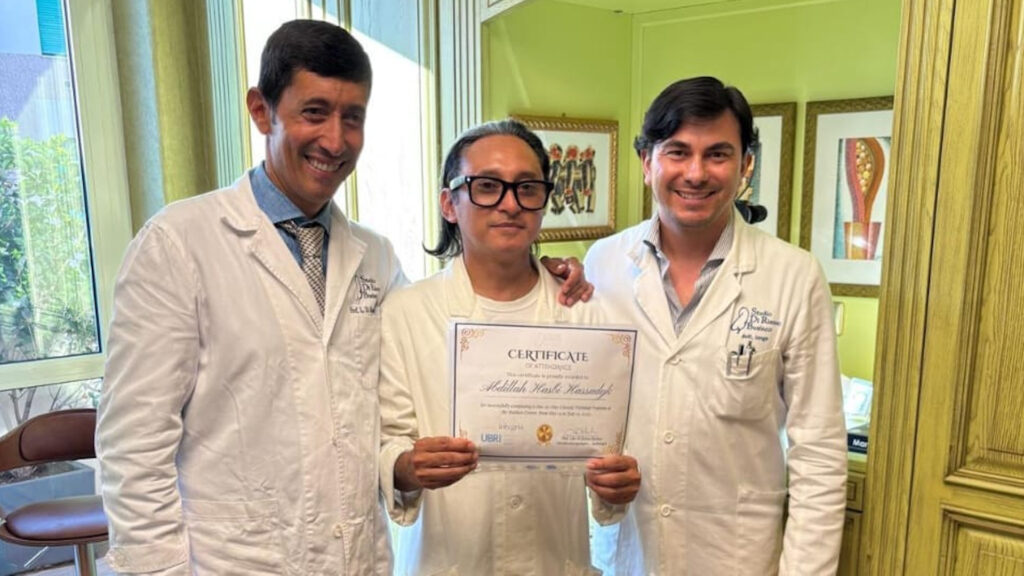
The QMR service is led by dr. Abdillah Hasbi Assadyk, Sp.THT-KL, an ENT specialist who completed intensive training in Italy with Lino Di Rienzo Businco, an internationally recognised ENT expert who has treated global public figures such as Andrea Bocelli and Francesco Totti. With this international experience, dr. Abdillah brings world-class ENT standards to patients in Indonesia.
In addition to QMR for turbinate hypertrophy, dr. Abdillah is also experienced in balloon sinuplasty for sinusitis and plasma coblation for tonsillitis. These technologies enable ENT procedures with minimal bleeding, faster recovery time, and reduced pain compared to conventional surgical methods. This approach is particularly beneficial for patients suffering from sleep apnea, chronic snoring, sinusitis, and other ENT disorders requiring advanced and effective solutions.
Practice Schedule of dr. Abdillah at RS Mandaya Royal Puri
dr. Abdillah Hasbi Assadyk is available at RS Mandaya Royal Puri on the following schedule:
- Monday: 08.00 – 12.00 WIB & 16.00 – 20.00 WIB
- Tuesday: 08.00 – 12.00 WIB & 16.00 – 20.00 WIB
- Wednesday: 08.00 – 12.00 WIB & 16.00 – 20.00 WIB
- Thursday: 08.00 – 12.00 WIB & 16.00 – 20.00 WIB
- Friday: 08.00 – 12.00 WIB & 16.00 – 20.00 WIB
- Saturday: 08.00 – 20.00 WIB
To make appointments and register for QMR procedures more conveniently, patients can use the Chat via WhatsApp feature, the Book Appointment service, or the Care Dokter application available on Google Play and App Store. These platforms allow patients to schedule consultations, monitor queue numbers, and access complete information about available ENT services.