


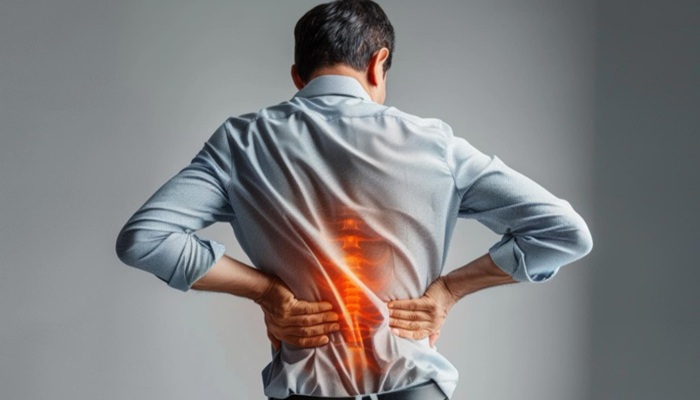
The spine is the main structural support of the human body, consisting of a series of bones called vertebrae. This part of the body extends from the neck to the pelvis and functions to support the body so that a person can stand upright, sit, and move in a stable manner. In addition to supporting body weight, the spine also plays a crucial role in protecting the spinal cord, which is the main nerve pathway connecting the brain to the rest of the body.
Because of its vital role, the spine needs to be maintained in a healthy and normal position. However, in some individuals, the shape of the spine can develop certain abnormalities that may alter body posture or cause physical discomfort. Some of the most common spinal disorders include kyphosis (a hunched upper back), lordosis (excessive inward curvature of the lower back), and scoliosis (a sideways curvature of the spine). Each of these conditions has different symptoms and treatment approaches.
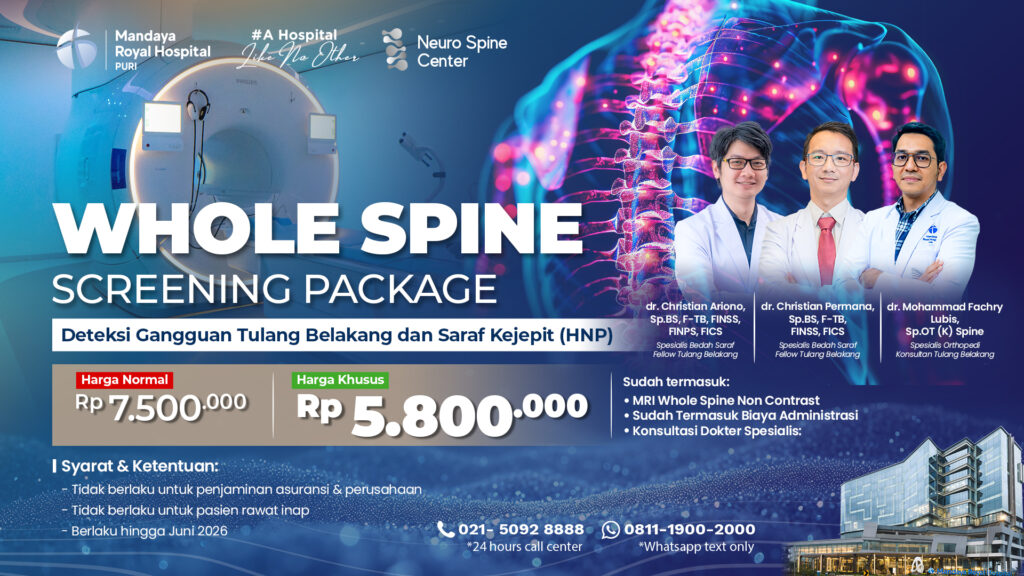
To help detect spinal problems early, Mandaya Royal Hospital Puri offers a Whole Spine Screening Package. This screening package is designed to evaluate the overall condition of the spine so that various abnormalities—including kyphosis, lordosis, and scoliosis—can be identified early and treated appropriately.
Contents
Types of Spinal Disorders
Below are several types of spinal disorders:
1. Kyphosis
Kyphosis is a spinal disorder characterized by excessive curvature of the upper back, causing the posture to appear hunched forward. Normally, the spine has natural curves, but in kyphosis, the curvature becomes more pronounced and may affect appearance, comfort, and even body function if severe.
Symptoms of kyphosis:
- The upper back appears hunched or rounded
- Pain or stiffness in the upper back
- Fatigue in the back area
- Reduced spinal flexibility
- In severe cases, breathing difficulties may occur
Causes of kyphosis:
- Poor posture over a long period
- Congenital spinal abnormalities (congenital kyphosis)
- Bone diseases such as osteoporosis
- Spinal injuries
- Certain conditions such as Scheuermann’s disease
Treatment for kyphosis depends on the severity of the spinal curvature and the underlying cause. In mild cases, doctors usually recommend posture correction, physiotherapy, and exercises to strengthen the back muscles to help maintain spinal stability.
If pain is present, pain-relieving medications may also be prescribed. In more severe cases—such as when the curvature is significant or causes breathing difficulties—doctors may consider using a brace (spinal support) or performing surgery to correct the spinal position.
2. Lordosis
Lordosis is a spinal condition characterized by excessive inward curvature of the lower back (lumbar spine). This condition makes the lower back appear more curved inward, causing the abdomen to protrude forward and the buttocks to appear more prominent. Mild lordosis may still be considered normal in some individuals, but excessive curvature can lead to symptoms.
Symptoms of lordosis:
- Excessive curvature in the lower back
- Lower back pain
- Imbalanced posture
- Stiffness or tension in the lower back muscles
- Pain that worsens when standing for long periods
Causes of lordosis:
- Poor posture
- Overweight or obesity
- Pregnancy
- Spinal or hip joint disorders
- Certain medical conditions such as spondylolisthesis
Treatment for lordosis generally focuses on reducing pain and improving posture. Doctors may recommend stretching and strengthening exercises for the core muscles through physiotherapy to better support the spine.
Lifestyle modifications—such as maintaining a healthy weight and improving sitting or standing habits—can also help reduce pressure on the lower back. In more severe cases or when caused by structural spinal abnormalities, the use of a brace or surgical procedures may be considered.
3. Scoliosis
Scoliosis is a spinal disorder that causes the spine to curve sideways, forming an “S” or “C” shape. This condition is most commonly found in children or adolescents during growth periods. The severity of scoliosis can vary from mild to severe, and in certain cases it may affect body balance and lung function.
Symptoms of scoliosis:
- Uneven shoulders
- One side of the waist appears higher
- One shoulder blade protrudes more than the other
- The body appears to lean to one side
- Back pain in some cases
Causes of scoliosis:
- Unknown cause (idiopathic scoliosis)
- Congenital spinal abnormalities (congenital scoliosis)
- Nerve or muscle disorders such as cerebral palsy or muscular dystrophy
- Spinal injuries or infections
- Degenerative spinal conditions in adults
Scoliosis treatment depends on the patient’s age, the degree of spinal curvature, and the risk of progression. In mild cases, doctors usually recommend periodic monitoring to ensure the curvature does not worsen.
If the curvature becomes significant, the use of a brace may be recommended, especially in children or adolescents who are still growing. In severe or progressive cases, spinal surgery may be performed to straighten and stabilize the spine.
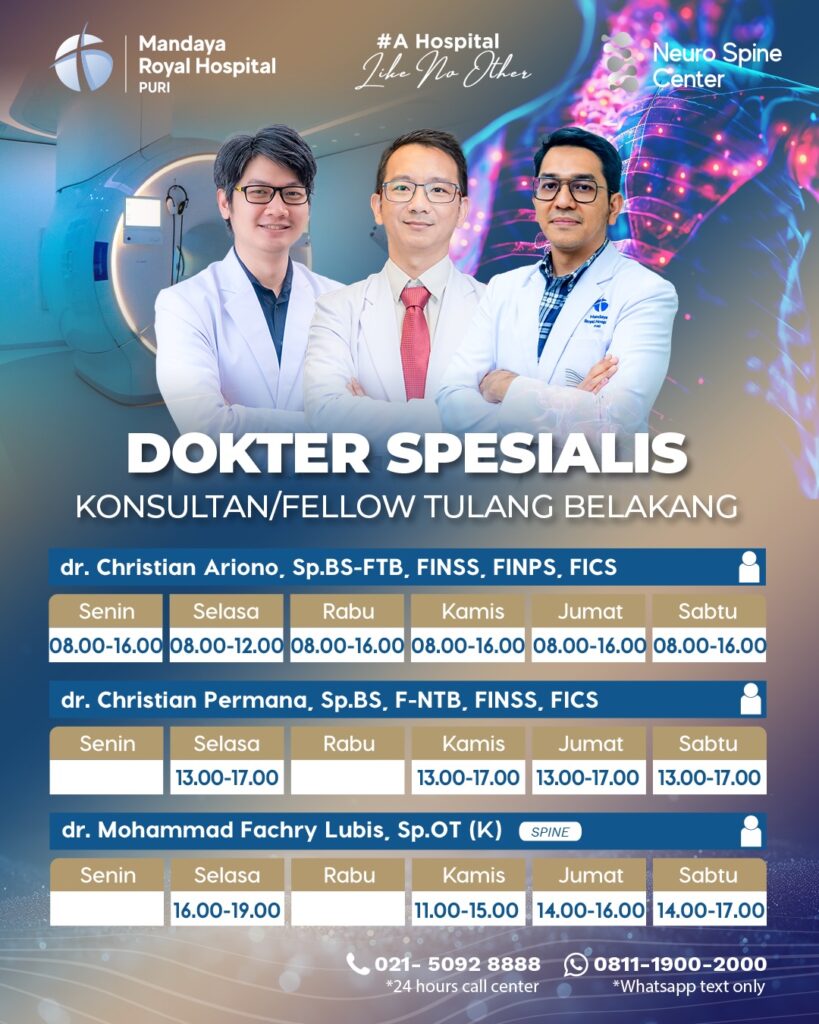
Spine Orthopedic Specialist at Mandaya Royal Hospital Puri
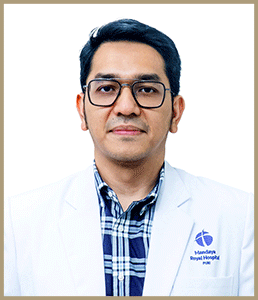
Dr. Mohammad Fachry Lubis, Sp.OT-(K) is known as an orthopedic spine consultant experienced in treating various spinal disorders, including kyphosis. He completed his medical education at Universitas Sumatera Utara, followed by orthopedic specialist and spine consultant subspecialty training at Universitas Indonesia.
With extensive experience in spine orthopedics, Dr. Fachry actively participates in various courses and training programs to continuously update his knowledge and clinical skills. Some of the training programs he has attended include AO Spine Asia Pacific Cadaveric in Sydney (2017), AO Trauma Chengdu (2016), Paris Shoulder Course in Paris (2017), North America Spine Society in Bali (2017), and AO Spine Advance in Jakarta (2017). These trainings were conducted both nationally and internationally.
In daily practice, Dr. Fachry is experienced in treating a wide range of spinal complaints and disorders. Some of the conditions he commonly handles include pinched nerves, scoliosis, spinal displacement, spinal nerve tumors, spinal fractures, sports-related spinal injuries, pain and tingling radiating from the lower back to the legs, neck pain radiating to the head, buttock pain, and chronic back or lower back pain.
Consultation schedule for Dr. Mohammad Fachry Lubis, Sp.OT-(K) at Mandaya Royal Hospital Puri:
- Tuesday: 17.00 – 20.00 WIB
- Thursday: 11.00 – 15.00 WIB
- Friday: 14.00 – 16.00 WIB
- Saturday: 14.00 – 16.00 WIB
Spine Examination Package at Mandaya Royal Hospital Puri
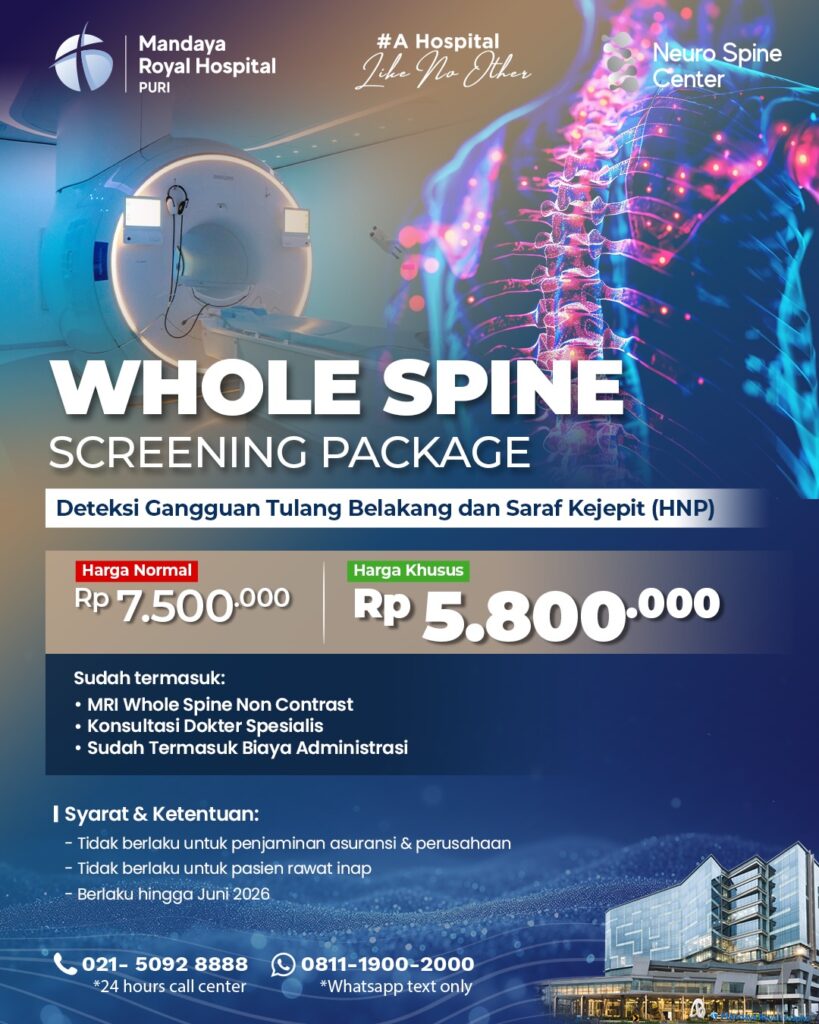
Below is the 2026 MRI Spine Examination Package price at Mandaya Royal Hospital Puri:
Price: Rp5,800,000
The price includes:
- MRI Whole Spine Non-Contrast
- Administrative fees
- Consultation with a specialist doctor
Terms and conditions:
- Not applicable for insurance or corporate guarantees
- Not applicable for inpatients
- Valid until June 2026
To make your visit to Mandaya Royal Hospital Puri easier, you can use the Chat via WhatsApp, Book Appointment, or the Care Dokter application, available for download on Google Play and App Store, to schedule visits, view queue numbers, and obtain other detailed information.