


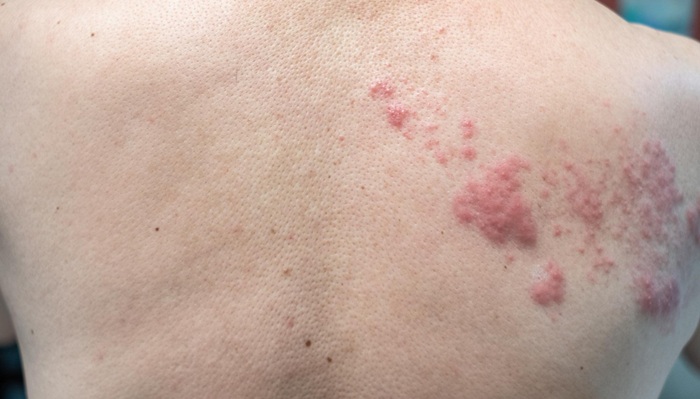
Shingles (herpes zoster) is a viral infection characterized by a painful skin rash and nerve damage. This condition is related to chickenpox, as it is caused by the same virus. After a person recovers from chickenpox, the virus does not completely leave the body but remains inactive. Under certain conditions, the virus can become active again and lead to shingles.

Contents
What Are the Symptoms of Shingles?
A painful, raised, or blistering rash is the most common symptom of shingles. It typically appears around the waist or on one side of the body, such as the face, neck, chest, abdomen, or back. However, in some cases, the rash can also appear on other parts of the body.
In addition to the rash, other symptoms may appear before or along with it, including:
- Deep nerve pain, often described as burning or stabbing
- Itching or tingling sensations
- Red or discolored patches of skin
- Fever
- Chills
- Headache
- General feeling of being unwell (fatigue or discomfort)
- Stomach upset
Some early symptoms, such as nerve pain and skin discoloration, can appear weeks before the rash develops. Other symptoms may occur a few days prior.
The rash usually turns into blisters within about 3–4 days. Within approximately 10 days, the blisters dry out and form scabs, which may take several weeks to fully heal.
It is important to note that not everyone with shingles develops a rash. If you experience symptoms that may indicate shingles, it is recommended to see a doctor even if no rash has appeared.
Causes of Shingles
Shingles is caused by the varicella-zoster virus (VZV), the same virus responsible for chickenpox. After recovery from chickenpox, the virus remains in the body in a dormant (inactive) state within nerve cells.
Later in life, the virus can become active again and cause shingles. The exact trigger is not always known, but it is more likely to occur as people age, especially when the immune system weakens.
Several factors may increase the risk of developing shingles, including:
- A weakened immune system (due to cancer, HIV, or immunosuppressive medications)
- Age over 50 years
- Possible association with stress, although this still requires further research
Is Shingles Contagious?
Shingles itself cannot be directly spread from one person to another. However, a person with shingles can transmit the virus that causes chickenpox to someone who has never had chickenpox before.
Transmission can occur through direct contact with fluid from the blisters or through airborne particles from the blisters. Therefore, it is important to avoid direct contact with the rash until it has fully healed.
Complications of Shingles
The most common complication of shingles is persistent nerve pain that continues even after the rash has healed. This condition can last for months or even years and may be quite severe.
Other possible complications include:
- Bacterial skin infections
- Vision problems or blindness due to eye infection
- Facial paralysis (Ramsay Hunt syndrome)
- Hearing problems, including tinnitus (ringing in the ears)
- Brain inflammation (encephalitis)
- Vertigo (a spinning sensation)
- Pneumonia
In very rare cases, shingles can be fatal.
How Is Shingles Treated?
Currently, there is no cure for shingles. However, doctors can provide treatments to relieve symptoms and speed up recovery, such as:
- Antiviral medications, including acyclovir, famciclovir, and valacyclovir
- Over-the-counter pain relievers, such as paracetamol or ibuprofen
- Corticosteroids, especially if shingles affects the eyes or face
When Should You See a Doctor?
If you experience symptoms of shingles, you should consult a doctor as soon as possible. Early treatment with antiviral medication can help speed up recovery and reduce the risk of complications.
Go to the emergency room immediately if you experience signs of serious complications, such as:
- Severe headache
- Vision changes
- Eye pain
- Sensitivity to light
- Stiff neck
- Confusion or changes in mental condition
- Muscle weakness or paralysis
Shingles Vaccine at Mandaya Royal Puri Hospital
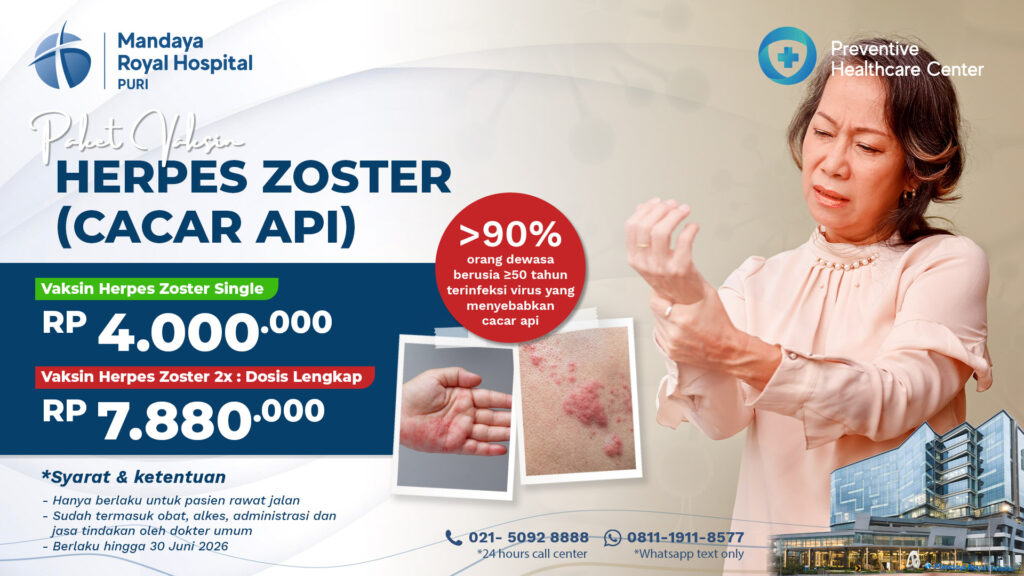
To prevent shingles, vaccination is highly recommended. Mandaya Royal Puri Hospital provides shingles vaccination services, available in both 1-dose and 2-dose options.
Shingles Vaccine Price:
- 1 dose: IDR 4,000,000
- 2 doses (complete dose): IDR 7,880,000
To make your visit more convenient, you can use the Chat via WhatsApp feature, Book Appointment service, or the Care Dokter application available on Google Play and the App Store. These platforms allow you to schedule appointments, check queue numbers, and access other important information.