


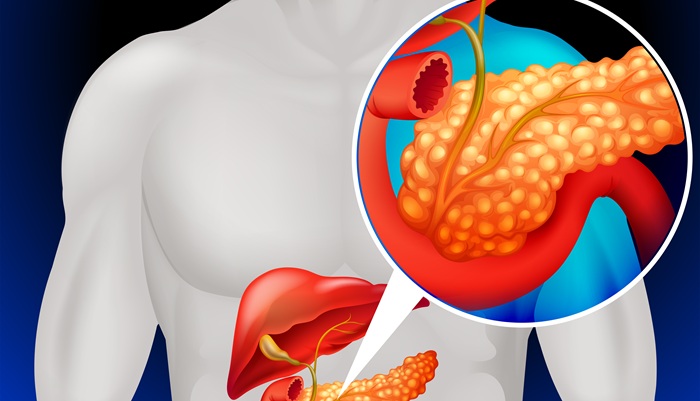
Pancreatic cancer is a type of cancer that develops in the tissues of the pancreas, an organ that plays a vital role in digestion and blood sugar regulation. This cancer is often detected late because it rarely causes specific symptoms in its early stages. As a result, many patients are only diagnosed when the disease has progressed to an advanced stage.
One of the latest innovations in the management of advanced-stage pancreatic cancer is High-Intensity Focused Ultrasound (HIFU) technology. HIFU is a non-invasive procedure that uses high-intensity ultrasound waves to precisely target and destroy tumor tissue without surgery. The ultrasound energy is focused on a specific point within the tumor, generating heat that damages and destroys cancer cells.
Today, HIFU technology at RS Mandaya Royal Puri offers new hope for patients with advanced pancreatic cancer. This technology provides a more minimally invasive treatment alternative, with a relatively lower risk of complications compared to conventional surgical procedures.

Contents
When Can HIFU Be Used for Pancreatic Cancer?
HIFU therapy is generally suitable for pancreatic cancer patients with the following conditions:
- Locally advanced pancreatic cancer, meaning the cancer has spread to tissues surrounding the pancreas but not to distant organs.
- Inoperable pancreatic cancer, for example when the tumor is located too close to major blood vessels or when the patient’s overall condition does not allow major surgery.
- Patients with limited treatment options, especially in advanced stages that are difficult to manage with conventional methods.
- Patients experiencing severe tumor-related pain, as HIFU can significantly relieve pain for a considerable period of time.
- Patients whose tumor size needs to be controlled, since HIFU can help gradually shrink the tumor, regardless of whether metastasis is present.
Some clinical data also suggest that HIFU may provide additional benefits in prolonging survival in selected patients.
How Does HIFU Work in Treating Pancreatic Cancer?
HIFU works by destroying tumor tissue without the need for surgery. Here is a simple explanation:
1. Directly Targeting the Tumor
High-intensity ultrasound waves are accurately directed at the tumor area in the pancreas using ultrasound (USG) imaging guidance.
2. Generating Extremely High Heat
When the ultrasound energy is concentrated at a single point, the temperature in that area can rise to more than 80°C.
3. Destroying Cancer Cells (Thermal Ablation)
This intense heat causes cancer cells to die (necrosis). Over time, the damaged tumor tissue shrinks, leading to a reduction in tumor size.
Advantages of HIFU for Pancreatic Cancer
HIFU offers several key advantages, including:
- Non-surgical (non-invasive), requiring no incisions.
- Relatively low risk and generally well tolerated by patients.
- Significant pain relief, including in patients with metastatic pancreatic cancer.
- Ability to reduce tumor size, which can support other treatment modalities.
- Potential to improve patients’ quality of life by reducing pain and stabilizing their condition.
- Possible survival benefits, particularly for patients with limited therapeutic options.
Ongoing clinical research continues to compare standard palliative therapy with a combination of standard therapy and HIFU in advanced pancreatic cancer to further validate its broader benefits.
What Do Clinical Studies Say About HIFU Effectiveness?
Based on the study titled Clinical Effectiveness and Potential Survival Benefit of US-Guided High-Intensity Focused Ultrasound Therapy in Patients with Advanced-Stage Pancreatic Cancer, HIFU therapy has shown promising results in patients with advanced pancreatic cancer.
-
84% of Patients Experienced Significant Pain Reduction
Among 50 advanced pancreatic cancer patients who underwent HIFU, 84% experienced significant relief from cancer-related abdominal pain starting from the early phase of treatment. The pain-relieving effect was sustained during the follow-up period, both in patients with and without metastases.
-
Tumor Size Reduced Within Weeks to Months
HIFU therapy has also been shown to reduce tumor size. On average, tumor volume decreased by approximately 37.8% after 6 weeks and reached about 57.9% after 6 months. These findings indicate that HIFU not only alleviates symptoms but also contributes to gradual tumor shrinkage.
-
Potential Survival Benefit
In the study, the median overall survival was approximately 16.2 months from diagnosis, with a median progression-free survival of around 16.9 months. These results suggest a potential additional survival benefit for advanced pancreatic cancer patients undergoing HIFU therapy.
HIFU Specialist for Pancreatic Cancer Treatment

HIFU procedures for pancreatic cancer at RS Mandaya Royal Puri are performed by dr. Sugianto Santoso, Sp.Rad, (K)RI, a radiologist with a subspecialty in interventional radiology. He has extensive experience in performing minimally invasive procedures to diagnose and treat various diseases across nearly all organ systems.
In his practice, he utilizes medical imaging guidance such as ultrasound, CT scans, MRI, and fluoroscopy to ensure precise and safe procedures. As an interventional radiologist, he is also skilled in procedures such as Transarterial Chemoembolization (TACE) for liver nodules and cancer, as well as ablation techniques including Radiofrequency (RF) Ablation and Microwave Ablation. These procedures aim to destroy tumor tissue without major surgery, reducing complication risks and shortening recovery time.
Dr. Sugianto completed his medical degree at Universitas Kristen Maranatha in Bandung and his radiology specialty training at Universitas Indonesia. With a strong academic background and extensive clinical experience, he plays an important role in implementing modern minimally invasive technologies, including HIFU, to provide more targeted and lower-risk treatment options for cancer patients.
Dr. Sugianto Santoso, Sp.Rad, (K)RI is available at RS Mandaya Royal Puri on:
- Tuesday: 4:00 PM – 8:00 PM (WIB)
- Thursday: 4:00 PM – 8:00 PM (WIB)
To make your visit easier, you can use the WhatsApp Chat feature, Book Appointment service, or download the Care Dokter app from Google Play and the App Store to check queue numbers and access complete information.