



Tic facialis, or facial twitching, is a condition characterized by repeated and involuntary contractions of the facial muscles. The twitching typically occurs on one side of the face, often starting around the eye area before spreading to the cheek and mouth. Although it may appear harmless at first, tic facialis can significantly disrupt daily activities, affecting a person’s ability to speak, see clearly, and interact confidently with others due to uncontrollable facial movements.

Contents
Patient Experience with Hemifacial Spasm: Undergoing MVD Surgery at Mandaya
One treatment option for this condition is Microvascular Decompression (MVD). This procedure aims to relieve pressure from a blood vessel pressing on the facial nerve, which is the main cause of the twitching. The MVD procedure can be performed by Mardjono Joy Tjahjadi, Sp.BS, Subsp. N-Vas, F. N-Onk, PhD, FICS, IFAANS, commonly known as Dr. Joy, a neurosurgeon at Mandaya Royal Hospital Puri who specializes in treating various neurological disorders, including tic facialis.
Recently, Dr. Joy performed an MVD procedure to help a 67-year-old patient named Mrs. Jammah. She had been experiencing persistent facial twitching for a long time due to tic facialis. Through the MVD procedure carried out by the medical team at Mandaya Royal Hospital Puri, the condition was treated with the goal of reducing or even eliminating the facial twitching that had been interfering with her daily activities.
“Right after I came out of the operating room, the twitching stopped immediately. My eyes and mouth were no longer shaking. Now I have no more complaints,” Mrs. Jammah said happily.
Dr. Joy’s Explanation About Tic Facialis
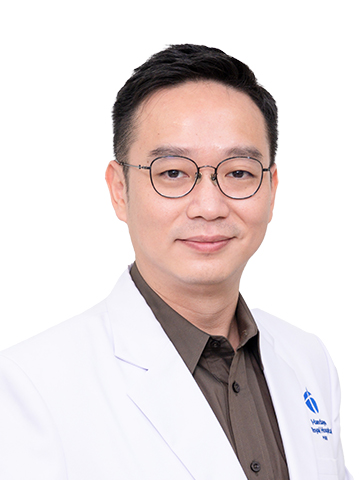
Tic facialis is a neurological disorder that causes uncontrollable twitching on one side of the face. The twitching usually begins in the eyelid and may spread to the cheek, corner of the lips, and other facial areas as the condition worsens.
According to Dr. Joy, this condition occurs when a blood vessel presses against the facial nerve.
“Hemifacial spasm or tic facialis is a condition where twitching occurs on one side of the face. The twitching can appear in the eyelid, cheek, and corner of the lips. It happens because a blood vessel presses against the facial nerve, and the pulsation triggers a nerve reaction that appears as twitching,” said Dr. Joy.
Over time, the constant pressure from the blood vessel can cause the twitching to become more frequent and more intense. In some patients, the twitching can even occur while resting or sleeping, significantly affecting quality of life.
Mrs. Jammah’s Experience: Worsening Facial Twitching
One patient who experienced this condition is Mrs. Jammah. She first noticed twitching around her eye several years ago, but the symptoms gradually spread to other parts of her face.
“At first the twitching was in my eye. Over time it spread to my cheek, my lips, and even my ear made a ‘cracking’ sound. Every day I felt scared and uneasy,” she said.
Because the condition became increasingly disruptive, Mrs. Jammah sought various treatments, even traveling abroad for medical care. However, her facial twitching did not improve.
“I went to many doctors, even to Singapore and Malaysia. I tried many kinds of treatments, but nothing worked.”
The constant twitching made daily activities uncomfortable and affected her confidence when speaking with others.
MVD Procedure by Dr. Joy at Mandaya Royal Hospital Puri
One of the most effective treatments for hemifacial spasm is the Microvascular Decompression (MVD) procedure. This surgery aims to separate the blood vessel that is pressing on the facial nerve so the nerve is no longer irritated.
According to Dr. Joy, this procedure can provide a more permanent solution compared to other therapies that only relieve symptoms temporarily.
“MVD surgery is performed by separating the blood vessel that is attached to the nerve. Once the pressure is released, the nerve is no longer irritated, allowing patients to be free from twitching in the long term,” explained Dr. Joy.
After undergoing the MVD procedure at Mandaya Royal Hospital Puri, Mrs. Jammah experienced a very significant improvement.
“Right after I came out of the operating room, the twitching stopped immediately. My eyes and mouth were no longer shaking. Now I have no more complaints.”
This experience shows that with the right diagnosis and treatment from an experienced specialist, tic facialis can be effectively managed so patients can return to their daily activities more comfortably.
Profile and Practice Schedule of Dr. Joy at Mandaya Royal Hospital Puri
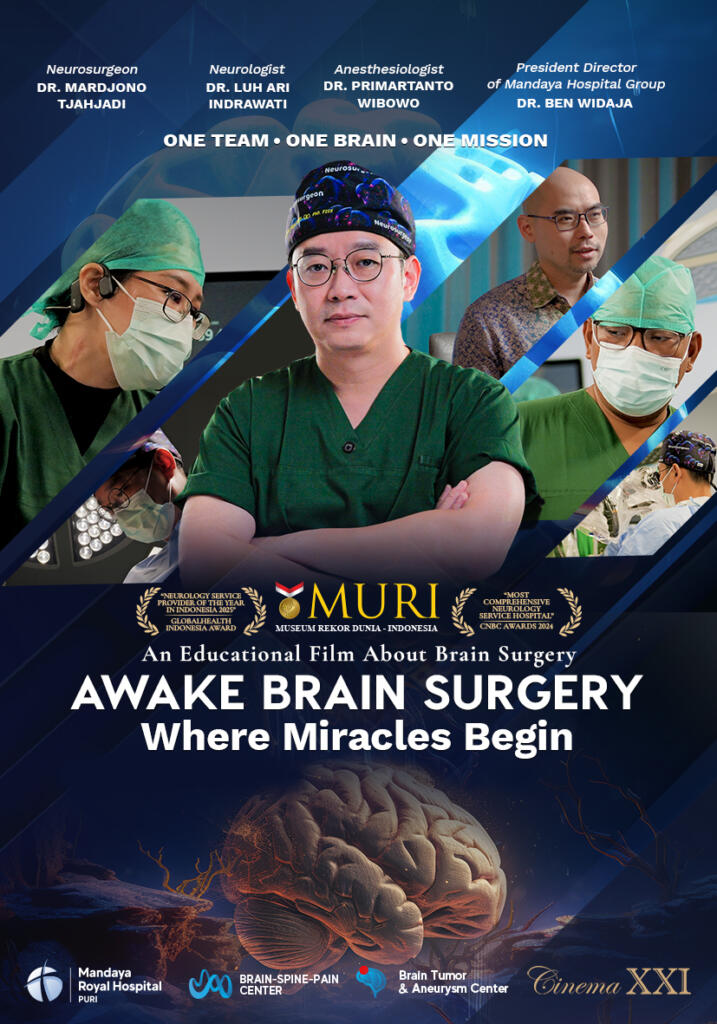
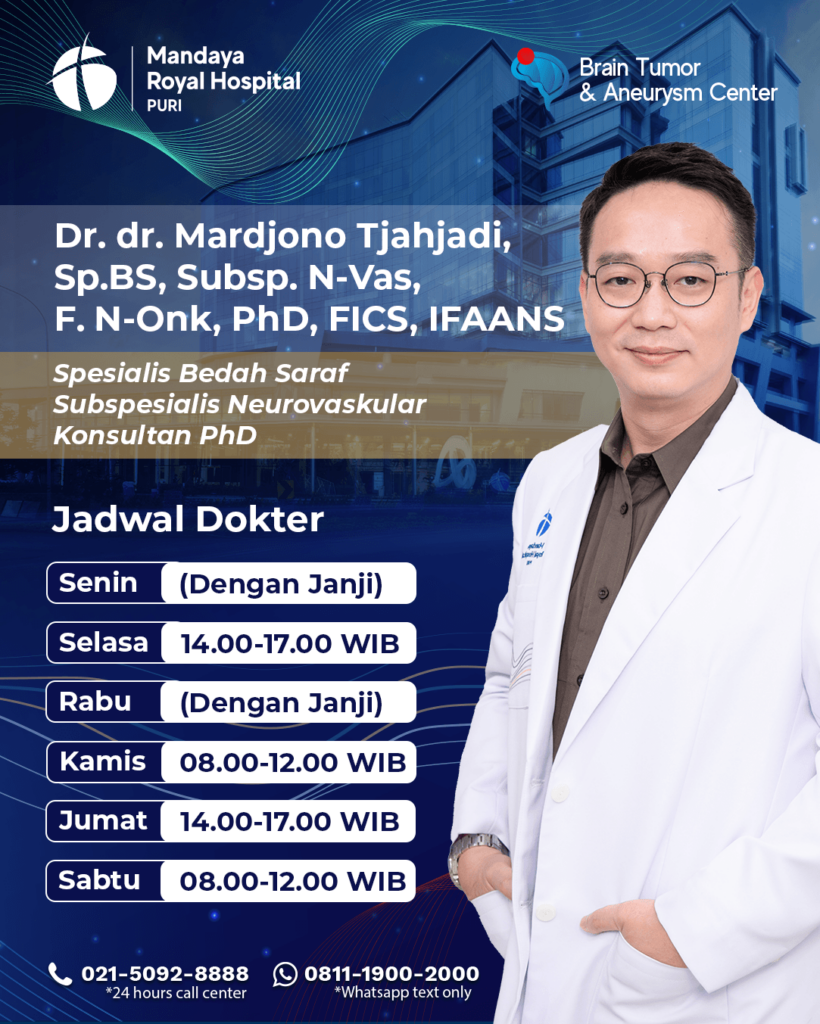
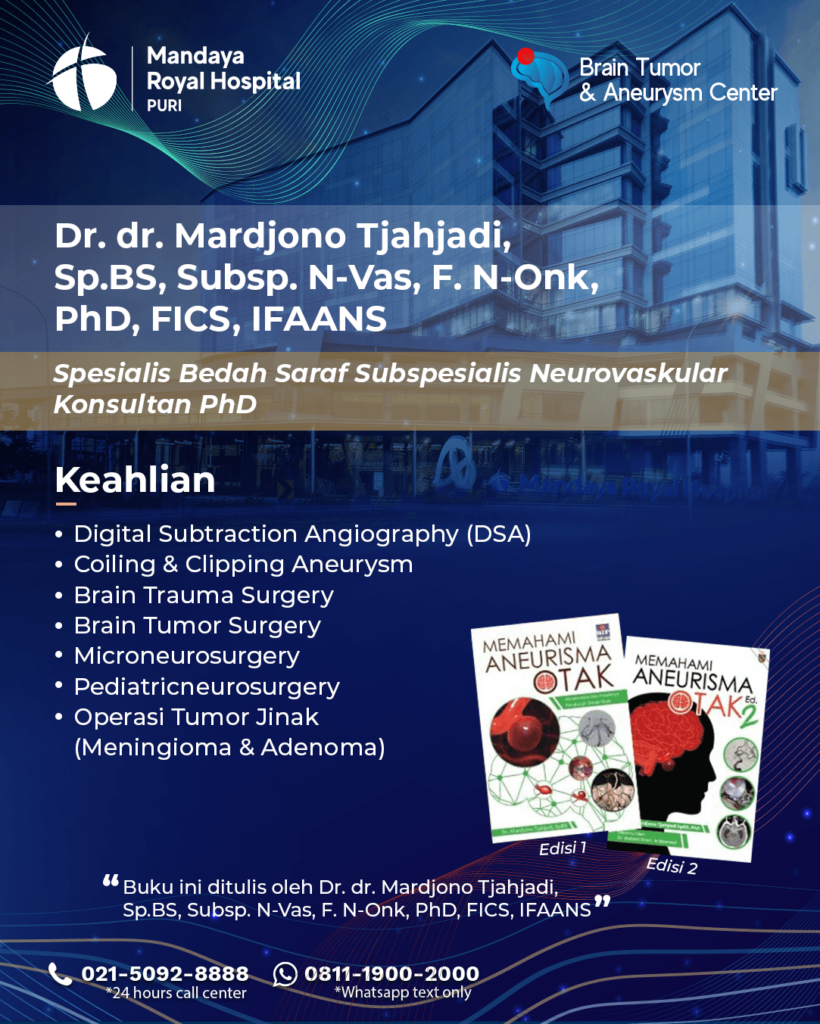
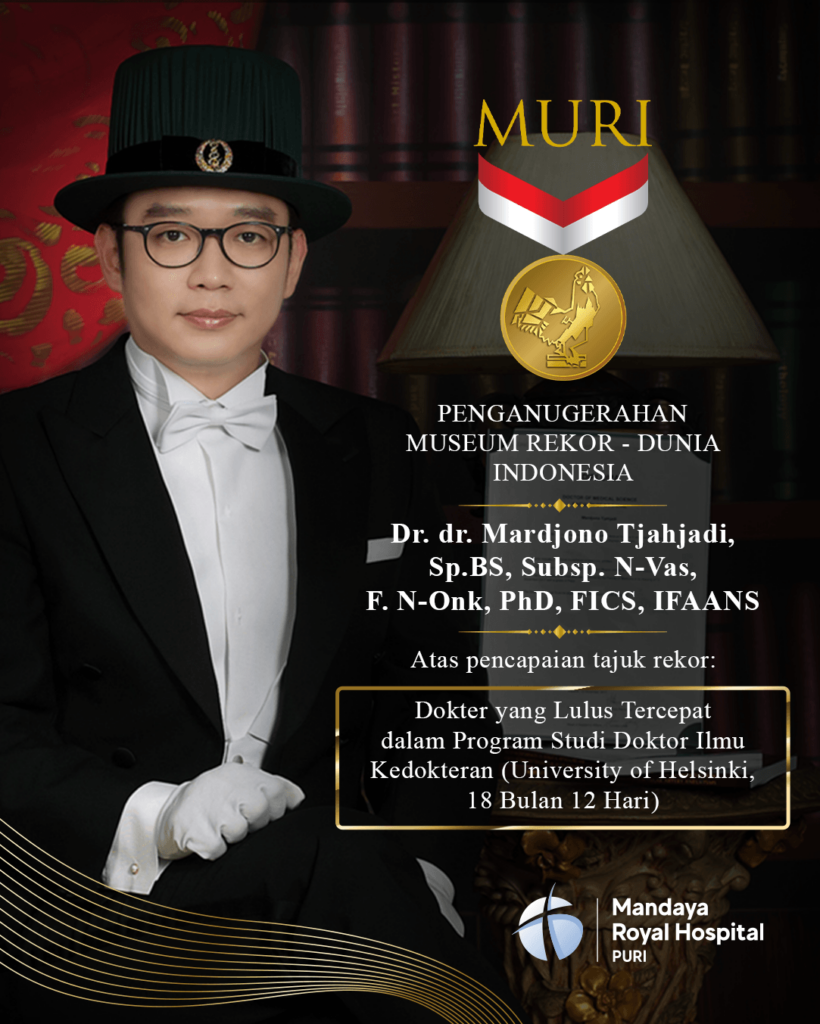
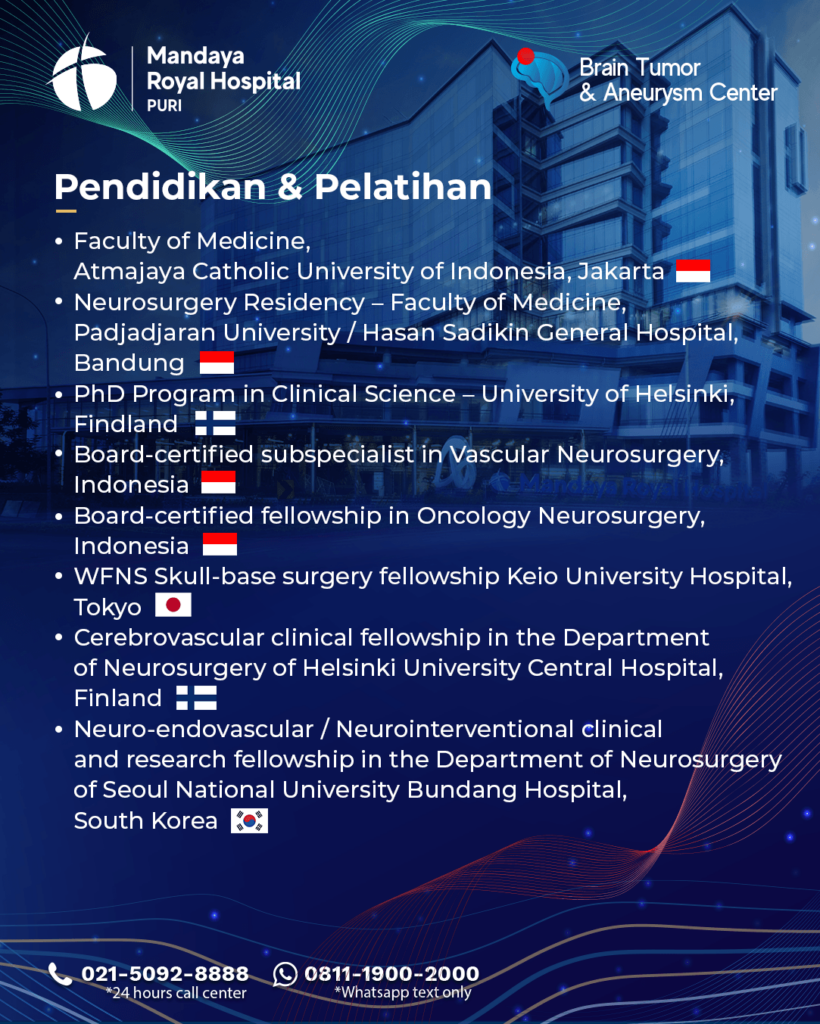
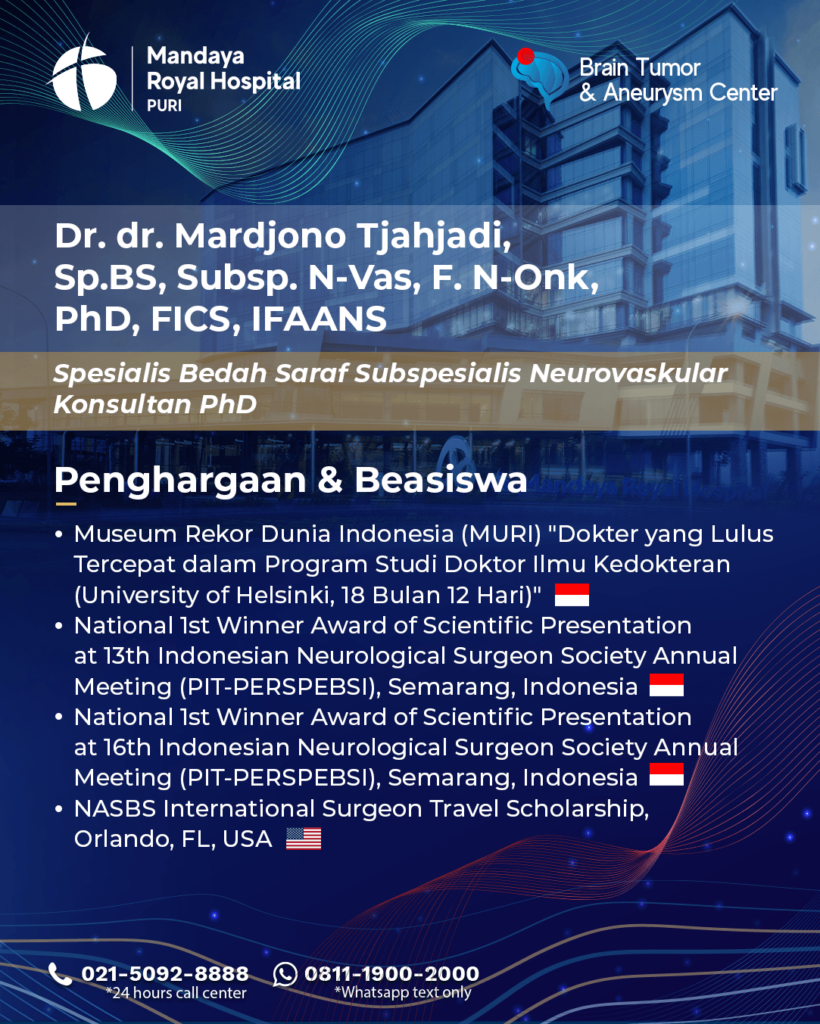
Dr. Mardjono Joy Tjahjadi, Sp.BS, Subsp. N-Vas, F. N-Onk, PhD, FICS, IFAANS, widely known as Dr. Joy, is a neurosurgeon with subspecialty expertise in cerebrovascular diseases. He is known for his ability to treat a wide range of neurological disorders, particularly those related to abnormalities of blood vessels in the brain.
Dr. Joy earned his doctoral degree from the University of Helsinki in Finland, focusing his research on brain aneurysms. His research explored the mechanisms behind aneurysm formation as well as various clinical approaches for diagnosing and treating this condition.
In addition to treating patients at Mandaya Royal Hospital Puri, Dr. Joy is also active in the academic field. He authored a book titled Memahami Aneurisma Otak, which has been published in two editions. The book discusses brain aneurysms comprehensively, covering causes, disease mechanisms, diagnostic methods, and available treatment options.
In his clinical practice, Dr. Joy has extensive experience managing complex neurological conditions, including:
- Brain aneurysm
- Cerebral blood vessel stenosis (narrowing of brain blood vessels)
- Brain hemorrhage
- Brain tumors
- Brain cancer
Supported by broad clinical experience, a strong academic background, and training in international neurosurgical centers, Dr. Joy is recognized as one of Indonesia’s leading neurosurgeons. His expertise is particularly prominent in managing complex cerebrovascular diseases and brain tumors.
For patients who wish to consult, Dr. Joy’s practice schedule at Mandaya Royal Hospital Puri is as follows:
- Monday: By appointment
- Tuesday: 14.00 – 17.00 WIB
- Wednesday: By appointment
- Thursday: 08.00 – 12.00 WIB
- Friday: 14.00 – 17.00 WIB
- Saturday: 08.00 – 12.00 WIB
To make your visit easier, you can use the WhatsApp Chat, Book Appointment, or the Care Dokter application, available on Google Play and App Store, to schedule visits, check queue numbers, and obtain other important information before coming to Mandaya Royal Hospital Puri.