


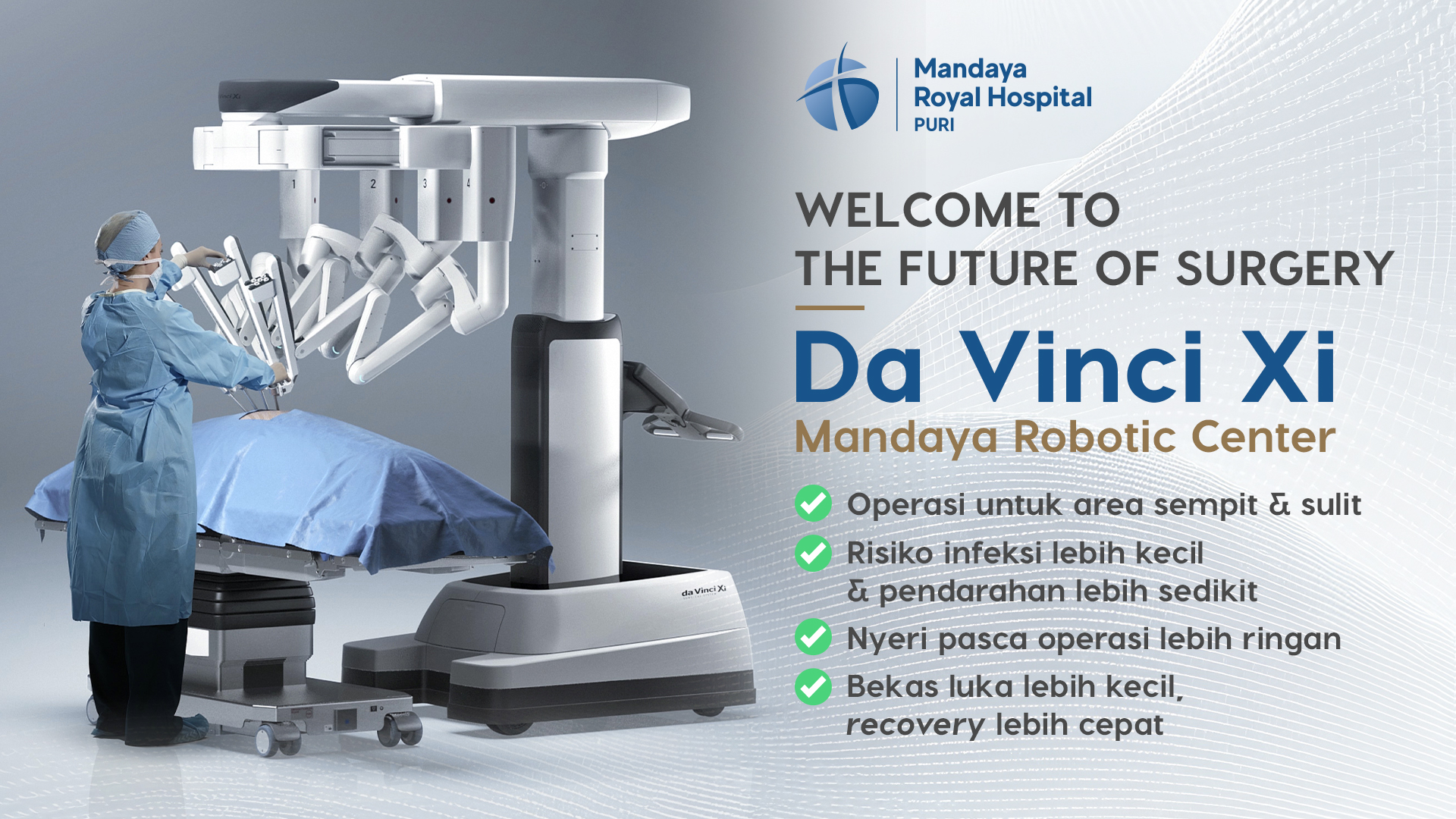
Mandaya Royal Hospital Puri brings the latest innovation in medical technology by introducing the da Vinci Xi robotic surgical system. This advanced technology is designed to assist surgeons in performing operations with higher precision, while also providing greater comfort and safety for patients. With this system, surgical procedures can be carried out in a more modern way with reduced risks.
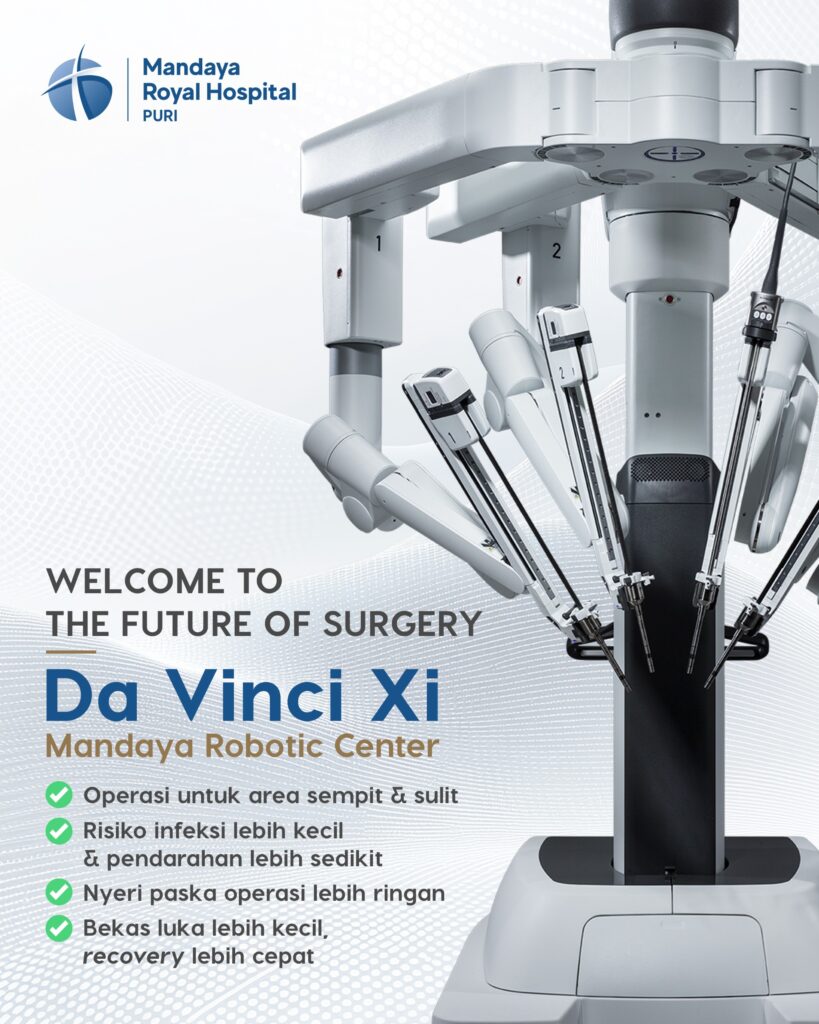
The da Vinci Xi is a robot-assisted surgical system that allows surgeons to control surgical instruments with greater flexibility and accuracy, especially in hard-to-reach areas of the body. It is equipped with four robotic arms that hold surgical instruments and a small camera, enabling clear visualization inside the body. All instruments are inserted through small incisions, eliminating the need for large cuts typically required in open surgery.
Although robotic technology is used, the entire procedure remains fully controlled by the surgeon, with no autonomous movement by the robot. Globally, the da Vinci system has been used in more than 10 million surgical procedures and continues to grow in popularity across many countries.

Contents
Understanding the da Vinci Xi Robot and Its Components
The da Vinci Xi is an advanced robotic surgical system equipped with four high-precision robotic arms, all directly controlled by the surgeon through a console with high-resolution 3D visualization. This technology enables surgeons to view internal organs more clearly, sharply, and in greater detail during procedures.
In addition, the robotic arms are highly flexible and capable of mimicking human hand movements on a smaller scale. This makes it easier for surgeons to access narrow and difficult-to-reach areas, allowing procedures to be performed with greater accuracy and potentially improving surgical success rates.
The da Vinci Surgical System consists of three main components:
- Control Console: This is where the surgeon sits during the procedure. It features a high-resolution 3D display that allows the surgeon to clearly view the surgical area while controlling the robotic arms. The controls resemble a joystick but are equipped with far more advanced and precise technology.
- Patient Cart (Robotic Arms Unit): This unit is positioned beside the patient during surgery. It supports the robotic arms and serves as the platform where surgical instruments are attached and operated.
- Vision Cart: This component contains the hardware and software required to run the da Vinci system. It also includes an additional monitor that allows other medical team members to observe the procedure in real time.
Types of Procedures That Can Be Performed with the da Vinci Xi
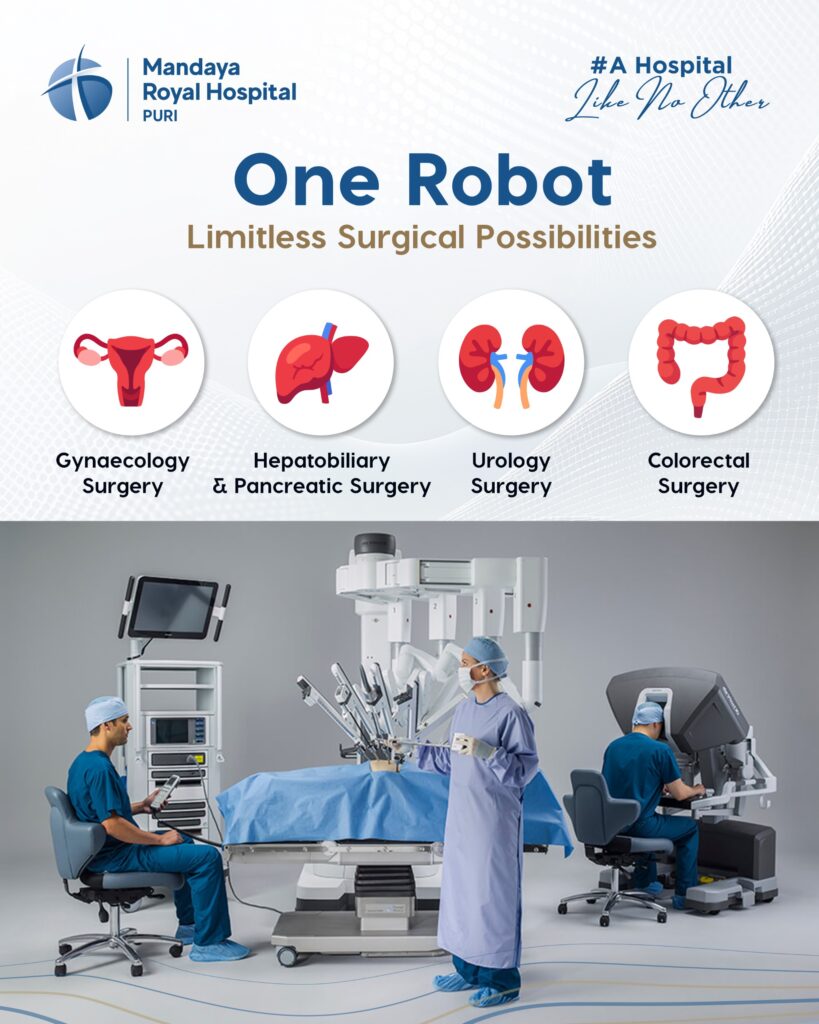
The da Vinci Xi robotic system can be used for a wide range of surgical procedures, including:
- Gynecological surgery
- Hepatobiliary and pancreatic surgery
- Urological surgery
- Colorectal surgery (colon and rectum)
Surgical Procedure with the da Vinci Xi Robot
The steps involved in robotic surgery may vary depending on the type of procedure. However, in general, the process includes:
- The anesthesiologist administers general anesthesia to ensure the patient is asleep during the procedure
- The medical team prepares the da Vinci system and positions the robotic arms beside the patient
- The surgeon makes several small incisions in the targeted area, depending on the type and location of the surgery
- Surgical instruments are inserted through these small incisions
- The instruments are then attached to the robotic arms
- The surgeon operates the system from the control console while viewing the surgical area through a high-resolution 3D display
- From the console, the surgeon controls all instrument movements. The robotic arms move with exceptional flexibility, mimicking the human wrist, allowing access to narrow spaces with high precision. The robot only moves under the surgeon’s control
- Once the procedure is completed, the instruments are removed and the incisions are closed
Advantages of da Vinci Xi Robotic Surgery at Mandaya Royal Hospital Puri
Here are some of the benefits patients may experience with da Vinci Xi robotic surgery:
During surgery:
- Reduced blood loss
- Minimal tissue trauma
- Smaller incisions
After surgery:
- Lower risk of complications and infection
- Less postoperative pain
- Minimal scarring
- Faster return to daily activities
- Shorter hospital stays
- Faster overall recovery
If you would like to learn more about surgery with the da Vinci Xi robot, feel free to visit Mandaya Royal Hospital Puri.
For your convenience, you can use the WhatsApp Chat feature, Book Appointment service, or the Care Dokter app—available on Google Play and the App Store—to schedule visits, check queue numbers, and access more detailed information.