


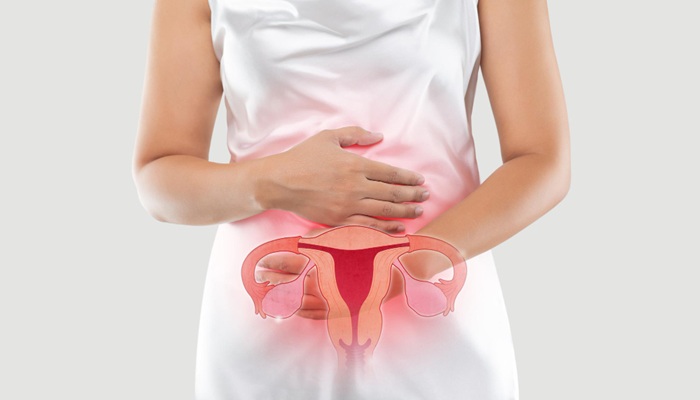
Uterine fibroids often cause symptoms such as heavy menstrual bleeding, pelvic pain, abdominal fullness, and even fertility problems. For years, fibroids have commonly been treated through conventional surgical procedures such as myomectomy and hysterectomy.
However, advances in medical technology have introduced a more modern alternative: HIFU (High-Intensity Focused Ultrasound). This non-invasive procedure requires no incisions and is considered safer with minimal risk. The HIFU technology is now available at RS Mandaya Royal Puri.
So, when compared to conventional fibroid surgery, which option offers better safety, lower complication risks, and faster recovery?

Contents
What Are Uterine Fibroids?
Uterine fibroids (also known as leiomyomas) are benign tumors that develop in the muscular wall of the uterus. This condition is common among women of reproductive age and may cause symptoms such as:
- Heavy or prolonged menstrual bleeding
- Pelvic pain or pressure
- A feeling of fullness or abdominal enlargement
- Frequent urination
- Fertility issues
In some cases, small fibroids may not cause noticeable symptoms. However, when fibroids grow larger or increase in number, medical treatment is often necessary.
Conventional Fibroid Surgery: Myomectomy and Hysterectomy
For many years, surgery has been the primary treatment for fibroids. The two most common procedures are myomectomy and hysterectomy.
Myomectomy
Myomectomy is a surgical procedure to remove fibroids while preserving the uterus. It is often recommended for women who wish to maintain their fertility.
Because it is still a surgical intervention, myomectomy carries certain risks, including:
- Intraoperative bleeding
- Infection
- Scar tissue formation
- Possibility of fibroid recurrence
Recovery time may take several weeks, depending on whether the procedure is performed via open surgery, laparoscopy, or hysteroscopy.
Hysterectomy
Hysterectomy involves the complete removal of the uterus. This option is typically recommended when fibroids are very large, numerous, or recurrent.
Since the uterus is removed, pregnancy is no longer possible after the procedure. Hysterectomy is considered major surgery and may involve risks such as:
- Bleeding
- Infection
- Anesthesia-related complications
- Longer hospitalization and recovery period
Safety Comparison: HIFU vs Conventional Fibroid Surgery
HIFU is a non-invasive technology that uses high-intensity focused ultrasound waves to destroy fibroid tissue without any surgical incisions.
The ultrasound waves are precisely targeted at the fibroid tissue, generating heat that destroys fibroid cells while preserving surrounding healthy tissue. The damaged tissue is then gradually absorbed naturally by the body.
Below is a comparison between HIFU and conventional fibroid surgery:
1. No Incisions and Minimal Bleeding
Unlike myomectomy and hysterectomy, which require surgical incisions, HIFU does not involve cutting or open surgery. Without surgical wounds, the risks of bleeding and infection are significantly lower.
2. Lower Risk of Complications
Conventional surgery carries risks such as anesthesia reactions, organ adhesions, and scar tissue formation. HIFU is performed without general anesthesia and without surgical intervention, reducing the likelihood of serious complications.
3. Faster Recovery Time
Patients undergoing fibroid surgery typically require several weeks for recovery. In contrast, HIFU patients often resume daily activities much sooner because there are no surgical wounds to heal.
4. Uterus Preservation
During hysterectomy, the uterus is completely removed. HIFU, on the other hand, preserves the uterus by targeting only the fibroid tissue. This is particularly important for women who wish to maintain their reproductive potential.
It is important to understand that both HIFU and conventional surgery are selected based on each patient’s individual condition. Factors such as fibroid size, number, location, overall health status, and future pregnancy plans are carefully evaluated by a specialist before determining the most appropriate treatment.
In other words, treatment decisions are personalized to ensure optimal safety and outcomes.
Fibroid and HIFU Specialists at RS Mandaya Royal Puri
In addition to advanced HIFU technology, RS Mandaya Royal Puri is supported by a team of obstetrics and gynecology specialists who have undergone intensive HIFU training in China.
1. dr. Gracia Merryane R.G Rauw, Sp.OG
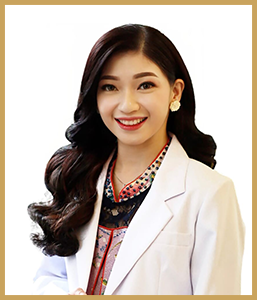
An Obstetrics and Gynecology specialist focused on women’s reproductive health, pregnancy monitoring, and gynecological disorders. She completed her medical and specialist education at Sam Ratulangi University. Her services include fertility programs, ovulation induction, vaginal delivery, cesarean section, hysterectomy, laparoscopy, Pap smear, SIS, and LEEP procedures.
Practice Schedule:
- Monday–Saturday: 08.00–11.00 WIB & 13.00–18.00 WIB
2. dr. Doddy F.P. Gultom, Sp.OG (K), M.Kes
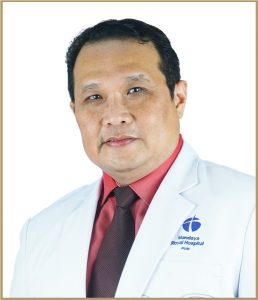
A consultant Obstetrics and Gynecology specialist with extensive experience in reproductive health. He completed his medical degree at Trisakti University, specialist training at Hasanuddin University, and consultant training at the University of Indonesia. His expertise includes preconception care, prenatal diagnosis, fetal imaging, contraception counseling, and minimally invasive gynecological procedures.
Practice Schedule:
- Tuesday: 17.00–20.00 WIB
- Thursday: 13.00–16.00 WIB
- Saturday: 08.00–12.00 WIB
3. Dr. dr. Unedo Hence Markus Sihombing, Sp.OG, Subsp. Onk

A subspecialist in gynecologic oncology who completed his medical education at Sriwijaya University and Sebelas Maret University, and earned his consultant and doctoral degrees at the University of Indonesia. He treats gynecologic cancers such as cervical, uterine, ovarian, vulvar, and vaginal cancers, as well as benign tumors and polyps.
Practice Schedule:
- Tuesday & Thursday: 16.00–20.00 WIB
- Saturday: 13.00–16.00 WIB
4. dr. Edward Tony Ngantung, Sp.OG
Provides comprehensive women’s healthcare, from preconception care to gynecological treatment. He completed his medical education at Sam Ratulangi University and specialist training abroad. His expertise includes prenatal diagnosis, fetal imaging, contraception counseling, and minimally invasive procedures.
Practice Schedule:
- Monday: 14.00–16.30 WIB
- Tuesday: 11.00–14.00 WIB
- Wednesday & Thursday: 17.00–20.00 WIB
- Friday: 10.00–14.00 WIB
- Saturday: 09.00–13.00 WIB
5. dr. Erik Sutandi, Sp.OG
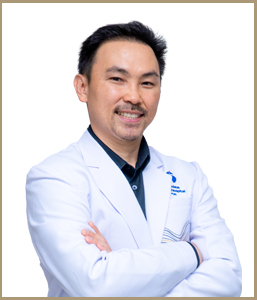
An Obstetrics and Gynecology specialist with expertise in reproductive health, pregnancy care, fertility evaluation, hormonal assessment, TORCH testing, 4D ultrasound, Pap smear, HPV vaccination, and various gynecologic procedures.
Practice Schedule:
- Monday: 17.00–20.00 WIB
- Wednesday: 14.00–16.00 WIB
- Friday: 17.00–20.00 WIB
- Saturday: 14.00–16.00 WIB
6. dr. Rahmadsyah, Sp.OG(K)FER, M.Kes, MARS
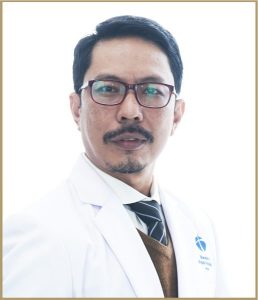
A Fertility Consultant specializing in reproductive medicine and assisted reproductive technology, including ovulation induction and IVF (in vitro fertilization). He also provides comprehensive pregnancy and gynecological care.
Practice Schedule:
- Monday–Saturday: 13.00–16.00 WIB
7. dr. Sigit Pradono Diptoadi, Sp.OG
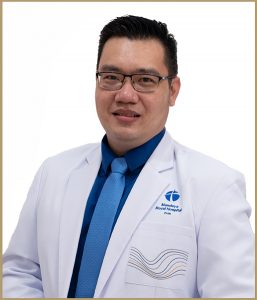
An Obstetrics and Gynecology specialist with expertise in fertility consultation, ovulation induction, pregnancy monitoring, labor induction, and 4D ultrasound examinations.
Practice Schedule:
- Monday, Friday, Saturday: 17.00–20.00 WIB