


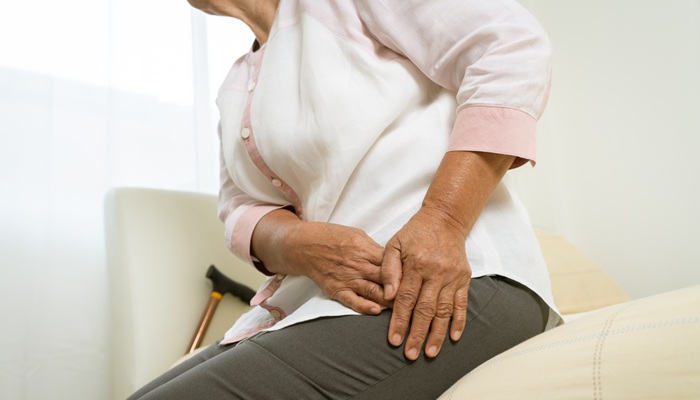
Hip pain is discomfort or soreness felt in or around the hip joint. This joint connects the thighbone (femur) to the pelvic bone, allowing the body to perform a wide range of movements.
As one of the largest joints in the body, the hip plays an important role in supporting body weight, maintaining balance, and helping you move. Therefore, problems affecting this joint can cause pain that interferes with everyday activities, including walking, standing, and sitting.

Contents
What Are the Symptoms of Hip Pain?
Hip pain symptoms can range from temporary discomfort to severe pain that requires medical attention. The location of the pain may also vary, depending on which part of the hip joint is affected.
In general, hip pain can be felt in several areas, including:
- Around the surface of the hip: The pain usually originates from problems involving the muscles, tendons (tissues that connect muscles to bones), or ligaments (tissues that connect bones to other bones).
- Deep inside the hip joint: Deeper pain may be associated with problems affecting the bones or cartilage in the hip joint.
- Lower back: Hip pain can sometimes radiate to the lower back or groin area.
In addition to its location, the intensity of hip pain may change throughout the day. Some people experience pain when walking or moving, but find that the discomfort improves with rest.
Pain may also occur at certain times, such as when getting out of bed in the morning or during the night. Even lying on your side with the affected hip pressed against the mattress can make the pain worse.
What Are the Causes of Hip Pain?
Hip pain can be caused by various conditions, ranging from physical activity-related injuries and joint inflammation to infections. Each underlying cause may produce different symptoms, including the following:
- Hip fracture: Can cause severe pain and difficulty walking, particularly after a fall or injury.
- Sprains or muscle strains: Usually cause pain, swelling, or bruising after intense exercise or repetitive movements.
- Tendinitis: Inflammation of a tendon that can cause pain following strenuous or repetitive physical activity.
- Osteoarthritis: Commonly affects people over the age of 45. The pain tends to worsen when walking and may be accompanied by joint stiffness after movement.
- Rheumatoid arthritis: Joint inflammation caused by an autoimmune disorder that can lead to pain and stiffness, particularly after periods of inactivity or upon waking up.
- Septic arthritis (joint infection): Can cause the hip joint to become warm and swollen, accompanied by fever or chills.
- Bursitis: Inflammation of a fluid-filled sac that helps reduce friction around the joint. This condition can cause pain that radiates to the upper thigh and worsens with movement or when lying on the affected side.
Each cause of hip pain requires a different approach to treatment. Therefore, a medical examination is necessary to identify the underlying cause and determine the most appropriate treatment.
When Should You See a Doctor for Hip Pain?
If your hip pain is mild, you can try several self-care measures at home to help relieve the discomfort, including:
- Rest: Limit activities that require excessive hip bending or place direct pressure on the joint. Avoid sleeping on the affected side and try not to sit for extended periods.
- Take pain relievers: Over-the-counter medications, such as paracetamol, ibuprofen, or naproxen, may help reduce pain. You can also use pain-relief creams, gels, or patches containing diclofenac, lidocaine, or capsaicin according to the product instructions.
- Apply a cold compress: Place an ice pack wrapped in a towel over the affected hip to help reduce inflammation and swelling.
- Use warm compresses and gentle stretching: Taking a warm bath can help relax the muscles before performing gentle stretches to reduce muscle tension and pain.
However, if these self-care measures do not relieve your symptoms, you should consult a doctor for further evaluation.
Seek immediate medical attention if you experience hip pain after an injury accompanied by any of the following symptoms:
- The hip joint looks abnormal or appears to be out of its normal position.
- One leg appears shorter than usual.
- You are unable to move your leg or hip joint.
- You cannot bear weight or stand on the affected leg.
- You experience extremely severe hip pain.
- Sudden swelling occurs.
- You develop a fever, chills, or changes in skin color on the injured leg.
These symptoms may indicate a serious injury or medical condition that requires immediate treatment. Do not delay seeking medical attention, as early treatment can help prevent the condition from worsening.
How Is Hip Pain Treated?
Treatment for hip pain depends on its underlying cause and severity. Your doctor will determine the most appropriate approach, which may range from self-care and medication to physical therapy or surgery when necessary.
The following are some treatment options for hip pain:
1. RICE Method
For hip pain caused by minor injuries, you can try the RICE method, which consists of four steps:
- Rest: Temporarily stop physical activities that trigger pain to prevent the injury from getting worse.
- Ice: Apply a cold compress for 10–15 minutes every hour on the first day after the injury. After that, you can apply it every 3–4 hours. Wrap the ice pack in a towel to prevent direct contact with your skin.
- Compression: Use an elastic bandage or compression garment to help reduce swelling around the hip.
- Elevation: If possible, position your hip and lower body above heart level using pillows or other supports.
2. Medication
Your doctor may prescribe or recommend medication to relieve pain and other accompanying symptoms. Common options include nonsteroidal anti-inflammatory drugs (NSAIDs), such as ibuprofen, aspirin, and naproxen, as well as paracetamol for pain relief.
These medications should be taken according to the recommended dosage and instructions. Avoid using pain relievers for more than 10 consecutive days without consulting your doctor.
3. Physical Therapy
Physical therapy may be recommended for hip pain caused by arthritis or structural problems affecting the joint. During physical therapy, patients are guided through stretching and strengthening exercises targeting the muscles around the hip.
These exercises aim to improve joint stability, enhance mobility, and help reduce pain.
4. Hip Surgery
Surgery is generally considered when hip pain is severe and does not improve with other treatments. It may also be necessary to repair fractures or damage to the structures of the hip joint.
Some types of hip surgery include:
- Hip arthroscopy: A minimally invasive procedure involving small incisions through which a specialized instrument called an arthroscope, equipped with a camera, is inserted. This allows the doctor to examine the inside of the hip joint and repair damaged tissues.
- Hip replacement: A procedure to replace a damaged hip joint with an artificial implant. This may be recommended when joint pain and damage significantly interfere with the patient’s ability to stand, walk, or move.
Your doctor will explain which surgical procedure is most appropriate, including the estimated recovery time based on your condition and the extent of joint damage.
Hip and Knee Orthopedic Specialists at Mandaya Royal Puri Hospital
If your hip pain does not improve, an examination by an orthopedic specialist in hip and knee conditions is necessary to identify the underlying cause and determine the appropriate treatment.
Mandaya Royal Puri Hospital has a team of orthopedic specialists in Hip & Knee conditions with experience treating various bone and joint problems, ranging from injuries and joint inflammation to osteoarthritis and joint damage requiring surgery.
The following are the hip and knee orthopedic specialists at Mandaya Royal Puri Hospital:
- dr. Paulus Ronald Hibono, Sp.OT (K) Hip & Knee
- dr. Ardi Setiawan, Sp.OT (K) Hip & Knee
- dr. Rahendra Pratama, Sp.OT (K) Hip & Knee
- dr. William Chandra, Sp.OT (K) Hip & Knee
The Mandaya Hip & Knee orthopedic team is available to see patients from Monday through Saturday, allowing you to schedule a consultation according to the available appointment times.
In addition to specialist consultations, Mandaya also provides comprehensive care for hip and knee conditions, ranging from physical therapy to help relieve pain and restore mobility to surgical procedures when joint damage is severe.
With the support of modern orthopedic facilities and robotic surgery technology, Mandaya strives to provide treatment tailored to each patient’s condition and needs.
Facilities for Out-of-Town and International Patients at Mandaya Royal Puri Hospital


Mandaya Royal Hospital Puri provides various support facilities to ensure greater comfort for patients traveling from other cities or countries:
- VIP transport: A pickup service from Soekarno-Hatta International Airport, train stations, or seaports to the hospital in a comfortable vehicle accompanied by a Patient Experience Officer (PEO).
- Medical ambulance pickup: A dedicated pickup service for patients with specific medical needs from their arrival point (airport, train station, or seaport). The ambulance is equipped with medical equipment and accompanied by professional healthcare personnel.
- Accommodation (Sleep Hub & apartments): Comfortable accommodation for families accompanying patients, located on the 8th floor of the Mandaya Royal Puri building, with nearby apartment options also available.
- International Patient Relation: Dedicated assistance for international patients, including medical coordination, interpreter services, and administrative support. For more information and assistance, you can contact International Patient Relation at 021 5092 8888 or email [email protected].
To make your visit to Mandaya Royal Hospital Puri easier, you can use the WhatsApp Chat feature, Book Appointment service, or the Care Dokter app, available for download on Google Play and the App Store. These services allow you to manage your visit, check queue numbers, and access other important information.
The information on this page is provided for educational purposes and general reference. It does not represent the full range of medical services that each doctor may provide. To ensure that you receive treatment appropriate for your health condition, we recommend consulting directly with the relevant doctor.
If you have any questions, suggestions, or need further information, please contact our call center at 0811-1900-2000.

References
- Cleveland Clinic. Hip Pain: Causes and Treatment. (https://my.clevelandclinic.org/health/symptoms/21118-hip-pain). Accessed on November 16, 2026.
- Mayo Clinic. Hip Pain: Causes and Definition. (https://www.mayoclinic.org/symptoms/hip-pain/basics/causes/sym-20050684). Accessed on November 16, 2026.
- NHS. Hip Pain in Adults. (https://www.nhs.uk/symptoms/hip-pain/). Accessed on November 16, 2026.