


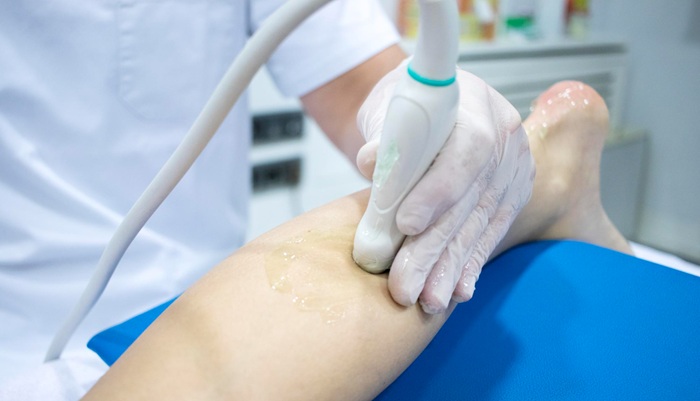
Injuries affecting the tendons, elbows, or hamstring muscles sometimes require specialized treatment, one option being shockwave therapy. Although the name may sound intimidating, this treatment is different from electroconvulsive therapy, which is used to treat certain mental health conditions.
Shockwave therapy, also known as extracorporeal shockwave therapy, is a procedure that uses a small handheld device to deliver shock waves through the skin to affected tendons or muscles. The device resembles an ultrasound probe and is used to help relieve pain and support tissue healing, depending on the patient’s condition.

Contents
What Is Shockwave Therapy and How Does It Work?
Shockwave therapy is a treatment method that may be used to help manage sports injuries and persistent pain. It works by delivering energy waves to affected areas to help stimulate tissue regeneration. In addition, the shock waves may help reduce pain by stimulating nerves in the treated area. Although the name may sound painful, the procedure generally causes only mild discomfort for most patients.
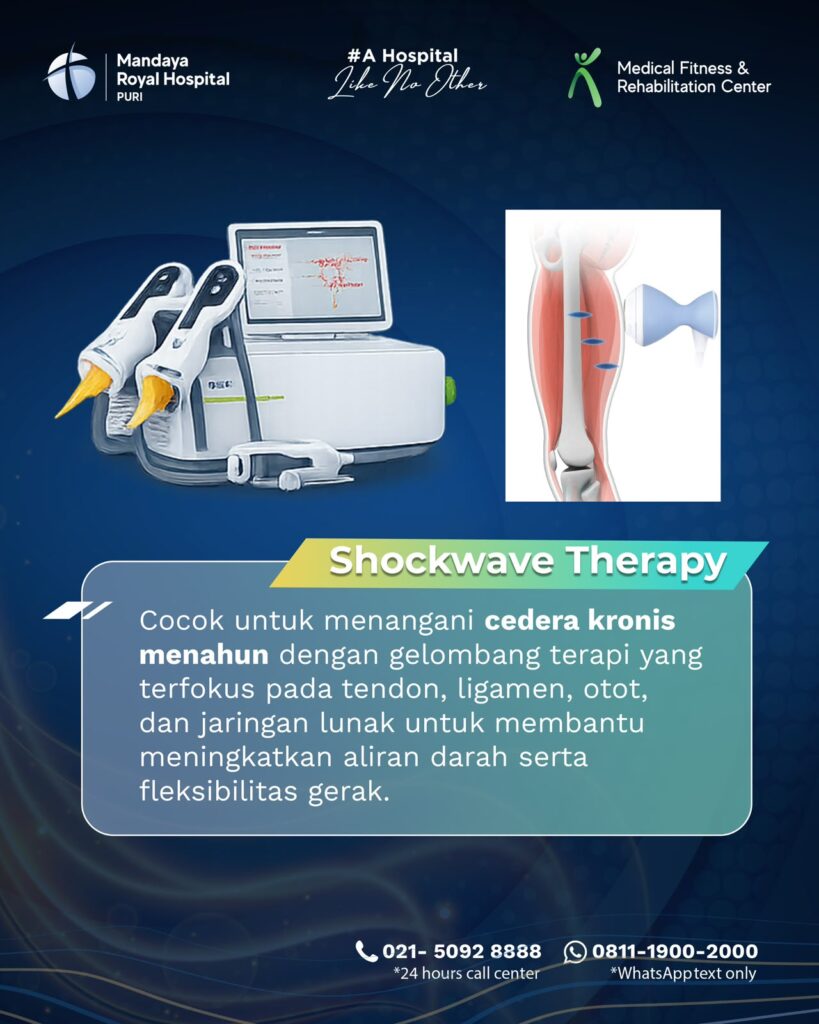
This therapy is commonly used to treat various soft tissue problems, such as golfer’s elbow, tennis elbow, hamstring injuries, and plantar fasciitis, a condition that causes heel pain.
The development of shockwave therapy began in Germany in the late 1960s. Initially, the therapy was widely used to help break up kidney stones so they could be more easily passed from the body. In the 1990s, scientists began researching the use of shock waves to treat soft tissue injuries. The therapy works by delivering pulses of energy to affected areas.
Shockwave therapy may help to:
- Improve blood circulation around injured soft tissues.
- Break down hardened or calcified deposits, such as kidney stones.
- Stimulate cells involved in the formation of new bone and connective tissue.
- Reduce pain by stimulating nerve endings in the affected area.
When Is Shockwave Therapy Needed? Signs to Look Out For
Pain that persists for weeks or months can interfere with daily activities and limit movement. In certain cases, shockwave therapy may be one treatment option, particularly when the pain is associated with tendon or soft tissue problems that have not improved with initial treatment.
Some signs and symptoms to look out for include:
- Persistent pain: Pain that lasts for several weeks or months without improvement should be evaluated to determine its cause.
- Limited movement: Pain makes it difficult to perform daily activities or exercise, or causes someone to avoid certain movements.
- Swelling or inflammation: Persistent swelling around a joint or painful area should be evaluated by a doctor to determine the underlying cause.
- Symptoms that do not improve with previous treatment: Pain that persists despite physiotherapy, medication taken as prescribed by a doctor, or the use of supportive devices such as orthotics may require further evaluation and additional treatment options.
If you experience these symptoms, consult a doctor to identify the cause of the pain and determine the appropriate treatment. Shockwave therapy is not necessary for every condition, so the decision to undergo this treatment should be based on the examination findings and the patient’s condition.
Who Should Not Undergo Shockwave Therapy?
Although shockwave therapy is generally well tolerated, it is not suitable for everyone. A doctor needs to evaluate the patient’s condition first to determine whether the treatment is safe and appropriate. In cases where soft tissue has sustained a severe tear that cannot heal adequately, or an injury requires surgery, shockwave therapy may not be the appropriate treatment option.
Shockwave therapy is also generally not recommended for certain conditions or areas of the body, including:
- Areas near the uterus during pregnancy.
- Malignant tumors or the surrounding tissue.
- Areas near the brain or spinal cord.
- Areas near the lungs.
- Patients with blood-clotting disorders or bleeding disorders.
If you are considering shockwave therapy, consult a doctor first to determine whether the procedure is appropriate for your health condition and type of injury. The doctor will recommend treatment based on the examination findings, taking into account the potential benefits and risks.
Advanced Laser & Shockwave Rehab Center Mandaya Puri: A Rehabilitation Center with Modern Technology
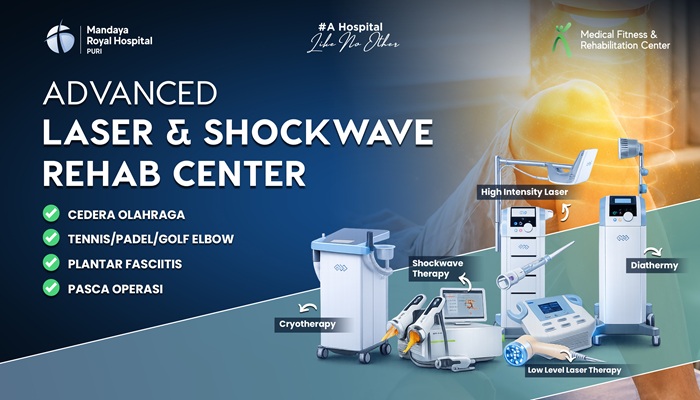
For those experiencing sports injuries, muscle and joint pain, or requiring recovery support after intense physical activity, the Advanced Laser & Shockwave Rehab Center at Mandaya Puri provides various medical rehabilitation facilities equipped with modern technology. These services are intended to help reduce pain and support the recovery of bodily functions according to each patient’s condition and medical needs.
The following are some of the available technologies and facilities and their functions:
- Low-Level Laser Therapy (LLLT): A treatment that uses low-intensity lasers to help reduce pain, relieve inflammation, and support tissue healing.
- High-Intensity Laser Therapy (HILT): A treatment that uses high-intensity lasers to help relieve pain and improve function and range of motion in muscle, bone, and joint conditions.
- Shockwave Therapy: A treatment that uses shock waves to help reduce pain and stimulate tissue healing, particularly in conditions involving tendons and ligaments.
- Diathermy: A treatment that uses energy to generate heat in body tissues, which may help relax muscles and improve blood circulation in the treated area.
- Cryotherapy: A treatment that uses cold temperatures to help relieve pain and reduce inflammation, including after an injury or strenuous physical activity.
Facilities for Out-of-Town and International Patients at Mandaya Royal Hospital Puri

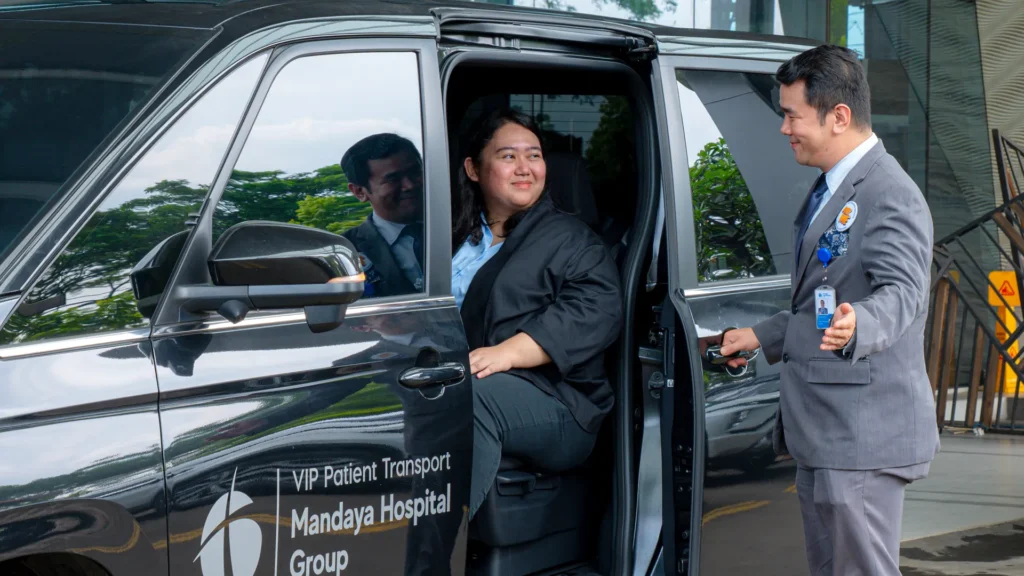
Mandaya Royal Hospital Puri provides various support facilities to offer additional comfort for patients traveling from other cities or from abroad:
- VIP Transport: A pickup service from Soekarno-Hatta International Airport, train stations, or seaports to the hospital in a comfortable vehicle accompanied by a Patient Experience Officer (PEO).
- Medical Ambulance Pickup: A specialized pickup service for patients with specific medical needs from their arrival point (airport, train station, or seaport), equipped with medical equipment and accompanied by professional healthcare personnel.
- Accommodation (Sleep Hub & Apartments): Comfortable accommodation for family members accompanying patients. The Sleep Hub is located on the eighth floor of the Mandaya Royal Puri building, with nearby apartment options also available.
- International Patient Relations: Dedicated assistance for international patients with medical coordination, interpretation, and administrative arrangements. For information and assistance from International Patient Relations, contact 021 5092 8888 or email [email protected].
To make your visit to Mandaya Royal Hospital Puri easier, use the WhatsApp chat feature, Book Appointment, or the Care Dokter application, available for download on Google Play and the App Store. These options help you manage appointments, check queue numbers, and access other relevant information.
The information on this page is provided for educational purposes and as a general overview. It does not cover every type of medical service that each doctor may provide. To ensure that you receive care appropriate to your health condition, you are advised to consult the relevant doctor directly.
If you have any questions, suggestions, or need further information, please contact our call center at 0811-1900-2000.