



Immunotherapy for breast cancer is a treatment method that helps the immune system recognize and fight cancer cells. It works by enhancing the immune system’s ability to attack cancer cells.
Immunotherapy may be used to treat high-risk early-stage triple-negative breast cancer and breast cancer that has spread to other parts of the body (metastatic breast cancer). Researchers are also evaluating the use of immunotherapy to treat HER2-positive and estrogen receptor-positive (ER-positive) breast cancer.

Contents
How does immunotherapy for breast cancer work?
Immunotherapy works by helping the immune system recognize and destroy cancer cells. It may also help the body produce immune cells or increase the activity of immune cells involved in fighting cancer. In general, immunotherapy for breast cancer is divided into two types:
- Active immunotherapy: These treatments are designed to help the immune system recognize specific targets on breast cancer cells. In developing these treatments, doctors and researchers study antigens, which are substances or markers recognized by the immune system, to help direct the immune response toward cancer cells.
- Passive immunotherapy: This approach uses laboratory-made drugs to help or enhance the immune system’s ability to fight cancer cells.
The type of immunotherapy used depends on the characteristics of the breast cancer and the patient’s condition.
When is immunotherapy for breast cancer recommended?
Immunotherapy may be administered at different stages of breast cancer treatment, depending on the type and stage of cancer and the patient’s condition. It may be recommended in the following situations:
- Before surgery: Immunotherapy may be combined with chemotherapy to help shrink the tumor so it can be removed more easily during surgery. This approach may be used for selected patients with triple-negative breast cancer.
- After surgery: After visible cancerous tissue has been removed, immunotherapy may be continued to help fight cancer cells that may remain. Whether it is continued depends on the type of cancer and the patient’s treatment plan.
- When cancer has spread or returned: Immunotherapy may be combined with chemotherapy to treat metastatic breast cancer or cancer that has returned and cannot be removed surgically, particularly in patients who meet the treatment criteria.
An oncologist will determine whether immunotherapy is appropriate based on tumor test results, cancer stage, and the potential benefits of treatment.
Immunotherapy drugs for breast cancer
Several immunotherapy drugs are used to treat breast cancer with specific characteristics. Two drugs mentioned in the Cleveland Clinic reference are:
- Pembrolizumab: Used to treat triple-negative breast cancer, including high-risk early-stage disease and metastatic disease with certain biomarkers. This drug helps the immune system recognize and attack cancer cells. In eligible patients, it may be administered before and after breast cancer surgery.
- Dostarlimab: May be used for certain cancers that have spread or progressed during or after treatment when the tumor has specific qualifying biomarkers.
The choice of immunotherapy depends on the type of cancer, disease stage, biomarker test results, and the patient’s condition. An oncologist will determine the most appropriate treatment.
How is immunotherapy for breast cancer administered?
Immunotherapy for breast cancer is generally administered through an intravenous (IV) infusion, which delivers the medication directly into a blood vessel. The treatment schedule depends on the type of drug and the patient’s condition, but it is generally given every 3–6 weeks for several months to approximately two years. The doctor will determine the treatment schedule and duration based on the patient’s medical needs.
What are the side effects of immunotherapy for breast cancer?
The side effects of immunotherapy vary from patient to patient, depending on the medication used and the immune system’s response. Common side effects include:
- Diarrhea: An increase in bowel movement frequency or looser stools.
- Fatigue: A feeling of weakness or lack of energy.
- Skin rash: Such as redness or itching.
- Thyroid problems: These may affect the body’s hormonal balance.
Immunotherapy can also cause more serious side effects, although these are less common. They include:
- Infusion reactions: Symptoms may include fever, chills, itchy skin, dizziness, facial flushing, shortness of breath, or wheezing.
- Autoimmune reactions: The immune system attacks healthy tissues or organs, potentially causing inflammation and problems in various parts of the body.
Patients should inform their doctor about any symptoms that develop during or after treatment. If they experience shortness of breath or other severe symptoms, they should seek medical attention immediately. Doctors will monitor side effects and determine appropriate management throughout immunotherapy.
Comprehensive breast cancer care at Mandaya Breast Cancer Center
Mandaya Royal Hospital Puri provides breast cancer services covering multiple stages of care, from detection and diagnosis to treatment and breast reconstruction. The hospital also has a Limfedema Center (Lymphedema Center) to help manage lymphedema, or swelling caused by impaired lymphatic fluid flow, which may affect some patients after breast cancer treatment.
The following services are available at Mandaya Breast Cancer Center:
- Breast cancer detection and diagnosis: Includes 2D and 3D mammography, breast ultrasound, Digital PET/CT Scan, and Vacuum-Assisted Breast Biopsy (VABB), which helps collect breast tissue samples through a small incision using a vacuum-assisted device.
- Breast cancer surgery: Options include mastectomy to remove the entire breast and endoscopic lumpectomy to remove a tumor while preserving as much breast tissue as possible, depending on the patient’s condition. Sentinel Lymph Node Biopsy (SLNB) may also be performed in selected patients to evaluate whether cancer has spread to the lymph nodes.
- Breast cancer treatment: Various treatment options are available, including radiotherapy, chemotherapy, immunotherapy, targeted therapy, and hormone therapy. Treatment is selected according to the cancer’s characteristics and stage and the patient’s condition.
- Breast reconstruction: This service helps restore the shape of the breast after surgery to remove cancerous tissue, taking each patient’s condition and needs into account.
- Treatment for certain benign tumors without open surgery: High-Intensity Focused Ultrasound (HIFU) uses high-intensity sound waves focused on specific tissue to treat certain benign tumors without requiring an open surgical incision.
- Lymphedema management through the Lymphedema Center: Services include Manual Lymphatic Drainage (MLD) performed by certified physiotherapists, compression devices, and surgical procedures such as Lymphovenous Anastomosis (LVA) and lymph node transplantation.
With these comprehensive services, Mandaya Royal Hospital Puri provides breast cancer examinations, treatment, reconstruction, and care for complications that may develop after treatment. Doctors recommend examinations and therapies based on medical evaluations and each patient’s individual needs.
Facilities for out-of-town and international patients at Mandaya Royal Hospital Puri

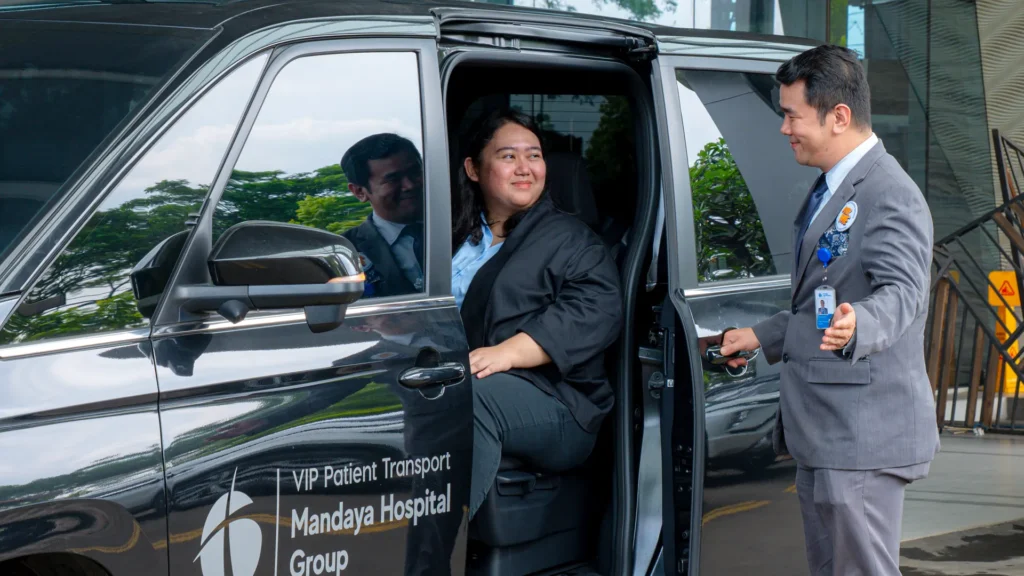
Mandaya Royal Hospital Puri provides a range of support facilities to enhance the comfort of patients traveling from other cities or countries:
- VIP transportation: A pickup service from Soekarno-Hatta International Airport, train stations, or seaports to the hospital in a comfortable vehicle, accompanied by a Patient Experience Officer (PEO).
- Medical ambulance pickup: Specialized transportation for patients with particular medical needs from arrival points such as airports, train stations, or seaports. The service includes medical equipment and assistance from qualified healthcare professionals.
- Accommodation (Sleep Hub and apartments): Comfortable accommodation for family members accompanying patients. Sleep Hub is located on the eighth floor of the Mandaya Royal Puri building, with additional apartment options nearby.
- International Patient Relations: Dedicated assistance for international patients, including medical coordination, interpretation, and administrative support. For information and assistance from International Patient Relations, please call 021 5092 8888 or email [email protected].
To make your visit to Mandaya Royal Hospital Puri easier, use the WhatsApp chat feature, book an appointment, or download the Care Dokter app from Google Play or the App Store. These options can help you arrange visits, check queue numbers, and access other information.
The information on this page is provided for educational purposes and as a general overview. It does not cover every type of medical service that each doctor may provide. To ensure that you receive care appropriate for your health condition, we recommend consulting the relevant doctor directly.
If you have any questions, suggestions, or need further information, please contact our call center at 0811-1900-2000.

References
- Cleveland Clinic. Immunotherapy Treatment for Breast Cancer. (https://my.clevelandclinic.org/health/treatments/21939-immunotherapy-treatment-breast-cancer). Accessed October 16, 2026.
- American Cancer Society. Immunotherapy for Breast Cancer. (https://www.cancer.org/cancer/types/breast-cancer/treatment/immunotherapy.html). Accessed October 16, 2026.
- National Cancer Institute. Immunotherapy for Breast Cancer. (https://www.cancer.gov/types/breast/treatment/immunotherapy). Accessed October 16, 2026.