


Coronary artery disease occurs when the blood vessels that supply blood to the heart muscle become narrowed or blocked. In certain conditions, doctors may recommend coronary artery bypass grafting (CABG) to create a new pathway for blood flow to the heart muscle. This procedure uses healthy blood vessels from other parts of the body, such as blood vessels from the chest, arm, or leg.
In addition to conventional heart bypass surgery, a minimally invasive technique known as minimally invasive coronary artery bypass surgery or MICS CABG is now available. Unlike conventional surgery, which generally requires opening the breastbone through a large incision, MICS CABG is performed through a smaller incision on the left side of the chest, measuring approximately 7–10 cm.
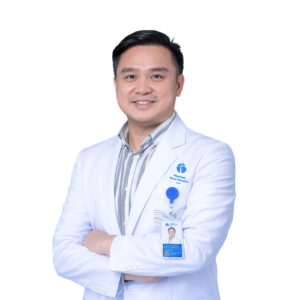
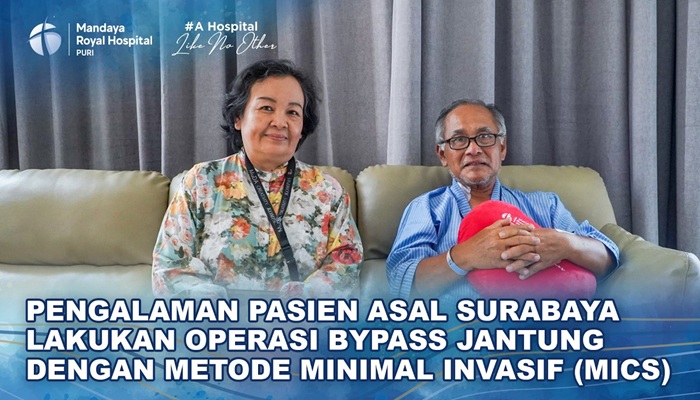
A patient from Surabaya underwent minimally invasive heart bypass surgery with dr. Wirya Ayu Graha, Sp. BTKV, Subsp. JD (K) at Mandaya Royal Puri Hospital. Initially, the patient was expected to undergo a stent placement procedure. However, because there were multiple blockages—two coronary arteries were completely blocked and another was approximately 92% blocked—bypass surgery was required. Interestingly, the heart bypass procedure was performed through only a 7 cm incision.
“(When I woke up from the anesthesia), I looked for the wound. I thought, where is the wound? It was not like my brother-in-law, who had undergone conventional heart bypass surgery. Where was the incision? It turned out there was no large incision (because the breastbone was not opened). There was only a small one on the side (of my body). (After the surgery), it was easier to breathe. I feel more comfortable and can breathe more freely now,” said Mr. Eko and his wife while sharing their experience.

Contents
The Patient Was Initially Afraid of Heart Bypass Surgery, but Found MICS with a Smaller Incision
Mr. Eko, a 66-year-old patient from Surabaya, initially did not expect to undergo heart bypass surgery. Before that, he was still able to carry out his daily activities and work as usual. However, one day after returning home from work, he suddenly felt extremely tired. He then slept for about two hours but experienced excessive sweating. His child eventually woke him up and took him to the hospital.
After undergoing examinations, the patient was treated in the intensive care unit for several days. Further examinations revealed blockages in the coronary arteries. A stent placement procedure was initially considered, but it could not be performed because there were multiple blockages. The doctor then recommended heart bypass surgery.
Hearing that he needed bypass surgery made the patient and his family concerned. Their concerns were partly due to their perception of conventional bypass surgery, which involves an incision through the chest. The family also had a relative who had previously undergone surgery through the chest and required a longer recovery period.
The patient and his family then looked for a doctor who could treat his condition using a less invasive approach. During their search, they learned that dr. Wirya Ayu Graha, Sp. BTKV, Subsp. JD (K), a cardiothoracic and vascular surgeon specializing in adult cardiac surgery at Mandaya Royal Puri Hospital, could perform minimally invasive coronary artery bypass surgery or MICS through a smaller incision on the side of the chest.
After discussing the procedure with the doctor and learning that the surgery would not involve the long chest incision he had imagined, the patient decided to undergo the procedure. He subsequently underwent minimally invasive heart bypass surgery at Mandaya Royal Puri Hospital.
“Where Is My Incision?” The Patient Was Surprised to See Only a Small Incision on the Side of His Chest
The patient underwent surgery at night after discussing his condition with the doctor beforehand. According to his family, the surgery went well and was completed that same night. The following morning, the patient was awakened and was able to communicate.
What surprised the patient and his family the most was the condition of the surgical wound. Before the procedure, the patient had imagined major surgery with a long incision across his chest. However, once he regained consciousness, he did not see the large incision he had expected.
This experience made Mr. Eko feel relieved because the procedure he had initially imagined as major surgery was performed through a relatively small incision. After the surgery, he also noticed a change in his breathing. Previously, he often experienced coughing and shortness of breath. After the procedure, he said that breathing felt easier.
For the patient and his family, the experience was something they were grateful for. After overcoming his fear before the surgery, the patient hoped to regain his health and have more opportunities to spend time with his children and grandchildren.
Understanding Coronary Artery Disease, Which Can Lead to a Heart Attack
The experience of the 66-year-old patient from Surabaya who underwent minimally invasive heart bypass surgery at Mandaya Royal Puri Hospital began with the discovery of blockages in his coronary arteries. After undergoing examinations, the patient was found to have severe blockages, making stent placement unsuitable. The doctor therefore recommended heart bypass surgery as one of the treatment options. Conditions like this can occur in coronary artery disease (coronary artery disease/CAD) and may increase the risk of a heart attack.
Coronary artery disease occurs when the coronary arteries, which carry oxygen-rich blood to the heart muscle, become narrowed or blocked. One common cause is the buildup of plaque along the artery walls, including plaque made up of cholesterol. As plaque continues to accumulate, the space inside the artery becomes narrower, potentially disrupting blood flow to the heart muscle.
In some people, coronary artery disease can develop for years without causing obvious symptoms. The condition can become more serious when plaque inside an artery ruptures and triggers the formation of a blood clot. The clot can block blood flow, causing the heart muscle to be deprived of oxygen and potentially resulting in a heart attack.
A heart attack is one of the serious complications that can occur as a result of coronary artery disease and requires immediate medical attention. Over time, coronary artery disease may also increase the risk of several other complications, including:
- Heart rhythm disorders (arrhythmias), which occur when the heart’s rhythm or heartbeat is abnormal.
- Cardiac arrest, a condition in which the heart suddenly stops pumping blood throughout the body.
- Cardiogenic shock, a serious condition in which the heart is unable to pump enough blood to meet the body’s needs.
- Heart failure, a condition in which the heart’s ability to pump blood is reduced.
Because coronary artery disease does not always cause typical symptoms in its early stages, regular heart health checkups are important, especially if symptoms such as chest pain begin to appear or if you have risk factors for heart disease.
Consult dr. Wirya at Mandaya Puri About Your Heart Bypass Surgery Options
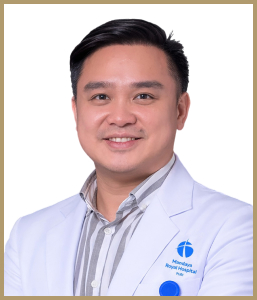
dr. Wirya Ayu Graha, Sp. BTKV, Subsp. JD (K) is a cardiothoracic and vascular surgeon specializing in adult cardiac surgery. One of his areas of focus is the use of Minimally Invasive Cardiac Surgery (MICS), including heart bypass surgery through a minimally invasive approach without opening the breastbone as in conventional surgery.
dr. Wirya also has experience using the Da Vinci Xi robotic technology to support minimally invasive heart bypass procedures. With the assistance of this technology, the procedure can be performed through smaller incisions in patients who meet the appropriate medical indications.
Here are several videos about minimally invasive heart bypass procedures and robotic technology with dr. Wirya:
dr. Wirya is also licensed to use the Da Vinci Xi robotic system for robotic heart bypass procedures. The choice of MICS or robotic technology remains dependent on each patient’s medical condition and indications.
For those who would like to consult about heart bypass surgery options, dr. Wirya Ayu Graha, Sp. BTKV, Subsp. JD (K) is available at Mandaya Royal Puri Hospital on:
- Tuesday: 16.30–20.00 WIB
- Thursday: 16.30–20.00 WIB
- Saturday: 10.00–13.00 WIB
Facilities for Out-of-Town and International Patients at Mandaya Royal Puri Hospital

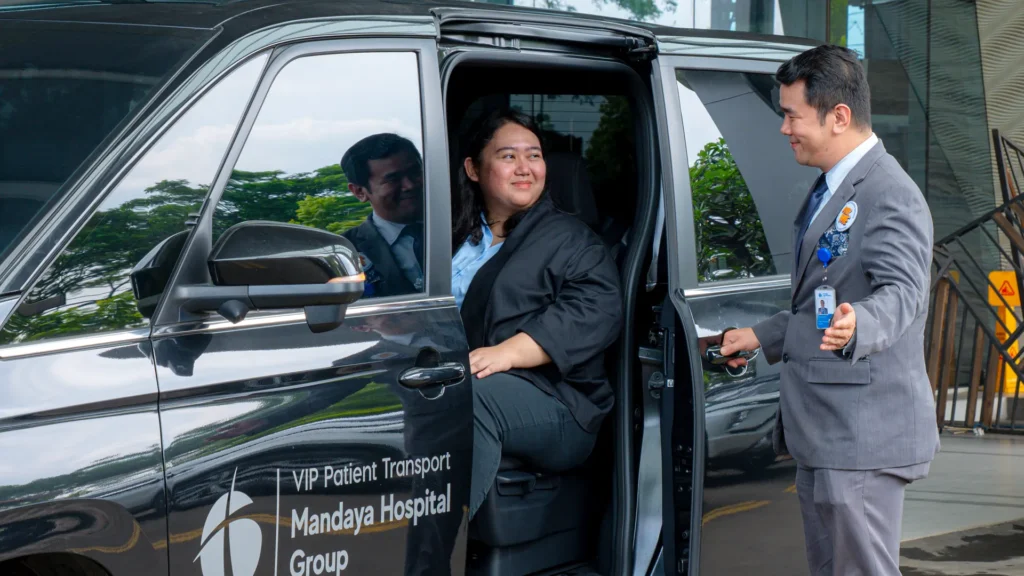
For patients traveling from outside Jakarta, such as Eko, who came from Surabaya, traveling to receive cardiac care may require additional preparation. Mandaya Royal Puri Hospital provides several facilities to assist patients and families traveling from other cities or countries, including:
- VIP transport: Pickup services from Soekarno-Hatta Airport, train stations, or ports to the hospital using a vehicle accompanied by the Patient Experience Officer (PEO) team.
- Medical ambulance pickup: Pickup services for patients with certain medical conditions from airports, train stations, or ports using an ambulance equipped with medical equipment and accompanied by healthcare professionals.
- Accommodation (Sleep Hub & apartments): Accommodation options for families accompanying patients, including the Sleep Hub located on the 8th floor of Mandaya Royal Puri Hospital and apartment options around the hospital.
- International Patient Relation: Assistance for international patients, including coordination of medical needs, translation services, and administrative processes. For more information, International Patient Relation can be contacted at 021 5092 8888 or by email at [email protected].
To make your visit to Mandaya Royal Hospital Puri easier, use the Chat via WhatsApp, Book Appointment, or Care Dokter app, which can be downloaded from Google Play and the App Store to make appointments, check queue numbers, and access other information.
*The information provided on this page is intended for educational purposes and general information only and does not represent the full range of medical services that may be performed by each doctor. To determine the most appropriate treatment based on your medical condition, consultation with the relevant doctor is recommended.
If you have any questions, suggestions, or need further information, please contact our call center at 0811-1900-2000.

References:
- National Heart, Lung, and Blood Institute (NHLBI). Coronary Artery Bypass Grafting. https://www.nhlbi.nih.gov/health/coronary-artery-bypass-grafting. Accessed October 8, 2026.
- Bangkok Hospital. Summary of the Advantages of Minimally Invasive Cardiac Surgery (MICS): A Fast-Recovery Option. https://www.bangkokhospital.com/en/bangkok-heart/content/minimally-invasive-cardiac-surgery-mics. Accessed October 8, 2026.
- Cleveland Clinic. Coronary Artery Disease. https://my.clevelandclinic.org/health/diseases/16898-coronary-artery-disease. Accessed October 8, 2026.