


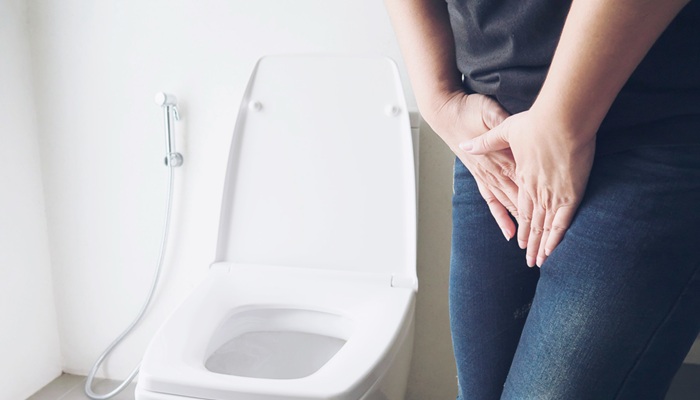
Overactive bladder (OAB) is a group of symptoms that can cause a person to urinate more frequently, experience a sudden and strong urge to urinate, have urine leakage or urinary incontinence, and wake up at night to urinate. These symptoms can interfere with daily activities and reduce quality of life, as people may constantly need to think about or look for the nearest toilet.
The causes of overactive bladder can vary, ranging from injuries to the abdominal area, infections, nerve damage, and the use of certain medications to the consumption of certain types of beverages. Treatment may include lifestyle changes, medications, and nerve stimulation therapy, depending on the individual’s condition and underlying cause.

Contents
Symptoms of overactive bladder
If you have an overactive bladder, you may experience several symptoms, including:
- A sudden urge to urinate that is difficult to control.
- Involuntary urine leakage after experiencing a strong urge to urinate. This is known as urge incontinence.
- Frequent urination, which may mean urinating eight or more times within a 24-hour period.
- Waking up frequently at night to urinate, particularly when this occurs more than twice in one night. This condition is known as nocturia.
Even if you can still reach the toilet in time when the urge to urinate occurs, urinating too frequently during the day or night can still interfere with daily activities and affect quality of life.
When should you see a doctor?
Overactive bladder is more commonly found in older adults, but it is not a normal part of aging. Symptoms such as frequent urination or difficulty controlling urine can sometimes make people feel uncomfortable discussing them. However, if the symptoms begin to interfere with your daily activities or cause emotional distress, you should consider consulting a doctor.
Appropriate treatment can help reduce symptoms and make daily activities more comfortable.
Read also: Botox Injection for Overactive Bladder: Procedure and Purpose
Causes of overactive bladder
Urine is produced by the kidneys and then transported to the bladder, where it is temporarily stored. Under normal circumstances, the brain sends signals when the body needs to urinate. At the same time, the pelvic floor muscles relax, allowing urine to leave the body.
With an overactive bladder, the bladder muscles may contract involuntarily even when the bladder is not yet full. These sudden contractions can create a strong urge to urinate and cause a person to urinate more frequently.
Several factors and conditions can trigger overactive bladder symptoms, including:
- Drinking too much fluid, which increases urine production.
- Taking certain medications that may increase urine production.
- Urinary tract infections (UTIs), which can irritate the bladder.
- Consuming alcohol or beverages that can irritate the bladder.
- Incomplete bladder emptying during urination.
The risk of developing overactive bladder may also increase with age. However, OAB is not a normal part of aging. Therefore, symptoms such as frequent urination or a sudden urge to urinate that is difficult to control should not be ignored. Consult a doctor for an appropriate examination and to determine the underlying cause of your symptoms.
Read also: Understanding Neurogenic Bladder: When Nerve Disorders Make It Difficult to Control Urination
Treatment for overactive bladder
Treatment for overactive bladder is tailored to the individual’s condition and underlying cause. Doctors may recommend several treatment options, including:
1. Pelvic floor muscle therapy
Physical therapy focusing on the pelvic floor muscles can help strengthen and train the muscles involved in controlling urination. This therapy may help reduce symptoms such as a sudden urge to urinate that is difficult to control, frequent urination, and nighttime urinary symptoms.
2. Medications
Doctors may prescribe medications to help reduce bladder contractions and control OAB symptoms. Some medications that may be used include tolterodine, trospium, and mirabegron.
3. Botox injections
Botox injections into the bladder can help reduce excessive bladder muscle activity. By reducing bladder contractions, the frequency of urination and the sudden urge to urinate may also decrease. The effects of Botox therapy are generally temporary, so the procedure may be repeated depending on the patient’s condition and response to treatment.
4. Nerve stimulation
Nerve stimulation can help regulate the nerve signals that control the bladder. One method that may be used is percutaneous tibial nerve stimulation (PTNS), which involves stimulating a nerve through a small needle placed in the lower leg area.
5. Surgery
If other treatments do not provide sufficient results, doctors may consider surgery to help increase bladder capacity or regulate bladder function. Options may include sacral nerve stimulation, urinary diversion, and bladder augmentation.
Read also: 5 Causes of Incomplete Bladder Emptying and How to Treat Them
Meet dr. Andika, a urologist and consultant in functional, female, and neuro-urology at Mandaya Royal Hospital Puri

dr. Andika Afriansyah, Sp.U, Subsp. FFN (K), MARS is a urologist specializing in functional, female, and neuro-urology. His expertise includes managing various urinary tract disorders, female urological conditions, and urinary problems associated with disorders of the nervous system.
dr. Andika completed his medical education at the University of Indonesia in 2008. He then pursued his Urology Specialist training at the University of Indonesia, completing it in 2020.
To further develop his expertise in functional, female, and neuro-urology, dr. Andika completed his consultant training at the Indonesian Urology Collegium in 2022. His expertise supports the management of various urinary tract functional disorders, female urological conditions, and urinary problems associated with neurological disorders.
What are dr. Andika’s areas of expertise?
As a urologist and consultant in functional, female, and neuro-urology, dr. Andika manages various conditions related to urinary tract function, including:
- Urinary tract disorders in women, including recurrent urinary tract infections (UTIs).
- Urination problems, such as difficulty urinating, weak urine flow, and conditions in which the bladder cannot empty urine properly.
- Urinary incontinence or difficulty controlling urination (urinary leakage), including in adults and older adults.
- Bladder dysfunction associated with neurological disorders or neuro-urology conditions, including certain conditions following a stroke or in patients with diabetes.
- Various urinary tract functional disorders that require examination and treatment by a urologist with expertise in functional, female, and neuro-urology.
- Botox injections for the treatment of overactive bladder.
dr. Andika’s practice schedule at Mandaya Royal Hospital Puri
dr. Andika Afriansyah, Sp.U, Subsp. FFN (K), MARS is available for consultation at Mandaya Royal Hospital Puri on:
- Tuesday: 4:00–8:00 PM WIB
- Thursday: 4:00–8:00 PM WIB
- Saturday: 9:00 AM–4:00 PM WIB
To make your visit to Mandaya Royal Hospital Puri more convenient, you can use the WhatsApp Chat, Book Appointment, or the Care Dokter app, which can be downloaded from Google Play and the App Store. The app makes it easier to arrange your visit, check your queue number, and access other useful information.
*The information provided on this page is intended for educational purposes and as general guidance. It does not represent the full range of medical services that may be provided by each doctor. To ensure appropriate care based on your health condition, consultation with the relevant doctor is recommended.
If you have any questions, suggestions, or require further information, please contact our call center at 0811-1900-2000.
References:
- Cleveland Clinic. Overactive Bladder (OAB): Causes, Symptoms & Treatment. (https://my.clevelandclinic.org/health/diseases/14248-overactive-bladder). Accessed September 15, 2026.
- Mayo Clinic. Overactive Bladder – Symptoms and Causes. (https://www.mayoclinic.org/diseases-conditions/overactive-bladder/symptoms-causes/syc-20355715). Accessed September 15, 2026.
- Healthline. Overactive Bladder. (https://www.healthline.com/health/overactive-bladder#causes). Accessed September 15, 2026.