



Thalassemia is an inherited blood disorder passed from parents to their children through genes. This condition causes the body to produce less hemoglobin than normal. Hemoglobin is the protein found in red blood cells that carries oxygen throughout the body. As a result, people with thalassemia are at risk of developing anemia, which may cause symptoms such as fatigue, weakness, and shortness of breath.
The severity of thalassemia varies from person to person. Some individuals experience no symptoms, while others require lifelong medical treatment. Therefore, an accurate diagnosis and appropriate treatment are essential to help control symptoms, prevent complications, and maintain a good quality of life.
Several treatment options may be recommended depending on the patient’s condition, including blood transfusions, iron chelation therapy, stem cell transplantation, and certain supplements. At Mandaya Royal Hospital Puri, thalassemia is managed by experienced pediatric hematology-oncology specialists who provide individualized treatment plans based on each patient’s needs.

Contents
Types of Thalassemia
Before learning about the available treatment options, it is important to understand the different types of thalassemia.
1. Alpha Thalassemia
Alpha thalassemia occurs due to abnormalities in the genes responsible for producing alpha-globin chains. There are four alpha-globin genes, and the severity of symptoms depends on how many of these genes are missing or abnormal.
- One abnormal or missing alpha-globin gene: Usually causes no symptoms. This condition is known as alpha thalassemia minima.
- Two abnormal or missing alpha-globin genes: Symptoms are usually mild or absent. This condition is called alpha thalassemia minor.
- Three abnormal or missing alpha-globin genes: Patients generally develop moderate to severe symptoms. This condition is also known as Hemoglobin H disease.
- Four abnormal or missing alpha-globin genes: This is the most severe form of alpha thalassemia and often results in death before or shortly after birth. Infants who survive typically require lifelong blood transfusions. This condition is known as Hydrops Fetalis with Hemoglobin Barts.
2. Beta Thalassemia
Beta thalassemia results from mutations in the genes responsible for producing beta-globin chains. There are two beta-globin genes, and the severity of anemia depends on the number of affected genes and the specific genetic mutation.
- One abnormal or missing beta-globin gene: Symptoms are usually mild or absent. This condition is known as beta thalassemia minor or beta thalassemia trait.
- Two abnormal or missing beta-globin genes: Patients generally develop moderate to severe symptoms. Based on transfusion requirements, this type is classified into:
- Transfusion-dependent thalassemia (TDT): Patients require regular blood transfusions.
- Non-transfusion-dependent thalassemia (NTDT): Patients do not require routine blood transfusions, although they may need transfusions under certain circumstances.
It is important to note that transfusion requirements may change over time. Patients who initially do not require regular transfusions may eventually become transfusion-dependent as the disease progresses.
Thalassemia Treatment Options Recommended by Doctors
The following treatment options may be recommended based on the patient’s condition.
1. Blood Transfusions
Patients with severe alpha thalassemia and transfusion-dependent thalassemia (TDT) generally require regular blood transfusions. Meanwhile, patients with Hemoglobin H disease or non-transfusion-dependent thalassemia (NTDT) may only need transfusions under certain circumstances, such as during infections.
2. Iron Chelation Therapy
Long-term blood transfusions can lead to iron overload in the body. Excess iron can damage various organs if left untreated. To prevent this, doctors may prescribe iron chelation medications that help remove excess iron from the body.
3. Folic Acid Supplements
Folic acid plays an important role in helping the body produce healthy red blood cells. Therefore, doctors may recommend folic acid supplementation as part of thalassemia management.
4. Medications for Anemia
Certain medications, such as luspatercept and mitapivat, may be used to treat anemia in adults with specific types of thalassemia. Luspatercept has also been shown to reduce the need for blood transfusions in some patients.
5. Splenectomy (Surgical Removal of the Spleen)
A splenectomy may be recommended in certain cases to help relieve thalassemia-related symptoms. The procedure may also reduce the frequency of blood transfusions for some patients.
6. Stem Cell Transplantation
Stem cell transplantation is currently the only treatment with the potential to cure thalassemia. During this procedure, patients receive healthy blood-forming stem cells from a compatible donor. These stem cells develop into healthy blood cells. However, stem cell transplantation carries significant risks, so not every patient is eligible for this treatment.
How Is Thalassemia Diagnosed?
Thalassemia is generally diagnosed through blood tests. Doctors may also recommend genetic testing to determine the specific type of thalassemia.
Some individuals with alpha thalassemia trait or beta thalassemia trait may discover the condition incidentally while undergoing routine blood tests for other reasons. Test results typically reveal abnormalities in the red blood cells that suggest thalassemia.
Meanwhile, alpha thalassemia major may be detected during pregnancy. One possible sign is abnormal swelling in the fetus, which can be identified during an ultrasound examination.
Your doctor may recommend thalassemia testing if you:
- Are pregnant or planning a pregnancy.
- Have a family member with thalassemia.
- You or a family member has unexplained anemia (low hemoglobin levels).
- Have a family background or ancestry from a region where thalassemia is common.
In addition, a fetus may undergo prenatal testing for thalassemia if there are certain indications or risk factors.
Is Untreated Thalassemia Dangerous?
Yes. If left untreated, thalassemia can lead to a variety of serious complications. In addition to chronic anemia, people with thalassemia are at risk of developing health problems that can affect their quality of life and organ function. Regular monitoring and appropriate treatment are essential to help prevent these complications.
Possible complications include:
- Enlarged spleen, which may require a splenectomy.
- Severe infections due to immune system abnormalities or certain treatments.
- Growth delays, especially in children with severe thalassemia.
- Hormonal disorders, including hypothyroidism (underactive thyroid).
- Bone disorders, including osteoporosis, which weakens the bones.
- Dental and oral health problems, which are more common in people with thalassemia.
Patients who receive regular blood transfusions are also at risk of iron overload. Without iron chelation therapy, excess iron can lead to serious complications such as:
- Heart problems, including heart failure and cardiac arrhythmias.
- Liver damage due to iron accumulation.
- Diabetes caused by pancreatic damage.
- Delayed puberty in children and adolescents.
- Reduced fertility in both men and women.
With early diagnosis, regular monitoring, and appropriate treatment, the risk of these complications can be significantly reduced, allowing people with thalassemia to lead healthier and more productive lives.
Pediatric Hematology-Oncology Specialist for Thalassemia at Mandaya Royal Hospital Puri
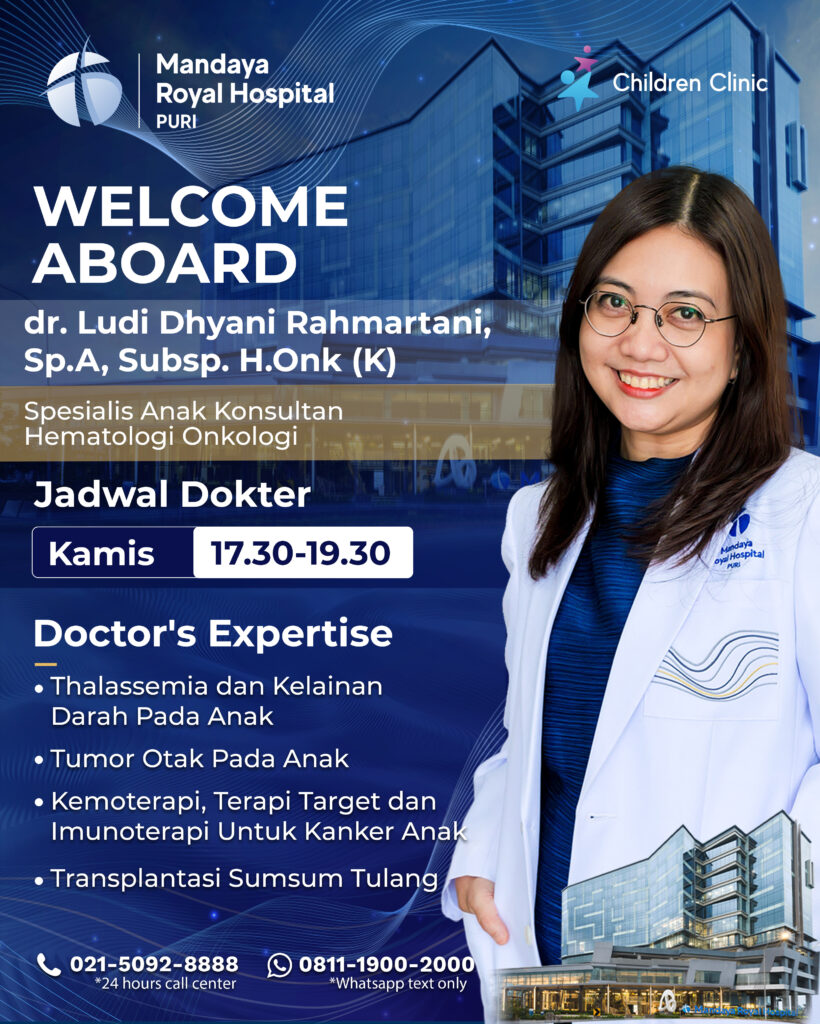
For patients requiring thalassemia treatment, Mandaya Royal Hospital Puri is home to experienced pediatric hematology-oncology specialists, including dr. Ludi Dhyani Rahmartani, Sp.A, Subsp. H.Onk (K). She provides comprehensive care for children with various blood disorders, including thalassemia, from diagnosis and long-term monitoring to determining the most appropriate treatment based on disease severity.
dr. Ludi earned her medical degree from the University of Indonesia in 2002. She completed her Pediatric Residency at the University of Indonesia in 2015 and subsequently obtained her Pediatric Hematology-Oncology subspecialty degree from the same institution in 2021.
In addition to treating thalassemia and other pediatric blood disorders, dr. Ludi has expertise in managing pediatric brain tumors, providing chemotherapy, targeted therapy, and immunotherapy for childhood cancers, as well as caring for patients undergoing bone marrow transplantation.
dr. Ludi’s Practice Schedule at Mandaya Royal Hospital Puri
dr. Ludi Dhyani Rahmartani, Sp.A, Subsp. H.Onk (K) is available for consultation at Mandaya Royal Hospital Puri on:
- Thursday: 5:30 PM – 7:30 PM
To make your visit to Mandaya Royal Hospital Puri more convenient, you can use the Chat via WhatsApp feature, Book Appointment, or download the Care Dokter app from Google Play or the App Store to schedule appointments, monitor your queue number, and access other useful information.
The information provided on this page is intended for educational and general informational purposes only. It does not represent the complete scope of medical services offered by each physician. To receive treatment tailored to your medical condition, we recommend consulting the appropriate doctor directly.
If you have any questions, suggestions, or require further information, please contact our call center at 0811-1900-2000.

References
- Mayo Clinic. Thalassemia: Symptoms and Causes. (https://www.mayoclinic.org/diseases-conditions/thalassemia/symptoms-causes/syc-20354995). Accessed July 29, 2026.
- Cleveland Clinic. Thalassemias. (https://my.clevelandclinic.org/health/diseases/14508-thalassemias). Last updated March 12, 2024. Accessed July 29, 2026.
- Healthdirect Australia. Thalassaemia. (https://www.healthdirect.gov.au/thalassaemia). Accessed July 29, 2026.