



Aphasia is a language disorder that affects a person’s ability to communicate, including speaking, understanding language, reading, and writing. It most commonly occurs after a stroke, particularly when the stroke affects the left side of the brain, which controls speech and language. As a result, people with aphasia may struggle with daily activities, social interactions, and communication with family members, often leading to feelings of isolation.
In addition to speech difficulties, some stroke survivors with aphasia also experience dysphagia (difficulty swallowing). This condition can make it difficult to swallow both solid foods and liquids, making it challenging to maintain adequate nutrition and hydration. This was the case for a stroke patient named Mr. Agus, who received treatment at Mandaya Royal Hospital Puri. Along with aphasia, he experienced severe swallowing difficulties that prevented him from eating and drinking normally.
After undergoing a rehabilitation program that included Transcranial Magnetic Stimulation (TMS) therapy at Mandaya Royal Hospital Puri, Mr. Agus showed remarkable improvement. Positive changes became evident in less than one month, offering new hope for restoring his communication and swallowing abilities after stroke.
“So far, Mr. Agus has been able to drive by himself again and has started participating in office activities, although he is still working from home. The most significant improvement has been his ability to eat and drink. When he first had the stroke, he required a nasogastric tube (NGT) for feeding, but in less than a month, the tube was removed because he was able to swallow again,” said his wife, who accompanied him throughout the recovery process.

Contents
A Patient’s Journey Through Stroke, Aphasia, and Recovery After TMS Therapy
Mr. Agus suffered a sudden stroke while working at his office. According to his wife, one of the first symptoms was facial drooping. Shortly afterward, he became unable to swallow either liquids or solid foods, requiring nutritional support through a nasogastric tube (NGT).
To determine the cause of his condition, Mr. Agus underwent a contrast-enhanced MRI examination. The results confirmed that he had suffered a stroke that resulted in aphasia.
“My husband suddenly had a stroke while he was at work. His mouth became crooked, and he couldn’t swallow either drinks or food,” his wife recalled.
Since they had already been regular patients at Mandaya Royal Hospital Puri, the family immediately brought him there for treatment. The medical team then recommended a rehabilitation program that included Transcranial Magnetic Stimulation (TMS) as part of the effort to stimulate brain function and support neurological recovery.
As the therapy progressed, Mr. Agus experienced encouraging improvements. One of the most notable changes was the recovery of his swallowing function. Previously, he depended on an NGT because he could not swallow food or liquids. However, the feeding tube was removed in less than one month after starting therapy. In addition, he is now able to drive independently and has resumed work activities from home.
What Is TMS and How Does It Work?
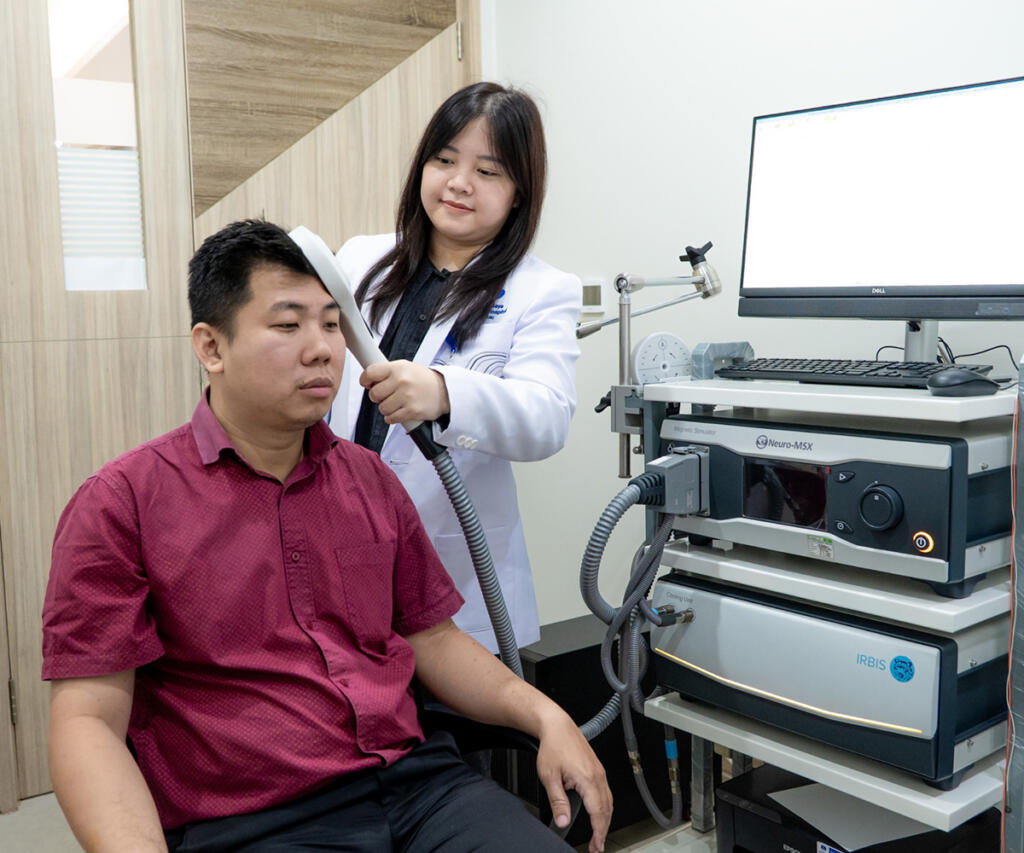
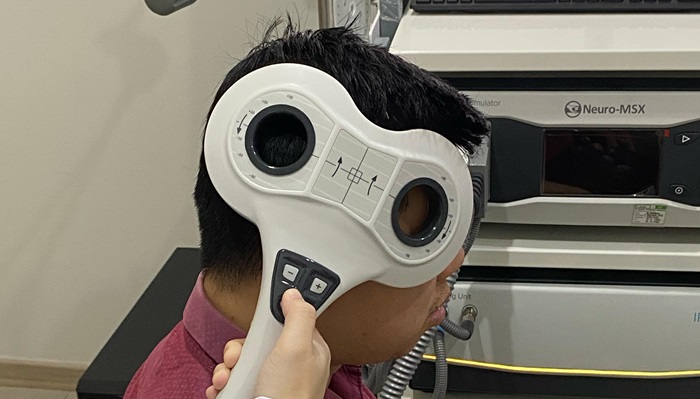
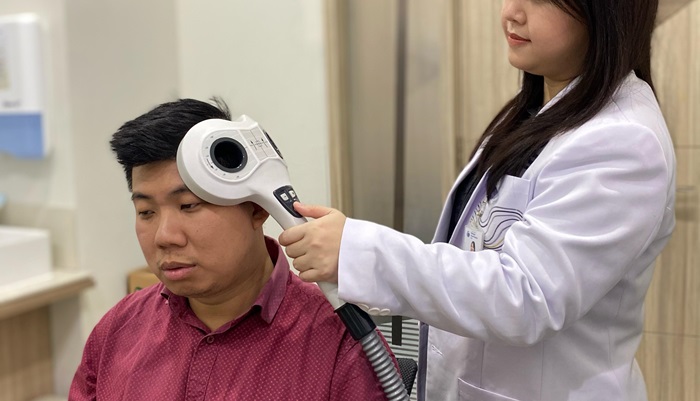
Transcranial Magnetic Stimulation (TMS) is a painless, non-invasive therapy that uses magnetic pulses to stimulate nerve cells in the brain. It is used to treat several conditions, including depression, obsessive-compulsive disorder (OCD), certain types of migraine, and as part of rehabilitation for neurological disorders such as post-stroke recovery.
TMS works by using a small coil placed on the surface of the head. The treatment process includes:
- The coil is positioned over a specific area of the brain targeted for stimulation.
- The coil generates magnetic pulses that pass through the skull without surgery or incisions.
- These magnetic pulses create low-intensity electrical impulses in the targeted brain cells.
- The stimulation pattern is adjusted according to the treatment goal, either to activate underactive brain regions or reduce excessive brain activity.
- This stimulation helps improve nerve cell function and supports brain recovery in selected neurological conditions.
How Long Does TMS Therapy Take?
TMS is generally performed as a series of treatment sessions rather than a single procedure.
In most cases, patients undergo therapy five days a week for four to six weeks. However, the number of sessions and the overall duration depend on the patient’s condition, treatment goals, and the physician’s clinical assessment.
The treating physician will determine the most appropriate treatment plan, including the recommended number of sessions and therapy duration. In some cases, additional maintenance sessions may also be considered to support long-term recovery.
Neurologist Specializing in Post-Stroke TMS Therapy at Mandaya Royal Hospital Puri
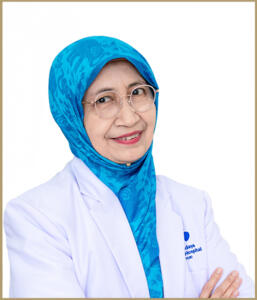
One of the neurologists specializing in TMS therapy at Mandaya Royal Hospital Puri is Dr. dr. Yetty Ramli, Sp.N(K). She specializes in neurorestoration, neurobehavior, and neurotrauma for both pediatric and adult patients.
Dr. Yetty has extensive experience treating various neurological disorders, including Alzheimer’s disease, Parkinson’s disease, post-stroke rehabilitation, and autism in children. She is also experienced in neuromodulation therapies such as Transcranial Direct Current Stimulation (tDCS), Electroencephalography (EEG), and other neurorestorative approaches designed to restore nervous system function.
She earned her medical degree from the Faculty of Medicine, Andalas University, followed by her neurology specialization at the Faculty of Medicine, University of Indonesia. She also completed a Ph.D. in Veterinary Biomedical Sciences at Bogor Agricultural University (IPB). To further enhance her expertise, Dr. Yetty completed fellowship training in Neuropediatrics at Sydney Children’s Hospital, as well as fellowships in Neurobehavior, Neurorestoration, and Neurotrauma.
Practice Schedule at Mandaya Royal Hospital Puri:
- Monday: 4:00 PM – 8:00 PM
- Wednesday: 4:00 PM – 8:00 PM
TMS Therapy Packages at Mandaya Royal Hospital Puri
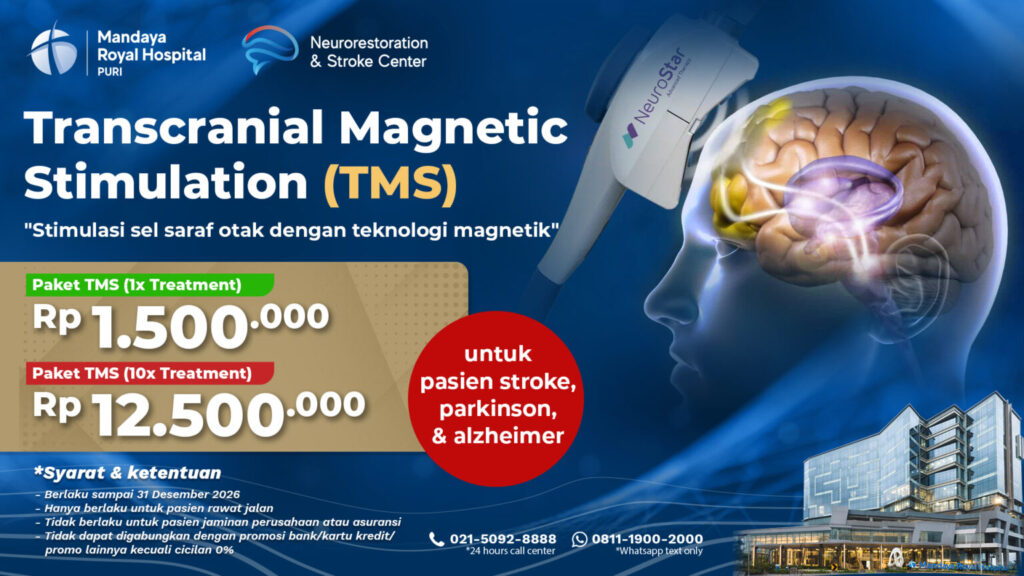
At Mandaya Royal Hospital Puri, TMS therapy is available at IDR 1,500,000 per session or IDR 12,500,000 for a package of 10 sessions.
All treatments are performed by experienced physicians and healthcare professionals after a comprehensive evaluation to determine the most appropriate treatment plan for each patient’s condition.
To make your visit more convenient, you can contact Mandaya Royal Hospital Puri via WhatsApp Chat, Book Appointment, or download the Care Dokter application from Google Play or the App Store to schedule appointments, monitor queue numbers, and access additional healthcare information.

References
- American Stroke Association. Aphasia and Stroke. (https://www.stroke.org/en/about-stroke/effects-of-stroke/communication-and-aphasia/stroke-and-aphasia). Last updated April 12, 2024. Accessed July 9, 2026.
- Cleveland Clinic. Dysphagia (Difficulty Swallowing): What It Is, Causes & Treatment. (https://my.clevelandclinic.org/health/symptoms/21195-dysphagia-difficulty-swallowing). Last updated August 20, 2023. Accessed July 9, 2026.
- Cleveland Clinic. Transcranial Magnetic Stimulation (TMS): What It Is. (https://my.clevelandclinic.org/health/treatments/17827-transcranial-magnetic-stimulation-tms). Last updated January 29, 2026. Accessed July 9, 2026.