


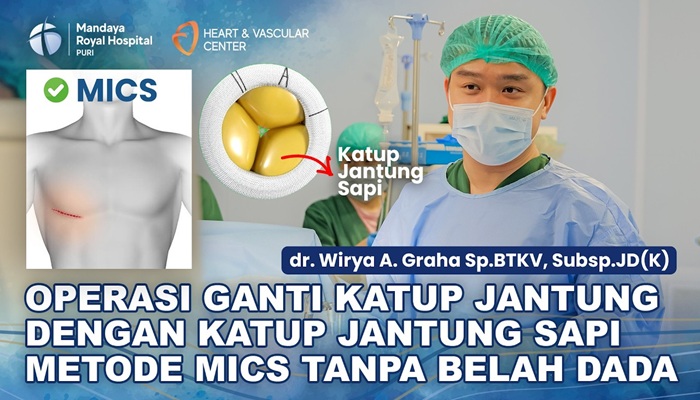
Heart valve surgery is one of the procedures used to address heart valve disorders, such as narrowing (stenosis) or leakage (regurgitation), which can disrupt blood flow throughout the body. As medical technology advances, heart valve surgery can now be performed using the Minimally Invasive Cardiac Surgery (MICS) method, a technique that uses a small incision without fully splitting the breastbone.

Recently, dr. Wirya A. Graha, Sp.BTKV, Subsp. JD(K), a thoracic, cardiac, and vascular surgery specialist with a subspecialty in adult cardiac surgery at Mandaya Royal Hospital Puri, performed a heart valve replacement surgery using a bovine heart valve (bioprosthetic valve) with the MICS method. This technique offers a smaller surgical wound, milder post-operative pain, and a faster recovery process compared to conventional heart surgery.

Contents
Understanding heart valve surgery and its indications
Heart valve replacement surgery is a procedure to replace a damaged heart valve with a new one. This procedure can be performed through open surgery or through a more minimally invasive technique, depending on the patient’s condition. The replacement valve can be a biological valve made from body tissue or a mechanical valve made from artificial materials.
This procedure is generally performed to treat severe heart valve disease, when the valve cannot open or close properly, disrupting blood flow. Valve replacement may be necessary when the heart is no longer able to pump blood optimally, or when the patient experiences symptoms such as chest pain, shortness of breath, easy fatigue, or fainting.
The heart has four valves: the aortic valve, mitral valve, tricuspid valve, and pulmonary valve. All of these valves can be replaced if damaged. However, the aortic valve is the valve most frequently requiring replacement, followed by the mitral valve, while tricuspid and pulmonary valve replacements are relatively rarer.
Heart valve replacement surgery can be a treatment option for various conditions, including:
Aortic valve disease, mitral valve disease, tricuspid valve disease, pulmonary valve disease, and congenital heart disease affecting the heart valves.
Types of replacement heart valves
Artificial or prosthetic heart valves are generally divided into two types:
1. Biological (bioprosthetic) valves
Biological valves are made from animal tissue, such as bovine (cow) or porcine (pig) tissue, or from donated human tissue (homograft). Some biological valves also have artificial components to reinforce their structure. This type is widely chosen because it doesn’t always require lifelong blood thinners, although its durability is generally shorter compared to mechanical valves.
2. Mechanical valves
Mechanical valves are made from artificial materials, such as metal or carbon, designed to be very strong and durable. The most common type used is the bileaflet valve, which has two carbon leaflets within a ring coated with special fabric. Mechanical valves have excellent durability and can last for many years, but patients typically need to take blood thinners for life to prevent blood clots from forming on the valve.
dr. Wirya’s heart valve surgery procedure using a bovine heart valve with the MICS method
In this case, the patient experienced heart valve damage due to an infection that caused the valve to leak and malfunction. This condition also caused various serious symptoms, such as shortness of breath, persistent fever, and a history of stroke.
According to dr. Wirya, the patient’s condition was caused by a fairly severe infection of the heart valve.
He explained that the patient’s heart valve was damaged, leaking, and infected, with foreign material present in the valve that shouldn’t have been there, causing shortness of breath, persistent fever, and a previous stroke.
Because the heart valve had suffered severe damage, dr. Wirya decided to replace it with a biological valve sourced from cattle. The procedure was performed using the MICS technique, through a small incision on the right side of the chest without splitting the breastbone, allowing for a faster patient recovery.
He further explained that when the valve is severely damaged due to infection, they replace it with an animal-derived valve, performed through a small, minimally invasive incision of 5-6 cm on the right side of the chest, without needing to cut the central bone, allowing for quick healing.
The bovine heart valve used in this surgery has a fairly long lifespan of around 25 years. Additionally, one advantage of this biological valve is that patients generally do not need to take blood thinners for life, unlike with mechanical heart valves.
The surgical procedure performed by dr. Wirya together with the multidisciplinary team at Mandaya Royal Hospital Puri lasted approximately 3 hours. After the new valve was installed, the medical team confirmed there was no further leakage and verified the valve’s position and function were working properly. Once the patient’s condition stabilized, the patient was moved to the Intensive Care Unit (ICU) for further monitoring and is expected to be discharged within approximately 5–6 days post-surgery.
What are the advantages of the MICS heart valve surgery method?
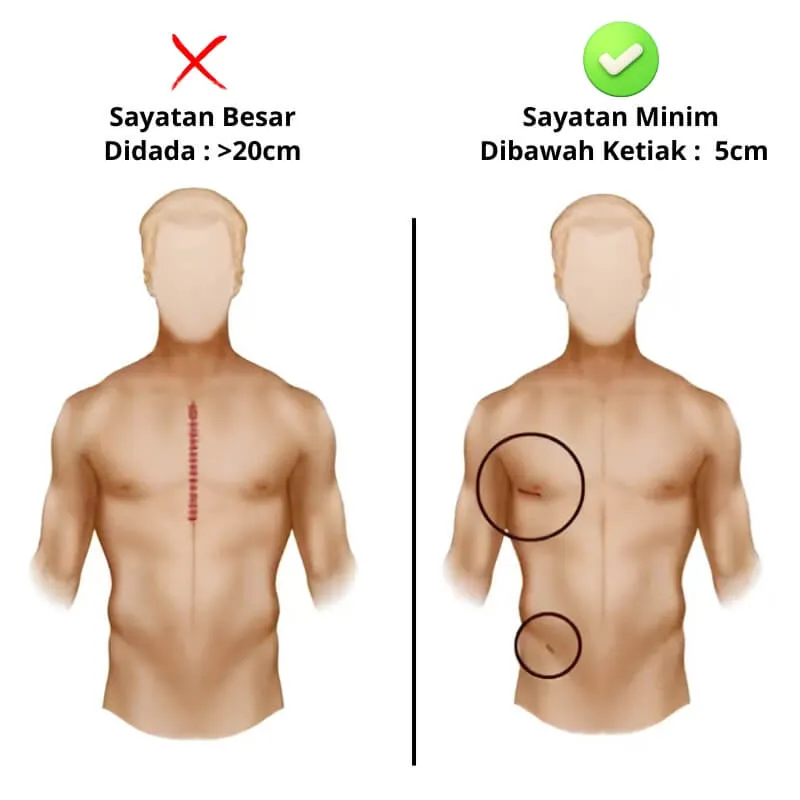
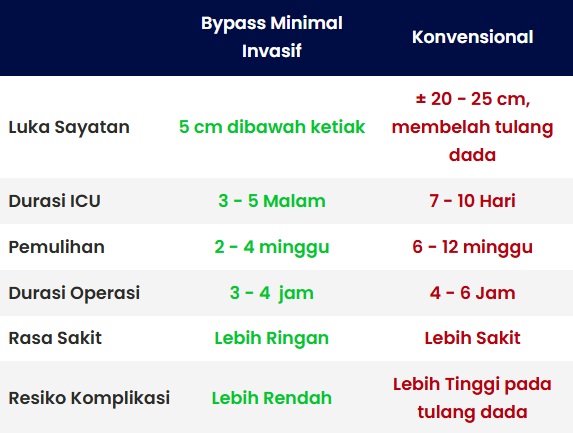
Compared to conventional heart surgery, which requires splitting the breastbone, MICS offers several benefits for patients, including:
- Recovery time is generally faster, allowing many patients to resume daily activities within about 2–4 weeks.
- The smaller surgical incision results in less post-procedure pain and minimal scarring.
- Because the procedure is less invasive, the physical and psychological trauma experienced by patients is typically milder.
- Hospital stays are generally shorter, around 3–4 days, depending on each patient’s condition.
- In the early recovery phase, lung function tends to return to optimal levels faster compared to after conventional surgery.
- The risk of post-operative infection and bleeding is also relatively lower.
When is heart valve surgery necessary?
Heart valve surgery is performed to address various types of heart valve disease, including:
- Heart valve stenosis, a condition in which the valve leaflets become thickened, stiff, or stuck together, narrowing the valve opening and obstructing blood flow.
- Heart valve regurgitation, a condition in which the valve cannot close tightly, causing blood to flow backward in the wrong direction.
- Heart valve prolapse, in which the valve leaflets become loose and bulge backward like a parachute during heart contraction, which can lead to regurgitation or valve leakage.
- Heart valve atresia, a congenital abnormality in which the valve does not form properly. Instead, dense tissue blocks blood flow between the heart chambers. This condition most commonly occurs in the pulmonary valve.
Not everyone with heart valve disease requires surgery. If symptoms are still mild or have not yet caused complaints, doctors will typically recommend routine check-ups, lifestyle changes, and medication to manage the condition.
However, if heart valve disease has begun to impair the heart’s ability to pump blood throughout the body, doctors may recommend heart valve surgery as a treatment option.
dr. Wirya’s expertise and practice schedule at Mandaya Royal Hospital Puri

dr. Wirya A. Graha, Sp.BTKV, Subsp. JD(K) is a thoracic, cardiac, and vascular surgery specialist with a subspecialty in adult cardiac surgery, with experience handling various cardiac and vascular surgery cases. He completed his specialist education in Thoracic and Cardiovascular Surgery at the Faculty of Medicine, University of Indonesia, which equipped him with expertise in cardiac and cardiovascular surgery.
One of dr. Wirya’s main areas of expertise is MICS, a cardiac surgery technique using small incisions without splitting the breastbone. Compared to conventional heart surgery, this method can offer several benefits, such as milder post-operative pain, lower risk of complications, and faster recovery time. With this expertise, dr. Wirya promotes a modern cardiac surgery approach that is more precise and comfortable for patients.
In addition to minimally invasive heart surgery, dr. Wirya is also experienced in various other surgical procedures, such as heart bypass surgery (Coronary Artery Bypass Graft/CABG), heart valve repair and replacement surgery, and aortic blood vessel surgery. He is also an active member of the Indonesian Medical Association (IDI) and is committed to providing thoracic and cardiovascular surgical services that prioritize quality, safety, and patient wellbeing.
To stay up to date with developments in cardiac surgery science and technology, dr. Wirya actively participates in various international training programs and conferences, including:
- 2017: 25th Annual Meeting of the Asian Society for Cardiovascular and Thoracic Surgery, Seoul, South Korea.
- 2018: 28th Annual Meeting of the Association of Thoracic and Cardiovascular Surgeons of Asia.
- 2019: 1st Joint Biennial South East Asian Regional Congress on Cardiovascular and Thoracic Surgery, held jointly with the 20th MATCVS Annual Scientific Meeting, Malacca.
- 2021: 25th European Vascular Course and 5th European Cardiovascular Course.
For those who wish to consult, dr. Wirya A. Graha, Sp.BTKV, Subsp. JD(K) practices at Mandaya Royal Hospital Puri with the following schedule:
- Tuesday: 4:30 PM–8:00 PM (WIB)
- Thursday: 4:30 PM–8:00 PM (WIB)
- Saturday: 10:00 AM–1:00 PM (WIB)
To make your visit to Mandaya Royal Hospital Puri easier, use the WhatsApp Chat feature, Book Appointment, or the Care Dokter app, available for download on Google Play and the App Store, to make visits easier, check queue numbers, and get other complete information.
*The information provided on this page is intended for educational purposes and general overview, and does not reflect the full range of medical services that each doctor can provide. To ensure treatment appropriate to your health condition, it is recommended that you consult directly with the relevant doctor.
If you have any questions, suggestions, or need further information, please contact our call center at 0811-1900-2000.

References:
- Cleveland Clinic. Heart Valve Replacement. (https://my.clevelandclinic.org/health/treatments/23966-heart-valve-replacement). Last revised June 4, 2024. Accessed June 30, 2026.
- Mayo Clinic. Heart valve surgery. (https://www.mayoclinic.org/tests-procedures/heart-valve-surgery/about/pac-20384901). Last revised March 27, 2025. Accessed June 30, 2026.