


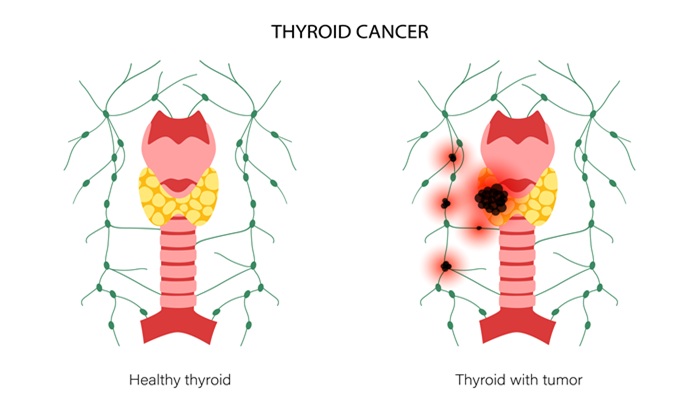
Thyroid cancer develops in the thyroid gland, a butterfly-shaped organ located at the front of the neck that produces hormones responsible for regulating the body’s metabolism. There are several types of thyroid cancer, ranging from papillary thyroid cancer, the most common type, to anaplastic thyroid cancer, which is more aggressive and difficult to treat.
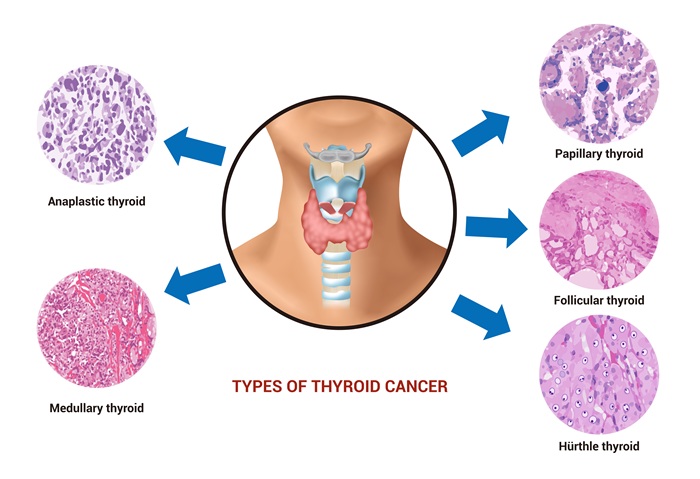
Each type of thyroid cancer has different characteristics and patterns of spread. Some grow slowly and respond well to treatment, while others may spread to lymph nodes, bones, lungs, or other organs, requiring more comprehensive management.
Therefore, treatment selection should be tailored to the type of cancer, stage of disease, and the patient’s overall condition. At Mandaya Royal Hospital Puri, various thyroid cancer treatment options are available to meet individual patient needs, including surgery, nuclear ablation therapy, radiotherapy, hormone therapy, targeted therapy, and chemotherapy.
Contents
Thyroid Cancer Treatment Options at Mandaya Royal Hospital Puri
The following thyroid cancer treatment options are available at Mandaya Royal Hospital Puri:
1. Surgery
Surgery is one of the primary treatment methods for thyroid cancer. The procedure aims to remove part or all of the thyroid gland affected by cancer. In certain cases, doctors may also remove nearby lymph nodes if cancer spread to those areas is detected.
2. Nuclear Ablation Therapy with Radioactive Iodine (RAI)
Radioactive Iodine (I-131) ablation therapy is commonly administered after surgery to destroy any remaining thyroid tissue or cancer cells. During this procedure, patients take radioactive iodine in capsule or liquid form. Since thyroid tissue naturally absorbs iodine, the radiation specifically targets and destroys diseased cells while minimizing effects on surrounding healthy tissues.
3. Radiation Therapy
Radiation therapy uses high-energy radiation beams to destroy cancer cells. This treatment may be considered for thyroid cancers that do not absorb radioactive iodine or when cancer has spread to specific areas that require additional treatment.
4. Hormone Therapy
Following thyroid removal surgery, patients usually require thyroid hormone therapy. In addition to replacing hormones no longer produced by the thyroid gland, this treatment helps suppress the growth of new thyroid tissue that could potentially trigger cancer recurrence.
5. Targeted Therapy
Targeted therapy works by attacking specific characteristics of cancer cells, including genetic mutations that support cancer growth. This approach is generally used for aggressive thyroid cancers or cancers that have reached an advanced stage.
6. Chemotherapy
Chemotherapy uses medications to destroy cancer cells throughout the body. Although it is not commonly the first-line treatment for thyroid cancer, chemotherapy may be considered in more aggressive cases or when the cancer does not respond adequately to other therapies.
When Should You Be Concerned About Thyroid Cancer?
One of the most common early signs of thyroid cancer is the appearance of a painless lump in the neck. This lump is known as a thyroid nodule. However, not all thyroid nodules are cancerous. In fact, most thyroid nodules are benign, and only a small percentage turn out to be cancer.
In many cases, thyroid cancer does not cause obvious symptoms during its early stages and is often discovered incidentally during examinations for unrelated conditions. Therefore, recognizing the warning signs of thyroid cancer is important so that diagnosis and treatment can begin as early as possible.
Symptoms that may occur in people with thyroid cancer include:
- A lump or swelling in the neck
- Enlarged lymph nodes in the neck
- Persistent hoarseness
- Difficulty breathing
- Difficulty swallowing
If you experience one or more of the symptoms above, especially a neck lump that continues to grow, you should consult a doctor for further evaluation. Early detection can significantly improve the success of thyroid cancer treatment.
Can Thyroid Cancer Be Cured?
Most thyroid cancer cases can be successfully treated with appropriate medical care. The chances of cure are generally higher when the cancer is detected and treated before it spreads to distant organs or other parts of the body.
Early diagnosis and treatment can also reduce the risk of cancer spread and improve overall treatment outcomes. Therefore, early detection and prompt intervention play a critical role in improving the prognosis of thyroid cancer patients.
In some cases, thyroid cancer may not be completely eliminated. However, doctors can develop a personalized treatment plan to control cancer growth, reduce symptoms, and help patients maintain a good quality of life over the long term.
Thyroid Cancer Specialist Team at Mandaya Royal Hospital Puri
The following specialists are involved in the treatment of thyroid cancer at Mandaya Royal Hospital Puri:
1. dr. Abdul Rachman, Sp.B (K) Onk
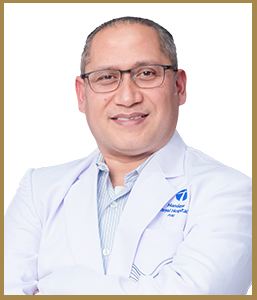
dr. Abdul Rachman, Sp.B (K) Onk is a surgical oncologist experienced in treating various cancers through surgical procedures. In his practice, he frequently performs surgeries for thyroid cancer and breast cancer, tailoring each approach to the patient’s specific condition and needs. His expertise covers a wide range of oncologic surgical procedures aimed at achieving optimal cancer removal while supporting patients’ quality of life.
He earned his medical degree from Trisakti University before completing General Surgery training at the University of Indonesia. He subsequently pursued subspecialty training in Surgical Oncology at the University of Indonesia. His services include total thyroidectomy, partial thyroidectomy, lumpectomy, and breast cancer surgery.
dr. Abdul Rachman, Sp.B (K) Onk is available at Mandaya Royal Hospital Puri on:
- Tuesday: 4:00 PM – 6:00 PM
- Thursday: 4:00 PM – 6:00 PM
- Saturday: 9:00 AM – 12:00 PM
2. dr. Enos H. Siburian, Sp.B (K) Onk
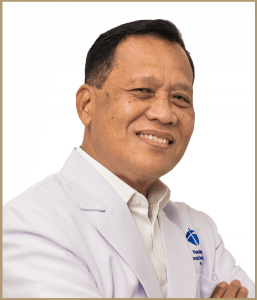
dr. Enos H. Siburian, Sp.B (K) Onk is a surgical oncologist practicing at Mandaya Royal Hospital Puri and is part of the Mandaya Advanced Cancer Center. He has extensive experience in treating cancers that require surgery, including breast cancer and thyroid cancer. In addition to caring for patients, he is an active member of several professional organizations, including the Indonesian Society of Surgical Oncology (PARABOI), the Indonesian Medical Association (IDI), and the Indonesian Association of Surgeons (PABI).
He obtained his medical degree from the Indonesian Christian University and later completed his surgical specialty training at Sam Ratulangi University in Manado. In daily practice, dr. Enos treats a variety of cancers requiring surgery, including breast cancer, colorectal cancer, thyroid cancer, stomach cancer, lung cancer, melanoma and skin cancer, pancreatic cancer, and other malignancies requiring comprehensive surgical oncology care.
dr. Enos H. Siburian, Sp.B (K) Onk is available at Mandaya Royal Hospital Puri on:
- Wednesday: 2:00 PM – 4:00 PM
- Thursday: 9:00 AM – 11:00 AM
- Friday: 2:00 PM – 4:00 PM
3. dr. Eko Purnomo, Sp.KNTM, Subsp. Onk
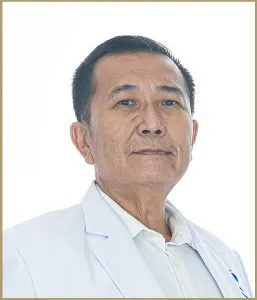
dr. Eko Purnomo, Sp.KNTM, Subsp. Onk is a nuclear medicine specialist with a subspecialty in oncology, focusing on the diagnosis and treatment of diseases using nuclear medicine technology. He has extensive experience performing diagnostic and therapeutic procedures, including PET Scan examinations and radioisotope-based therapies for cancer patients.
He earned his medical degree from the Faculty of Medicine at Atma Jaya Catholic University of Indonesia before pursuing Nuclear Medicine specialty training at Hasan Sadikin Hospital affiliated with Padjadjaran University. To further strengthen his expertise in modern nuclear imaging, dr. Eko has participated in several international PET Scan training programs in China, the Netherlands, and Japan.
dr. Eko Purnomo, Sp.KNTM, Subsp. Onk is available at Mandaya Royal Hospital Puri on:
- Monday: 11:00 AM – 5:00 PM
- Tuesday: 11:00 AM – 5:00 PM
- Wednesday: 11:00 AM – 5:00 PM
- Thursday: 11:00 AM – 5:00 PM
- Friday: 1:00 PM – 5:00 PM
4. dr. Alvita Dewi Siswoyo, Sp.KNTM, Subsp. Onk., M.Kes., FANMB
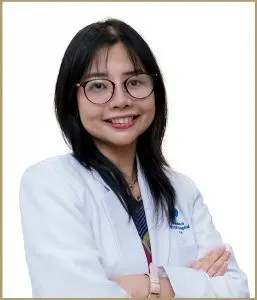
dr. Alvita Dewi Siswoyo, Sp.KNTM, Subsp. Onk., M.Kes., FANMB is a nuclear medicine specialist with a subspecialty in oncology who has extensive experience in utilizing nuclear technology for cancer diagnosis and treatment. She provides various nuclear medicine services that support accurate diagnosis and treatment planning for cancer patients.
She completed her Nuclear Medicine specialty training at Padjadjaran University, Bandung. In addition, dr. Alvita actively participates in international scientific programs and training courses, including Hybrid Imaging in Oncology, International Atomic Energy Agency (IAEA) programs, and workshops on radioisotopes, radiopharmaceuticals, cyclotrons, and nuclear medicine.
dr. Alvita Dewi Siswoyo, Sp.KNTM, Subsp. Onk., M.Kes., FANMB is available at Mandaya Royal Hospital Puri on:
- Monday: 5:00 PM – 7:00 PM
- Wednesday: 5:00 PM – 7:00 PM
5. dr. Aleksander, Sp.KTNM, FANMB
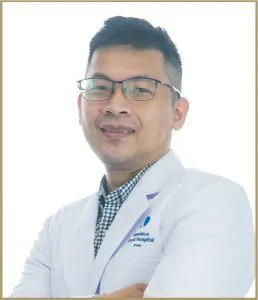
dr. Aleksander, Sp.KTNM, FANMB is a nuclear medicine specialist experienced in a wide range of diagnostic and therapeutic nuclear medicine services. He performs various molecular imaging examinations, including PET Scans, as well as nuclear ablation therapy for appropriate medical indications.
He completed his medical education at Maranatha Christian University before pursuing specialty training in Nuclear Medicine at Padjadjaran University. In addition to his expertise in nuclear medicine, dr. Aleksander also has experience in occupational medicine.
dr. Aleksander, Sp.KTNM, FANMB is available at Mandaya Royal Hospital Puri on:
- Monday: 9:00 AM – 5:00 PM
- Tuesday: 9:00 AM – 5:00 PM
- Wednesday: 9:00 AM – 5:00 PM
- Thursday: 9:00 AM – 5:00 PM
- Friday: 9:00 AM – 5:00 PM
To make your visit to Mandaya Royal Hospital Puri more convenient, you can use the WhatsApp Chat feature, Book Appointment service, or the Care Dokter mobile application available on Google Play and the App Store. These services help patients schedule visits, check queue numbers, and access additional information.
The information provided on this page is intended for educational and general informational purposes only and may not reflect all medical services performed by each physician. To determine the most appropriate treatment for your condition, please consult directly with the relevant doctor.
If you have any questions, suggestions, or require further information, please contact our call center at 0811-1900-2000.