



Radiotherapy for nasopharyngeal cancer is one of the most commonly used treatment methods to help kill cancer cells and shrink tumor size. This therapy utilizes high-energy radiation — typically X-rays — directed precisely at the cancerous area. Beyond controlling cancer growth, radiotherapy can also help relieve various symptoms experienced by patients.
Most nasopharyngeal cancers respond well to radiation. For this reason, radiotherapy is often a core part of primary treatment, particularly when the cancer is still confined to the head and neck area and has not spread to more distant parts of the body. The type and combination of therapy selected will be tailored to the cancer stage and the individual condition of each patient.
At Mandaya Royal Puri Hospital, radiotherapy for nasopharyngeal cancer is performed by an experienced team of radiation oncology specialists who collaborate in a multidisciplinary manner with ear, nose, and throat (ENT) specialist doctors.

Contents
When Is Radiotherapy Used for Nasopharyngeal Cancer?
Radiotherapy may be used in various situations to treat nasopharyngeal cancer, depending on the cancer stage, extent of disease spread, and the patient’s overall health condition. The following are some of the circumstances in which radiotherapy may be recommended:
- As the primary therapy for early-stage cancer, particularly for tumors that are still small and have not spread to the lymph nodes in the neck. Radiotherapy may also be an option for patients who are unable to undergo chemotherapy.
- In combination with chemotherapy (chemoradiotherapy) to treat larger tumors or cancer that has spread to the lymph nodes in the neck. This combination is often one of the primary approaches in the treatment of nasopharyngeal cancer.
- Following chemotherapy, particularly if the cancer has grown into surrounding tissues or structures around the nasopharynx and/or has spread to the lymph nodes in the neck. In patients who respond well to chemotherapy, subsequent chemoradiotherapy can help improve treatment outcomes and survival rates.
- To help relieve symptoms of advanced-stage cancer, such as pain, bleeding, or difficulty swallowing. In this context, radiotherapy serves as palliative therapy to improve the patient’s quality of life.
- To treat cancer that has recurred following previous treatment. Radiotherapy may be one of the therapy options depending on the location and extent of cancer recurrence.
In nasopharyngeal cancer, radiotherapy is typically directed not only at the primary tumor in the nasopharyngeal area, but also at the surrounding lymph nodes in the neck. This is because cancer cells can spread to the lymph nodes even before they appear enlarged or show abnormalities on physical examination or imaging.
If cancer spread to the lymph nodes has been confirmed, doctors will generally deliver a higher radiation dose to those areas to help optimally control cancer cell growth.
Types of Radiotherapy for Nasopharyngeal Cancer
Several types of radiotherapy can be used to treat nasopharyngeal cancer. However, external beam radiation therapy (EBRT) is the most commonly used method. In certain circumstances, doctors may also consider intraoperative radiation therapy (IORT) or brachytherapy.
1. External Beam Radiation Therapy (EBRT)
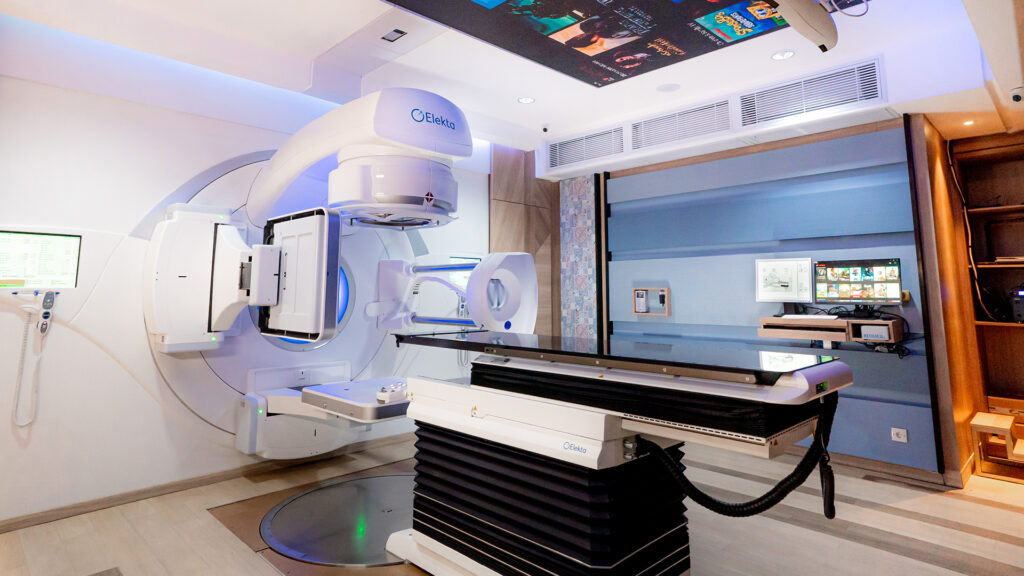
External beam radiation therapy is a method that uses high-energy X-rays directed at the tumor from a machine positioned outside the patient’s body.
The procedure is similar to an X-ray examination, but uses a higher radiation dose directed with greater precision at the cancerous area. During therapy, patients will not feel any pain and the machine will not come into contact with the body. Each radiation session generally lasts only a few minutes, although the preparation and patient positioning process typically takes longer.
Before beginning therapy, a custom mask may be made for the patient to cover the head and neck area. This mask keeps the head, neck, and shoulders in the same position during each radiotherapy session, allowing radiation to be delivered more accurately. Some patients may feel slightly uncomfortable or confined when wearing the mask, so doctors can provide adjustments or mild sedation if needed.
In some cases, patients may also use a bite block placed inside the mouth during the procedure to help maintain the correct positioning throughout the session.
2. Intraoperative Radiation Therapy (IORT)
In certain rare cases, doctors may use intraoperative radiation therapy (IORT) to treat nasopharyngeal cancer. This procedure is generally only available at hospitals with specialized facilities and expertise in cancer management.
IORT is delivered during surgery, after the doctor has removed as much tumor tissue as possible. Following removal, a focused high-dose radiation beam is directed precisely at the former tumor site to help destroy any cancer cells that may remain.
After undergoing IORT, patients may also receive additional external beam radiotherapy to further enhance treatment effectiveness. However, not all patients are candidates for this procedure. Doctors will consider various factors, including overall health condition, prior radiotherapy history, the success of tumor removal surgery, and the function of vital organs such as the ability to swallow and breathe.
Given the complexity of the procedure, IORT is only used in specific circumstances and for patients who meet particular criteria.
3. Brachytherapy
Brachytherapy, or internal radiation therapy, is a method of delivering radiation by placing a radiation source directly inside or very close to the location of the cancer.
In this procedure, very thin metal rods or wires containing radioactive material are placed in the target area. Because the radiation only reaches a short distance, the therapy can effectively destroy cancer cells while minimizing damage to surrounding healthy tissue.
Brachytherapy is not commonly used as an initial treatment for nasopharyngeal cancer. It is more often considered when cancer returns after treatment or does not fully resolve following chemoradiotherapy. In some cases, doctors may also combine brachytherapy with external beam radiotherapy to achieve more optimal treatment results.
Nasopharyngeal Cancer and Radiotherapy Specialist Doctors at Mandaya Royal Puri Hospital
The following are the nasopharyngeal cancer and radiotherapy specialist doctors at Mandaya Royal Puri Hospital:
1. dr. Handoko Nugroho Yossarsongko, Sp.THT-KL, M.Kes
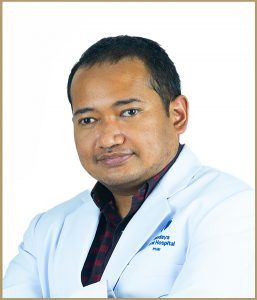
dr. Handoko Nugroho Yossarsongko, Sp.THT-KL, M.Kes is an Ear, Nose, Throat, Head and Neck Surgery (ENT-HNS) specialist who is an active member of the Indonesian ENT Head and Neck Surgery Specialist Association (PERHATI-KL) and the Indonesian Medical Association (IDI).
He completed his medical education at Universitas Kristen Indonesia (UKI) before pursuing a Master’s degree in Biomedical Sciences and an ENT-HNS specialist program at Hasanuddin University.
In his practice, dr. Handoko manages a wide range of complaints and conditions involving the ears, nose, and throat. He also holds competency in Functional Endoscopic Sinus Surgery (FESS), a minimally invasive endoscopic sinus surgical procedure, as well as various other medical procedures related to ENT and head and neck health.
Schedule at Mandaya Royal Puri Hospital:
- Tuesday: 18:00 – 20:00 WIB
- Thursday: 18:00 – 20:00 WIB
- Saturday: 14:00 – 19:00 WIB
2. Prof. Dr. dr. Soehartati A. Gondhowiardjo, Sp.Onk.Rad (K)

Prof. Dr. dr. Soehartati A. Gondhowiardjo, Sp.Onk.Rad (K) is a consultant radiation oncology specialist with extensive experience in radiotherapy and cancer management. She completed her medical degree at the University of Indonesia in 1980, then pursued specialist training in radiology at the same institution, graduating in 1987.
To develop her expertise in radiation oncology, Prof. Soehartati undertook advanced training programs, including at the Strahlentherapie Abteilung Wilhelm-Westfälischen Universität Münster in Germany. She also earned her Doctorate in Medical Science through a collaborative program between the University of Indonesia and AKH Vienna, Austria, in 1998.
Alongside her clinical activities, Prof. Soehartati is active in academic and research endeavors. She consistently participates in various international training programs and scientific forums, including the Workshop Indonesia-IAEA Radiation Medicine and the ESTRO Evidence-Based Radiation Oncology Course in 2023. Her extensive experience in radiation oncology makes her one of the key figures in the development of radiotherapy services in Indonesia.
Schedule at Mandaya Royal Puri Hospital:
- Wednesday: by appointment.
3. dr. Novina Fortunata, Sp.Onk.Rad
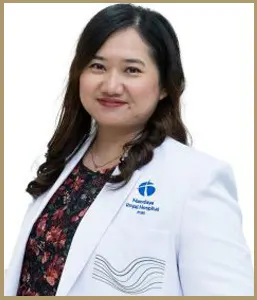
dr. Novina Fortunata, Sp.Onk.Rad is a radiation oncology specialist providing cancer treatment through radiation therapy at Mandaya Royal Puri Hospital. She completed her general medical degree at Airlangga University before pursuing specialist training in Radiation Oncology at the University of Indonesia.
As part of her commitment to delivering optimal care, dr. Novina actively participates in various seminars, webinars, and scientific training programs to stay current with developments in cancer therapy. Events she has attended include The 3rd Jakarta Annual Collaborative Cancer Meeting (JACCM) 2022, the FARO Webinar Series, and Continuing Medical Education (CME) programs from the Indonesian Radiation Oncology Society (IROS).
With continuously updated knowledge, dr. Novina strives to deliver radiation therapy that keeps pace with modern technological advancements and is tailored to the individual needs of each patient.
Schedule at Mandaya Royal Puri Hospital:
- Monday – Friday: 08:00 – 16:00 WIB
- Saturday: 08:00 – 13:00 WIB
4. dr. Riyan Apriantoni, Sp.Onk.Rad
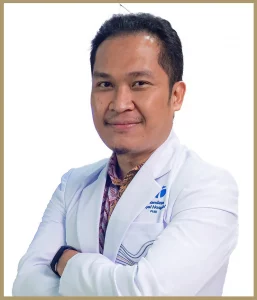
dr. Riyan Apriantoni, Sp.Onk.Rad is a radiation oncology specialist with experience in applying a range of modern radiotherapy techniques for cancer management. He completed his medical degree at Sriwijaya University before pursuing specialist training in Radiation Oncology at the University of Indonesia.
In his day-to-day practice, dr. Riyan treats patients using high-precision radiotherapy technologies, including Stereotactic Radiosurgery (SRS) and Stereotactic Body Radiation Therapy (SBRT). These technologies allow radiation to be delivered in a highly targeted manner to the tumor area with a high degree of accuracy, helping to reduce exposure to surrounding healthy tissue.
In addition to his proficiency in SRS and SBRT, he also has experience performing brachytherapy and various other radiotherapy methods tailored to the clinical condition of each patient. With an approach that prioritizes treatment safety and effectiveness, dr. Riyan is committed to delivering cancer care that adheres to the latest therapy standards.
Schedule at Mandaya Royal Puri Hospital:
- Monday – Friday: 17:00 – 20:00 WIB
To make your visit to Mandaya Royal Puri Hospital more convenient, use the WhatsApp Chat feature, Book Appointment, or download the Care Dokter app on Google Play and the App Store to streamline your visit, view your queue number, and access complete information.
Information available on this page is compiled for educational and general informational purposes and does not reflect the full range of medical services that each doctor may provide. To ensure treatment appropriate to your health condition, a direct consultation with the relevant doctor is recommended.
For questions, suggestions, or further information, please contact our call center at 0811-1900-2000.