


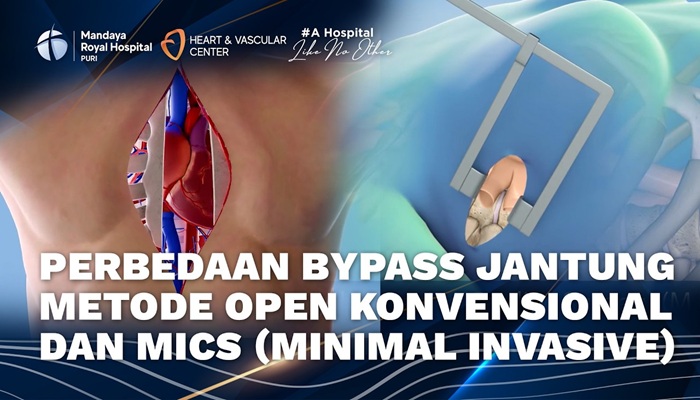
Heart bypass surgery is one of the important procedures used to treat blockages in the heart’s blood vessels (coronary artery disease). However, many people feel worried or even afraid to undergo this procedure, mainly because the conventional method is associated with opening the breastbone, which appears major and requires a longer recovery time. These concerns often lead patients to delay treatment, even though this condition needs to be addressed promptly and appropriately.
With advancements in medical technology, Minimally Invasive Cardiac Surgery (MICS) is now available. This technique allows doctors to perform heart bypass surgery through a small incision of about 5–8 cm between the ribs. This method serves as an alternative for patients who prefer a less invasive approach compared to conventional techniques.
At Mandaya Royal Hospital Puri, heart bypass surgery using the MICS approach is available and handled by an experienced thoracic and cardiovascular surgeon, dr. Wirya Ayu Graha, Sp.BTKV, Subsp.JD (K). With expertise in minimally invasive cardiac procedures, patients can receive more modern and targeted treatment based on their individual medical conditions.

Contents
What are the differences between conventional heart bypass surgery and MICS?
Coronary artery bypass grafting (CABG), or heart bypass surgery, is a surgical procedure aimed at restoring blood flow to the heart muscle. This is done by creating a “new pathway” to bypass blocked or narrowed coronary arteries. The procedure is generally recommended for patients with coronary artery disease to help reduce symptoms such as chest pain and improve overall heart function.
Coronary artery disease itself is a condition in which the coronary arteries become narrowed or blocked due to plaque buildup, including cholesterol, within the vessel walls. Over time, this buildup reduces blood flow to the heart muscle.
Below are the differences between open CABG (conventional) and MICS (minimally invasive):
-
Open CABG (Conventional Method)
Open CABG has long been the standard approach for heart bypass surgery. In this procedure, the surgeon opens the breastbone (sternum) through a large incision to directly access the heart. During the operation, the heart is usually temporarily stopped, and blood circulation is supported by a heart-lung machine. The surgeon then creates a new pathway using blood vessels taken from other parts of the body, such as the leg or chest wall.
Although effective, this method generally requires a longer recovery period. In addition, the risk of infection may be higher, and patients often experience more significant postoperative pain due to the large incision.
-
MICS CABG (Minimally Invasive Method)
MICS CABG is a more modern and minimally invasive approach compared to the conventional method. In this procedure, the surgeon does not need to open the breastbone but instead makes a small incision between the ribs to access the heart. The incision size typically ranges from 5–8 cm.
In MICS procedures, doctors use advanced technology such as cameras and specialized instruments to clearly visualize the surgical area and perform the operation with greater precision.
In general, the main difference between Open CABG and MICS CABG lies in how the procedure is performed and its impact on the patient. Open CABG uses a conventional method by opening the breastbone, providing wider access to the heart, but it tends to involve a longer recovery time and more postoperative pain.
Meanwhile, MICS CABG offers a more minimally invasive option, requiring only a small incision without opening the breastbone. This approach generally provides greater comfort and faster recovery time, although outcomes still depend on each patient’s condition.
What are the advantages of MICS heart bypass surgery compared to conventional techniques?
Compared to open heart bypass surgery, minimally invasive bypass surgery (MICS) offers several advantages, including:
- Faster recovery time
- Less blood loss
- Smaller and less visible scars
- Lower risk of bleeding or infection
- Reduced postoperative pain
- Shorter hospital stay
Who can undergo MICS heart bypass surgery?
Minimally invasive CABG may be an option for patients with certain conditions, including:
- Having coronary artery disease due to narrowed or blocked blood vessels that require further treatment
- Requiring heart bypass surgery but wishing to avoid major surgery involving opening the breastbone
- Wanting a faster recovery process to return to daily activities sooner
- Having undergone a thorough examination and evaluation and being deemed suitable for the procedure by a specialist
When should you consult a doctor?
Coronary artery disease is a serious condition and one of the leading causes of death worldwide. Therefore, it is important to recognize the following symptoms:
- Chest pain (angina): Feels like pressure, tightness, heaviness, or pain in the chest, usually in the center or left side. It may occur during physical activity or emotional stress. In some people (especially women), the pain may be brief or radiate to the neck, arms, or back.
- Shortness of breath: Feeling difficulty breathing
- Fatigue: The body tires easily because the heart does not pump blood optimally
Initially, symptoms may not be noticeable. However, as the arteries become more narrowed, complaints may become more frequent and severe, especially during activity.
Symptoms of a heart attack (if the artery is completely blocked):
- Chest pain described as pressure or squeezing
- Pain radiating to the shoulders, arms, back, neck, jaw, or upper abdomen
- Cold sweats
- Fatigue
- Burning sensation in the chest (similar to heartburn)
- Nausea
- Shortness of breath
- Dizziness or lightheadedness
It is important to note that not everyone experiences the same symptoms. In women, the elderly, or people with diabetes, symptoms may be milder or atypical, and some may not feel any symptoms at all during a heart attack.
Seek medical attention immediately if you experience the symptoms above to receive proper treatment.
Consultation with dr. Wirya at Mandaya Royal Hospital Puri
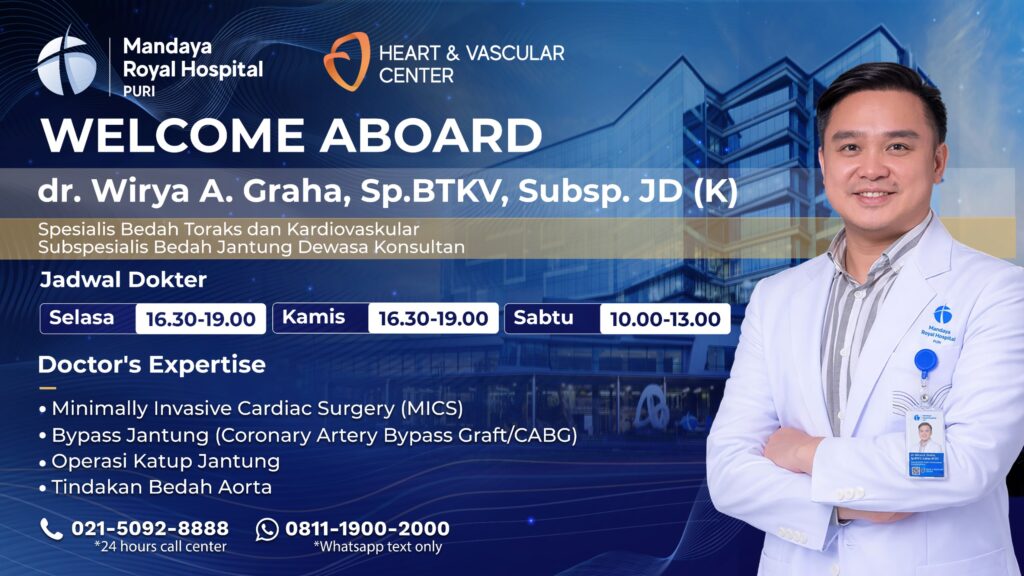
dr. Wirya A. Graha, Sp.BTKV, Subsp.JD (K), is a thoracic, cardiac, and vascular surgeon with a subspecialty in adult cardiac surgery. He has experience in handling various cardiac and vascular surgical procedures and completed his Thoracic and Cardiovascular Surgery specialist training at the Faculty of Medicine, University of Indonesia.
dr. Wirya has extensive experience in cardiac surgery, performing more than 600 operations annually. Of these, over 300 cases involve minimally invasive techniques, including more than 200 heart bypass procedures and over 100 heart valve surgeries using similar approaches.
His expertise in MICS techniques allows procedures to be performed without fully opening the breastbone, offering benefits such as reduced postoperative pain, lower risk of complications, and faster recovery time compared to conventional methods.
In addition to minimally invasive procedures, dr. Wirya also handles various other surgeries, including heart bypass surgery, heart valve surgery, and aortic surgery. He is a member of the Indonesian Medical Association (IDI) and is committed to providing professional, safe, and patient-centered thoracic and cardiovascular surgical care.

dr. Wirya A. Graha, Sp.BTKV, Subsp. JD (K) is available at Mandaya Royal Hospital Puri on:
- Tuesday: 4:30 PM – 7:00 PM
- Thursday: 4:30 PM – 7:00 PM
- Saturday: 10:00 AM – 1:00 PM
To make your visit easier, you can use the WhatsApp Chat feature, Book Appointment service, or the Care Dokter application (available on Google Play and the App Store) to manage appointments, check queue numbers, and access other information.
The information provided on this page is intended for educational purposes and general overview only and does not represent the full scope of medical services offered by each doctor. To ensure appropriate treatment for your condition, it is recommended to consult directly with the relevant doctor.
If you have any questions, suggestions, or need further information, please contact our call center at 0811-1900-2000.