


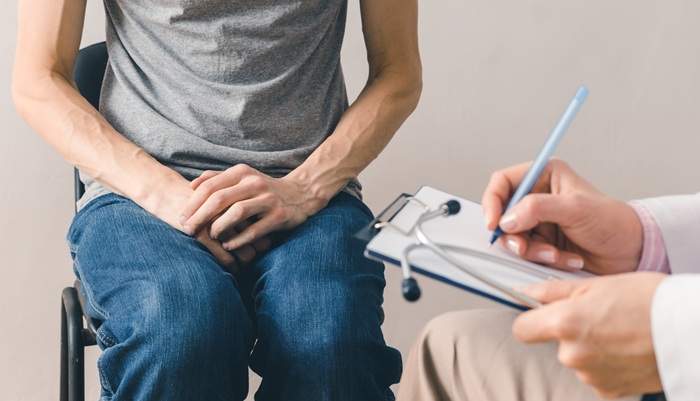
Prostatectomy is a surgical procedure to remove part or all of the prostate gland. The prostate is part of the male reproductive system, located in the pelvic area just below the bladder, and it surrounds the urethra, the tube that carries urine out of the body.
This procedure is most commonly performed to treat prostate cancer, but it can also be used to manage other prostate conditions, such as benign prostatic hyperplasia (BPH). The type of surgery performed depends on the patient’s condition and treatment needs.

Contents
Types of Prostatectomy
Here are the main types of prostatectomy:
1. Radical prostatectomy
This procedure removes the entire prostate gland along with surrounding tissue and is typically performed to treat prostate cancer. In some cases, nearby lymph nodes may also be removed.
Radical prostatectomy can be performed using several approaches:
- Open surgery: involves a single large incision and is now less commonly used
- Laparoscopic surgery: uses several small incisions, allowing faster recovery
- Robot-assisted surgery: offers greater precision, less pain and bleeding, and quicker recovery
2. Nerve-sparing prostatectomy
A surgical technique aimed at preserving the nerves responsible for erectile function, when possible.
3. Simple prostatectomy
This involves removing part of the prostate tissue, typically to treat BPH. It is usually performed using minimally invasive techniques such as laparoscopy or robotic surgery.
When Is Prostatectomy Needed?
Prostatectomy may be recommended in several situations, including:
1. To treat prostate cancer
It is most often performed for prostate cancer that is still confined to the prostate and has not spread. In this case, the entire prostate and some surrounding tissue are removed (radical prostatectomy). It may be used as a primary treatment or combined with other therapies such as radiation or hormone therapy.
2. To treat enlarged prostate (BPH)
Prostatectomy may also be performed for benign prostate enlargement, especially when symptoms are severe. In this case, part of the prostate is removed (simple prostatectomy) to improve urine flow.
Common symptoms indicating the need for treatment:
- Frequent and sudden urge to urinate
- Difficulty starting urination
- Weak or prolonged urine flow
- Frequent urination at night
- Interrupted urine stream
- Feeling of incomplete bladder emptying
- Recurrent urinary tract infections
- Inability to urinate (urinary retention).
Prostatectomy Procedure
The method and extent of prostate removal depend on the patient’s condition and the type of procedure performed. Common approaches include:
-
Robot-assisted radical prostatectomy
This procedure is performed through several small incisions in the abdomen. The surgeon uses a tiny camera and robotic instruments controlled from a console. A magnified 3D view allows for more precise movements. This method typically results in smaller incisions, faster recovery, and fewer complications compared to open surgery.
-
Open radical prostatectomy
The surgeon makes an incision in the lower abdomen, from below the navel to above the pubic bone. The prostate is carefully separated from surrounding nerves and blood vessels before being removed along with nearby tissue. The incision is then closed with sutures.
-
Simple prostatectomy
This procedure often begins with the insertion of a cystoscope (a thin tube with a camera) through the tip of the penis to examine the urethra, bladder, and prostate. A catheter is then placed to drain urine during surgery. The surgeon removes the part of the prostate causing symptoms. After surgery, one or two drainage tubes may be placed and later removed once recovery progresses.
Prostatectomy with Da Vinci Xi at Mandaya Royal Hospital Puri
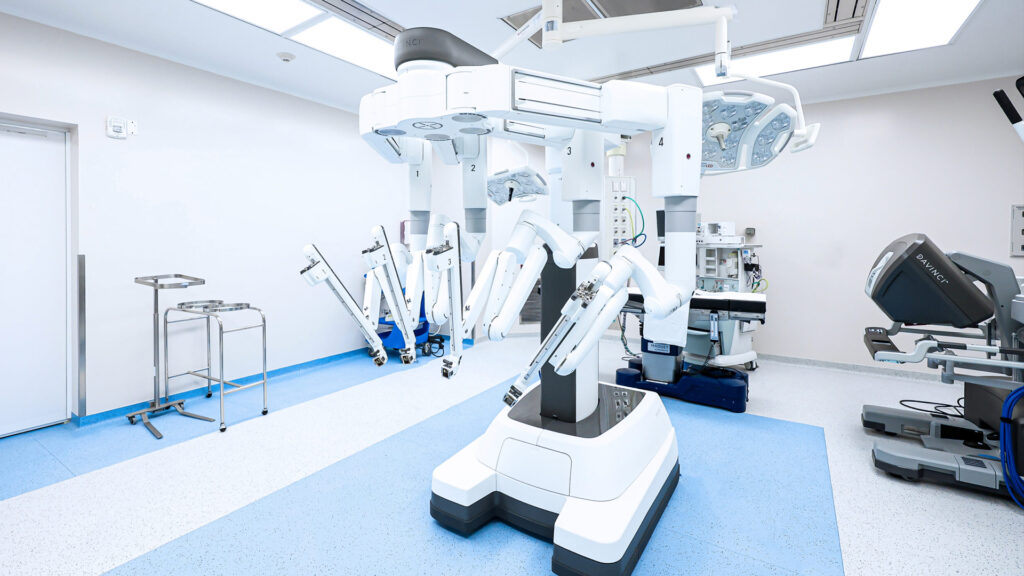
The Da Vinci Xi is an advanced robotic surgical system used in various urologic procedures, including prostatectomy. It features four precision robotic arms controlled by the surgeon through a high-definition 3D console.
This technology allows for clearer and more detailed visualization of the prostate, enabling highly accurate surgical movements. The robotic arms are flexible and mimic the motion of human hands in a smaller range, allowing access to narrow and complex areas around the prostate.
Benefits of robotic prostatectomy with Da Vinci Xi:
- Greater precision and control: smoother, more stable, and accurate movements
- Minimally invasive: smaller incisions, less bleeding, less pain, and faster recovery
- Better for complex areas: helps protect nearby nerves and blood vessels, including those related to urinary and sexual function
- Faster recovery: less tissue trauma allows patients to return to daily activities sooner
Urology Specialists for Prostatectomy at Mandaya Royal Hospital Puri
Here are the experienced urology specialists at Mandaya Royal Hospital Puri:
1. Prof. dr. Chaidir Arif Mochtar, Sp.U(K), PhD
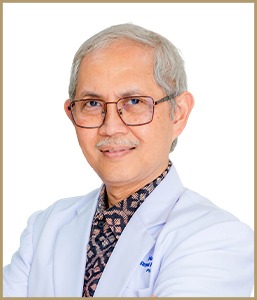
A senior urologist with extensive national and international experience. He performs various urologic procedures, including prostate surgery, and is skilled in laparoscopic (minimally invasive) techniques, with training in the Netherlands.
Schedule:
- Monday: 16:00 – 18:00 WIB
- Thursday: 16:00 – 18:00 WIB
2. Prof. dr. Ponco Birowo, Sp.U(K), PhD

A urologist experienced in managing complex cases, including prostate cancer. He is recognized as a referral specialist for advanced robotic urologic procedures requiring high precision.
Schedule:
- Tuesday: 16:00 – 18:00 WIB
- Thursday: 16:00 – 18:00 WIB
3. dr. Hendy Mirza, Sp.U(K)
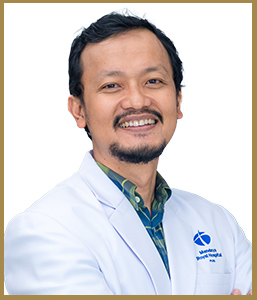
A consultant urologist specializing in urinary tract and prostate conditions. He completed his medical education at the University of North Sumatra and his urology training at the University of Indonesia. He is also skilled in laparoscopic techniques and pediatric urology.
Schedule:
- Monday: 16:00 – 19:00 WIB
- Wednesday: 16:00 – 19:00 WIB
- Friday: 16:00 – 19:00 WIB
If you would like to learn more about prostatectomy with the Da Vinci Xi system, you can consult directly with the urology team at Mandaya Royal Hospital Puri.
To make your visit easier, you can use the WhatsApp Chat feature, Book Appointment service, or the Care Dokter app available on Google Play and the App Store to check schedules, queue numbers, and other information.
The information on this page is intended for educational purposes and general overview only and does not represent the full range of medical services provided by each doctor. For appropriate treatment, please consult directly with a healthcare professional.
If you have any questions or need further information, please contact our call center at 0811-1900-2000.