


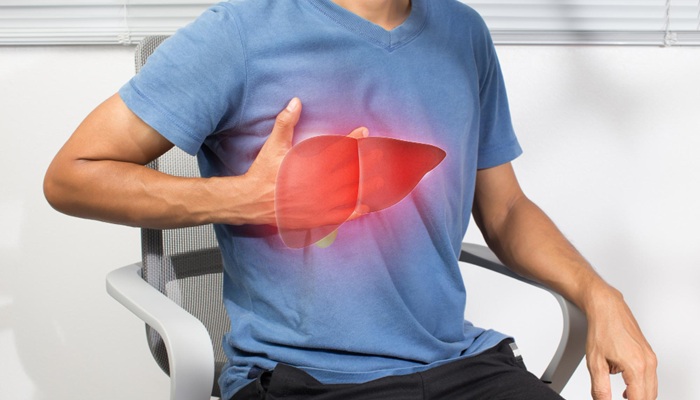
Liver cancer is a type of cancer that develops in the liver, a vital organ responsible for filtering toxins, processing nutrients, and maintaining the body’s metabolic balance. The most common type of liver cancer is hepatocellular carcinoma (HCC), which typically occurs in patients with a history of chronic liver disease such as cirrhosis.
With advancements in medical technology, liver cancer can now be treated without major surgery through HIFU (High-Intensity Focused Ultrasound). This therapy uses high-intensity ultrasound waves that are precisely focused on tumor tissue to generate heat and destroy cancer cells without incisions. However, not all liver cancer patients are eligible for this procedure. There are specific criteria—ranging from HCC diagnosis, tumors clearly visible via ultrasound, to patients with advanced cirrhosis accompanied by ascites—that allow treatment using HIFU technology.
At Mandaya Royal Hospital Puri, HIFU has become one of the modern therapy options for liver cancer patients who meet certain criteria. With its minimally invasive approach, this therapy offers a more comfortable alternative with lower risks, while prioritizing patient safety—especially for those with impaired liver function.

Contents
Criteria for Liver Cancer Patients Eligible for HIFU Technology
For HIFU therapy to be effective and safe, several patient criteria are typically considered:
1. Diagnosed with Hepatocellular Carcinoma (HCC)
HIFU is most commonly used for patients with HCC, the most prevalent type of primary liver cancer.
2. Advanced Cirrhosis, Including Ascites
Patients with advanced-stage cirrhosis (liver scarring), including those who have developed fluid accumulation in the abdomen (ascites), may still be candidates for HIFU. This therapy serves as an alternative because it does not require major surgery, which carries higher risks in patients with decreased liver function.
3. Relatively Small Tumor Size
Tumors that are not excessively large are generally more ideal for HIFU treatment. The more localized and limited the tumor size, the more optimal the cancer tissue destruction results.
4. Tumor Clearly Visible on Ultrasound
HIFU procedures are performed under ultrasound (USG) guidance. Therefore, the tumor must be clearly visible and accurately localized via ultrasound imaging so that the ultrasound waves can be precisely focused on the cancerous tissue.
5. Tumor Located in Areas That Allow Safe Intervention
This includes tumors located in the upper part of the liver or near other organs such as the stomach, intestines, gallbladder, major blood vessels, or ribs. Although these areas can be technically challenging, with thorough preparation and specialized techniques, HIFU can still be performed with minimal complication risks.
With comprehensive evaluation by a medical team and proper patient selection, HIFU represents a promising modern therapy to help control liver cancer without the need for open surgery.
How HIFU Works in Treating Liver Cancer with Cirrhosis
HIFU is a non-surgical therapy that utilizes high-intensity ultrasound waves to destroy liver cancer tissue. In patients with cirrhosis, this method is particularly beneficial because it does not require incisions and helps minimize risks to already compromised liver function. Here is a simplified explanation of how it works:
1. Energy Delivered from Outside the Body Without Surgery
The HIFU procedure is performed without surgical incisions. A specialized device is placed on the skin’s surface and emits ultrasound waves that penetrate body tissues directly toward the tumor in the liver.
2. Ultrasound Waves Precisely Focused on the Tumor
HIFU technology uses ultrasound waves at specific frequencies (approximately 0.8–3.5 MHz) that can be accurately concentrated on the cancerous area. The process is guided by imaging such as ultrasound to ensure precise targeting of the tumor tissue.
3. Controlled Temperature Elevation at the Tumor Site
When the ultrasound waves converge at a focal point, the energy is converted into heat. The temperature at the tumor site can rise above 60°C—high enough to damage and destroy cancer cells.
4. Cancer Cells Destroyed Through Thermal Ablation
The heat generated causes proteins within cancer cells to denature and coagulate. As a result, cancer cells die, and the tumor tissue is gradually destroyed through a process known as thermal ablation.
5. Surrounding Healthy Liver Tissue Remains Preserved
Because the heat is focused only on the tumor area, the surrounding healthy liver tissue is relatively unaffected. This is particularly important for patients with cirrhosis, as preserving healthy liver tissue is a top priority due to already compromised liver function.
With its targeted and minimally invasive mechanism, HIFU offers a safer and more controlled therapeutic approach for liver cancer, especially in patients with cirrhosis.
HIFU Specialist for Liver Cancer Treatment – dr. Sugianto Santoso, Sp.Rad (K)RI

dr. Sugianto Santoso, Sp.Rad (K)RI is a radiology specialist with a subspecialty in interventional radiology, experienced in performing various minimally invasive procedures for both diagnosis and treatment of diseases, including liver cancer. In every procedure, he relies on advanced medical imaging technologies such as ultrasound, CT scan, MRI, and fluoroscopy to ensure precise targeting, accuracy, and patient safety.
As an interventional radiologist, dr. Sugianto is skilled in multiple liver cancer treatment methods, including Transarterial Chemoembolization (TACE) for liver nodules and tumors, as well as ablation procedures such as Radiofrequency (RF) Ablation and Microwave Ablation. These techniques are designed to destroy tumor tissue without open surgery, reducing complication risks and generally shortening recovery time. Additionally, he applies HIFU technology as a modern therapeutic innovation to treat liver cancer with greater precision and minimal risk.
For his educational background, dr. Sugianto completed his medical degree at Maranatha Christian University and pursued his Radiology Specialist training at the University of Indonesia. With a strong academic foundation and extensive clinical experience, he is committed to providing the latest minimally invasive therapies to help improve the quality of life of liver cancer patients.
dr. Sugianto Santoso, Sp.Rad (K)RI is available at Mandaya Royal Hospital Puri on:
- Tuesday: 4:00 PM – 8:00 PM (WIB)
- Thursday: 4:00 PM – 8:00 PM (WIB)
To make your visit easier, you can use the WhatsApp Chat feature, Book Appointment service, or download the Care Dokter application via Google Play and the App Store to simplify your visit, check queue numbers, and access other complete information.