


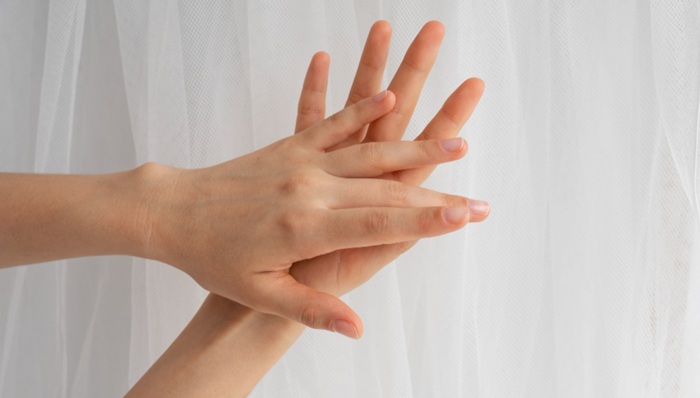
Stiff fingers upon waking up are a fairly common complaint, especially among adults and the elderly. This condition can make the fingers difficult to move, painful, or even locked when first used in the morning. Morning finger stiffness is not always caused by fatigue alone; it may indicate underlying problems involving the joints, tendons, or surrounding tissues of the fingers.
Several conditions that should be carefully considered include trigger finger, osteoarthritis, rheumatoid arthritis, and Dupuytren’s contracture.
Proper management of stiff fingers upon waking up requires a thorough evaluation and treatment by an experienced specialist. Mandaya Royal Puri Hospital is home to an orthopedic specialist with expertise in treating various finger and hand disorders, dr. Jecky Chandra, M.Kes, Sp.OT(K), CIPS, AIFO-K. Supported by comprehensive medical facilities and advanced technology, Mandaya Royal Puri Hospital provides integrated services to help patients receive accurate diagnoses and appropriate treatment tailored to their individual conditions.

Contents
Causes of Stiff Fingers Upon Waking Up, from Trigger Finger to Osteoarthritis
Below are several causes of stiff fingers upon waking up that should not be overlooked:
1. Trigger Finger
Trigger finger occurs due to thickening of the flexor tendon sheath, which prevents the tendon from gliding smoothly. This condition often causes the finger to lock in a bent position upon waking, requiring manual straightening and producing a characteristic “clicking” sensation. The narrowing typically occurs at the A1 pulley near the base joint of the finger.
Common symptoms of trigger finger include morning finger stiffness, difficulty straightening the finger independently, and the presence of a small palpable lump at the base of the finger. The ring finger and thumb are most commonly affected, although multiple fingers can be involved simultaneously.
2. Osteoarthritis
Osteoarthritis causes degeneration of the cartilage between finger joints, leading to direct friction between bones. This condition commonly affects the joints closest to the fingertips (distal interphalangeal joints) and the middle finger joints (proximal interphalangeal joints), characterized by bony enlargements known as Heberden’s nodes and Bouchard’s nodes.
As a result, patients often experience stiff fingers upon waking up, although the stiffness usually lasts less than 30 minutes and may worsen with changes in humidity.
In addition, osteoarthritis frequently affects the base joint of the thumb (carpometacarpal joint), causing difficulty with gripping or pinching objects. Movement of the fingers may produce a grinding or crackling sensation (crepitus). Joint stiffness may also recur after periods of inactivity throughout the day, contributing to finger stiffness in the morning or after light activities.
3. Rheumatoid Arthritis
Rheumatoid arthritis is an autoimmune disease that attacks the synovial lining of the joints, causing inflammation that typically lasts more than one hour every morning. This condition often affects the knuckle joints (metacarpophalangeal joints) and middle finger joints symmetrically, meaning both hands are involved in a similar pattern.
Morning finger stiffness in rheumatoid arthritis is usually accompanied by warmth, pain, and visible swelling. The disease follows a pattern of flares and remission. During flare-ups, morning stiffness may persist throughout the day, and grip strength can decrease significantly. Without proper treatment, long-term progression may lead to ulnar deviation, a condition in which the fingers gradually shift toward the little finger.
4. Dupuytren’s Contracture
Dupuytren’s contracture occurs due to thickening of the palmar fascia, forming cord-like structures that pull the fingers toward the palm. This condition most commonly affects the ring finger and little finger, which gradually become increasingly bent.
Morning finger stiffness may accompany this condition; however, unlike other causes, the stiffness does not improve with movement. Dupuytren’s contracture progresses through several stages, starting from nodules, followed by cord formation, and eventually leading to permanent finger contractures.
Inability to place the palm flat on a surface (table-top test) is a sign that the condition has advanced and requires further medical intervention.
Hand Orthopedic Specialist for Stiff Fingers at Mandaya Royal Puri Hospital

dr. Jecky is an orthopedic and traumatology specialist as well as a consultant with advanced expertise in treating disorders of the fingers, hands, elbows, and shoulders. He has extensive experience performing complex procedures, ranging from finger reattachment following severe injuries such as traumatic amputations, to correction of congenital finger abnormalities including syndactyly and polydactyly.
All procedures are performed using microsurgical techniques, which require a high level of precision and specialized expertise.
In addition to treating carpal tunnel syndrome (CTS), dr. Jecky manages various orthopedic conditions such as trigger finger, wrist and hand fractures, ganglion cysts, acute tendon injuries, and cubital tunnel syndrome, which involves nerve compression around the elbow. He also provides orthopedic stem cell therapy as part of a modern treatment approach for finger and hand disorders.
dr. Jecky completed his medical education at the Faculty of Medicine, Hasanuddin University, Makassar. He then pursued a Master’s Degree in Health Sciences (M.Kes) and completed his Orthopedic and Traumatology Specialist Program at the same university.
To further strengthen his clinical expertise, he participated in advanced training programs, including the Comprehensive Course in Musculoskeletal Pain Intervention and Regeneration at Precursor, Universitas Padjadjaran, Bandung.
He has also passed the National Certification Examination in Sports Physiology, earning the title AIFO-K (Clinical Sports Physiology Expert). Additionally, dr. Jecky completed his subspecialty/consultant training in Hand, Upper Limb, and Microsurgery at Dr. Soetomo General Hospital / Airlangga University, Surabaya.
His international credentials are reinforced by certification from the World Institute of Pain (WIP) as a Certified Interventional Pain Sonologist (CIPS), obtained in Budapest, Hungary.
WALANT: A Modern Method for Treating Trigger Finger at Mandaya Royal Puri Hospital
The WALANT (Wide Awake Local Anesthesia No Tourniquet) technique is a modern method used to treat trigger finger without general anesthesia and without a tourniquet. In this procedure, local anesthesia is injected directly into the finger or palm area, allowing the patient to remain fully awake during the procedure.
With the WALANT technique, release of the inflamed tendon can be performed more precisely, with minimal pain and improved patient comfort.
Advantages of the WALANT Technique for Trigger Finger Treatment:
- No need for general anesthesia, reducing anesthesia-related risks
- No tourniquet, resulting in greater comfort
- Patients remain awake and can immediately move the finger to confirm restored tendon function
- Shorter and more efficient procedure time
- Minimal bleeding due to the vasoconstrictive effect of local anesthesia
- Faster recovery period
- Safe for patients with certain medical conditions who are not advised to undergo general anesthesia
Most patients can return home and resume daily activities on the same day after the procedure.
To make your visit easier, you can use the WhatsApp Chat, Book Appointment feature, or the Care Dokter application—available for download on Google Play and the App Store—to schedule visits, check queue numbers, and access complete information.