


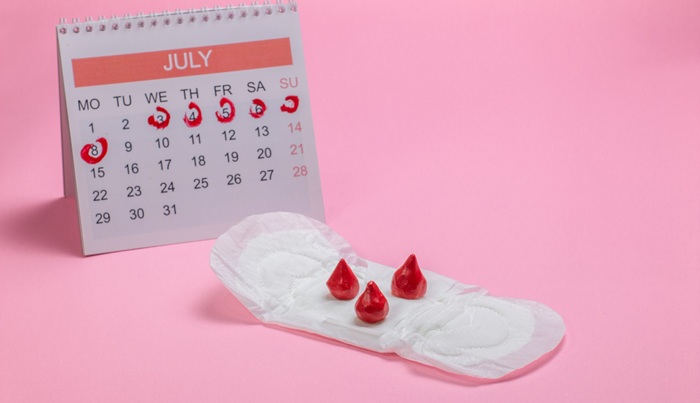
Prolonged or excessively heavy menstruation is often considered trivial, even though it can be a sign of underlying disorders in the female reproductive organs. One fairly common cause is uterine fibroids, which are benign tumors that grow inside or around the uterus and can affect both the menstrual cycle and the amount of menstrual bleeding.
As a non-surgical solution for treating fibroids, Mandaya Royal Hospital Puri offers HIFU (High-Intensity Focused Ultrasound), a non-invasive method designed to effectively treat fibroids with a faster recovery time.

Contents
Why Do Uterine Fibroids Cause Prolonged Menstruation?
Uterine fibroids can cause menstrual periods to last longer, be heavier, or occur more frequently than normal. This happens because fibroids can alter the shape and structure of the uterine lining, disrupting the normal shedding process of the uterine wall during menstruation.
In addition, fibroids may interfere with uterine contractions, increase blood vessel growth, and affect hormonal balance, including prostaglandins. These factors collectively contribute to excessive menstrual bleeding and prolonged shedding of the uterine lining.
Other Uterine Fibroid Symptoms to Watch Out For
In addition to prolonged menstruation, uterine fibroids may also cause other symptoms, such as:
- Excessive menstrual bleeding or painful periods
- A feeling of pressure or pain in the pelvic area
- Frequent urination or difficulty urinating
- Enlarged or bloated abdomen
- Constipation
- Pain in the abdomen or lower back
- Pain during sexual intercourse
Can Uterine Fibroids Cause Complications?
Most uterine fibroids do not lead to serious complications. However, in certain cases, fibroids may cause the following health problems:
- Increasing and difficult-to-control pain
- Swelling of the abdomen or pelvic area
- Excessive menstrual bleeding
- Anemia due to blood loss
- Fertility problems or infertility (rare cases)
Understanding HIFU Technology for Treating Fibroids Without Surgery
HIFU (High-Intensity Focused Ultrasound) is a non-invasive technology used to treat uterine fibroids without the need for surgery or incisions. This method works by focusing high-intensity ultrasound waves from outside the body directly onto fibroid tissue inside the uterus. The ultrasound energy generates heat at the target point, allowing fibroid cells to be selectively destroyed without damaging surrounding healthy tissue.
During the procedure, HIFU utilizes an ultrasound imaging system to accurately map the location of the fibroids. The heat produced at the targeted area causes coagulative necrosis, which is the controlled death of fibroid tissue. With its high level of precision, HIFU is an effective and safe treatment option for benign uterine fibroids while preserving the function and structure of nearby healthy tissue.
How HIFU Technology Works to Treat Fibroids:
- Focused ultrasound targeting: High-energy ultrasound waves are precisely directed at the fibroid tissue.
- Controlled heat generation: When the ultrasound reaches the fibroid tissue, the energy is converted into high-temperature heat.
- Fibroid tissue destruction: The heat damages fibroid cells and triggers effective coagulative necrosis.
- Protection of healthy tissue: The HIFU system allows highly precise focus control, keeping surrounding healthy tissue safe.
- Natural fibroid shrinkage: The damaged fibroid tissue is gradually absorbed by the body, causing the fibroid to shrink over time.
Advantages of HIFU for Uterine Fibroid Treatment
HIFU (High-Intensity Focused Ultrasound) offers several advantages in treating uterine fibroids, especially for patients who wish to avoid surgery. This method is non-invasive and does not require incisions, resulting in a lower risk of infection. In addition, HIFU does not use radiation, as it relies on ultrasound waves, making it safer for the body.
Another benefit is that HIFU generally does not require general anesthesia and can be performed with mild sedation or analgesia. This technology also helps preserve fertility by maintaining the structure and function of the uterus. With minimal tissue trauma, recovery time is shorter, allowing patients to return to daily activities more quickly.
Fibroid Specialists at Mandaya Royal Hospital Puri
In addition to being supported by advanced medical technology for uterine fibroid treatment, Mandaya Royal Hospital Puri is home to a team of experienced obstetrics and gynecology specialists and subspecialists. These doctors provide comprehensive fibroid care, from consultation and diagnosis to personalized therapy tailored to each patient’s condition.
1. dr. Gracia Merryane R.G. Rauw, Sp.OG
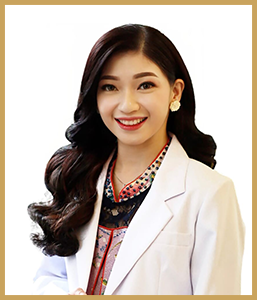
dr. Gracia Merryane R.G. Rauw, Sp.OG, is an obstetrics and gynecology specialist with a focus on women’s reproductive health, pregnancy, and various gynecological disorders. She completed her medical and specialist education at the Faculty of Medicine, Sam Ratulangi University.
Her services include routine gynecological examinations, pregnancy planning programs, lactation and family planning consultations, ovulation induction, normal delivery and cesarean section, as well as various gynecological procedures such as laparoscopy, hysterectomy, Pap smear, SIS, and LEEP.
Practice Schedule at Mandaya Royal Hospital Puri:
- Monday: 08:00 – 11:00 WIB & 13:00 – 18:00 WIB
- Tuesday: 08:00 – 11:00 WIB & 13:00 – 18:00 WIB
- Wednesday: 08:00 – 11:00 WIB & 13:00 – 18:00 WIB
- Thursday: 08:00 – 11:00 WIB & 13:00 – 18:00 WIB
- Friday: 08:00 – 11:00 WIB & 13:00 – 18:00 WIB
- Saturday: 08:00 – 11:00 WIB & 13:00 – 18:00 WIB
2. dr. Doddy F.P. Gultom, Sp.OG (K), M.Kes
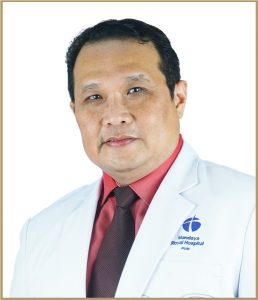
dr. Doddy F.P. Gultom, Sp.OG (K), M.Kes, is a consultant obstetrician and gynecologist with extensive experience in reproductive health and gynecology. He graduated from the Faculty of Medicine, Trisakti University, completed his specialist training at Hasanuddin University, and earned his consultant degree at the University of Indonesia.
His services include preconception care, prenatal diagnosis, fetal imaging, contraceptive selection, management of pregnancy complications, benign gynecological disorders, and minimally invasive procedures.
Practice Schedule at Mandaya Royal Hospital Puri:
- Tuesday: 17:00 – 20:00 WIB
- Thursday: 13:00 – 16:00 WIB
- Saturday: 08:00 – 12:00 WIB
3. dr. Ong Tjandra, M.Kes, Sp.OG, Subsp. Onk

dr. Ong Tjandra is a gynecologic oncology subspecialist with experience in treating cervical cancer, ovarian cancer, vaginal cancer, and various other gynecological conditions. He is also highly skilled in performing fibroid and ovarian cyst surgeries using laparoscopic techniques and hysterectomy.
With a comprehensive approach, dr. Ong Tjandra is well known for managing complex gynecological cases and malignancies.
Practice Schedule at Mandaya Royal Hospital Puri:
- Monday: 10:00 – 17:00 WIB
- Thursday: 16:00 – 20:00 WIB
4. Dr. dr. Unedo Hence Markus Sihombing, Sp.OG, Subsp. Onk

Dr. dr. Unedo Hence Markus Sihombing is an obstetrics and gynecology specialist with a subspecialty in oncology. He completed his education at Sriwijaya University and Sebelas Maret University, and earned his Doctorate and Consultant degree at the University of Indonesia.
He manages a wide range of gynecologic cancer cases, including cervical, uterine, ovarian, vulvar, and vaginal cancers, as well as benign conditions such as uterine polyps and tumors. His meticulous and empathetic approach is one of his key strengths in patient care.
Practice Schedule at Mandaya Royal Hospital Puri:
- Tuesday: 16:00 – 20:00 WIB
- Thursday: 16:00 – 20:00 WIB
- Saturday: 13:00 – 16:00 WIB
To make your visit more convenient, you can use the WhatsApp Chat feature, Book Appointment service, or the Care Dokter application available on Google Play and the App Store to schedule visits, check queue numbers, and access complete information.